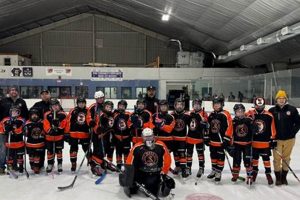
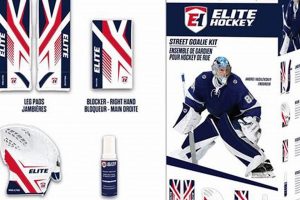
A foundational equipment collection is essential for participants entering the sport of youth hockey. This collection typically includes protective gear such as a helmet, shoulder pads, elbow pads, gloves, hockey pants, shin guards, and a mouthguard. A hockey stick and ice skates are also fundamental components, ensuring the player has the basic tools required to engage in the game.
The significance of acquiring these items stems from the inherent need for player safety and performance. Appropriate protective equipment minimizes the risk of injury, allowing young athletes to participate with confidence. Furthermore, utilizing suitable gear can enhance a player’s agility, control, and overall effectiveness on the ice, contributing to a more positive and developmental sporting experience. Historically, the accessibility and affordability of these necessary items have greatly influenced youth participation rates in hockey programs.
The following sections will delve into specific aspects of selecting, fitting, and maintaining the components described above. This will include considerations for size, material, and safety standards, alongside tips for ensuring longevity and optimal performance of the equipment. Proper understanding of these details is crucial for maximizing both player safety and the value of the initial investment.
Essential Guidance for Initial Hockey Equipment Acquisition
The following recommendations offer crucial insights for individuals and organizations involved in procuring the necessary items for novice hockey players. Adherence to these guidelines can optimize safety, performance, and long-term cost-effectiveness.
Tip 1: Prioritize Certified Safety Standards: Ensure all protective equipment, particularly helmets and shoulder pads, meet or exceed established safety certifications, such as those provided by HECC (Hockey Equipment Certification Council) and CSA (Canadian Standards Association). Verification of these certifications is critical for minimizing potential injuries.
Tip 2: Focus on Proper Fit: Ill-fitting equipment compromises protection and hinders performance. Consult sizing charts and, ideally, seek professional assistance to ensure each item fits snugly but comfortably. This is especially important for helmets, skates, and shoulder pads.
Tip 3: Consider Adjustable Components: Select items with adjustable features, such as straps and padding, to accommodate growth spurts and allow for a more customized fit. This can extend the lifespan of the equipment and provide a more adaptable protective system.
Tip 4: Evaluate Material Durability: Opt for equipment constructed from high-quality, durable materials designed to withstand the rigors of on-ice activity. Reinforced stitching and abrasion-resistant fabrics can significantly increase the lifespan of the collection.
Tip 5: Research Brand Reputation and Reviews: Investigate established brands with a proven track record for producing reliable and protective hockey equipment. Read customer reviews and seek recommendations from experienced players or coaches to gain valuable insights.
Tip 6: Explore Used Equipment Options Carefully: While purchasing pre-owned items can reduce costs, thorough inspection is essential. Verify the equipment’s structural integrity, cleanliness, and certification status before acquisition. Compromised or outdated equipment should be avoided.
Tip 7: Account for Maintenance and Storage: Proper maintenance, including regular cleaning and drying, is crucial for extending the lifespan of equipment and preventing the development of odors and bacteria. Store items in a well-ventilated area to promote drying and prevent mildew growth.
Following these recommendations contributes to a safer and more enjoyable introduction to hockey, optimizing both the protection and performance of aspiring players.
The subsequent sections will address specific equipment maintenance procedures and offer guidance on recognizing when replacement is necessary.
1. Safety Certification

Safety certification is a paramount consideration within the framework of youth hockey equipment, representing a formalized assurance that specific products meet or exceed established protection standards. The presence of recognized certifications on equipment is not merely a suggestion but a fundamental requirement for safeguarding young athletes involved in the sport. It is a verifiable benchmark indicating the product has undergone rigorous testing to minimize injury risk.
- HECC (Hockey Equipment Certification Council) Compliance
HECC certification, predominantly found on helmets and face masks, signifies adherence to performance criteria designed to mitigate head injuries. Equipment bearing this mark has been subjected to impact testing simulating real-world on-ice collisions. Its presence demonstrates that the product offers a degree of protection commensurate with accepted safety protocols and is a critical element within the hockey kit.
- CSA (Canadian Standards Association) Approval
CSA certification, often applicable to helmets, face shields, and neck protectors, indicates the product has been evaluated against Canadian safety standards. This evaluation includes assessments of impact resistance, structural integrity, and material quality. Equipment with CSA approval has been deemed compliant with these rigorous requirements and provides a recognized level of protection.
- Third-Party Testing and Verification
In addition to HECC and CSA, some manufacturers may pursue independent testing by accredited laboratories to validate the protective capabilities of their equipment. These third-party assessments provide an additional layer of scrutiny, confirming that the equipment meets or exceeds industry benchmarks for safety and performance. Reporting of testing methodologies and results enhances transparency and consumer confidence.
- Impact on Liability and Insurance
The presence of safety certifications on hockey equipment can significantly impact liability considerations in the event of an injury. Organizations and leagues often mandate the use of certified equipment as a condition of participation, demonstrating a commitment to player safety. Utilizing certified equipment may also influence insurance coverage and claims processing, highlighting the importance of adhering to established safety standards.
The integration of certified equipment into the youth hockey collection is non-negotiable for any program or individual committed to prioritizing player well-being. The selection process should consistently prioritize verified certifications as a baseline criterion, ensuring that young athletes are afforded the maximum available protection within the context of the sport.
2. Optimal Fit
The relationship between optimal fit and youth hockey starter kit is causal and fundamental. An ill-fitting collection, despite containing all necessary components, fails to deliver the intended level of protection and can negatively impact performance. The starter kit provides the raw materials for safety and participation, but optimal fit transforms these materials into an effective safeguard. For example, a helmet that is too large offers inadequate impact protection, potentially leading to head injuries. Skates that are too small can cause blisters and discomfort, hindering skating development. The appropriate fit of each item within the collection, therefore, is not merely desirable, but essential.
The practical significance of understanding the importance of proper fit extends beyond injury prevention. A well-fitting kit allows young players to move freely and comfortably, fostering confidence and enjoyment. This enhances skill development and encourages continued participation in the sport. Conversely, poorly fitting equipment can be distracting and uncomfortable, leading to frustration and potentially discouraging players from pursuing hockey. A real-world application of this understanding involves taking precise measurements and consulting with experienced equipment specialists to ensure accurate sizing for each player. Furthermore, parents and coaches need to be educated on how to identify signs of improper fit and make necessary adjustments.
In summary, optimal fit is a critical element within the broader concept of a youth hockey starter kit. It transforms a collection of equipment into a functional and protective system that supports player safety, performance, and long-term engagement. The challenge lies in ensuring access to knowledgeable fitting assistance and promoting awareness of the importance of this aspect. Neglecting optimal fit undermines the entire purpose of the kit and can have detrimental consequences for young hockey players.
3. Durability
Durability, in the context of a youth hockey starter kit, represents the capacity of the equipment to withstand the rigors of repeated use and the physical demands inherent in the sport. It directly impacts the lifespan, cost-effectiveness, and protective capabilities of the kit, making it a critical factor in equipment selection and maintenance.
- Material Composition and Construction
The materials used in manufacturing hockey equipment significantly influence its resistance to wear and tear. High-density plastics, reinforced stitching, and abrasion-resistant fabrics contribute to enhanced durability. For instance, a helmet constructed from a robust polycarbonate shell provides greater impact protection and longer lifespan compared to one made from a less durable material. Similarly, hockey pants with reinforced knees and hips offer increased protection against abrasion and tearing during falls and collisions.
- Impact Resistance and Protective Qualities
Durability is intrinsically linked to the equipment’s ability to maintain its protective qualities over time. Repeated impacts and stresses can degrade the structural integrity of protective components, reducing their effectiveness. A shoulder pad with weakened padding or a helmet with hairline fractures may compromise player safety. Regular inspection and timely replacement of worn or damaged equipment are essential to ensure continued protection.
- Resistance to Environmental Factors
Hockey equipment is frequently exposed to moisture, sweat, and temperature fluctuations, all of which can contribute to material degradation. Durable equipment is designed to resist these environmental factors, preventing the growth of mold and bacteria and maintaining structural integrity. Proper drying and storage practices further extend the lifespan of the collection by minimizing exposure to moisture and extreme temperatures.
- Long-Term Cost Considerations
While the initial cost of a more durable youth hockey starter kit may be higher, the long-term cost savings can be significant. More durable equipment requires less frequent replacement, reducing the overall expenditure over the player’s youth hockey career. Furthermore, the reduced risk of equipment failure minimizes potential interruptions to participation and enhances the overall value of the investment.
The selection of a durable starter kit represents a commitment to player safety, long-term cost-effectiveness, and sustainable participation in the sport. Prioritizing equipment constructed from high-quality materials and designed to withstand the demands of youth hockey is a crucial aspect of responsible equipment management.
4. Maintenance

The ongoing care and upkeep of a youth hockey starter kit are inextricably linked to its overall effectiveness and longevity. Maintenance is not a supplementary activity but an essential component, directly impacting player safety, hygiene, and the long-term value of the investment. A neglected kit, regardless of its initial quality, degrades rapidly, compromising its protective capabilities and potentially exposing the user to health risks. For example, failing to properly dry equipment after use fosters bacterial growth, leading to unpleasant odors and increasing the risk of skin infections. Similarly, unsharpened skates diminish performance, hindering the development of proper skating technique.
The practical implications of understanding the importance of maintenance are manifold. A regular cleaning schedule, involving the use of antimicrobial sprays and thorough drying, prevents the proliferation of harmful bacteria. Routine skate sharpening ensures optimal edge control and maneuverability on the ice. Periodic inspections for wear and tear, followed by timely repairs or replacements, maintain the kit’s structural integrity and protective function. Parents and coaches bear the responsibility of educating young players about these maintenance practices, instilling a sense of ownership and responsibility for their equipment.
In conclusion, integrating maintenance into the management of a youth hockey starter kit is paramount. It transcends mere cosmetic upkeep, directly impacting safety, performance, and the economic viability of the equipment. The challenge lies in promoting a culture of consistent maintenance through education and practical implementation. By prioritizing this often-overlooked aspect, stakeholders can ensure that young hockey players benefit from a safe, hygienic, and optimally performing starter kit throughout their developmental years.
5. Growth Accommodation

Growth accommodation, as it relates to a youth hockey starter kit, is the provision for adjustments and modifications within the equipment to accommodate the physical development of the young athlete. Acknowledging that children and adolescents experience rapid growth spurts is critical in ensuring the starter kit remains both safe and functional throughout its intended lifespan. Failure to account for growth leads to ill-fitting equipment, which diminishes protective capabilities and hinders performance.
The practical manifestation of growth accommodation is evident in adjustable features incorporated into various pieces of equipment. For instance, helmets often include adjustable straps and padding systems that allow for expansion as the head circumference increases. Similarly, hockey pants may feature extendable inseams, and shoulder pads may have adjustable torso straps. Skates, although less amenable to significant adjustments, are ideally selected with some initial allowance for sock thickness and potential insole modifications. Real-world examples include parents routinely checking helmet fit every few months and adjusting straps as needed, or a coach advising a player to extend the inseam of their hockey pants when the pant legs begin to ride up above the boot top. Without growth accommodation, it would be necessary to replace the entire collection with each significant growth spurt, resulting in considerable expense and inconvenience.
The incorporation of growth accommodation into the design and selection of a youth hockey starter kit represents a balance between initial investment and long-term usability. While slightly more expensive models may offer greater adjustability, the extended lifespan of these items can outweigh the initial cost difference. The challenge lies in educating parents and coaches about the importance of regularly monitoring equipment fit and making necessary adjustments. Ultimately, providing for growth accommodation ensures that the kit remains a protective and functional asset throughout the player’s developmental years, fostering a safer and more enjoyable hockey experience. Neglecting growth accommodation undermines the value of the kit and can negatively impact player safety and performance.
Frequently Asked Questions
This section addresses common inquiries concerning the components, selection, and maintenance of a youth hockey starter kit. Understanding these aspects is crucial for ensuring player safety and maximizing the value of the equipment investment.
Question 1: What constitutes a complete youth hockey starter kit?
A comprehensive kit typically includes a helmet with appropriate safety certification, shoulder pads, elbow pads, gloves, hockey pants, shin guards, a mouthguard, ice skates, and a hockey stick. Neck guards are also highly recommended.
Question 2: How does one determine the appropriate size for each item in the kit?
Sizing charts provided by manufacturers serve as a starting point. Seeking assistance from experienced equipment specialists at a reputable sporting goods store is strongly advised to ensure optimal fit for each individual player.
Question 3: What safety certifications are essential for a youth hockey helmet?
Helmets should possess certification from either HECC (Hockey Equipment Certification Council) or CSA (Canadian Standards Association). These certifications indicate the helmet has met established impact protection standards.
Question 4: How frequently should a youth hockey starter kit be replaced?
Replacement frequency depends on the player’s growth rate, the intensity of use, and the condition of the equipment. Items exhibiting signs of wear, damage, or compromised fit should be replaced immediately.
Question 5: What maintenance practices are necessary to prolong the lifespan of the kit?
Regular cleaning and drying of all equipment after each use are essential. Antimicrobial sprays can help prevent the growth of bacteria. Skates require periodic sharpening, and all items should be stored in a well-ventilated area.
Question 6: Is it acceptable to purchase used equipment for a youth hockey starter kit?
Used equipment can be a cost-effective option, but thorough inspection is crucial. Ensure the equipment is in good condition, meets current safety standards, and fits properly. Helmets are generally not recommended for purchase used due to potential unseen damage.
Proper understanding and implementation of these principles contribute to a safer and more enjoyable introduction to the sport for young hockey players.
The subsequent section will provide guidance on selecting specific brands and models within the youth hockey equipment market.
Youth Hockey Starter Kit
This article has explored the multifaceted nature of a youth hockey starter kit, emphasizing the critical aspects of safety certification, optimal fit, durability, maintenance, and growth accommodation. Each element contributes to a young player’s well-being and ability to participate effectively in the sport. Comprehensive understanding of these factors is paramount for parents, coaches, and organizations involved in youth hockey.
The proper selection, maintenance, and adaptation of the youth hockey starter kit constitute an ongoing responsibility. Prioritizing these considerations safeguards young athletes and fosters a positive and developmental sporting experience. Continued vigilance and informed decision-making are essential for ensuring the safety and success of aspiring hockey players.