These curated collections of equipment enable young individuals to participate in the sport of ice or street hockey. Typically, these packages include essential protective gear, such as helmets, padding for shoulders, elbows, and legs, and gloves, along with a hockey stick and sometimes a carrying bag for ease of transport. Selection depends on the player’s age, size, and skill level, ensuring both safety and optimal performance on the ice or playing surface.
Engaging in hockey provides numerous physical and social advantages for young participants. The activity promotes cardiovascular health, improves coordination and agility, and fosters teamwork and sportsmanship. Furthermore, it instills discipline, perseverance, and the ability to work collaboratively towards shared goals, contributing to personal development beyond the realm of sports. The accessibility of proper introductory equipment removes a barrier to entry, encouraging broader participation in the sport.
Subsequent sections will explore the various components typically found within these collections, offer guidance on selecting the appropriate size and fit, and discuss important safety considerations for young players. Detailed information regarding maintenance, storage, and resources for further skill development will also be provided.
Guidance on Introductory Hockey Equipment
The following offers practical advice for selecting and utilizing appropriate equipment for young hockey players. These points are intended to maximize safety, enhance performance, and ensure a positive introductory experience with the sport.
Tip 1: Prioritize Proper Fit: Equipment must fit snugly but comfortably. Overly large equipment impairs mobility and provides inadequate protection, while excessively tight equipment restricts movement and can cause discomfort or injury. Consult sizing charts and seek expert assistance at reputable sporting goods stores.
Tip 2: Invest in a Certified Helmet: The helmet is the most crucial piece of protective gear. Ensure it meets safety standards established by organizations such as CSA, HECC, or ASTM. Replace helmets after significant impacts, regardless of visible damage.
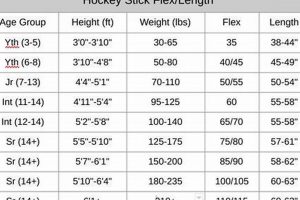
Tip 3: Select the Correct Stick Length: With skates on, the stick should typically reach between the player’s chin and nose. An appropriately sized stick enables better puck control and shooting mechanics.
Tip 4: Ensure Comprehensive Padding: Padding should cover all vulnerable areas, including shoulders, elbows, shins, and knees. Verify that the padding is securely fastened and does not shift during play.
Tip 5: Introduce Equipment Gradually: For new players, allow them to become accustomed to wearing the equipment in a non-game environment. This can reduce discomfort and anxiety when they begin playing.
Tip 6: Regularly Inspect Equipment: Routinely examine equipment for signs of wear and tear, such as cracks, tears, or loose straps. Replace damaged components promptly to maintain optimal protection.
Tip 7: Emphasize Mouthguard Usage: A properly fitted mouthguard protects teeth and reduces the risk of concussion. Encourage its consistent use during all hockey activities.
Adhering to these guidelines promotes both safety and skill development, fostering a more enjoyable and productive experience for young hockey enthusiasts. Choosing the right equipment is an investment in their well-being and continued participation in the sport.
The subsequent sections will delve into specific equipment types, maintenance procedures, and resources available to further enhance a young player’s involvement in hockey.
1. Protective Headgear

Protective headgear is a fundamental component of any hockey set intended for youth participants. Its primary function is to mitigate the risk of head injuries, which can have severe and long-lasting consequences, particularly for developing brains. The selection and proper use of protective headgear are paramount for ensuring the safety of young hockey players.
- Certification Standards
Helmets included in youth hockey sets must meet specific certification standards established by organizations such as CSA (Canadian Standards Association), HECC (Hockey Equipment Certification Council), or ASTM (American Society for Testing and Materials). These certifications indicate that the helmet has undergone rigorous testing and meets minimum safety requirements for impact absorption and protection against skull fractures and concussions.
- Proper Fit and Adjustment
Even a certified helmet will not provide adequate protection if it does not fit correctly. A proper fit ensures the helmet sits securely on the head without excessive movement. Adjustment mechanisms, such as straps and pads, allow for customization to accommodate different head sizes and shapes, ensuring a snug and comfortable fit that maximizes protective capabilities. Parents and coaches should be trained to assist young players in achieving a proper helmet fit.
- Types of Helmets
Several types of helmets are available for youth hockey, including single-density and multi-density models. Multi-density helmets offer varying layers of foam designed to absorb impact energy more effectively across a range of impact forces. Some helmets also incorporate rotational energy management systems intended to reduce the risk of rotational forces contributing to concussion. The selection of a specific helmet type should consider the level of play and the player’s individual needs.
- Maintenance and Replacement
Helmets require regular inspection and maintenance to ensure continued protective effectiveness. Cracks, dents, or loose components can compromise the helmet’s ability to absorb impact energy. Helmets should be replaced after any significant impact, regardless of visible damage, as the internal protective structure may have been compromised. It is also recommended to replace helmets after a certain period (e.g., five years) due to material degradation over time.
The integration of certified, properly fitted, and well-maintained helmets within hockey sets for youth directly contributes to a safer playing environment. Emphasizing the importance of protective headgear is crucial for minimizing the risk of head injuries and fostering long-term participation in the sport.Furthermore, awareness campaigns and educational resources regarding helmet safety can empower young players and their families to make informed decisions regarding protective equipment.
2. Appropriate Sizing

The correlation between appropriate sizing and hockey sets for youth is foundational to player safety and performance. Ill-fitting equipment, whether too large or too small, directly compromises its protective capabilities. Overly large equipment allows excessive movement, leaving vulnerable areas exposed to impact. Conversely, undersized equipment restricts mobility and can cause discomfort or even impede circulation. The impact of improper sizing manifests in increased injury risk and diminished ability to execute fundamental hockey skills.
Consider the example of shin guards: improperly sized shin guards can shift during play, leaving the lower leg susceptible to direct impact from pucks or skates. Similarly, an ill-fitting helmet may not adequately absorb impact forces during collisions. The appropriate sizing extends beyond the specific dimensions of the equipment to consider factors such as a player’s growth rate and the adjustability of various components. Recognizing that young athletes are in a continuous state of physical development, hockey sets designed for youth must incorporate features that allow for adjustments and modifications to accommodate changes in size and body proportions. This ensures the equipment remains effective and comfortable as the player grows.
In summary, the emphasis on appropriate sizing is not merely a matter of comfort but a critical aspect of injury prevention and skill development within youth hockey programs. Addressing challenges related to sizing requires ongoing education for parents, coaches, and equipment retailers, coupled with the availability of comprehensive sizing charts and expert fitting assistance. Understanding this correlation is essential for fostering a safe and enjoyable introduction to hockey for young participants.
3. Essential Body Padding
Essential body padding represents a critical element within hockey sets designed for youth. Its function extends beyond mere comfort, serving as the primary defense against the high-impact nature of the sport. The absence or inadequacy of this padding directly elevates the risk of injuries, potentially hindering a young player’s development and overall experience.
- Shoulder Pads
Shoulder pads protect the shoulders, upper chest, and upper back from impact. These pads typically consist of a combination of hard plastic caps and dense foam padding to distribute and absorb force from collisions with other players, the boards, or falls. Properly fitted shoulder pads prevent injuries such as shoulder separations, clavicle fractures, and contusions. An improperly sized or poorly designed shoulder pad may leave critical areas exposed, negating its protective value.
- Elbow Pads
Elbow pads shield the elbow joint, a common point of impact during falls and collisions. These pads feature a hard plastic shell covering the elbow, coupled with foam padding to cushion the joint and forearm. Effective elbow pads are anatomically designed to allow for a full range of motion while maintaining continuous protection. Insufficient elbow padding can lead to fractures, dislocations, and painful contusions.
- Shin Guards
Shin guards protect the lower leg from pucks, skate blades, and collisions with other players. These guards typically consist of a hard plastic shell extending from the knee to the ankle, lined with foam padding for comfort and impact absorption. The design often includes a hinged knee cap to facilitate mobility. Properly fitted shin guards prevent fractures, lacerations, and contusions of the tibia and fibula, while inadequate shin protection can result in significant lower leg injuries.
- Pants/Hip Protection
Hockey pants, often integrated with hip protection, offer padding to the thighs, hips, and tailbone. These padded pants mitigate the risk of bruises, contusions, and more severe injuries to the pelvic region. While not always considered ‘padding’ in the traditional sense, their protective role is undeniable. Look for pants that fit securely and offer sufficient coverage to prevent injuries from falls or collisions with the boards.
The selection and appropriate fitting of essential body padding are indispensable aspects of ensuring player safety within hockey sets for youth. The proper application of this equipment serves to mitigate the inherent risks associated with the sport, allowing young players to participate with increased confidence and reduced likelihood of injury. The integration of well-designed and appropriately sized padding contributes to a safer and more enjoyable hockey experience, supporting long-term player development and participation.
4. Stick Specifications
Stick specifications are a critical determinant of a young hockey player’s development and performance. These specifications, encompassing length, flex, curve, and lie, collectively influence a player’s ability to control the puck, shoot effectively, and maintain proper posture. Selecting an inappropriate stick can hinder skill acquisition, increase the risk of injury, and diminish overall enjoyment of the sport. Within hockey sets for youth, the inclusion of a suitably specified stick represents a foundational element for introducing young players to the game.
Length dictates the player’s stance and reach, affecting puck handling and skating efficiency. A stick that is too long forces the player to hold the puck too far away from the body, reducing control. Conversely, a stick that is too short requires excessive bending at the waist, compromising balance and power. Flex refers to the stick’s stiffness; a softer flex allows for easier loading and release of the puck, which is beneficial for younger players who may lack the strength to flex a stiffer stick effectively. The curve of the blade influences shot trajectory and puck handling capabilities. A flatter curve facilitates easier puck reception, while a more pronounced curve can enhance shot lift and accuracy. Lie refers to the angle of the blade relative to the shaft; the correct lie ensures the blade rests flat on the ice, optimizing puck contact and shot power. Consider a scenario where a young player receives a hockey set with an adult-sized, stiff-flex stick. The player struggles to control the puck, cannot elevate shots, and develops poor posture due to the stick’s excessive length and stiffness. Conversely, a set containing a properly sized and flexed stick allows the player to develop fundamental skills, improving their overall experience and fostering continued participation.
The provision of appropriate stick specifications within youth hockey sets presents a challenge, given the wide range of ages, sizes, and skill levels among young players. Manufacturers and retailers must offer a diverse selection of sticks tailored to different developmental stages. Educational resources and expert fitting assistance are crucial for guiding parents and coaches in selecting the optimal stick for each player. Ultimately, the integration of properly specified sticks into youth hockey sets is an investment in the player’s development, safety, and long-term enjoyment of the sport. This aligns with the broader goal of promoting youth hockey as a positive and enriching experience.
5. Age-appropriate design

Age-appropriate design within hockey sets for youth is not merely a consideration of aesthetics but a fundamental aspect of safety, performance, and developmental suitability. The physical characteristics and skill levels of young hockey players differ significantly across age groups, necessitating equipment tailored to these variations. Failure to account for age-related factors in the design of hockey sets can lead to compromised protection, hindered skill development, and an increased risk of injury. For instance, a helmet designed for an adult, even if seemingly fitted, may not provide adequate impact protection for a smaller child’s head due to differences in skull structure and neck strength.
The impact of age-appropriate design extends to all components of a hockey set. Consider the weight and flexibility of hockey sticks. A stick designed for an older teenager would be too heavy and stiff for a seven-year-old to handle effectively. This can lead to improper technique, muscle strain, and frustration. Conversely, a stick designed for very young children would lack the necessary power and control for older youth players. Similarly, the size and adjustability of protective padding, such as shoulder pads and shin guards, must correspond to the specific age and size range of the intended user. Overly bulky padding can restrict movement, while inadequate padding leaves vulnerable areas exposed. The design must also consider ease of use. Fasteners, straps, and adjustment mechanisms should be simple enough for young players to manipulate independently, fostering a sense of autonomy and responsibility.
In summary, age-appropriate design is an indispensable element of hockey sets for youth. It directly influences the safety, performance, and overall enjoyment of the sport for young players. Addressing this aspect requires ongoing research and development to create equipment that effectively meets the evolving needs of different age groups. Challenges remain in ensuring affordability and accessibility of appropriately designed equipment, but the benefits of prioritizing age-appropriate design are undeniable in promoting safe and positive experiences within youth hockey.
Frequently Asked Questions
The following addresses common inquiries concerning hockey sets designed for young participants. The information provided aims to clarify critical aspects related to safety, selection, and usage.
Question 1: What constitutes a comprehensive hockey set for youth?
A comprehensive hockey set generally includes a certified helmet, shoulder pads, elbow pads, gloves, hockey pants, shin guards, a jock or jill supporter, and a hockey stick. Some sets may also include a carrying bag for convenient storage and transport.
Question 2: How does one determine the appropriate size for youth hockey equipment?
Accurate sizing relies on precise measurements of the player’s height, weight, chest circumference, arm length, and leg length. Consult sizing charts provided by equipment manufacturers and seek assistance from experienced retailers to ensure a proper and secure fit.
Question 3: What safety certifications are essential for youth hockey helmets?
Helmets intended for youth hockey must meet established safety standards, typically indicated by certifications from organizations such as CSA (Canadian Standards Association), HECC (Hockey Equipment Certification Council), or ASTM (American Society for Testing and Materials).
Question 4: How frequently should youth hockey equipment be inspected for wear and tear?
Equipment requires regular inspection before each use. Examine all components for cracks, tears, loose straps, or other signs of damage that may compromise their protective capabilities. Replace damaged or worn-out items promptly.
Question 5: Is professional fitting necessary for youth hockey equipment, or can it be done at home?
While basic fitting can be performed at home using sizing charts, professional fitting by experienced personnel is highly recommended. Experts can assess the fit and make necessary adjustments to ensure optimal protection and comfort.
Question 6: What considerations are paramount when selecting a hockey stick for a young player?
Key considerations include stick length, flex, curve, and lie. The stick’s length should generally reach between the player’s chin and nose while on skates. Flex, curve, and lie should be chosen based on the player’s age, size, skill level, and playing style.
Proper equipment selection and maintenance are essential for safeguarding young athletes and promoting a positive experience within the sport. Neglecting these considerations can elevate the risk of injury and hinder skill development.
The next section will provide guidance on maintaining and storing youth hockey equipment to prolong its lifespan and ensure continued effectiveness.
Conclusion
The preceding discussion has underscored the multifaceted nature of hockey sets for youth. These sets are not merely collections of sporting goods but rather investments in the safety, development, and enjoyment of young athletes. The importance of age-appropriate design, proper sizing, and adherence to safety standards cannot be overstated. These elements directly influence a player’s ability to develop fundamental skills while minimizing the risk of injury. The selection of appropriate protective gear, coupled with informed decision-making regarding stick specifications, represents a crucial step in fostering a positive introduction to the sport.
As such, careful consideration should be given to the acquisition and maintenance of these collections. Prioritizing safety and consulting with knowledgeable retailers or experienced coaches can ensure that young players are adequately equipped to participate in hockey. Furthermore, ongoing research and development within the industry should continue to focus on improving the design and performance of youth hockey equipment. By embracing a proactive approach to safety and skill development, the sport can continue to provide valuable opportunities for young individuals to learn, grow, and excel.