Pre-activity preparation on the ice, or sometimes off the ice, is a period dedicated to physical and mental readiness for a hockey game or practice. This often involves a series of exercises designed to gradually increase body temperature, heart rate, and blood flow to the muscles. Examples include light jogging, dynamic stretching, and puck handling drills to prepare the body and mind for the demands of the activity.
Adequate preparation is crucial for optimizing performance and minimizing the risk of injuries. It enhances flexibility, improves reaction time, and promotes focus. Historically, informal routines have evolved into structured programs incorporating sport-specific movements, reflecting an increasing understanding of physiology and injury prevention in athletics.
The following sections will delve into specific exercises, techniques, and considerations for effectively preparing athletes for the physical challenges of ice hockey.
Essential Considerations for Pre-Activity Preparation
The following provides guidelines for maximizing the effectiveness and safety of pre-activity routines in ice hockey.
Tip 1: Prioritize Dynamic Stretching: Incorporate active movements that mimic on-ice actions, such as leg swings, torso twists, and arm circles, to enhance flexibility and range of motion, as opposed to static stretches held for prolonged periods before activity.
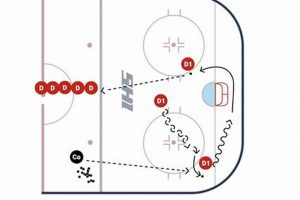
Tip 2: Include Sport-Specific Drills: Integrate puck handling, passing, and shooting drills into the routine to prime the neuromuscular system for the specific skills required during the activity.
Tip 3: Gradually Increase Intensity: Begin with low-intensity exercises and progressively increase the difficulty to avoid sudden strain on muscles and joints. An example is starting with light jogging and transitioning to short sprints.
Tip 4: Focus on Core Engagement: Activate core muscles through exercises like planks and Russian twists to improve stability and power transfer during skating and other movements.
Tip 5: Incorporate Mental Preparation: Utilize visualization techniques to mentally rehearse key plays and strategies, enhancing focus and confidence.
Tip 6: Pay Attention to Individual Needs: Adjust the duration and intensity of the routine based on individual fitness levels, injury history, and specific positional demands.
Tip 7: Hydrate Adequately: Ensure sufficient hydration before, during, and after the activity to maintain optimal muscle function and prevent dehydration.
Adhering to these guidelines can contribute to improved athletic performance, reduced injury risk, and enhanced overall well-being.
The subsequent section will provide a concluding summary of the key concepts discussed throughout this article.
1. Increased muscle temperature

Increased muscle temperature is a foundational element of effective pre-activity preparation in ice hockey, acting as a direct causal factor in optimizing physical performance and reducing injury risk. The elevation of muscle temperature enhances metabolic processes within muscle tissue, improving the efficiency of energy production and utilization. This physiological shift, in turn, leads to increased muscle elasticity and contractility, allowing for a greater range of motion and more powerful muscle contractions. For instance, a player who engages in light jogging or cycling prior to skating experiences improved stride length and agility compared to a player who does not adequately elevate muscle temperature.
The importance of increased muscle temperature as a component is underscored by its impact on enzymatic activity. Warmer muscles facilitate faster enzymatic reactions necessary for energy metabolism, enabling athletes to sustain high-intensity efforts for longer durations. Furthermore, elevated muscle temperature improves nerve conduction velocity, resulting in quicker reaction times and enhanced neuromuscular coordination. A practical example is observed in a hockey player’s ability to execute quick passes and accurate shots after a proper period of light activity, as opposed to experiencing sluggishness and reduced precision.
In summary, increased muscle temperature forms a critical cornerstone for an effective routine. Its physiological effects directly contribute to improved performance metrics, such as agility, power, and reaction time, while concurrently mitigating the likelihood of muscle strains and other injuries. Understanding this connection allows athletes and coaches to design tailored preparations that prioritize muscle warming strategies, leading to optimized on-ice performance and long-term physical well-being. The challenge lies in implementing routines that achieve the desired muscle temperature elevation without inducing fatigue, necessitating a careful balance of intensity and duration.
2. Enhanced Flexibility

Enhanced flexibility, attained during pre-activity routines, directly influences a hockey player’s performance and injury resilience. Flexibility refers to the range of motion around a joint, and increasing this range allows for more fluid and efficient movements on the ice. Enhanced flexibility supports the execution of complex skating maneuvers, increases reach for puck control, and aids in injury prevention by reducing strain on muscles and ligaments. For example, a player with improved hip flexibility can achieve a deeper skating stance, resulting in a lower center of gravity and greater stability, whereas a player with tight hamstrings is at greater risk of muscle pulls when performing explosive sprints.
The incorporation of dynamic stretching exercises during preparation directly causes improved flexibility. These exercises involve active movements through a full range of motion, stimulating blood flow to muscles and increasing their elasticity. Dynamic stretches like leg swings, torso twists, and arm circles prepare the body for the demands of the game. A practical application of this understanding is seen in training programs where coaches prioritize dynamic stretches that mimic specific on-ice movements, promoting both performance enhancement and injury mitigation. Furthermore, increased flexibility can offset compensatory movements, where a player is forced to make inefficient maneuvers due to a lack of range of motion, potentially leading to strain and injury.
In summary, enhanced flexibility is a crucial component of pre-activity protocols in ice hockey. Its influence on agility, skating mechanics, and injury prevention underscores its importance. Incorporating targeted stretching exercises, particularly dynamic stretches, enables players to optimize their physical capabilities and minimize the likelihood of injuries. The effectiveness of this preparation strategy is dependent on the consistent application of appropriate techniques, emphasizing range of motion, and individualizing approaches to accommodate specific player needs and movement patterns. The challenge lies in balancing the need for flexibility with other components, such as strength and stability, to achieve comprehensive physical conditioning.
3. Improved Reaction Time
Enhanced reaction time is a critical element cultivated during preparation for ice hockey, directly impacting a player’s ability to respond swiftly to dynamic situations on the ice. It represents the time elapsed between the perception of a stimulus and the initiation of a corresponding motor response. The development of rapid responses is pivotal for success in hockey, influencing puck handling, defensive positioning, and overall game awareness.
- Neuromuscular Priming
Neuromuscular priming involves activating neural pathways to facilitate faster communication between the brain and muscles. Through sport-specific drills incorporated, the nervous system becomes increasingly efficient at transmitting signals, resulting in quicker motor responses. An example is performing reaction drills that require players to rapidly respond to visual or auditory cues. Improved neuromuscular priming leads to more decisive actions on the ice, allowing players to intercept passes or initiate offensive plays more effectively.
- Sensory Acuity Enhancement
Preparation routines serve to heighten sensory acuity, enabling players to process visual and auditory information more rapidly and accurately. Exercises that challenge players’ spatial awareness and peripheral vision contribute to improved anticipation of opponent movements and puck trajectory. For instance, practicing quick head movements to scan the ice surface enhances situational awareness. Sensory acuity enhancement provides players with a competitive advantage, enabling them to make better decisions under pressure.
- Cognitive Processing Acceleration
Preparation routines facilitate cognitive processing acceleration, improving a player’s ability to quickly analyze game situations and formulate appropriate responses. Mental rehearsal and visualization exercises sharpen cognitive functions, allowing players to anticipate play patterns and execute strategic maneuvers. A practical example involves mentally rehearsing different defensive scenarios to develop instinctive reactions. Accelerated cognitive processing enables players to make split-second decisions that can significantly impact game outcomes.
- Reduction of Cognitive Load
A well-structured pre-activity preparation can actually reduce cognitive load during the game. By automating certain responses through repetition and focused drills, players require less conscious thought to execute those actions. This frees up cognitive resources for higher-level decision-making, strategic planning, and adapting to unexpected situations. For example, consistent passing drills allow a player to execute a pass without consciously thinking through the mechanics, improving both speed and accuracy.
In conclusion, the cultivation of improved reaction time through strategic preparation is integral to maximizing player performance in ice hockey. By focusing on neuromuscular priming, sensory acuity enhancement, cognitive processing acceleration, and reduction of cognitive load, athletes can develop the capacity for faster, more decisive actions on the ice. The efficacy of these techniques rests upon the careful design and consistent implementation of preparation routines tailored to the specific demands of the sport.
4. Sport-specific Activation

Sport-specific activation forms an integral component of effective pre-activity preparation in ice hockey. It involves exercises and drills that directly mimic the physical and cognitive demands of the sport, preparing the neuromuscular system for the specific movements and skills required during play. This approach differs from generic exercises, as it focuses on priming the body for the precise actions needed on the ice, thereby enhancing performance and reducing the risk of injury. For example, incorporating skating drills into pre-activity routines serves to activate the muscles and neural pathways responsible for skating propulsion, balance, and agility, providing a more targeted preparation than general cardio exercises.
The inclusion of sport-specific activation in a preparation routine causes improved on-ice performance through enhanced neuromuscular coordination and increased efficiency of movement. By engaging the muscles and neural pathways that will be used during the activity, sport-specific activation prepares the body for the demands of the sport in a way that non-specific exercises cannot. For instance, stick-handling drills can improve a player’s puck control, spatial awareness, and hand-eye coordination, leading to better offensive performance. Furthermore, dynamic stretches that emulate skating motions can improve stride length and flexibility. This practical application of specific movements leads to an optimized level of preparedness before the beginning of the hockey activity.
In summary, sport-specific activation constitutes a crucial element of pre-activity preparation in ice hockey. Its focus on mirroring the movements and skills required during activity results in enhanced neuromuscular coordination, improved performance, and reduced risk of injury. The implementation of sport-specific activation routines necessitates a careful analysis of the sport’s demands and the selection of exercises that directly target the relevant muscle groups and neural pathways. The challenge lies in developing routines that are both effective and efficient, maximizing the benefits of pre-activity preparation within a limited time frame, and adjusting to the specific needs and skill levels of individual players.
5. Mental Preparation
Mental preparation constitutes an indispensable component of hockey warm up, impacting cognitive readiness and subsequent on-ice performance. It encompasses techniques designed to optimize focus, manage anxiety, and enhance strategic thinking prior to activity. The integration of mental strategies into the physical routine elevates the overall effectiveness of preparation.
- Visualization Techniques
Visualization entails creating mental images of successful plays, movements, and game scenarios. This process allows athletes to mentally rehearse specific skills and strategies, enhancing neuromuscular pathways and improving confidence. For instance, a forward might visualize a successful breakaway goal, mentally experiencing the speed, puck control, and shot placement. Consistent visualization prepares the mind to execute these actions more effectively during the game.
- Focus and Concentration Drills
These drills aim to sharpen attention and minimize distractions, allowing athletes to maintain concentration throughout the activity. Techniques such as mindfulness exercises or specific breathing patterns can enhance focus. An example involves focusing on the feeling of the skates on the ice or the grip on the stick, creating a sense of presence and reducing mental clutter. Improved focus reduces the likelihood of errors and enhances reaction time.
- Anxiety Management Strategies
Competitive environments often induce anxiety, which can negatively impact performance. Strategies such as positive self-talk, relaxation techniques, and cognitive reframing can mitigate these effects. A player might use positive affirmations to build confidence or employ deep breathing to calm pre-game nerves. Effective anxiety management allows athletes to perform at their peak, even under pressure.
- Strategic Planning and Review
Mental preparation includes reviewing game plans, analyzing opponent strategies, and formulating individual performance goals. This cognitive exercise enhances strategic thinking and promotes informed decision-making during the activity. A defenseman might mentally review positioning strategies for different offensive formations. Strategic planning ensures athletes are mentally aligned with the team’s objectives, improving overall performance.
Integrating these facets of mental preparation into the hockey warm up routine optimizes cognitive readiness, contributing to improved on-ice performance. Mental preparation is not a substitute for physical conditioning but rather a complementary element that maximizes the potential of the athlete.
Frequently Asked Questions About Hockey Warm Up
The following addresses common inquiries regarding preparation routines for ice hockey, aiming to provide clarity and dispel misconceptions.
Question 1: What constitutes an adequate duration for preparation prior to a hockey game?
The ideal duration can vary based on individual factors, however, a minimum of 20-30 minutes is generally recommended. This allows sufficient time for cardiovascular activation, dynamic stretching, and sport-specific drills.
Question 2: Is static stretching beneficial before hockey activity?
Current research suggests that static stretching is best performed after exercise. Before activity, dynamic stretching is preferred as it prepares the muscles for the movements required in hockey.
Question 3: How important is off-ice training as part of the routine?
Off-ice activities can be a crucial element. Implementing activities increases body temperature and primes the neuromuscular system for the sport-specific demands of on-ice performance.
Question 4: Should preparation vary based on position played?
While a core routine is beneficial for all players, position-specific modifications can optimize performance. For instance, forwards may focus more on agility drills, while defensemen may prioritize exercises that enhance lateral movement and balance.
Question 5: How can athletes address pre-game anxiety as part of the warm up?
Mental preparation techniques such as visualization, deep breathing exercises, and positive self-talk can effectively manage anxiety and promote focus prior to competition.
Question 6: Is it necessary even for informal games or practices?
While the intensity can be adjusted, preparation before any physical activity is recommended to reduce injury risk and enhance performance. Even for informal settings, a basic routine is beneficial.
Effective and consistent implementation promotes player well-being and improves athletic capabilities.
The upcoming section will transition to a practical routine that can be implemented on and off ice.
Hockey Warm Up
This exploration of hockey warm up has emphasized its critical role in preparing athletes for the rigors of ice hockey. Key considerations include increasing muscle temperature, enhancing flexibility, improving reaction time, incorporating sport-specific activation, and prioritizing mental preparation. Adherence to these principles contributes to both improved performance metrics and a reduction in injury risk, underscoring the significance of a structured and informed approach to pre-activity routines.
Effective implementation of hockey warm up protocols requires a commitment to evidence-based practices and individualized adaptation. Coaches and athletes are encouraged to continuously refine their techniques, ensuring that preparation aligns with the evolving understanding of sports science and the specific demands of the sport. Ultimately, the dedication to a well-designed preparation routine reflects a proactive investment in the long-term well-being and athletic potential of hockey players at all levels.