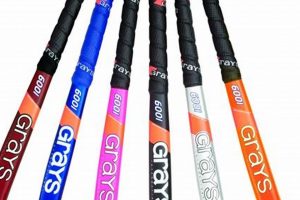
A table correlating player height and stick length serves as a guideline for selecting appropriate equipment. The chart provides a starting point for determining the ideal stick size, ensuring a player can comfortably handle the stick while maintaining proper posture and control. For example, an individual of 5’8″ might find a stick length between 59″ and 62″ suitable, requiring adjustment based on personal preference and playing style.
The utility of this reference stems from the direct impact of stick length on skating posture, puck handling, and shooting accuracy. A properly sized stick promotes a more natural and efficient skating stride, allows for superior puck control due to optimal blade contact, and contributes to more powerful and accurate shots. Historically, players relied on trial and error to determine appropriate stick length; the advent of these guides streamlines this process and minimizes potential discomfort or injury.
The subsequent sections will delve into the methods for using these resources, the factors influencing individual stick length choices beyond simple height correlation, and the potential consequences of utilizing an improperly sized stick on performance and injury risk. This includes examining on-ice adjustment techniques and modifications to personalize equipment.
Guidance on Selecting Equipment Dimensions
Selecting the correct stick length is paramount for optimizing performance and minimizing the risk of injury. The following points provide direction for using these resources effectively.
Tip 1: Initial Assessment with a Guide: Employ the reference to identify a preliminary range of suitable lengths based on height. This range provides a starting point for further evaluation.
Tip 2: On-Ice Evaluation: After identifying a potential size, conduct an on-ice test. Observe posture and stick handling ability to determine if adjustments are needed. The stick should allow for a comfortable crouch without excessive bending.
Tip 3: Blade Contact Observation: With skates on and in a hockey stance, the heel of the blade should rest flush on the ice. If the blade is angled significantly up or down, a different length may be necessary. This ensures efficient energy transfer during shooting and passing.
Tip 4: Account for Skate Height: Skates elevate a player, thereby effectively shortening the stick. Consider this when determining length, potentially opting for a slightly longer stick than initially indicated by the reference.
Tip 5: Adjust for Playing Style: Defensive players may prefer a longer stick for poke checks and reach. Offensive players often favor a shorter stick for increased puck handling and quick release shots. Evaluate positional needs during selection.
Tip 6: Personal Preference: While the mentioned reference provides a solid foundation, ultimately the ideal stick length is subjective. It should feel comfortable and allow for optimal control and movement. Experimentation within the recommended range is encouraged.
Tip 7: Consistent Measurement: Establish a consistent measurement method when comparing sticks. Measure from the heel of the blade to the butt end of the stick, ensuring accuracy and consistency across different brands and models.
Proper use of these resources enhances player comfort, control, and performance. Consistent evaluation and adjustment are crucial for optimizing equipment selection.
The subsequent sections will address further aspects of stick customization and the implications of improper equipment sizing on player development.
1. Height

An individual’s height serves as the foundational element in determining the appropriate stick length. The correlation is rooted in biomechanics; a stick of unsuitable length disrupts posture and impedes efficient movement. As a player’s stature increases, so too does the required stick length to maintain proper spinal alignment and optimal reach. For example, a player of 5’0″ typically requires a stick considerably shorter than one used by a player of 6’0″ to avoid excessive bending at the waist or overextension of the arms.
Failure to account for height can manifest in several adverse effects. A stick that is too short forces a player to hunch over, diminishing skating power and increasing the risk of back strain. Conversely, a stick that is too long reduces puck control and makes it challenging to execute quick turns and passes. Professional hockey players, despite possessing refined skill sets, meticulously select stick lengths based on their individual height and skating styles, demonstrating the ongoing practical relevance of this fundamental consideration.
In summary, height is the initial determinant, providing a starting point for equipment selection. It must be considered alongside other factors such as playing style and skate height for precise stick length determination. Ignoring this initial assessment can lead to compromised performance and increased susceptibility to injury, underlining the importance of height within the broader context of equipment selection.
2. Weight
Weight, while not directly featured on equipment charts, plays an indirect yet consequential role in determining optimal stick selection. A player’s weight correlates with strength and the ability to handle a stick of a particular flex and length, thus influencing overall performance.
- Impact on Stick Flex
A heavier player typically generates more force and may require a stiffer flex to maximize energy transfer during shots. A lighter player might find a stiffer stick difficult to load, resulting in less powerful shots. The ability to effectively bend, or “load,” the stick is crucial for shot power and accuracy; therefore, weight should inform the flex rating of the chosen stick in conjunction with its length.
- Influence on Stick Handling
Body mass affects balance and stability. A lighter player might benefit from a lighter stick overall, facilitating quicker hand movements and improved puck control. Conversely, a heavier player may prefer a slightly heavier stick for added stability during physical play and battles along the boards. The stick’s weight should complement the player’s physical attributes to enhance puck handling skills.
- Correlation with Muscle Development
Increased weight often indicates greater muscle mass, particularly in the upper body. This development can influence the player’s ability to manage a longer or stiffer stick. As players gain strength, they may transition to equipment with different specifications. A player’s physical maturation should be factored into stick selection.
- Indirect Effect on Stick Length
While not a primary determinant of length, a player’s weight can indirectly affect the selection process. A heavier player may be more comfortable managing a slightly longer stick for reach and defensive purposes, while a lighter player might prioritize a shorter stick for agility. The ultimate choice depends on the player’s individual playing style and comfort level, but weight should be considered as part of the broader evaluation.
In conclusion, weight functions as a supplementary consideration alongside height and playing style when determining appropriate dimensions. While tables don’t explicitly list weight, it informs the player’s ability to manage both flex and length effectively. Consequently, a holistic approach that incorporates weight alongside other factors will yield the most appropriate equipment selection, optimizing performance and minimizing potential strain.
3. Position
The player’s position fundamentally influences optimal stick selection. Each role demands specific skills and tactical responsibilities, which, in turn, necessitate adjustments to stick length and flex. Position-specific requirements significantly impact the effective utilization of any sizing resource.
- Defensemen: Reach and Interception
Defensive players typically benefit from a longer stick. Increased length extends reach, enabling more effective poke checks and blocked shots. A longer stick facilitates disrupting passing lanes and gaining possession of the puck in defensive zones. For example, a defenseman might opt for a stick 1-2 inches longer than recommended by a standard height chart to maximize defensive coverage.
- Forwards: Puck Handling and Quick Release
Offensive players often favor a shorter stick. Shorter length enhances puck control in tight spaces and allows for quicker stick handling. This configuration promotes rapid puck movement and faster shot release, critical for offensive opportunities. A forward might select a stick slightly shorter than generally recommended to improve maneuverability in the offensive zone.
- Center: Versatility and Face-Offs
Centers, often tasked with both offensive and defensive responsibilities, require a balance of reach and puck control. Stick length considerations often mirror those of forwards, but center may adjust flex to take successful face-offs. Centers stick choices often lean slightly towards balance between the shorter stick used by offensive players and the longer stick favored by defenders.
- Goaltenders: Unique Considerations
While sizing references do not directly apply to goaltenders’ sticks due to their unique design, the goalie’s playing style and body type influence paddle length and overall stick dimensions. A taller goalie may prefer a longer paddle, while a goalie who plays a more active style may prefer a lighter and more maneuverable stick. These selections require specialized fitting and expertise.
In summary, position dictates specific stick length and flex requirements, diverging from generalized sizing recommendations. Strategic adjustments, reflecting positional demands, optimize performance and playing effectiveness. The interplay between player position and equipment configuration underpins effective on-ice execution.
4. Experience

Experience significantly influences stick selection, modifying the reliance on standard sizing resources. As proficiency increases, players develop a nuanced understanding of how subtle variations in stick length and flex affect performance, leading to deviations from generalized recommendations.
- Refined Feel and Control
Experienced players possess enhanced kinesthetic awareness, allowing them to discern subtle differences in stick handling and shot mechanics. This refined sense informs adjustments to stick length based on personal preferences and specialized skill sets. For instance, a seasoned player may opt for a shorter stick, even if contrary to height-based suggestions, to maximize puck control in close-quarters situations. Conversely, a longer stick might be chosen for strategic advantages in defensive plays or for maximizing shot power from a distance.
- Adaptation to Playing Style
More seasoned players typically exhibit a well-defined playing style. Experience refines tactical decision-making and positional awareness, leading to equipment choices that complement individual strengths. A defensive-minded player with years of experience might prefer a longer stick, despite height norms, to effectively disrupt passing lanes and engage in poke checks. An offensive player, focused on quick releases and intricate puck handling, may gravitate towards a shorter, lighter stick.
- Muscle Memory and Comfort
Years of practice develop muscle memory, creating a strong association between specific stick dimensions and comfortable, efficient movement. Experienced players often prioritize comfort and consistency, even if newer recommendations suggest alternative options. Changes to stick length or flex can disrupt established motor patterns, potentially leading to temporary performance decline. Preference outweighs rigid adherence to sizing guides.
- Awareness of Flex and Kick Point
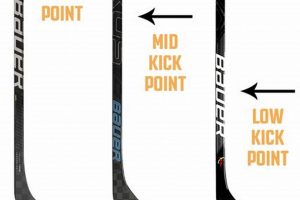
Experienced players understand the complex relationship between stick flex, kick point, and shot trajectory. They can manipulate these variables to optimize shot power and accuracy based on situational demands. For example, an experienced player might select a stick with a low kick point for quick releases in tight scoring areas, regardless of height-based suggestions. These experienced athletes frequently can manipulate these variables better than novice players.
In summary, experience empowers players to transcend the limitations of generic sizing charts. Informed by refined feel, stylistic preferences, muscle memory, and nuanced understanding of stick mechanics, experienced players make equipment choices that optimize individual performance. While resources provide a foundation, seasoned players tailor their selections based on years of accumulated knowledge and on-ice feedback, demonstrating the subjective nature of equipment selection at higher levels of play.
5. Skate Height
Skate height is a key modifier in determining suitable dimensions. The elevation provided by skates effectively alters the player’s stance and reach, necessitating adjustments to standard tables.
- Elevation Impact
Skates introduce a non-negligible vertical displacement between the player’s feet and the ice surface. This elevation effectively reduces the reach required, as the player is already standing higher. Failure to account for skate height results in selecting a stick that is too long, negatively impacting puck handling and posture. For example, a player with 2-inch skate height needs a shorter stick to achieve the same reach as if they were on shoes.
- Posture Adjustment
Skate height influences posture. Elevated stance affects forward lean. A higher skate promotes a more upright stance, requiring a correspondingly shorter stick. Selecting equipment without accounting for this altered posture can lead to an unbalanced stance, compromising skating efficiency and control. The ideal stick length allows for a comfortable forward lean without excessive bending at the waist.
- Puck Handling Dynamics
Elevated height alters puck-handling mechanics. Appropriate stick length maintains optimal blade contact. Skates impact lower hand positioning. Selecting a stick that is too long forces the player to raise the upper hand excessively, impeding puck control and shot accuracy. Conversely, a stick that is too short necessitates excessive bending at the waist, reducing power and balance. Adjustment must be made to optimize puck handling mechanics.
- Comparative Analysis
Skate height is a consistent variable, but individual models and brands vary in their height. A player should not only consider the presence of skates but also the specific elevation provided by their particular model. Players need to account for small differences to fine-tune equipment selections.
Skate height significantly modifies effective height, and its influence must be integrated with sizing references. Its direct correlation to posture, reach, and blade contact necessitates careful consideration when assessing stick length. Ignoring this variable compromises the utility and accuracy, hindering player performance and increasing the risk of injury. A player should account for their height with skates on.
6. Preference
While sizing resources offer a data-driven starting point, personal preference ultimately dictates the selection of hockey equipment. Individual variations in playing style, physical attributes, and comfort levels necessitate adjustments beyond the recommendations of standardized resources. Preference acts as a crucial filter, refining choices based on subjective experience and perceived performance benefits.
Preference manifests in several ways. Some players favor a shorter stick for enhanced puck control and quicker releases, even if it deviates from height-based recommendations. Others prioritize a longer stick for increased reach and defensive capabilities. Similarly, the preferred flex point, blade curve, and stick weight are often highly individualized, reflecting specific shot mechanics and puck-handling techniques. Real-life examples include professional players who have customized equipment for years, or players selecting longer sticks to counter smaller ice rinks. Ultimately, equipment choice must support the player’s individual strengths and mitigate any weaknesses, regardless of size considerations. Selecting equipment that conflicts with player preference can impede performance and negatively impact confidence.
A holistic understanding of optimal equipment configuration involves recognizing the interplay between objective measurements and subjective player experience. While charts provide a baseline, the informed player uses experience to make the selection. Equipment must feel natural and intuitive. A blend of empirical data and player preference optimizes comfort, control, and performance, transcending the limitations of generic sizing recommendations. The confluence between available information and individual preference creates equipment configurations that best support an athlete’s skill and style on the ice.
Frequently Asked Questions About Stick Sizing
This section addresses common inquiries concerning stick selection and its influence on player performance.
Question 1: How reliable are charts as a determinant of ideal stick length?
These resources offer a general starting point but should not be considered definitive. Individual factors such as playing style, position, and skating ability necessitate adjustments to chart recommendations. Empirical testing, in addition to chart-based assessments, are crucial.
Question 2: Does the height of skates influence stick length selection?
Yes. The height added by skates elevates the player, effectively shortening the reach required. Therefore, skate height should be factored in, potentially leading to the selection of a shorter stick than initially suggested by charts based solely on height.
Question 3: How does playing position affect equipment choice?
Playing position significantly influences stick length preference. Defensemen typically benefit from longer sticks for increased reach and defensive coverage. Forwards often prefer shorter sticks for enhanced puck control and quicker shot releases. Considerations should be made for individual playing style.
Question 4: Is there a standard method for measuring stick length?
Consistency in measurement is vital. A common method involves measuring from the heel of the blade to the butt end of the stick. Ensure consistency across all measurements to facilitate comparisons between sticks.
Question 5: Can an improperly sized stick increase the risk of injury?
Yes. A stick that is too short can force the player to hunch over, leading to back strain. A stick that is too long can compromise balance and increase the risk of upper-body injuries. Proper sizing mitigates such risks.
Question 6: Does stick flex correlate to stick length?
While independent properties, stick length influences the effective flex. Shortening a stick increases stiffness, while lengthening decreases it. When altering stick length, adjustments to flex should also be considered to maintain optimal shooting performance.
Proper sizing greatly improves performance and reduces injury. Consider all factors to find what’s best.
The next article section delves into customizing sticks.
Ice Hockey Stick Size Chart
This discussion has explored the utility of, the factors influencing stick selection, and the critical considerations involved in achieving optimal equipment configuration. It highlights the inherent limitations of relying solely on basic measurements, emphasizing the need to account for position, playing style, and individual player preference. A player should consider their needs and experience.
The significance of proper equipment dimensions extends beyond mere comfort; it directly impacts performance, injury prevention, and long-term player development. It warrants the continued attention of players, coaches, and equipment professionals alike. Continued research into stick mechanics and equipment customization could refine our understanding, leading to improved guidelines and technologies that further optimize player performance and safety. A new generation of players will benefit from these developments.