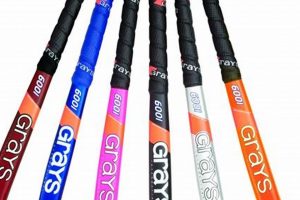
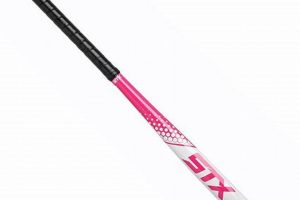
Equipment specifically designed for off-ice hockey play is crucial for simulating on-ice conditions and skill development. These implements are typically constructed with materials capable of withstanding the abrasive surfaces encountered on asphalt or concrete, offering increased durability compared to standard ice hockey equivalents. As an illustration, composite or ABS blades paired with aluminum or fiberglass shafts are common choices.
Utilizing appropriate equipment enhances player performance, reduces the risk of damage to standard equipment, and promotes a safer playing environment. The development of specialized equipment stems from the need to replicate the feel of ice hockey on alternative surfaces, allowing players to practice and refine their skills year-round. This contributes to improved stickhandling, shooting accuracy, and overall game readiness.
The subsequent sections will examine the key considerations when selecting equipment for off-ice hockey, including materials, construction, and performance characteristics, to aid players in making informed decisions.
Considerations for Selecting Durable Off-Ice Hockey Equipment
Choosing the right equipment for off-ice hockey is crucial for performance and longevity. Prioritize materials and construction techniques designed to withstand the rigors of abrasive surfaces.
Tip 1: Material Selection: Opt for composite or ABS blades. These materials offer enhanced abrasion resistance compared to traditional wood or fiberglass.
Tip 2: Shaft Durability: Aluminum or fiberglass shafts are recommended due to their resistance to cracking and splintering, common issues with wooden shafts under stress.
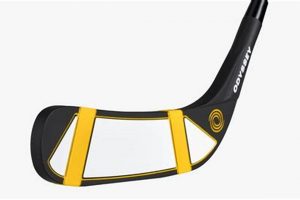
Tip 3: Blade Reinforcement: Examine the blade’s construction for added reinforcement, such as internal supports or a thicker profile, to enhance its structural integrity.
Tip 4: Grip and Handling: Consider a textured grip or overgrip tape to maintain control in varying weather conditions and during intense play.
Tip 5: Weight and Balance: Choose a weight and balance that complements individual playing style. A balanced implement promotes better control and responsiveness.
Tip 6: Length Adjustment: Ensure the equipment is the appropriate length for the player’s height and skating style. Proper length maximizes power and control.
Tip 7: Regular Maintenance: Clean the blade and shaft regularly to remove debris that can accelerate wear and tear. Inspect the equipment for signs of damage, and address any issues promptly.
Selecting off-ice hockey equipment requires careful consideration of materials and construction. Prioritizing durability and performance will ensure a longer lifespan and enhanced playing experience.
The subsequent section will provide additional insights into the care and maintenance of off-ice hockey equipment, further extending its usability.
1. Material Composition

The material composition of equipment used for off-ice hockey is a primary determinant of its suitability for the intended environment. The abrasive nature of surfaces such as asphalt or concrete necessitates materials with high abrasion resistance and impact strength. For instance, a shaft constructed from layered fiberglass and resin offers a balance of flexibility and durability, enabling it to withstand the repetitive stress of shooting and stickhandling without fracturing prematurely. Similarly, blades molded from acrylonitrile butadiene styrene (ABS) exhibit greater resistance to wear compared to traditional wood or ice hockey blade materials, prolonging the lifespan of the equipment under demanding conditions.
The correlation between material selection and product performance is evident in the longevity and functionality of off-ice implements. Selecting inadequate materials often results in rapid degradation and diminished performance. For example, using standard ice hockey blades on rough surfaces can lead to splintering and loss of structural integrity within a single game. Conversely, the integration of reinforced polymers and composite materials in off-ice designs significantly extends usability and maintains consistent performance characteristics over time. This consideration extends to the grip as well; rubberized compounds or textured polymers provide a more secure and comfortable hold, especially during extended play or in variable weather conditions.
In summary, informed selection of materials is crucial for the efficacy and lifespan of off-ice hockey equipment. Proper understanding and execution with appropriate material choices reduces replacement frequency, improves player performance, and minimizes the risk of injury due to equipment failure. Choosing the right material composition is a fundamental element of identifying and utilizing implements designed for optimal off-ice hockey performance.
2. Blade Durability

Blade durability is a paramount factor in the assessment of implements for off-ice hockey. The abrasive nature of surfaces such as asphalt and concrete subjects the blade to considerable wear and tear, making durability a critical determinant of the equipment’s lifespan and performance.
- Material Composition and Abrasion Resistance
The selection of blade materials directly correlates with its ability to withstand abrasion. Blades constructed from high-density polymers, such as ABS (Acrylonitrile Butadiene Styrene), exhibit superior abrasion resistance compared to traditional wood or composite materials commonly used in ice hockey. The inclusion of reinforcing agents, such as fiberglass or carbon fiber, can further enhance the blade’s resistance to surface degradation. For example, a blade composed of a reinforced ABS polymer will demonstrate significantly less wear over time compared to a standard wooden blade when subjected to similar playing conditions.
- Structural Integrity and Impact Resistance
Blade durability also encompasses its ability to withstand impacts and maintain structural integrity. Off-ice hockey often involves collisions with obstacles or other players, which can exert significant stress on the blade. Blades designed for off-ice use incorporate internal reinforcing structures, such as ribs or cross-bracing, to distribute impact forces and prevent cracking or breakage. An example includes a blade with a reinforced heel and toe, which are particularly vulnerable to damage from repeated impacts against hard surfaces.
- Blade Profile and Thickness
The profile and thickness of the blade contribute to its overall durability. A thicker blade profile provides greater material mass, increasing its resistance to wear and tear. Additionally, a well-designed blade profile optimizes weight distribution and enhances stiffness, reducing the likelihood of deformation or breakage under stress. For example, a blade with a slightly curved profile and increased thickness in the high-wear areas can offer improved longevity compared to a thinner, flatter blade.
- Bonding and Adhesion
The method by which the blade is bonded to the shaft is another critical aspect of its durability. A secure and robust bond prevents the blade from separating from the shaft during play, which can compromise performance and pose a safety hazard. Manufacturers employ various bonding techniques, such as epoxy resins or mechanical fasteners, to ensure a strong and durable connection. For instance, a blade secured to the shaft with a high-strength epoxy resin and reinforced with rivets will exhibit greater resistance to separation than a blade that is simply glued in place.
In conclusion, blade durability is a multifaceted attribute that encompasses material composition, structural integrity, blade profile, and bonding strength. Equipment intended for off-ice hockey requires careful consideration of these factors to ensure optimal performance and longevity. The selection of components with enhanced abrasion resistance, robust construction, and secure bonding mechanisms will contribute to a more durable and reliable playing experience.
3. Shaft Strength
The structural integrity of the shaft is a fundamental attribute determining the overall performance and longevity of implements used for off-ice hockey. The ability of the shaft to withstand repetitive stress and impact forces directly influences power transfer, shot accuracy, and equipment durability.
- Material Composition and Resistance to Flex
The material composition of the shaft significantly impacts its strength and resistance to flex. Shafts constructed from fiberglass, aluminum alloys, or composite materials, such as carbon fiber, offer varying degrees of stiffness and impact resistance. For instance, a shaft made of woven carbon fiber exhibits a high strength-to-weight ratio, allowing for efficient energy transfer during shooting while minimizing weight. An aluminum alloy shaft, while heavier, provides enhanced resistance to bending and deformation, making it suitable for players who prioritize durability. The choice of material should align with the player’s style and playing environment.
- Shaft Geometry and Stress Distribution
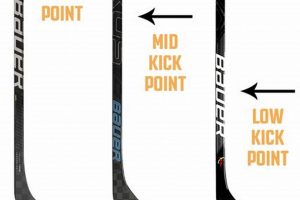
The geometric design of the shaft affects stress distribution and resistance to breakage. Shafts with rounded or elliptical cross-sections tend to distribute stress more evenly than those with sharp edges, reducing the likelihood of stress concentrations and fatigue failures. Furthermore, the taper of the shaft, or its gradual narrowing towards the blade, influences the flex point and overall stiffness. A shaft with a low taper point will flex closer to the blade, facilitating quicker releases, while a high taper point will provide a stiffer feel and more power on slap shots. The geometry should be selected based on individual playing style and preferred shot type.
- Impact Resistance and Fracture Toughness
Impact resistance and fracture toughness are critical properties for shafts used in off-ice hockey, where collisions with hard surfaces and other players are common. Shafts manufactured with impact-modified polymers or reinforced with internal bracing exhibit improved resistance to cracking and shattering upon impact. For example, a shaft with a layered construction consisting of a fiberglass core surrounded by a carbon fiber wrap will offer a balance of stiffness and impact resistance, allowing it to withstand repeated collisions without catastrophic failure. This feature is particularly important for players who engage in aggressive play or frequently encounter physical contact.
- Grip Enhancement and Control
While not directly related to shaft strength, the grip texture and material contribute to overall control and power transfer. A textured grip or overgrip tape provides a secure and comfortable hold, preventing slippage during shots and stickhandling. The grip material should also be durable and resistant to abrasion, as it is subjected to constant friction during play. For instance, a grip made of a high-friction rubber compound will enhance control and power transfer, enabling the player to maintain a firm grip even in wet or slippery conditions.
The interplay of material composition, geometric design, impact resistance, and grip enhancement collectively determines the suitability for off-ice hockey. Selecting implements with shafts designed to withstand the rigors of abrasive surfaces and high-impact play ensures optimal performance, durability, and player safety. The appropriate combination of these elements depends on individual playing style, preferred shot type, and the specific conditions of the playing environment.
4. Grip Quality

The interface between a player and their implement is crucial in off-ice hockey. The quality of this interface, commonly referred to as grip, significantly impacts control, power transmission, and overall performance. In the context of implements designed for play on abrasive surfaces, grip assumes an even greater level of importance due to the increased demands of puck handling and shooting under variable conditions.
- Material Composition and Tactile Feedback
The materials used in the grip directly influence the tactile feedback received by the player. Rubber compounds, textured polymers, and specialized grip tapes each offer a unique feel that can impact control and responsiveness. A high-quality grip material should provide a balance of tackiness and comfort, allowing for a secure hold without causing discomfort or slippage, even with prolonged use or in damp conditions. For example, a grip constructed from a dual-density rubber compound may offer superior shock absorption and enhanced grip compared to a standard plastic grip.
- Texture and Slip Resistance
The texture of the grip surface plays a crucial role in preventing slippage, particularly in environments where moisture or debris may compromise grip integrity. Textured grips, featuring patterns such as ridges, grooves, or knurling, increase the surface area and frictional force between the hand and the implement. This is particularly important in off-ice hockey, where surfaces like asphalt can accumulate dust and dirt. A grip with a deep, aggressive texture will provide a more secure hold and enhance control compared to a smooth or lightly textured grip.
- Durability and Resistance to Wear
The grip must withstand the rigors of frequent use and exposure to abrasive surfaces. High-quality grips are constructed from durable materials that resist tearing, cracking, and degradation over time. The grip should also be resistant to the absorption of sweat and other fluids, which can compromise its integrity and reduce its effectiveness. For instance, a grip made from a cross-linked polymer will exhibit greater resistance to wear and tear compared to a standard rubber grip, extending its lifespan and maintaining its performance characteristics.
- Grip Thickness and Ergonomics
The thickness and shape of the grip contribute to its overall ergonomics and comfort. A grip that is too thin may cause hand fatigue and reduce control, while a grip that is too thick may be difficult to grasp and manipulate effectively. A properly designed grip should conform to the natural contours of the hand, providing a comfortable and secure hold that minimizes strain and maximizes control. Ergonomic grips often feature subtle contours and varying thicknesses to accommodate different hand sizes and playing styles.
Considering all these facets, a superior grip represents a critical element in equipment tailored for off-ice hockey. By optimizing material selection, texture, durability, and ergonomics, a high-quality grip ensures enhanced control, power transmission, and overall performance, directly contributing to an improved playing experience.
5. Weight Balance
Weight balance, in the context of implements designed for off-ice hockey, refers to the distribution of mass along the longitudinal axis. This distribution directly impacts handling, puck control, and shooting accuracy, thereby influencing the overall performance of the equipment. A balanced implement allows for fluid movements and efficient energy transfer, crucial for maximizing on-surface performance.
- Center of Gravity and Responsiveness
The center of gravity dictates the responsiveness of the implement. A centrally located center of gravity promotes quick stick handling and maneuverability, allowing for rapid changes in direction. Conversely, a implement with a weight bias towards the blade may enhance shot power but compromise agility. Selecting the optimal center of gravity depends on the player’s preferred playing style and position.
- Swing Weight and Fatigue Reduction
Swing weight, a measure of how heavy an object feels when swung, directly impacts player fatigue. A high swing weight requires greater exertion to control, leading to increased fatigue over extended periods. Optimizing weight distribution to minimize swing weight allows for more efficient movements and reduced muscle strain, enabling players to maintain performance throughout the duration of play. For instance, a lightweight shaft paired with a balanced blade reduces swing weight, minimizing fatigue.
- Blade-to-Shaft Weight Ratio and Puck Feel
The relative weight of the blade compared to the shaft influences puck feel and control. A heavier blade provides enhanced puck feel and stability during stick handling, while a lighter blade allows for quicker reactions and faster puck movement. The optimal blade-to-shaft weight ratio depends on individual preferences and playing style; some players may prioritize puck feel, while others may prefer agility and speed.
- Overall Weight and Balance Point Customization
The overall weight of the implement and its balance point can be customized through the addition of weights or adjustments to grip placement. Players can fine-tune the balance point to optimize performance based on their individual preferences and playing style. For example, adding weight to the butt end shifts the balance point towards the hands, enhancing control and reducing swing weight. The ability to customize weight and balance allows players to personalize their equipment for maximum effectiveness.
In summary, optimizing weight balance is crucial for maximizing the performance of off-ice hockey equipment. A well-balanced implement enhances handling, reduces fatigue, and improves overall playability. Adjusting the center of gravity, swing weight, blade-to-shaft weight ratio, and overall weight allows players to fine-tune their equipment to suit their individual preferences and playing style, ultimately leading to enhanced on-surface performance.
6. Length suitability
Appropriate equipment dimensions are paramount to performance and safety in off-ice hockey. Implements that do not conform to a player’s physical stature and playing style can impede skill development and increase the risk of injury. The following outlines the critical aspects of length suitability in relation to implements used on abrasive surfaces.
- Impact on Stickhandling and Puck Control
Equipment length dictates the ease with which a player can manipulate the puck. An implement that is too long can hinder close-quarters stickhandling and limit maneuverability in confined spaces. Conversely, an implement that is too short may require excessive bending at the waist, leading to discomfort and reduced control. Properly sized equipment facilitates a comfortable and efficient stickhandling posture, enabling precise puck control and quick reactions. The length is determined by standing the implement up straight, touching the nose, not higher than the brow and not lower than the adam’s apple. However the final decision depends on the position the player is in.
- Influence on Shooting Mechanics and Power Transfer
Length directly impacts the mechanics of shooting. An implement of appropriate length allows for optimal leverage and power transfer during shots. When too long, the player may struggle to generate sufficient force and maintain accuracy. Too short may compromise shot trajectory and velocity. Proper length allows for a full range of motion and efficient power transfer, resulting in more accurate and forceful shots.
- Effect on Skating Posture and Balance
The length of equipment influences a player’s skating posture and balance. Equipment that is improperly sized can disrupt the natural skating stride and compromise stability. Too long, the player may feel unstable, resulting in diminished agility and increased risk of falls. Equipment that is appropriately sized promotes a balanced and athletic stance, facilitating efficient skating and enhanced stability.
- Relationship to Player Height and Skill Level
Equipment length should correlate with player height and skill level. Younger or less experienced players may benefit from shorter implements that are easier to control and maneuver. More experienced players may prefer slightly longer implements that provide enhanced reach and power. Selecting equipment that matches the player’s physical attributes and skill level promotes optimal performance and skill development. Experimentation may be required to find the most suitable length.
In summation, length suitability is a critical determinant of performance and safety in off-ice hockey. Selecting implements of appropriate dimensions ensures optimal stickhandling, shooting mechanics, skating posture, and overall playability, ultimately enhancing the player’s skill development and enjoyment of the game.
7. Surface compatibility

Implements designed for off-ice hockey must exhibit surface compatibility to function effectively and endure the stresses inherent to abrasive playing environments. The interaction between the blade material and the playing surface asphalt, concrete, or other similar materials dictates wear rates, puck handling characteristics, and overall equipment longevity. Incompatibility manifests as accelerated degradation, reduced puck control due to altered friction coefficients, and ultimately, compromised player performance. Equipment intended for ice surfaces, for instance, degrades rapidly when used on asphalt, resulting in splintering, cracking, and a significant reduction in playability. ABS (Acrylonitrile Butadiene Styrene) blades designed for these abrasive environments represent a significant improvement due to their higher abrasion resistance.
The surface compatibility of an implement’s blade material directly influences puck handling performance. A blade material with appropriate friction characteristics allows for predictable puck movement, enabling accurate passing and shooting. A blade that is too sticky will hinder puck release, while a blade that is too slippery will result in a loss of control. Manufacturers address surface compatibility by engineering blade materials with specific friction coefficients tailored for common off-ice surfaces. For example, certain blade coatings incorporate additives designed to reduce friction and enhance puck glide on rough surfaces, improving overall puck handling capabilities.
In conclusion, surface compatibility is an indispensable attribute of implements intended for off-ice hockey. Proper material selection and design considerations ensure equipment longevity, optimize puck handling characteristics, and promote consistent player performance. Neglecting surface compatibility results in premature equipment failure and diminished playability, underscoring the importance of selecting implements specifically engineered for the intended playing surface. The practical significance of this understanding enables informed purchasing decisions, maximizing equipment lifespan and enhancing the off-ice hockey experience.
Frequently Asked Questions
The following addresses common inquiries regarding equipment designed for off-ice hockey, specifically emphasizing durability and performance considerations.
Question 1: What distinguishes equipment intended for off-ice play from that used on ice surfaces?
Off-ice implements are typically constructed with materials exhibiting greater abrasion resistance to withstand the rigors of asphalt or concrete surfaces. Blades often consist of ABS or reinforced polymers, while shafts may utilize aluminum or fiberglass composites.
Question 2: How often should equipment used for off-ice hockey be replaced?
Replacement frequency is contingent upon usage intensity, playing surface abrasiveness, and maintenance practices. Visual inspection for cracks, splintering, or significant wear is recommended prior to each use. Performance degradation necessitates prompt replacement.
Question 3: Are all surface types equally abrasive to equipment?
No. Asphalt generally presents a higher level of abrasiveness compared to smoother concrete or specialized sport court surfaces. Surface selection influences the rate of wear and tear on equipment.
Question 4: Can conventional ice hockey equipment be utilized for off-ice play?
While possible, the practice is discouraged due to the accelerated wear and potential damage to equipment not designed for abrasive surfaces. The lifespan of ice hockey equipment will be substantially reduced when used on asphalt or concrete.
Question 5: What role does grip quality play in off-ice hockey performance?
A high-quality grip enhances control and minimizes slippage, especially in variable weather conditions. Textured surfaces or specialized grip tapes improve handling precision and power transfer during shots.
Question 6: Is equipment length a critical factor for off-ice play?
Yes. Proper length ensures optimal stickhandling, shooting mechanics, and skating posture. Equipment that is too long or too short can impede performance and increase the risk of injury.
Selecting appropriate equipment for off-ice hockey requires careful consideration of material composition, construction techniques, and individual playing style. Prioritizing durability and performance ensures a longer lifespan and enhanced playing experience.
The subsequent section will delve into the proper care and maintenance procedures for off-ice hockey equipment, further extending its usability and performance.
Conclusion
This article has explored the critical attributes of implements designed for off-ice hockey, with a specific focus on the selection of durable and performance-oriented equipment. Key considerations include material composition, blade durability, shaft strength, grip quality, weight balance, length suitability, and surface compatibility. Addressing these elements directly contributes to enhanced player performance, equipment longevity, and a safer playing environment.
Selecting equipment tailored to the demands of off-ice surfaces is an investment in skill development and long-term performance. By prioritizing informed purchasing decisions and adhering to proper maintenance protocols, players can maximize the utility of their equipment and fully realize the benefits of off-ice training. Continued advancement in materials science and design promises further improvements in the durability and performance of these implements, fostering greater accessibility and engagement within the sport.