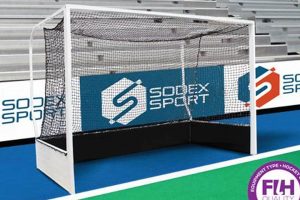
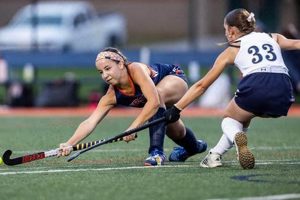
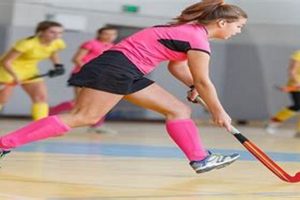
Structured exercises designed to enhance specific skills related to the sport constitute a core component of player development. These activities are crafted to improve a player’s abilities in areas such as dribbling, passing, shooting, and defensive positioning. A practical example might involve a cone-based agility exercise to refine footwork and stick handling under pressure.
These targeted activities are fundamental for enhancing individual technique and team coordination. Their strategic implementation in training regimes provides notable benefits, including improved player proficiency, enhanced game performance, and injury prevention. Historically, these exercises have evolved alongside the sport, adapting to changes in tactics and equipment to optimize athlete development.
The following sections will examine various categories of structured activities, exploring their specific objectives, execution methods, and adaptation strategies for different skill levels and team requirements. Furthermore, it will discuss optimal integration into training programs for maximum effectiveness.
Optimizing Performance
The following recommendations provide a structured approach to maximize the effectiveness of focused training activities, enhancing player development and overall team performance.
Tip 1: Prioritize Fundamental Skill Development. Establish a solid base in core techniques such as passing accuracy, receiving proficiency, and basic defensive positioning. Before introducing advanced maneuvers, ensure players demonstrate mastery of foundational elements. For instance, consistent short passing accuracy should precede the introduction of complex aerial passes.
Tip 2: Integrate Game-Realistic Scenarios. Design activities that simulate the pressures and conditions encountered during matches. Include elements such as defensive pressure, time constraints, and spatial limitations. A 3v2 drill in the attacking third, focusing on quick passing and decisive shooting, effectively mirrors game-like situations.
Tip 3: Emphasize Progressive Overload. Gradually increase the difficulty and intensity of activities to challenge players and promote continuous improvement. Begin with simplified variations and systematically introduce additional complexities, such as increased speed, reduced space, or enhanced defensive pressure. A progression from stationary passing to passing on the move, then to passing under defensive pressure, exemplifies this approach.
Tip 4: Provide Specific and Constructive Feedback. Offer targeted evaluations of player performance, highlighting areas for improvement and reinforcing positive actions. Focus on objective observations and actionable suggestions rather than generalized praise. Instead of saying “good job,” specify “the weight and accuracy of that pass created a scoring opportunity.”
Tip 5: Vary Activities to Maintain Engagement. Implement a diverse range of exercises to prevent monotony and stimulate player interest. Incorporate different formats, such as small-sided games, circuit training, and skill-specific drills, to address multiple aspects of player development. A varied approach ensures sustained motivation and prevents plateaus in performance.
Tip 6: Focus on Conditioning Integration: Build physical fitness elements into the exercise routines to promote endurance and strength development. Integrate shuttle runs, interval sprints, and plyometric movements during exercises to maximize physical conditioning.
Strategic application of these guidelines can significantly improve skill acquisition, tactical awareness, and physical conditioning within a team environment. Consistent implementation and careful monitoring of progress are crucial for optimizing player development.
The subsequent sections will delve deeper into specific exercise types and their application within a comprehensive training framework.
1. Skill Refinement

Skill refinement, in the context of field hockey, represents the iterative process of improving fundamental and advanced techniques. Structured exercises are the primary mechanism for this development, allowing players to focus on specific aspects of their game and gradually enhance proficiency.
- Technical Execution
This facet encompasses the precise performance of core skills, such as passing, receiving, dribbling, and shooting. exercises designed to improve technical execution typically involve repetitive practice of specific movements, focusing on accuracy, control, and consistency. An example would be repetitive short passing exercises to improve precision and control.
- Motor Skill Development
Motor skill development addresses the physical coordination and muscle memory required for fluid and efficient movements. Exercises targeting this area often incorporate agility drills, footwork exercises, and stick-handling routines that challenge players to execute skills with speed and precision. For instance, cone drills focused on quick changes of direction develop agility and coordination.
- Decision-Making Under Pressure
Refining skills also involves improving the ability to make quick and effective decisions in dynamic game situations. Exercises simulating game-like pressure, such as 2v1 or 3v2 scenarios, force players to assess options, anticipate movements, and execute skills under time constraints. This may involve exercises wherein an attacker makes decisions based on defensive positions.
- Consistency and Adaptability
The ultimate goal of skill refinement is to achieve consistent performance across a variety of conditions and game situations. exercises should incorporate variations in speed, terrain, and defensive pressure to challenge players’ adaptability and ensure that skills are transferable to the competitive environment. Exercises that alter the distance of the pass and level of pressure from opponents can lead to improvement.
Collectively, these facets of skill refinement are intrinsically linked to effective exercises. Through consistent and targeted practice, players can significantly enhance their technical proficiency, motor skills, decision-making abilities, and overall consistency, leading to improved performance in field hockey matches.
2. Tactical Application
Tactical application, within the context of field hockey, denotes the strategic deployment of learned skills and coordinated movements to achieve specific objectives during gameplay. The linkage to structured activities lies in the deliberate design of exercises that mirror in-game scenarios, fostering an understanding of how individual and team skills translate into effective tactical execution. For instance, a drill focused on defensive pressing patterns directly teaches players how to apply pressure in specific zones of the field, thereby inhibiting opponent progress and creating turnover opportunities. Without such focused activities, theoretical knowledge of tactics remains abstract, lacking the practical context necessary for successful implementation. A team may understand the concept of a “high press,” but the activities will equip them with the practical skills and cooperative behavior required to execute it effectively.
A further illustration involves exercises designed to improve attacking transitions. These activities might simulate regaining possession in the defensive third and quickly transitioning the ball into the attacking half with coordinated passing and player movement. The effectiveness of such exercises depends on their ability to replicate the speed, pressure, and spatial dynamics encountered during actual gameplay. For example, varying the starting positions of players within the exercise, or introducing constraints on the number of touches allowed, forces players to adapt their decision-making and tactical responses in real-time. Furthermore, structured activities are crucial in refining set-piece routines, such as penalty corners and free hits. These activities offer a controlled environment to practice specific plays and refine the timing and execution of pre-determined movements.
In summary, tactical application relies heavily on the strategic design and implementation of structured activities. These activities bridge the gap between theoretical knowledge and practical execution, enabling players to translate skills into effective tactical maneuvers. The challenge lies in creating activities that accurately simulate the complexities of gameplay, thereby fostering adaptability and improving decision-making under pressure. Ultimately, successful integration of tactical application into training regimes is essential for maximizing team performance and achieving competitive success.
3. Physical conditioning

Physical conditioning is integral to field hockey performance, representing the development of physiological attributes necessary for enduring the demands of the sport. Structured activities are strategically designed to enhance these specific attributes, optimizing a player’s capacity to perform effectively throughout a match.
- Aerobic Endurance
Aerobic endurance refers to the cardiovascular system’s capacity to sustain prolonged activity. Exercises that improve aerobic endurance in field hockey often involve continuous running at varying intensities, simulating the constant movement required during a game. Shuttle runs and interval sprints integrated into ball control activities serve as practical examples, enhancing a player’s ability to maintain pace and decision-making quality over extended periods. Diminished aerobic endurance can lead to reduced performance in later stages of a match.
- Anaerobic Power
Anaerobic power is the ability to generate high-intensity bursts of energy for short durations. Structured activities targeting anaerobic power include short sprints, plyometric jumps, and resistance training. A specific exercise might involve repeated 20-meter sprints with minimal rest, mimicking the bursts of speed needed for attacking runs or defensive recoveries. Insufficient anaerobic power can impede a player’s ability to accelerate quickly or engage in intense physical contests.
- Muscular Strength and Endurance
Muscular strength and endurance are essential for maintaining stability, executing powerful shots, and enduring physical contact. exercises to improve these attributes typically involve weightlifting, resistance band training, and bodyweight exercises. Squats, lunges, and core strengthening activities are common examples, enhancing a player’s capacity to withstand physical challenges and maintain shooting power throughout a game. Weak muscular strength and endurance can increase the risk of injury.
- Flexibility and Mobility
Flexibility and mobility enhance range of motion, reduce the risk of injury, and improve overall athletic performance. Exercises targeting these aspects include static and dynamic stretching, yoga, and foam rolling. Stretching exercises integrated into warm-up and cool-down routines help maintain muscle elasticity and joint mobility, optimizing movement efficiency and reducing the likelihood of strains or sprains. Limited flexibility and mobility can restrict movement patterns and increase susceptibility to injury.
Collectively, these facets of physical conditioning are fundamentally enhanced through strategically designed exercises. The effectiveness of these exercises depends on their ability to replicate the specific demands of field hockey, ensuring that players develop the physiological attributes required for optimal performance and injury prevention. A well-designed physical conditioning regime integrated within structured exercises enables players to maintain intensity, power, and agility throughout the duration of a match.
4. Team coordination
Team coordination, in field hockey, is inextricably linked to structured activities. These planned exercises are not merely about individual skill enhancement; they serve as the primary mechanism for developing cohesive unit movements and synchronized tactical execution. The activities establish patterns of play, enabling players to anticipate teammates’ actions and react accordingly. Without these designed opportunities to practice cooperative maneuvers, team coordination remains theoretical, lacking the practical foundation for consistent implementation during matches. A practical demonstration of this principle can be seen through penalty corner activities. These exercises specifically train players in the coordinated movements required for an effective set play. The precision in passing, screening, and shooting, all synchronized through repeated activity, directly impacts the success rate of these crucial scoring opportunities.
Further analysis reveals the significance of targeted exercise in fostering positional awareness and supporting runs. Through designed scenarios, players learn to anticipate their teammates’ movements, thereby optimizing spacing and creating passing lanes. For example, activities focused on attacking transitions, involve coordinated runs by midfielders and forwards, aiming to exploit defensive vulnerabilities. The repeated practice of these movements reinforces the importance of timing, spacing, and communication, which are all critical for successful attacking play. Similarly, defensive exercises emphasize coordinated pressing and tracking, ensuring that players work as a unit to regain possession and disrupt the opponent’s attack. Without these structured repetitions, defensive formations become vulnerable to exploitation.
In conclusion, team coordination is significantly influenced by deliberately structured activities. These exercises facilitate the development of synchronized movements, tactical understanding, and positional awareness, all essential components of a high-performing field hockey team. The effectiveness of team coordination activities is directly related to the accuracy and realism of the exercise designs. Therefore, the capacity to create simulations that effectively replicate game demands is crucial to translate enhanced team coordination into tangible match results. Addressing the challenges in activity design and promoting the strategic integration of team coordination exercises are vital steps toward improving overall team performance and competitiveness.
5. Performance analysis

Performance analysis serves as a critical feedback loop in the design and execution of effective field hockey exercises. The systematic collection and evaluation of data derived from drill performance provide actionable insights for optimizing training protocols and maximizing player development. This analytical approach transcends subjective observations, offering objective metrics to gauge the efficacy of specific exercises and their impact on skill acquisition. For example, video analysis of a passing exercise can reveal patterns of inaccurate passes, allowing coaches to identify technical deficiencies or communication breakdowns that necessitate targeted adjustments to the activity. This data-driven approach ensures that activities are continuously refined to meet the specific needs of the players and align with strategic objectives.
The practical application of performance analysis extends beyond individual skill assessment. By analyzing team performance within structured activities, coaches can identify systemic weaknesses in tactical execution and adjust exercises to address those deficiencies. For instance, analysis of a defensive pressure exercise may reveal a lack of coordinated movement, prompting modifications to the activity to emphasize communication and positional awareness. In addition, performance data informs the selection and progression of exercises, ensuring that players are challenged appropriately to promote continuous improvement. The detailed information gleaned from performance analysis also aids in talent identification and player evaluation, providing objective criteria for assessing potential and guiding personnel decisions. Therefore, structured exercises are essential in developing players.
In summary, performance analysis is an indispensable component of the structured exercises and the training process. The iterative process of data collection, analysis, and activity modification ensures that activities remain aligned with strategic goals, contributing to enhanced individual skill, improved team coordination, and optimized performance outcomes. The integration of performance analysis within exercise design necessitates a commitment to objective assessment and data-driven decision-making, which ultimately contributes to competitive advantage and sustained success in field hockey. One primary challenge, however, is to implement tools to conduct such assessment during drill activity. Another aspect is using these tools to produce actionable improvement goals for the individuals or the collective.
Frequently Asked Questions
The following questions address common inquiries regarding the nature, implementation, and efficacy of structured exercises used in field hockey training.
Question 1: What constitutes an effective field hockey drill?
An effective structured activity is characterized by clear objectives, relevance to game scenarios, progressive difficulty, and measurable outcomes. The structured activity should directly address specific skills or tactical concepts, simulate game conditions, provide opportunities for repetition, and allow for objective evaluation of performance.
Question 2: How frequently should particular exercises be incorporated into a training schedule?
The frequency of a structured activity’s incorporation depends on the developmental stage of the players and the specific objectives of the training program. Fundamental skills should be reinforced regularly, while advanced tactical concepts may require less frequent but more focused attention. Periodic variation in exercise selection is recommended to prevent plateaus and maintain player engagement.
Question 3: What role does equipment play in the execution of structured activities?
Appropriate equipment is essential for the safe and effective execution of exercises. Cones, targets, and protective gear contribute to structuring the activity, defining boundaries, and minimizing the risk of injury. The selection and utilization of equipment should be carefully considered to align with the objectives of the exercise.
Question 4: How can structured activities be adapted to accommodate varying skill levels?
Exercises can be adapted by adjusting the complexity, intensity, and constraints. Novice players may benefit from simplified variations with reduced pressure and increased time, while advanced players can be challenged with more complex scenarios, reduced space, and increased defensive pressure. Progressive overload is essential for continuous improvement.
Question 5: What are common pitfalls to avoid when designing and implementing exercises?
Common pitfalls include a lack of clear objectives, insufficient relevance to game situations, inadequate progression, and a failure to provide constructive feedback. Exercise design should be grounded in sound pedagogical principles, and implementation should be carefully monitored to ensure optimal player development.
Question 6: How does performance analysis contribute to the effectiveness of exercises?
Performance analysis provides objective data for evaluating the efficacy of exercises and identifying areas for improvement. Video analysis, statistical tracking, and player feedback can inform modifications to exercise design and implementation, leading to enhanced skill acquisition and tactical understanding.
Structured activities, when strategically designed and implemented, are a cornerstone of field hockey development.
The subsequent section will explore strategies for evaluating the long-term impact of structured activities on player performance.
Conclusion
This exploration has underscored the fundamental role that structured activities play in the sport. Effective implementation of these activities requires careful consideration of skill development, tactical application, physical conditioning, team coordination, and performance analysis. The strategic integration of these elements ensures optimal player and team advancement.
The future of field hockey development hinges on a continued commitment to refining structured training methodologies. Coaches and players alike should prioritize objective evaluation, data-driven decision-making, and a relentless pursuit of innovation to maximize the potential of these practices and achieve sustained competitive success.
![Hingham Field Hockey: [Your Area]'s Premier Team Guide | Your Ultimate Source for Hockey Updates, Training Guides, and Equipment Recommendations](https://ssachockey.com/wp-content/uploads/2026/05/th-1-300x200.jpg "Hingham Field Hockey: [Your Area]'s Premier Team Guide Your Ultimate Source for Hockey Updates, Training Guides, and Equipment Recommendations")