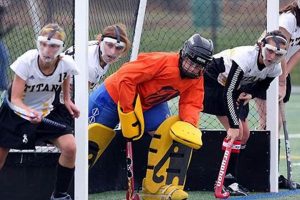
The regulations governing play within a confined space, typically a gymnasium or similar indoor area, differ in several key aspects from the outdoor version of the sport. These stipulations address modifications to field dimensions, the use of sideboards, and alterations to permitted equipment, contributing to a faster-paced and more technically demanding game. For example, the prohibition of raising the ball except in designated shooting circles encourages ground-based passing and intricate dribbling skills.
Adherence to these specific guidelines ensures player safety within the smaller playing area and promotes a distinct style of play emphasizing close control and tactical awareness. Historically, the adaptation of the sport for indoor environments has broadened its accessibility, allowing for year-round play regardless of external weather conditions. This has fostered the development of exceptional stick skills and strategic thinking amongst participants.
The subsequent sections will delve into the specific dimensions and equipment requirements, elaborate on gameplay distinctions such as permitted stick angles and penalty corner procedures, and outline the unique regulations concerning player conduct and officiating within the indoor format.
Strategic Insights for Indoor Play
This section provides critical tactical and technical recommendations derived from the formal framework of indoor play, designed to enhance performance and understanding of the nuanced game.
Tip 1: Master Low Passes: The restricted ball elevation mandates precision passing along the ground. Practice delivering firm, accurate passes that minimize bounce and allow for swift ball control by teammates.
Tip 2: Emphasize Close Control: Confined spaces necessitate exceptional stick handling. Develop the ability to maintain possession in tight situations through constant adjustments and subtle movements of the stick.
Tip 3: Exploit Sideboards Strategically: Utilize the boards for passes and rebounds, understanding their predictable angles. This technique provides opportunities for quick changes in direction and unanticipated attacks.
Tip 4: Refine First-Time Finishing: The pace of play requires rapid shot execution. Hone the skill of shooting accurately with minimal preparation, capitalizing on fleeting scoring chances.
Tip 5: Prioritize Defensive Positioning: With limited space, defensive discipline is paramount. Maintain a compact formation and anticipate opponent movements to intercept passes and thwart attacks.
Tip 6: Optimize Penalty Corner Execution: The indoor penalty corner differs significantly from its outdoor counterpart. Develop specialized routines that exploit the reduced area and emphasize quick, deceptive plays.
Tip 7: Enhance Agility and Reflexes: The accelerated tempo of play demands quick reactions and nimble footwork. Incorporate drills that improve agility, coordination, and response time.
Implementing these strategies, which are deeply rooted in the stipulations governing play, will contribute significantly to enhanced tactical proficiency and overall gameplay effectiveness.
The subsequent section will address frequently asked questions regarding common interpretations and practical applications of these guidelines within competitive settings.
1. Surface Material

The playing surface within an indoor field hockey setting exerts a considerable influence on gameplay, necessitating specific adaptations within the established framework. Its characteristics directly affect ball behavior, player movement, and ultimately, the strategic approaches employed.
- Friction Coefficient and Ball Speed
Indoor surfaces, commonly constructed from wood or synthetic materials, present a lower friction coefficient compared to natural grass. This reduced friction translates to faster ball speeds during passing and shooting. Consequently, rules regarding stickwork and ball control are paramount to maintain accuracy and prevent uncontrolled play. The faster pace necessitates quicker reaction times and more precise passing techniques, impacting the overall flow of the game.
- Ball Bounce and Trajectory
The hardness and uniformity of indoor surfaces dictate the ball’s bounce characteristics. Unlike the irregular bounces encountered on outdoor fields, indoor surfaces provide consistent and predictable ball trajectories. This predictability allows for the implementation of rules that emphasize ground-based play, such as restrictions on lifting the ball except in designated shooting areas. The regulated bounce promotes intricate passing patterns and close-quarters dribbling skills.
- Player Traction and Mobility
The grip afforded by the surface material affects player traction and agility. Indoor surfaces typically offer a reliable grip, enabling players to execute rapid changes in direction and maintain balance during intense maneuvers. This enhanced mobility necessitates rules that address physical contact and dangerous play, ensuring player safety in the confined space. The improved traction also supports the implementation of advanced techniques, such as drag-flicking, with greater precision.
- Maintenance and Play Consistency
The relative ease of maintaining indoor surfaces ensures a consistent playing experience regardless of external weather conditions. This consistency allows for the standardization of rules and gameplay strategies. Furthermore, the predictability of the surface facilitates the development of specialized skills tailored to indoor play, such as utilizing the sideboards for passing and rebounding. Regular maintenance is essential to preserve these characteristics and uphold the integrity of the sport.
The characteristics of the indoor playing surface are intrinsically linked to the sport’s regulatory framework. These regulations, in turn, shape the technical and tactical dimensions of the game, emphasizing skill, precision, and strategic adaptation. The surface, therefore, is not merely a background element but an active agent that molds the dynamics of indoor field hockey.
2. Stick Regulations

The specification of stick dimensions, weight, and material composition constitutes a critical component of the regulatory framework governing indoor field hockey. These stipulations are not arbitrary; rather, they are directly linked to player safety within the confined indoor environment and the preservation of the technical characteristics that distinguish the indoor variant of the sport. For example, limits on stick weight and the specification of materials (typically wood or composite) mitigate the risk of injury resulting from accidental contact during close-quarters play. The permitted curvature of the stick’s head is also strictly regulated to ensure fair striking techniques and to prevent dangerous or overly aggressive ball control tactics.
The implementation of stick regulations directly influences the style of play. By mandating specific weight and balance parameters, the regulations promote the development of quick, skillful ball manipulation. The restrictions on head curvature, for instance, promote ground passing and discourage the elevation of the ball, except within designated shooting areas. A notable example of this influence can be seen in the increased emphasis on drag-flicking, a technique where the ball is propelled along the ground, as opposed to hitting it with a high trajectory. Furthermore, regular equipment checks by officials enforce adherence to these stipulations, ensuring a level playing field and deterring illegal modifications that might provide an unfair advantage.
Failure to comply with stick regulations results in penalties, underscoring their importance within the broader framework. These penalties can range from warnings to temporary suspensions, reinforcing the commitment to player safety and fair competition. While challenges persist in ensuring uniform enforcement across all levels of play, the consistent application of these stipulations remains crucial for upholding the integrity of indoor field hockey and fostering a safe and technically demanding sporting environment.
3. Ball Elevation
The control of ball height is a fundamental aspect governed by indoor field hockey regulations, significantly shaping gameplay and tactical approaches. Restrictions on raising the ball, outside designated shooting zones, dictate a distinct ground-based style of play, differentiating it from the outdoor version.
- Restricted Play Zones
Outside of the shooting circle, intentional elevation of the ball is generally prohibited. This restriction promotes ground passing, close control, and intricate dribbling skills. A player who intentionally lifts the ball outside the permitted zone commits a foul, resulting in a free hit for the opposing team. The location of the foul dictates the placement of the free hit, further emphasizing the importance of tactical awareness and precise execution within these zones.
- Permitted Elevation in Shooting Circles
Within the designated shooting circle, players are permitted to raise the ball with the intent of scoring a goal. However, even within this zone, safety regulations apply. The trajectory of the elevated shot must not pose an undue risk to opposing players. Shots deemed excessively high or dangerous can result in penalties, even if a goal is scored. This balance between attacking freedom and player safety defines the parameters of permitted ball elevation within the scoring area.
- Accidental Elevation and Interpretation
Not all instances of a raised ball constitute a foul. Accidental elevation, such as when the ball deflects off another players stick or foot, is often permitted, provided it does not create a dangerous situation. Umpires exercise judgment in these situations, assessing the intent of the player and the potential risk involved. Consistency in interpretation is crucial for maintaining fairness and flow within the game. This aspect highlights the nuanced nature of applying these stipulations.
- Impact on Tactical Strategies
The limitations on ball elevation profoundly influence tactical strategies employed in indoor field hockey. Teams prioritize ground passing patterns, utilizing quick, short passes to advance the ball. Dribbling skills, particularly close control and deceptive movements, become paramount for maintaining possession. Aerial balls are reserved primarily for scoring opportunities within the shooting circle, requiring precise execution and tactical awareness. This regulatory constraint fosters a unique style of play characterized by technical finesse and strategic precision.
The regulations governing ball elevation in indoor field hockey serve to promote a safe, skillful, and strategically rich game. By limiting aerial play outside designated zones, the rules emphasize ground-based passing and close control, fostering a distinct style of play that differentiates it from its outdoor counterpart. The nuanced interpretation and tactical implications of these guidelines are essential for players, coaches, and officials alike to fully appreciate the intricacies of the sport.
4. Penalty Corners

Within indoor field hockey, penalty corners represent a significant scoring opportunity, governed by a specific set of stipulations that deviate substantially from outdoor regulations. These alterations are necessitated by the reduced playing area and the presence of sideboards, influencing both tactical approaches and execution techniques.
- Positioning of Defenders
Unlike outdoor field hockey, the number of defenders permitted on the goal line during an indoor penalty corner is typically restricted to four, including the goalkeeper. This limitation creates increased space for attacking players and necessitates precise defensive positioning to cover potential scoring angles. Teams often deploy strategic formations, such as a diamond or a line, to maximize coverage and intercept incoming shots.
- Initial Outlet Options
The initial pass from the injector must travel outside the shooting circle before a shot on goal can be taken. This stipulation prevents direct shots from close range and encourages the development of intricate passing sequences. Teams often employ various outlet options, including passes to the top of the circle, deflections, or quick switches to create optimal shooting opportunities.
- Shooting Restrictions
While the elevation of the ball is generally restricted in indoor field hockey, shots on goal during a penalty corner are an exception. However, shots deemed dangerous, either through excessive height or reckless execution, can result in penalties. This regulation necessitates precise shooting technique and tactical awareness to balance attacking intent with player safety. Low, powerful shots along the ground are frequently favored due to their increased accuracy and reduced risk.
- Duration and Subsequent Play
In some rule variations, the penalty corner continues until the ball exits the circle, a goal is scored, or the defending team gains possession and carries the ball beyond the circle. This extended duration places a premium on defensive endurance and tactical adaptability. Furthermore, the positioning and movement of players after the initial shot or pass are crucial for maintaining attacking pressure or transitioning into defensive counterattacks.
The aforementioned facets underscore the intricate relationship between penalty corners and the comprehensive framework governing indoor field hockey. These modifications, born from the spatial constraints and unique characteristics of the indoor game, demand specialized training, tactical acumen, and a thorough understanding of the stipulated guidelines to maximize effectiveness and ensure fair competition.
5. Sideboard Usage

The strategic application of sideboards constitutes a distinctive element within the framework of indoor field hockey, fundamentally altering the dynamics of play and requiring specialized tactical adaptations from participants. These solid barriers, defining the boundaries of the playing area, introduce a unique set of opportunities and challenges that are explicitly addressed within the sport’s regulations.
- Deflections and Rebounds
The sideboards serve as dynamic surfaces for deflections and rebounds, permitting players to redirect the ball off the wall to circumvent opponents or create unexpected passing lanes. Such actions must adhere to stipulations regarding intentionality and safety; deliberate use of the boards to injure or endanger other participants is strictly prohibited. The predictable angle of reflection, governed by physical laws, allows for pre-calculated passes, adding a layer of strategic complexity. For example, a player trapped along the sideline may opt to bank the ball off the board to a teammate in a more advantageous position, rather than attempting a contested pass through opposing defenders.
- Creating Space and Avoiding Pressure
Players can strategically utilize the sideboards to create space and alleviate pressure from opposing defenders. Bouncing the ball off the wall and then retrieving it allows a player to evade a direct tackle or to gain a momentary advantage in positioning. However, repeated or excessive reliance on this tactic without demonstrable intent to advance play can be interpreted as stalling, potentially incurring a penalty. The ability to effectively leverage the boards for spatial manipulation requires exceptional stick skills and anticipatory awareness.
- Tactical Plays and Set Pieces
The sideboards can be incorporated into pre-designed tactical plays, particularly during set-piece situations. In penalty corner routines, for instance, players may use the boards to initiate deceptive passes or to create deflections that confound the defensive formation. These specialized plays necessitate precise timing and coordinated execution, reflecting the importance of team communication and strategic planning. The utilization of the boards in such scenarios adds an element of unpredictability and tactical ingenuity to the game.
- Boundary Management and Possession Retention
The sideboards effectively eliminate traditional out-of-bounds situations, enabling continuous play and minimizing stoppages. This characteristic places a premium on maintaining possession within the confined area. Players must develop the ability to control the ball in close proximity to the boards and to anticipate the trajectory of rebounds. Failure to adapt to this aspect of the game can lead to turnovers and a loss of territorial advantage. The regulations emphasize maintaining a reasonable distance from the boards when challenging for the ball, reducing the risk of collisions and injuries.
These integrated facets emphasize how sideboard usage, governed by the sport’s formal framework, influences tactical innovation and the development of specialized skill sets within indoor field hockey. The judicious application of the boards fosters a dynamic and technically demanding environment, distinguishing the indoor variant from its outdoor counterpart. This underscores the integral role that these structural components play in shaping the competitive landscape.
Frequently Asked Questions
This section addresses common inquiries regarding the application and interpretation of guidelines within the indoor version of the sport. The information provided aims to clarify potential ambiguities and enhance understanding of key regulations.
Question 1: What are the standard dimensions of an indoor field hockey pitch?
The generally accepted size for an indoor field hockey playing area is between 18 to 22 meters in width and 36 to 44 meters in length. These dimensions are subject to minor variations depending on available space and facility limitations.
Question 2: Is it permissible to lift the ball at any time during gameplay?
No, elevation of the ball is restricted, with exceptions only within the designated shooting circle when attempting to score. Raising the ball outside of this area typically results in a penalty, awarding a free hit to the opposing team.
Question 3: How many players constitute a standard indoor field hockey team?
A standard team comprises six players, including the goalkeeper. Substitutions are generally permitted throughout the match, following established procedures outlined in the official regulations.
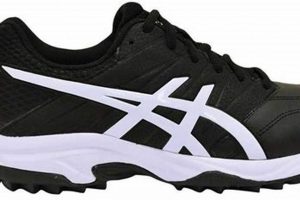
Question 4: Are there specific regulations regarding footwear for indoor play?
Yes, players are required to wear non-marking indoor sports shoes to protect the playing surface and ensure adequate grip. The use of outdoor cleats or shoes with aggressive treads is prohibited.
Question 5: What is the procedure for a penalty corner in indoor field hockey?
The procedure differs slightly from outdoor regulations. The attacking team is awarded a penalty corner when a foul is committed by a defender inside the shooting circle or for an intentional foul by a defender within the 25-yard area. A limited number of defenders are positioned on the goal line, and the ball must be passed outside the circle before a shot can be taken.
Question 6: How are the sideboards used during gameplay, and are there any restrictions?
The sideboards are integral to indoor play, allowing for deflections and rebounds. Players can utilize the boards to pass the ball or create space. However, intentional and dangerous use of the boards to injure or impede opponents is prohibited and will result in penalties.
In summary, a comprehensive understanding of these regulations, encompassing pitch dimensions, ball elevation restrictions, team composition, footwear requirements, penalty corner procedures, and sideboard utilization, is essential for successful participation in indoor field hockey.
The subsequent section will provide a glossary of commonly used terms within the context of this sport.
Conclusion
This exposition has detailed key aspects of “indoor field hockey rules”, encompassing modifications to dimensions, equipment, and gameplay. Emphasis has been placed on the restrictions on ball elevation, the strategic use of sideboards, and the specific adaptations required for penalty corner situations. These distinct regulations define the technical and tactical nuances of the sport.
A continued commitment to understanding and adhering to these established “indoor field hockey rules” is paramount for ensuring fair competition, promoting player safety, and fostering the ongoing development of this dynamic and technically demanding sport. Consistent application of these stipulations remains crucial for upholding the integrity of indoor field hockey and its continued growth.