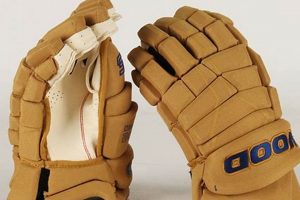
Protective handwear specifically designed for young ice hockey players. This equipment safeguards hands and wrists from impacts with pucks, sticks, and the ice surface during play. Typically constructed from durable materials like nylon and synthetic leather, these items feature padding for shock absorption and a secure fit for optimal dexterity.
Appropriate hand protection contributes significantly to a child’s safety and confidence on the ice. It reduces the risk of injuries that could hinder development and enjoyment of the sport. Historically, the evolution of this equipment has mirrored advancements in materials science and an increasing awareness of player safety in youth sports.
The following sections will address the key factors in selecting the right size and fit, understanding the different types available, and proper maintenance procedures to ensure longevity and continued protection for young athletes.
Selection and Care Guidance
Properly chosen and maintained hand protection is crucial for young hockey players. The following guidance assists in ensuring optimal safety and performance.
Tip 1: Size Appropriately. Accurate sizing is paramount. Measure the player’s hand from the base of the palm to the tip of the longest finger, then consult sizing charts specific to the manufacturer and model. Overly large handwear compromises control; undersized handwear restricts movement and offers insufficient protection.
Tip 2: Prioritize Fit. The fit should be snug but not constricting. The player should be able to comfortably grip a hockey stick without excessive movement within the handwear. Ensure there is no pinching or binding in the wrist or fingers.
Tip 3: Evaluate Padding. Examine the density and placement of padding, particularly in high-impact areas such as the back of the hand and fingers. Dense foam padding is generally preferable for enhanced protection.
Tip 4: Inspect Palm Material. The palm material should provide a balance of durability and grip. Leather or synthetic leather palms offer good feel for the stick, while reinforced areas enhance wear resistance.
Tip 5: Ensure Wrist Protection. Adequate wrist protection is essential to prevent hyperextension injuries. Look for models with extended cuffs that offer substantial coverage without impeding movement.
Tip 6: Maintain Hygiene. Regular cleaning minimizes odor and bacterial growth. Air dry thoroughly after each use. Periodically wipe down the interior with a mild disinfectant solution.
Tip 7: Inspect Regularly for Damage. Routinely check for tears, worn padding, and loose stitching. Damaged handwear should be repaired or replaced immediately to maintain protective integrity.
Adherence to these guidelines ensures that young players receive adequate protection, promoting safety and extending the lifespan of the equipment.
The final section of this article summarizes key considerations and reinforces the importance of investing in quality protective equipment for young hockey players.
1. Protection

In the context of equipment for young ice hockey players, the primary function of handwear is to provide essential protective measures against injuries sustained during gameplay. This consideration guides design, material selection, and overall construction.
- Impact Absorption
The capability to dissipate kinetic energy from collisions with pucks, sticks, and the ice surface is paramount. High-density foam padding, strategically placed in key impact zones such as the back of the hand and fingers, attenuates force and minimizes the risk of contusions, fractures, and lacerations. Without effective impact absorption, young players are vulnerable to potentially debilitating injuries.
- Abrasion Resistance
The outer shell must withstand repetitive contact with abrasive surfaces. Durable materials like nylon and synthetic leather provide a protective barrier against cuts and abrasions resulting from falls or collisions with other players. Inadequate abrasion resistance can lead to premature wear and tear, compromising the structural integrity of the equipment.
- Wrist Support
The wrist joint is particularly susceptible to hyperextension injuries. Extended cuffs provide stabilization and limit the range of motion during impacts, reducing the risk of sprains and strains. Insufficient wrist support can lead to chronic pain and impaired mobility, potentially affecting a player’s long-term participation in the sport.
- Thumb Protection
The thumb is vulnerable to dislocation and fractures. Reinforced thumb loops and additional padding offer crucial protection against hyper-extension and direct impact from pucks or sticks. Without this safeguard, young players are exposed to significant risk of thumb injuries that can limit their ability to hold the stick properly and affect performance and confidence on the ice.
These protective facets are integrated into the design of handwear to minimize the risk of injury. Prioritizing adequate protection allows young athletes to participate with greater confidence, enhancing their overall experience and fostering long-term engagement with the sport.
2. Fit

The concept of “fit,” when applied to protective handwear for young ice hockey players, transcends mere comfort. It directly correlates with safety, performance, and the prevention of injury, influencing a player’s ability to effectively participate in the sport.
- Hand and Finger Mobility
A properly fitted pair allows for a full range of motion in the fingers and wrist. Restriction hinders stick handling, shooting, and overall control of the puck. Conversely, excessive looseness reduces the protective value and can lead to slippage during critical moments. For example, a child struggling to grip the stick due to an ill-fitting item may be unable to execute a timely pass or defend effectively.
- Secure Wrist Closure
The wrist closure system must secure the hand within the item without constricting blood flow or limiting mobility. Adjustable straps or elasticized cuffs are common features designed to achieve this balance. An insecure closure can expose the wrist to injury during falls or collisions, while an overly tight closure can cause discomfort and fatigue.
- Palm Contact and Grip
The material and construction of the palm influence the player’s ability to maintain a secure grip on the stick. An optimal fit ensures consistent contact between the hand and the stick, maximizing control and minimizing slippage. A loose or poorly contoured palm can compromise grip strength and increase the risk of turnovers.
- Overall Comfort and Feel
While secondary to safety, comfort contributes to a player’s confidence and focus on the ice. Ill-fitting equipment can cause distractions and discomfort, detracting from performance. A well-fitted pair should feel natural and allow the player to concentrate on the game rather than the equipment itself.
These facets of fit highlight the importance of careful selection and sizing. A product that meets these criteria offers superior protection, enhances performance, and promotes a positive experience for young hockey players, ultimately fostering a safer and more enjoyable environment on the ice.
3. Durability
The lifespan and protective capabilities of equipment directly correlate with material resilience and construction integrity. Premature failure due to wear or damage can compromise a player’s safety and necessitate frequent replacement, resulting in increased costs and potential performance limitations.
- Material Composition
The constituent materials significantly influence the overall robustness. High-denier nylons, reinforced synthetic leathers, and impact-resistant foams exhibit superior resistance to abrasion, tearing, and compression. Substandard materials are prone to degradation, leading to reduced protective effectiveness and premature failure. For example, items constructed with low-grade fabrics may exhibit seam failure after minimal use, rendering them unsuitable for continued play.
- Seam Construction
The method of seam attachment directly impacts the structural integrity. Reinforced stitching, such as double or triple stitching, provides enhanced resistance to stress and prevents seam separation during rigorous activity. Inadequate seam construction creates weak points that are susceptible to tearing or unraveling, compromising the overall durability and protective capability.
- Palm Reinforcement
The palm, which experiences constant friction with the stick, requires reinforcement to withstand wear. Additional layers of durable material, such as leather or synthetic overlays, prolong the lifespan of the palm and maintain grip integrity. Absence of adequate palm reinforcement can result in rapid wear and tear, leading to reduced stick control and increased risk of blistering or discomfort.
- Impact Padding Integrity
The ability of padding to maintain its protective properties over time is essential. High-density foams that resist compression and retain their shape after repeated impacts provide consistent protection. Low-quality padding that compresses permanently loses its shock-absorbing capabilities, leaving the player vulnerable to injuries.
These interconnected aspects of durability underscore the importance of investing in quality equipment. A product that exhibits superior material composition, robust seam construction, reinforced palms, and resilient padding ensures long-lasting protection and minimizes the risk of premature failure, safeguarding young players and providing a return on investment through extended use.
4. Dexterity

In the context of protective handwear designed for young ice hockey players, dexterity represents a critical performance parameter. A design that prioritizes protection at the expense of manual agility can impede a player’s ability to effectively control the stick, manipulate the puck, and execute fundamental skills.
- Finger Sensitivity and Tactile Feedback
The thickness and material properties of the palm and finger gussets directly influence a player’s ability to “feel” the stick and the puck. Excessive padding or bulky materials can dampen tactile feedback, reducing sensitivity and hindering precise stick handling. Conversely, inadequate padding exposes the hands to injury. A balance must be struck to provide sufficient protection without compromising the sensory input required for optimal performance.
- Grip Control and Stick Handling
The palm material and its texture significantly impact the ability to maintain a secure grip on the stick. Slippage reduces control and increases the likelihood of turnovers. Engineered materials with enhanced grip characteristics, coupled with ergonomic designs that conform to the natural contours of the hand, promote a confident and responsive grip. However, an overly aggressive grip texture can cause friction and discomfort, particularly during prolonged use.
- Wrist Mobility and Range of Motion
The design of the wrist cuff directly influences the player’s ability to flex and extend the wrist, which is essential for shooting, passing, and puck handling. A restrictive cuff can limit range of motion and reduce power and accuracy. Conversely, an overly loose cuff offers inadequate wrist protection. A properly designed cuff provides a balance of support and flexibility, allowing for a full range of motion while minimizing the risk of injury.
- Overall Hand Freedom and Responsiveness
The cumulative effect of these factors determines the overall freedom and responsiveness. Restrictive equipment can cause fatigue and reduce a player’s ability to react quickly and efficiently. Lightweight materials, articulated designs, and strategically placed flex zones enhance agility and responsiveness, allowing young players to develop their skills and participate fully in the game. The ultimate goal is to provide protective handwear that feels like a natural extension of the hand, rather than an encumbrance.
In summary, dexterity is not merely a matter of comfort, but a crucial performance and safety factor. Protective handwear that prioritizes dexterity enhances a player’s ability to control the stick, manipulate the puck, and react quickly on the ice, fostering skill development and reducing the risk of injury. The selection of suitable protective equipment necessitates a careful evaluation of these factors to ensure optimal performance and safety for young hockey players.
5. Maintenance

The maintenance of protective handwear directly influences its longevity, hygiene, and continued effectiveness in mitigating injury risks for young hockey players. Neglecting regular maintenance leads to the degradation of materials, the accumulation of bacteria, and a reduction in protective capabilities, ultimately increasing the likelihood of hand injuries. For instance, sweat and moisture absorbed during play can degrade padding and stitching over time. This weakens the structure and diminishes its ability to absorb impact, potentially leading to contusions or fractures. Without regular upkeep, the equipment becomes a less effective barrier against harm.
Proper maintenance protocols encompass several key actions. Thoroughly drying the equipment after each use prevents the proliferation of bacteria and mildew, minimizing odor and skin irritation. Periodically wiping down the interior with a mild disinfectant solution further reduces bacterial load. Inspection for tears, worn padding, and loose stitching allows for timely repairs or replacement before a critical failure occurs. An example of practical application lies in regularly checking the palm for wear; a compromised palm reduces grip and increases the chances of a stick-handling error, possibly resulting in a collision and subsequent hand injury.
Therefore, proactive maintenance is not merely cosmetic; it is a fundamental aspect of ensuring the ongoing safety and performance of handwear. Overlooking this responsibility results in diminished protection, increased risk of injury, and accelerated equipment degradation. By prioritizing regular cleaning, inspection, and repair, parents and coaches can contribute significantly to the well-being of young hockey players and maximize the value of their investment in protective gear.
6. Sizing

In protective handwear for young ice hockey players, “sizing” is not a mere dimensional specification; it represents a critical factor directly influencing safety, performance, and injury prevention. Incorrect sizing negates the intended protective function, rendering the equipment ineffective and potentially exacerbating the risk of harm. Consider a scenario where a child wears gloves that are excessively large. The hand may slip within the glove during impact, causing instability and increasing the likelihood of wrist sprains or fractures. Conversely, overly tight gloves restrict blood flow, impede dexterity, and limit the range of motion, compromising stick handling and increasing fatigue. Sizing charts, based on hand measurements from the base of the palm to the fingertip, serve as initial guides, but individual fit must be assessed to ensure proper functionality. The significance of sizing therefore becomes a fundamental aspect in the selection of equipment, underpinning every other consideration from protection to player development.
The practical application of understanding appropriate sizing extends beyond initial purchase. Regular monitoring of a child’s hand growth is crucial, as equipment that fit adequately at the start of a season may become too small and restrictive as the player grows. Furthermore, different manufacturers employ varying sizing standards. Consulting sizing charts is essential, but a physical fitting provides the most reliable assessment of proper fit. Observe the player’s grip on the stick. Can they maintain a firm hold without excessive movement of the hand within the glove? Are there any pressure points or areas of discomfort? These observations provide valuable feedback on the suitability of the size and model. Retailers specializing in hockey equipment are best positioned to offer expert guidance and ensure proper fitting, mitigating potential risks associated with incorrect sizing.
Effective sizing presents ongoing challenges, particularly with growing athletes and inconsistent manufacturing standards. However, the benefits of addressing these challenges are significant. Prioritizing correct sizing minimizes injury risk, optimizes performance, and enhances player comfort, ultimately fostering a safer and more enjoyable experience on the ice. As a foundational element of protective gear, sizing underscores the importance of careful selection and informed decision-making when equipping young hockey players. The goal must be to furnish hand protection that is both effective and comfortable, contributing to the long-term development and well-being of the athlete.
7. Safety

Protective handwear for young hockey players functions primarily to mitigate the risk of hand and wrist injuries. The inherent dangers of ice hockey, including high-speed pucks, forceful collisions with sticks, and falls onto the ice, necessitate specialized equipment designed to absorb impact and prevent lacerations, fractures, and sprains. A direct correlation exists between the quality and proper fit of such equipment and the incidence of injuries. Substandard or ill-fitting items provide inadequate protection, increasing vulnerability to harm. The design and construction of this equipment must prioritize impact absorption, abrasion resistance, and secure fit to effectively safeguard the wearer. The safety element is paramount; without adequate protection, participation in ice hockey carries a significant risk of debilitating injuries that can hinder long-term athletic development.
The selection process should consider independent testing and certification standards. Organizations such as the Hockey Equipment Certification Council (HECC) establish minimum performance criteria for protective equipment, including handwear. Adherence to these standards ensures that equipment has undergone rigorous testing and meets established benchmarks for impact resistance and structural integrity. Parents and coaches bear a responsibility to verify compliance with relevant safety standards before purchasing equipment. Furthermore, proper maintenance is crucial. Damaged or worn handwear loses its protective capabilities and should be repaired or replaced promptly. Regular inspection for tears, loose stitching, and compromised padding is essential to maintaining the equipment’s effectiveness.
Ultimately, the integration of safety considerations into every aspect of protective handwear from design and manufacturing to selection and maintenance is paramount. While no equipment can eliminate the risk of injury entirely, high-quality, properly fitted, and well-maintained handwear significantly reduces the likelihood and severity of hand and wrist injuries in young hockey players. Prioritizing safety fosters a more positive and sustainable environment for athletic participation, allowing young athletes to develop their skills and enjoy the sport without undue risk of harm. Investing in quality equipment demonstrates a commitment to the well-being of young players and sets a precedent for safe practices throughout their athletic careers.
Frequently Asked Questions About Children’s Hockey Gloves
The following section addresses common inquiries concerning the selection, use, and maintenance of protective handwear for young ice hockey players.
Question 1: How critical is it to select equipment specifically designed for children?
The use of age-appropriate equipment is essential. Adult-sized handwear does not conform properly to smaller hands, reducing dexterity and compromising protection. Equipment designed for children provides a more secure and comfortable fit, optimizing safety and performance.
Question 2: What are the key features to look for when purchasing protective gear?
Priority should be given to padding density and coverage, particularly on the back of the hand, fingers, and wrist. Seam construction should be robust, and the palm material should provide a secure grip. Wrist cuffs should offer adequate support without restricting movement.
Question 3: How often should handwear be replaced?
Replacement frequency depends on usage and wear. Regular inspection for tears, worn padding, and loose stitching is essential. Any equipment exhibiting significant damage should be replaced immediately to maintain protective integrity.
Question 4: How should protective equipment be cleaned and stored?
Handwear should be air-dried thoroughly after each use to prevent bacterial growth. Periodically wipe down the interior with a mild disinfectant solution. Store in a well-ventilated area, away from direct sunlight and extreme temperatures.
Question 5: Can handwear be modified to improve fit or performance?
Modifications are generally discouraged, as they can compromise the structural integrity and protective capabilities. Consult a qualified equipment specialist for advice on proper fit and adjustments that do not diminish safety.
Question 6: Are there specific certifications or standards that indicate quality and safety?
Look for equipment that meets standards established by organizations such as the Hockey Equipment Certification Council (HECC). Certification indicates that the equipment has undergone testing and meets minimum performance criteria for impact resistance.
These questions represent a distillation of common concerns regarding the safety and suitability of this important piece of equipment. Making informed decisions based on this guidance can positively influence the playing experience for young athletes.
The subsequent discussion will present a concise summary encompassing the essential considerations surrounding this topic.
Conclusion
This exposition has examined the critical features and considerations surrounding children’s hockey gloves. The discussion has emphasized the importance of prioritizing safety, ensuring a proper fit, and maintaining the equipment to maximize its protective capabilities. The interplay between protection, dexterity, durability, and hygiene directly impacts the well-being and performance of young athletes engaged in ice hockey.
Ultimately, investing in high-quality children’s hockey gloves and adhering to recommended guidelines is a prudent measure to safeguard the health and development of young players. Continued vigilance in equipment selection and maintenance remains essential to fostering a safer and more rewarding environment for youth participation in the sport.