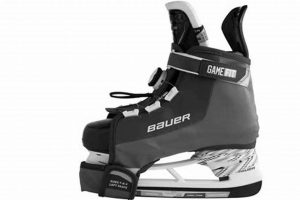
The assertion that skates used in hockey are simpler to learn than those employed in figure skating reflects a common perception. This stems primarily from the differing blade designs. Hockey skates possess a shorter, more curved blade facilitating quick turns and acceleration, while figure skates feature a longer, flatter blade with a toe pick used for jumps and spins. The stability afforded by the hockey blade, combined with the lower boot cut providing increased ankle mobility, often leads to a faster initial learning curve for forward skating and basic maneuvers.
The perceived ease of use for hockey skates is beneficial for individuals primarily interested in speed and team play. The focus on rapid movement and puck control allows beginners to engage in gameplay relatively quickly. Historically, hockey skates prioritized functionality and durability, emphasizing performance over intricate movements. This design philosophy contrasts with figure skates, which are engineered to enable a wider range of artistic and technically demanding elements.
Therefore, a comprehensive analysis necessitates considering factors beyond initial usability. The following discussion will delve into the specific differences in blade design, boot construction, and skill requirements to determine whether hockey or figure skates ultimately present a greater challenge to master.
For individuals contemplating ice skating, understanding the nuances between hockey and figure skates can streamline the learning process. Several key considerations influence the initial experience and long-term skill development.
Tip 1: Prioritize Ankle Support. Hockey skates typically offer less rigid ankle support compared to figure skates. Beginners may benefit from strengthening ankle muscles through off-ice exercises to compensate and improve stability.
Tip 2: Familiarize with Blade Geometry. The shorter, more curved blade of a hockey skate facilitates tighter turns. Practice basic forward strides and turns on a flat surface to acclimatize to the responsiveness.
Tip 3: Understand Braking Techniques. Unlike figure skates, hockey skates do not have a toe pick. Mastering the T-stop, a braking technique involving placing one skate perpendicular to the other, is crucial for controlling speed.
Tip 4: Focus on Balance and Posture. Maintaining a low center of gravity with a slight bend in the knees is essential for both skate types. However, the increased maneuverability of hockey skates necessitates greater core engagement to maintain balance during rapid movements.
Tip 5: Progress Gradually. Avoid attempting advanced maneuvers before mastering fundamental skills. Consistent practice and a focus on proper technique will accelerate progress and reduce the risk of injury.
Tip 6: Consider Professional Guidance. Enrolling in introductory lessons with a qualified instructor can provide personalized feedback and ensure correct technique from the outset. This is especially valuable in mitigating bad habits that can hinder long-term development.
Mastering either hockey or figure skates requires dedication and consistent effort. Understanding the specific characteristics of each skate type and focusing on fundamental skills will enable individuals to achieve their desired level of proficiency.
The following sections will examine the equipment variations and specific training methodologies associated with hockey and figure skating to further illuminate the distinctions between these disciplines.
1. Blade Curvature

Blade curvature, specifically the radius of hollow (ROH) and the overall rocker profile, is a primary factor influencing the perception that hockey skates offer a less complex initial experience than figure skates. A shallower ROH, common in many hockey skates, creates a larger contact surface with the ice. This increased surface area provides greater stability, making it easier for beginners to maintain balance during forward strides and simple turns. In contrast, figure skates often have a deeper ROH, reducing the contact patch and enhancing maneuverability for intricate edge work, but demanding greater balance control from the skater. A more pronounced rocker, present in hockey blades, facilitates quicker turns and acceleration but can feel less stable for straight-line skating when first learning.
The practical significance of this difference is evident when observing beginners. A novice on hockey skates can often achieve basic forward motion and stopping within a short period. This rapid progress stems from the inherent stability afforded by the blade’s curvature. Conversely, a beginner on figure skates may struggle with balance and edge control, requiring more practice to master the fundamentals. Consider a hockey player learning to skate for the first time; the blade design allows them to quickly participate in drills and gameplay. A figure skater, however, must first develop a solid foundation in edge control before progressing to more complex maneuvers like jumps or spins.
Understanding the impact of blade curvature is crucial for selecting the appropriate skate for a given discipline and skill level. While the shallower ROH and more pronounced rocker of a typical hockey blade may contribute to a faster initial learning curve for basic skating skills, it also necessitates adapting to a different feel compared to figure skates. The enhanced stability comes at the cost of edge control refinement. Choosing the correct blade configuration, therefore, is a key consideration in determining the level of difficulty and the path to mastering skating techniques.
2. Ankle Support

Ankle support plays a significant role in the perceived difficulty between hockey and figure skates. The degree of support directly impacts stability, maneuverability, and the physical demands placed on the skater’s lower extremities.
- Boot Stiffness and Initial Stability
Figure skates typically feature stiffer boots, providing a higher level of ankle support. This rigidity assists novice skaters in maintaining balance and controlling edges, which is critical for fundamental skating techniques. The increased stability reduces the risk of ankle roll and provides a more secure platform for learning basic maneuvers. In contrast, hockey skates generally offer greater flexibility in the ankle, allowing for a wider range of motion and agility. While this enhances maneuverability for experienced skaters, it can present a challenge for beginners who lack the necessary ankle strength and control.
- Range of Motion and Agility
The reduced ankle support in hockey skates facilitates greater range of motion, enabling quick pivots, crossovers, and rapid changes in direction. This agility is essential for gameplay and advanced skating techniques in hockey. However, this freedom of movement requires significant ankle strength and proprioception. Skaters must actively stabilize their ankles to prevent injury and maintain control. Figure skates, with their stiffer boots, restrict ankle movement, but compensate by providing inherent stability and support for complex jumps and spins that demand precise control over the blade.
- Muscle Engagement and Development
The contrasting levels of ankle support necessitate different muscle engagement patterns. Hockey skates demand greater activation of ankle stabilizing muscles, such as the peroneals and tibialis anterior, to compensate for the lack of external support. This increased muscle engagement can lead to faster development of ankle strength and stability over time. Figure skates, while offering greater initial support, may result in less active engagement of these muscles. Therefore, figure skaters often incorporate specific exercises to strengthen ankle stabilizers to prevent injuries and enhance control during landings and edge work.
- Impact on Learning Curve
The level of ankle support significantly influences the initial learning curve for each skate type. The greater support provided by figure skates can accelerate the development of basic skating skills, such as forward strides and backward skating. Beginners may feel more secure and confident on figure skates due to the inherent stability. However, the reduced ankle support in hockey skates encourages the development of active stabilization skills, which can be advantageous in the long term. While it may take longer to achieve initial proficiency, the enhanced ankle strength and control gained through skating in hockey skates can ultimately lead to greater agility and adaptability on the ice.
The relationship between ankle support and the perceived difficulty of hockey versus figure skates is multifaceted. While figure skates offer greater initial stability, potentially easing the initial learning phase, hockey skates foster the development of crucial ankle strength and control that are essential for long-term performance. The optimal choice depends on the skater’s goals, physical capabilities, and preferred skating style.
3. Maneuverability Needs
The agility demands inherent in hockey and figure skating significantly contribute to the differing perceptions of difficulty between the two disciplines. The design and functionality of each skate type are intrinsically linked to the specific maneuvers required, thereby influencing the learning curve and skill ceiling for each sport.
- Blade Length and Turning Radius
Hockey skates, characterized by shorter blades with a more pronounced rocker, facilitate tighter turning radii crucial for rapid changes in direction during gameplay. This design prioritizes agility and responsiveness. Figure skates, with their longer, flatter blades, offer increased stability and edge control for executing complex patterns and jumps, but necessitate a wider turning radius. The agility afforded by hockey skates often leads to a perception of easier initial maneuverability, as beginners can readily navigate basic turns and stops.
- Boot Flexibility and Ankle Mobility
Hockey skate boots are typically more flexible than figure skate boots, allowing for greater ankle mobility. This increased range of motion enables hockey players to execute quick crossovers, pivots, and changes in stride. The stiffer boots of figure skates provide enhanced ankle support, essential for maintaining balance during intricate jumps and spins. The flexibility of hockey skate boots, while enhancing agility, also demands greater ankle strength and control, potentially posing a challenge for novice skaters.
- Edge Work and Control
Figure skating emphasizes precise edge work and control for executing complex maneuvers, such as spirals, turns, and jumps. The longer, flatter blade and stiffer boot provide the necessary stability and support for maintaining clean edges and executing controlled movements. Hockey skating, while also requiring edge control, prioritizes speed and agility over precision. The shorter, more curved blade allows for quicker changes in direction and more aggressive edge work, but may sacrifice some of the finesse and control required in figure skating.
- Center of Gravity and Balance
The maneuverability needs of each discipline also influence optimal center of gravity and balance. Hockey players typically maintain a lower center of gravity, with a more pronounced knee bend, to enhance stability and agility during gameplay. Figure skaters, on the other hand, often maintain a more upright posture, particularly during jumps and spins, to optimize balance and control. The dynamic balance required in hockey skating, with its constant changes in direction and speed, differs significantly from the static balance demanded in figure skating elements, such as spirals and spins.
In conclusion, the maneuverability requirements of hockey and figure skating dictate the design and functionality of each skate type. The emphasis on agility and responsiveness in hockey skates can lead to a perception of easier initial maneuverability. However, the precise edge control, stability, and balance demanded in figure skating present a different set of challenges. Ultimately, the relative difficulty depends on the specific skills being evaluated and the skater’s aptitude and training.
4. Balance requirements
Balance requirements constitute a critical element in assessing the relative ease of hockey versus figure skates. The differing blade designs and boot structures necessitate distinct balance strategies. Hockey skates, with their shorter blades and greater rocker, demand dynamic balance. This is because the reduced contact area with the ice requires constant adjustments to maintain stability, particularly during rapid turns and changes in direction. Conversely, figure skates, with their longer, flatter blades, afford a greater degree of static balance. The extended blade surface provides a more stable platform, allowing for controlled movements and intricate maneuvers. The heightened initial stability offered by figure skates can lead to the perception that they are easier to balance on, at least for basic forward skating. However, figure skating’s advanced elements, such as single-leg spins and jumps, necessitate a significantly higher level of static and dynamic balance, demanding years of dedicated practice. A hockey player might quickly learn to skate forward and stop, but maintaining balance while executing a complex spin on a figure skate requires substantial training.
The distribution of weight and posture also influences balance requirements. Hockey players typically maintain a lower center of gravity with flexed knees, which enhances stability during aggressive skating and contact. Figure skaters, especially during jumps and spins, often maintain a more upright posture, demanding precise control of body alignment to avoid losing balance. The consequences of imbalance differ as well. In hockey, a loss of balance may result in a missed opportunity or a collision. In figure skating, an imbalance during a jump landing can lead to serious injury. Therefore, the balance skills developed in each discipline are tailored to the specific demands of the sport. A beginner on hockey skates may find it relatively easy to maintain balance during basic strides, but the constant need for micro-adjustments can be fatiguing. A beginner on figure skates may struggle initially with edge control and balance, but the greater stability of the blade allows for more deliberate movements.
In summary, the perception that hockey skates are easier hinges, in part, on the lower initial balance threshold for basic skating. However, the dynamic balance demands of hockey, while distinct from the static balance requirements of figure skating, are not necessarily simpler. The overall difficulty is intrinsically linked to the level of skill and the complexity of the maneuvers attempted. While a novice may find forward skating more intuitive on hockey skates, mastering advanced figure skating elements demands a significantly higher degree of both static and dynamic balance control.
5. Intended use
The intended application of either hockey or figure skates significantly shapes the perception of their relative difficulty. The design characteristics of each skate type are optimized for specific movements and performance requirements, directly impacting the learning curve and overall skill acquisition.
- Recreational Skating
For individuals seeking casual enjoyment and basic movement on ice, hockey skates may present a more accessible initial experience. The shorter blade and increased ankle mobility often translate to easier forward skating and basic stopping maneuvers. Figure skates, with their longer blade and stiffer boot, can feel less intuitive for novice recreational skaters focused on simple gliding and exploration.
- Team Sports Participation
Hockey skates are specifically engineered for the demands of ice hockey. The design facilitates rapid acceleration, sharp turns, and quick stops necessary for gameplay. Individuals intending to participate in hockey will find that the performance characteristics of hockey skates are essential for skill development and team integration. Figure skates are unsuited for the aggressive skating and puck handling required in hockey.
- Artistic Expression and Performance
Figure skates are the unequivocal choice for artistic performance and competitive figure skating. The longer blade, toe pick, and rigid boot provide the necessary stability and control for executing complex jumps, spins, and footwork sequences. Hockey skates lack the design features required for these elements and would preclude a skater from engaging in any form of figure skating performance.
- Skill Specialization and Advancement
Individuals aspiring to achieve a high level of proficiency in either hockey or figure skating must utilize the corresponding skate type. Attempting to master the skills of one discipline with the equipment designed for another would be impractical and severely limit potential progress. The intended use, therefore, dictates the appropriate skate selection and influences the perceived difficulty based on the alignment between equipment design and performance objectives.
In essence, the “easier” skate is contingent on the intended activity. For casual skating and basic maneuvers, hockey skates may offer a quicker initial learning curve. However, for figure skating’s specialized movements or hockey’s rigorous gameplay, the respective skate types are essential, rendering direct comparisons of overall difficulty less meaningful. The congruity between the skate and its intended purpose ultimately defines the skater’s progression and perceived ease of use.
6. Stopping technique
Stopping technique presents a significant point of divergence in assessing the relative difficulty between hockey and figure skates. The absence of a toe pick on hockey skates necessitates the mastery of alternative braking methods, primarily the T-stop. This technique involves positioning one skate perpendicular to the direction of travel, creating friction and decelerating the skater. While seemingly straightforward, effective execution of the T-stop requires precise weight distribution, controlled edge pressure, and coordinated body movements. Improper technique can result in instability, loss of control, or inefficient braking. The initial learning curve for the T-stop can be steep for beginners, demanding practice to develop the necessary muscle memory and coordination. In contrast, figure skates offer the option of using the toe pick for stopping. Though not the primary braking method for advanced figure skating, the toe pick can provide a more intuitive and immediate stopping mechanism for novices. This can contribute to the perception that figure skates are easier to control initially, as the toe pick offers a readily available braking solution.
However, reliance on the toe pick for stopping can hinder the development of more sophisticated skating skills. Advanced figure skating requires controlled edge work and gradual deceleration, rather than abrupt stops. Therefore, figure skaters eventually transition to using edges for controlled stops, similar to the techniques employed in hockey skating. The challenge for figure skaters lies in mastering these edge-based stopping methods after initially relying on the toe pick. In hockey, the forced adaptation to T-stops and other edge-based braking techniques from the outset can lead to quicker development of fundamental skating skills. Consider a beginner hockey player; they must learn to T-stop effectively to participate safely in gameplay. This necessity drives rapid skill acquisition and reinforces proper technique. A figure skater, on the other hand, might delay mastering edge-based stops, potentially hindering their progress in advanced elements that require precise edge control.
The connection between stopping technique and perceived difficulty underscores the importance of considering the long-term implications of initial learning curves. While the toe pick on figure skates may provide a convenient braking solution for beginners, the mastery of edge-based stopping techniques, essential for both hockey and advanced figure skating, ultimately dictates a skater’s overall proficiency and control. The early adoption of these techniques in hockey skating can, therefore, contribute to the perception that, despite the initial challenges, hockey skates facilitate a more direct path to developing fundamental skating skills.
7. Skill Ceiling
The perceived initial ease of hockey skates compared to figure skates often overshadows the significant differences in their respective skill ceilings. While a novice may find basic forward motion and simple turns more readily achievable on hockey skates, the ultimate level of expertise attainable within figure skating surpasses that of hockey skating in terms of technical complexity and artistic expression. The skill ceiling, therefore, becomes a crucial determinant in evaluating whether hockey skates are, in a broader sense, “easier.” The cause-and-effect relationship lies in the fundamental objectives of each discipline. Hockey emphasizes speed, agility, and puck control within a dynamic team environment, whereas figure skating prioritizes precision, artistry, and the execution of technically demanding jumps, spins, and footwork sequences.
The toe loop, triple axel, and Biellmann spin serve as concrete examples of the higher technical demands present in figure skating. These maneuvers require years of dedicated training, exceptional body control, and precise edge work. While hockey players undeniably develop advanced skating skills, their expertise is primarily directed towards enhancing game performance rather than mastering intricate individual elements. A hockey player may exhibit superior speed and agility on the ice, but likely lacks the ability to execute the complex jumps and spins common in figure skating. This distinction highlights the importance of considering the skill ceiling when assessing the overall difficulty of each discipline. The practical significance of this understanding lies in setting realistic expectations and selecting the appropriate skating style based on individual goals and aspirations. A recreational skater seeking immediate gratification may find hockey skating more appealing, while an individual driven by artistic expression and technical mastery may gravitate towards figure skating.
In conclusion, while hockey skates may offer a less daunting entry point for beginners, the higher skill ceiling of figure skating presents a greater long-term challenge. This difference stems from the divergent objectives and performance demands of each discipline. The initial ease of hockey skates should not be misconstrued as an indication of overall simplicity. The true measure of difficulty lies in the commitment required to reach the highest levels of skill, and in this regard, figure skating presents a demonstrably steeper and more demanding path. Understanding this distinction is essential for making informed decisions and pursuing realistic goals within the realm of ice skating.
Frequently Asked Questions
The following questions address common misconceptions surrounding the relative difficulty of hockey and figure skates, providing clear and concise explanations based on design and skill requirements.
Question 1: Are hockey skates inherently easier to learn than figure skates?
The perception of greater ease stems primarily from the blade design. Hockey skates typically feature a shorter, more curved blade facilitating quicker turns and enhanced maneuverability, often leading to a faster initial learning curve for basic skating skills. Figure skates, conversely, possess a longer, flatter blade and a toe pick, requiring greater balance and control for initial movement.
Question 2: Do hockey skates offer better ankle support for beginners?
Generally, figure skates provide more rigid ankle support compared to hockey skates. This increased support assists novice skaters in maintaining balance and controlling edges. Hockey skates offer greater ankle flexibility, which enhances agility but necessitates greater ankle strength and stability. Therefore, while figure skates may offer a more secure feel initially, hockey skates encourage the development of critical ankle stabilizing muscles.
Question 3: Is stopping easier on hockey skates or figure skates?
Figure skates offer the option of using the toe pick for initial stopping, which some beginners may find more intuitive. However, effective and controlled stopping in both disciplines relies on edge-based techniques. Hockey skates necessitate the mastery of the T-stop and other edge-based methods from the outset, fostering quicker development of these fundamental skills. Advanced figure skating also requires edge-based stopping, eventually diminishing the reliance on the toe pick.
Question 4: Do hockey skates require more aggressive edge work than figure skates?
Hockey skates require rapid and dynamic edge work for quick turns, acceleration, and stopping during gameplay. Figure skates prioritize precise and controlled edge work for executing intricate jumps, spins, and footwork sequences. While both disciplines demand skilled edge control, the application and emphasis differ significantly.
Question 5: Is the skill ceiling higher in hockey or figure skating?
While hockey demands a high degree of skating proficiency, agility, and puck control, figure skating presents a higher skill ceiling in terms of technical complexity and artistic expression. The mastery of intricate jumps, spins, and footwork sequences in figure skating requires years of dedicated training and exceptional body control, surpassing the skill requirements of most hockey players.
Question 6: Are figure skates suitable for playing ice hockey?
Figure skates are not suitable for playing ice hockey. The blade design and boot structure are optimized for artistic performance and lack the necessary features for the rapid acceleration, sharp turns, and puck handling required in hockey. Attempting to play hockey in figure skates would be detrimental to performance and significantly increase the risk of injury.
In summary, the perception that hockey skates are “easier” is largely context-dependent and often focuses on the initial learning phase. A comprehensive assessment necessitates considering the differing skill requirements, performance objectives, and long-term developmental paths associated with each discipline.
The next section will provide resources for those seeking to learn more about either hockey or figure skating.
Distinguishing Skate Difficulty
The foregoing analysis clarifies that judging whether hockey skates are simpler than figure skates necessitates a nuanced understanding of numerous factors. Initial ease of use, primarily influenced by blade curvature and ankle support, may favor hockey skates for basic mobility. However, the long-term skill acquisition, technical demands, and performance objectives unique to each discipline dictate that neither skate type is inherently “easier” across all contexts. Figure skating’s intricate jumps and spins present a demonstrably higher technical ceiling, while hockey emphasizes dynamic agility and rapid adaptation within a team environment.
Therefore, informed decisions regarding skate selection must align with individual aspirations and intended use. Recognizing the specific challenges and demands of each skating style allows for a more realistic assessment of personal potential and fosters a greater appreciation for the distinct skills cultivated in both hockey and figure skating. Further investigation into specialized training methodologies and equipment customization is encouraged for those pursuing either discipline at an advanced level.