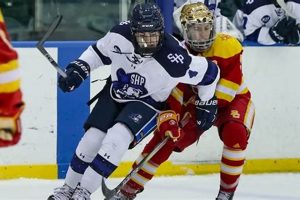
Exercises designed to improve a team’s ability to prevent the opposing team from scoring fall under the umbrella of defensive preparation. These activities focus on various aspects of preventing goals, such as positioning, stick-checking, blocking shots, and clearing the defensive zone. For instance, a drill might involve players practicing angling an opposing forward toward the boards to limit their scoring opportunity.
Effective defensive strategies are fundamental to a successful hockey team. Strong defense can minimize scoring chances for the opposition, create opportunities for counterattacks, and boost team confidence. Historically, teams with robust defensive structures have consistently performed well in league standings and championship competitions. They provide a framework for puck possession and territorial control.
The following sections will explore specific types of these defensive exercises, detailing their objectives and execution, while also considering how they integrate into a broader game strategy, improving an ice hockey team’s capabilities in the defensive zone.
Strategic Implementation of Defensive Exercises
Optimizing defensive capabilities necessitates a focused and well-structured approach to training. The following outlines several key considerations for effectively integrating defensive exercises into a hockey team’s regimen.
Tip 1: Prioritize Foundational Skills: Mastering fundamental techniques, such as proper skating posture, stick positioning, and body angling, is crucial before progressing to more complex exercises. For example, skaters should consistently practice backward skating drills and maintaining a low center of gravity to enhance balance and agility in the defensive zone.
Tip 2: Emphasize Positional Awareness: Players must understand their roles and responsibilities within the defensive structure. Practices should consistently reinforce the importance of maintaining proper positioning relative to the puck and opposing players, ensuring optimal coverage and minimizing scoring opportunities.
Tip 3: Integrate Game-Like Scenarios: Exercises should simulate realistic game situations to prepare players for the demands of actual competition. This includes incorporating puck pressure, quick transitions, and decision-making under duress, thereby improving reaction time and tactical awareness.
Tip 4: Focus on Communication: Clear and concise communication among defensive players is essential for coordinating movements and preventing breakdowns. Drills should encourage constant verbal and non-verbal communication, such as calling out assignments, identifying threats, and signaling changes in coverage.
Tip 5: Develop Puck Retrieval Skills: Efficiently retrieving loose pucks in the defensive zone is critical for transitioning to offense. Exercises should focus on developing puck pursuit skills, maintaining body position, and executing clean breakouts to initiate counterattacks.
Tip 6: Practice Shot Blocking Techniques: Disciplined shot blocking can significantly reduce the number of shots on goal. Players should be trained to effectively position themselves, use their bodies safely, and minimize rebounds, contributing to overall defensive stability.
Tip 7: Enhance Breakout Execution: Successful defensive zone exits are vital for generating offensive opportunities. Players should consistently practice various breakout strategies, including short passes, stretch passes, and controlled carry-outs, to improve puck possession and transition effectiveness.
These tips collectively serve to elevate a team’s defensive acumen. Through strategic planning, precise execution, and continuous refinement of these tactics, a team can fortify their defensive zone, minimize scoring chances, and enhance their overall competitiveness.
The concluding section will synthesize the core principles and offer concluding remarks regarding the value of well-executed defensive planning within the greater context of hockey.
1. Positioning

Positioning within defensive hockey training is fundamental to a team’s ability to limit scoring opportunities and control the defensive zone. Correct placement of players relative to the puck, opposing players, and the net is paramount to effective defense.
- Angling Techniques
Angling involves guiding the puck carrier towards the boards or away from the center of the ice. For example, a defenseman might skate parallel to an attacking forward, gradually closing the gap and directing them towards the boards. This limits the attacker’s options, decreasing the likelihood of a scoring chance. This strategy is a core element in various defensive zone exercises.
- Net-Front Presence
Maintaining a strong net-front presence is critical for preventing screens and rebounds. A defenseman positioned in front of the net should box out opposing forwards, preventing them from obstructing the goalie’s vision or capitalizing on loose pucks. Exercises often involve simulated battles for position in front of the net.
- Defensive Zone Coverage
Effective defensive zone coverage requires each player to understand their designated area and responsibilities. Common coverage schemes include zone defense and man-to-man marking. Drills might focus on transitioning between these schemes based on the puck’s location and the opposing team’s movements, demanding adaptability and awareness from the players.
- Gap Control
Gap control refers to the distance maintained between a defenseman and an approaching forward. A tight gap limits the forward’s time and space, while a loose gap provides more room for maneuvering. Drills often emphasize adjusting the gap based on the forward’s speed and skill, as well as the overall game situation, contributing to controlled defensive plays.
These positional elements are interwoven into a comprehensive defensive strategy. By mastering these techniques through dedicated training, a team can significantly improve its ability to stifle opposing attacks, control the defensive zone, and transition to offense effectively. Such mastery requires constant repetition and adaptation within various training scenarios.
2. Stick-checking

Stick-checking is a fundamental defensive skill in ice hockey, consistently emphasized within defensive exercises. It encompasses various techniques used to disrupt an opponent’s control of the puck, ranging from subtle lifts to more forceful pokes. Its effective application is crucial for regaining possession and thwarting scoring opportunities.
- Poke Check
The poke check involves extending the stick to poke the puck away from an opponent. Proper technique requires maintaining a low center of gravity and using the stick to create separation without drawing a penalty. A drill example might involve a defenseman practicing the poke check on a forward skating towards the net, emphasizing timing and precision. This technique can regain puck control.
- Lift Check
The lift check aims to subtly lift the opponent’s stick, disrupting their puck handling. It requires precise timing and minimal contact to avoid a hooking penalty. Drills focusing on lift checks might involve players practicing lifting the stick of a stationary puck carrier, gradually increasing the speed and complexity of the drill. This can prevent shots and passes.
- Sweep Check
A sweep check involves using the stick to sweep the puck away from an opponent’s skates. This technique is often used when the opponent is skating parallel to the defender. Defensive drills may incorporate sweep checks within simulated game scenarios, emphasizing body positioning and stick placement. This strategy breaks up plays on the boards.
- Back Check
Back-checking entails a forward skating back into the defensive zone to apply pressure on the opposing puck carrier. While not solely a stick-checking technique, it often involves using the stick to disrupt the puck or impede the forward’s progress. Drills simulating back-checking situations emphasize speed, positioning, and effective stick usage to regain possession. This action can limit the opponent’s attack.
The successful execution of these stick-checking techniques hinges on proper training and consistent practice within various defensive exercises. By mastering these skills, players can significantly enhance their ability to disrupt opposing attacks, regain possession of the puck, and contribute to a more robust defensive presence.
3. Shot Blocking

Shot blocking is a critical component of effective ice hockey defense and, consequently, an integral focus within defensive exercises. The act of intentionally positioning oneself to intercept a shot aimed at the net requires courage, discipline, and precise technique. It directly reduces the number of shots reaching the goaltender, diminishing the opposition’s scoring chances. For instance, during penalty kills, a common exercise involves players practicing forming a tight box formation to block passing lanes and shots from the point. Failure to effectively execute this skill leads to increased pressure on the goaltender and heightened vulnerability to scoring.
Defensive training regimens typically incorporate drills designed to improve players’ ability to anticipate shot trajectories, assume proper blocking positions, and minimize personal risk. These drills often simulate game-like scenarios, such as power-play situations or odd-man rushes, where shot-blocking is paramount. A common exercise includes having players react to simulated shots from various angles, emphasizing techniques like turning the body to minimize exposed areas and deflecting the puck out of play. Furthermore, coaches instruct players on selecting appropriate moments to block shots, balancing the potential reward of preventing a goal with the risk of injury or creating a rebound opportunity.
The strategic importance of shot blocking extends beyond merely reducing shots on goal. It signals a commitment to team defense and can disrupt the opposition’s offensive momentum. However, improper execution can lead to penalties or create scoring chances for the opposition. Therefore, comprehensive training within defensive exercises is essential for honing the skill and ensuring it is employed effectively as part of a broader defensive strategy. The emphasis on safety, technique, and strategic awareness reinforces its role as a vital aspect of successful ice hockey defense.
4. Zone Exits
Zone exits, the coordinated effort to move the puck out of the defensive zone and transition to offense, are a critical area of focus within defensive exercises. Successful execution provides a team with possession and scoring opportunities, while a failure can lead to sustained pressure and increased defensive workload. These drills aim to instill the skills and strategies necessary for efficient and controlled breakouts.
- Controlled Breakouts
Controlled breakouts emphasize puck possession as the primary objective. These involve short, accurate passes to teammates in optimal positions for transitioning up the ice. Defensive exercises might include drills where defensemen practice making quick, concise passes to forwards breaking out of the zone, focusing on timing, accuracy, and decision-making. Controlled exits minimize turnovers and maintain puck control.
- Quick Ups
Quick ups involve rapidly moving the puck out of the zone using longer passes, often to a strategically positioned forward near center ice. Exercises focus on the defenseman’s ability to quickly assess the ice, identify open teammates, and execute a precise outlet pass. This can catch the opposing team off guard and create immediate scoring chances. For example, a defenseman retrieving the puck behind the net immediately executes a stretch pass to a forward streaking into the neutral zone. The play develops rapidly as the puck moves down the ice, pressuring the other team’s defense and potentially leading to a scoring opportunity.
- Support Play
Effective zone exits require all five players on the ice to provide support. Forwards must be aware of the defenseman’s intentions and position themselves accordingly to receive passes or create space. Defensive exercises emphasize communication and coordinated movements to ensure smooth transitions. This ensures multiple passing options and reduces the risk of turnovers.
- Under Pressure Exits
Executing zone exits under pressure from the opposing team demands heightened awareness and quick decision-making. Drills simulate situations where the defensive team is being heavily forechecked, forcing them to make smart plays under duress. For example, exercises can involve one or two opposing forwards pressuring the defenseman as they attempt to retrieve the puck and initiate a breakout. The defensive player must then quickly assess the pressure, identify passing lanes or skating options, and execute a safe and effective zone exit while maintaining possession or clearing the puck strategically.
These facets of zone exits are woven into a team’s overall defensive strategy and are honed through dedicated practice in defensive exercises. A team’s ability to efficiently and effectively exit their defensive zone is directly linked to their offensive potential and overall success on the ice. Such skill is particularly important in ice hockey.
5. Communication
Effective communication is paramount within ice hockey defensive exercises. These drills, designed to hone defensive capabilities, rely heavily on clear, concise, and timely exchanges of information among players. The absence of adequate communication diminishes the effectiveness of any defensive strategy, regardless of individual skill levels.
- Verbal Cues for Positional Adjustments
Verbal cues are essential for coordinating positional adjustments within the defensive zone. For example, a defenseman might call out “switch” to indicate a change in coverage responsibilities, ensuring that each opposing player is accounted for and no gaps are left open. This audible signal triggers a synchronized shift in player positioning, maintaining a cohesive defensive structure. The effectiveness of these drills hinges on players quickly responding to verbal commands and adjusting their positions accordingly, thus preventing breakdowns in coverage.
- Visual Signals for Offensive Threats
Visual signals play a crucial role in identifying and communicating potential offensive threats. A player might point to an opposing forward entering the zone or use hand signals to indicate a developing screen in front of the net. These non-verbal cues alert teammates to immediate dangers, enabling them to react proactively and disrupt the opposition’s attack. Incorporating visual signal drills into training enhances players’ peripheral awareness and ability to quickly relay critical information without breaking visual contact with the play.
- Clearance Calls for Puck Retrieval
Clearance calls are used to communicate intentions during puck retrieval situations in the defensive zone. A player retrieving the puck might call out “ice” to signal their intention to clear the puck down the ice, or “wheel” to indicate a desire to skate the puck out of the zone. These verbal signals provide teammates with advance notice, enabling them to provide support and create space for the puck carrier. Exercises focusing on these calls improve team cohesion and ensure that zone exits are executed efficiently and effectively, minimizing turnovers.
- Pre-Determined Breakout Signals
Pre-determined signals facilitate rapid and organized breakouts from the defensive zone. Teams often employ specific hand signals or verbal cues to indicate the type of breakout they intend to execute, allowing players to anticipate the play and move into the appropriate positions. For instance, a defenseman might tap their stick on the ice a designated number of times to signal a particular breakout pattern. These signals are rehearsed during drills and help streamline the transition from defense to offense, creating scoring opportunities and disrupting the opposition’s forecheck.
These communicative facets illustrate the interwoven nature of effective defensive strategies and clear player communication. Defensive exercises must incorporate these communication elements to fully prepare players for the demands of game situations. Continuous reinforcement of these techniques during training is paramount to instilling ingrained habits and ensuring seamless execution during competition.
6. Puck Retrieval

Puck retrieval, the act of gaining possession of loose pucks, is intrinsically linked to successful execution of defensive strategy in ice hockey. Efficient puck retrieval is not merely a reactive measure but a proactive element of defensive control, providing opportunities for zone exits and offensive transitions. Effective defensive training emphasizes not just stopping the opposition, but also gaining and maintaining possession.
- Active Stick Work
Active stick work involves employing the stick to disrupt an opponent’s attempt to secure the puck, or to prevent them from gaining control in the first place. This can involve lifting an opponent’s stick, poking the puck away, or using the stick to box out an opponent. For example, a defenseman may use their stick to tie up an opposing forward’s stick while battling for a loose puck along the boards. Defensive exercises often incorporate scenarios that emphasize quick stick movements and strategic placement to inhibit the opposition’s retrieval efforts.
- Body Positioning and Shielding
Effective body positioning and shielding are essential components of puck retrieval. Players must use their body to create a barrier between the opponent and the puck, protecting the puck and creating space. A common example is a defenseman angling their body to shield the puck while waiting for support from teammates during a breakout. Defensive drills frequently include scenarios that emphasize maintaining a low center of gravity, using proper footwork, and leveraging body mass to secure the puck.
- Anticipation and Awareness
Anticipation and awareness involve predicting where a loose puck will go and positioning oneself to retrieve it before the opposition. This requires keen observation skills, an understanding of game dynamics, and the ability to react quickly. A player anticipating a rebound off the goalie’s pads and swiftly moving to claim possession is a prime example. Defensive training often involves exercises designed to improve peripheral vision, reaction time, and the ability to read the play, enabling players to anticipate and capitalize on puck retrieval opportunities.
- Communication and Team Support
Puck retrieval is rarely a solitary endeavor. Effective communication and team support are crucial for successful outcomes. Players must communicate their intentions, provide support to teammates engaged in puck battles, and coordinate their movements to ensure a cohesive effort. For instance, a forward might call out “help” to signal their need for support while battling for a loose puck in the corner, prompting a teammate to move in and provide assistance. Defensive exercises often incorporate scenarios that emphasize clear communication, coordinated movements, and mutual support to enhance the team’s collective ability to retrieve pucks effectively.
These facets illustrate the critical role of puck retrieval within a comprehensive defensive strategy. The skills and techniques associated with puck retrieval are not merely isolated actions but are integrated into the broader context of defensive zone play, influencing the team’s ability to transition to offense, maintain possession, and control the flow of the game. The capacity of a team to reliably secure loose pucks directly impacts their defensive effectiveness and overall performance.
Frequently Asked Questions
This section addresses common inquiries regarding defensive training exercises in ice hockey, providing clarity on their purpose and implementation.
Question 1: Why are defensive exercises considered crucial for ice hockey teams?
Defensive exercises are integral because they develop the skills and strategies necessary to prevent the opposing team from scoring. A strong defense minimizes scoring opportunities, promotes puck possession, and enhances overall team performance.
Question 2: What are the primary components typically addressed in defensive training?
Defensive training commonly focuses on key areas such as positioning, stick-checking, shot blocking, zone exits, communication, and puck retrieval. These components collectively contribute to a robust and effective defensive structure.
Question 3: How can coaches effectively integrate these exercises into team practices?
Coaches should prioritize foundational skills, emphasize positional awareness, integrate game-like scenarios, focus on communication, and develop puck retrieval skills within the drills. This ensures comprehensive training and prepares players for actual game situations.
Question 4: What is the significance of communication during defensive plays?
Clear and concise communication among defensive players is essential for coordinating movements, identifying threats, and preventing breakdowns. Effective communication streamlines defensive actions and minimizes the risk of scoring chances.
Question 5: How do controlled zone exits contribute to a team’s defensive capabilities?
Controlled zone exits facilitate the transition from defense to offense while maintaining puck possession. Efficient zone exits reduce defensive pressure and create opportunities for counterattacks, contributing to overall team success.
Question 6: What considerations are vital when teaching shot-blocking techniques?
Training should emphasize proper positioning, using the body safely, and minimizing rebounds. Players must learn to effectively block shots while minimizing the risk of injury and avoiding the creation of scoring opportunities for the opposition.
In summary, effective execution hinges on a comprehensive understanding of each element, integrating it cohesively into overall defensive practices.
The following section will provide concluding remarks regarding the value of well-executed defensive training within the broader context of hockey.
Conclusion
This exposition has detailed the multifaceted nature of ice hockey defensive drills, underscoring their importance in developing a robust and effective defensive game. Positioning, stick-checking, shot blocking, zone exits, communication, and puck retrieval, are all necessary for reducing opposition scoring opportunities. Proper implementation is a blend of practice, theory, and adaptability.
Ultimately, diligent integration of ice hockey defensive drills into a team’s training regimen translates to a more disciplined, resilient, and strategically sound defensive unit. The commitment to mastering these skills is paramount for teams striving for sustained success and championship contention in the competitive landscape of ice hockey. Coaches and players alike should continually seek opportunities to refine their defensive strategies.