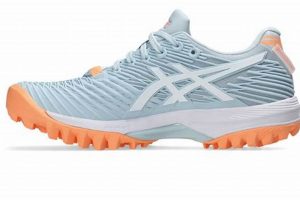
Footwear specifically engineered for the demands of field hockey played on indoor surfaces provides traction, support, and cushioning. These specialized shoes are designed to optimize player performance within the confines of a gymnasium or similar enclosed space. A typical example incorporates a non-marking outsole to prevent floor damage and a reinforced upper to withstand the lateral movements inherent in the sport.
The use of appropriate footwear is crucial for injury prevention and enhanced agility. The design facilitates quick changes in direction and provides essential ankle support. Historically, players often used generic athletic shoes, but the development of purpose-built options has significantly improved player safety and enabled greater control and responsiveness on the court.
This article will delve into the specific features to consider when selecting footwear for indoor field hockey, including outsole materials, midsole technology, upper construction, and fit considerations. A comprehensive understanding of these elements will empower players to make informed decisions and optimize their performance.
Essential Guidance
Selecting appropriate footwear for indoor field hockey is crucial for maximizing performance and minimizing the risk of injury. This section provides critical considerations for making an informed purchase.
Tip 1: Prioritize Traction. Outsole grip is paramount on indoor surfaces. Look for non-marking rubber with a multi-directional tread pattern to ensure stability during rapid movements and changes in direction.
Tip 2: Evaluate Cushioning. Indoor surfaces offer less give than outdoor fields. Ample cushioning in the midsole is essential for absorbing impact and reducing stress on joints. EVA or similar shock-absorbing materials are recommended.
Tip 3: Consider Ankle Support. The quick lateral movements in indoor field hockey place significant stress on the ankles. A shoe with a supportive upper and potentially a higher cut around the ankle can provide added stability and reduce the risk of sprains.
Tip 4: Assess Upper Material. The upper material should be both durable and breathable. Synthetic materials offer a good balance of these qualities, providing support while allowing for ventilation to prevent overheating.
Tip 5: Ensure Proper Fit. A snug, comfortable fit is critical for optimal performance and injury prevention. Ensure adequate toe room and a secure heel fit to minimize slippage during play. Consider trying on footwear with socks similar to those worn during gameplay.
Tip 6: Prioritize Lightweight Construction. Excessive weight can hinder agility and increase fatigue. Select footwear designed with lightweight materials to minimize encumbrance and maximize speed and responsiveness.
Proper selection of footwear designed for field hockey played indoors provides a significant advantage in terms of performance, comfort, and safety. Prioritizing traction, cushioning, support, and fit ensures a positive and productive playing experience.
The following sections will delve into the specific technologies and brands currently available, offering further insights into the optimal choices for indoor field hockey footwear.
1. Non-marking outsoles

Non-marking outsoles are a critical, defining feature of field hockey footwear intended for indoor use. The physical properties of the outsole material are specifically formulated to prevent the deposition of scuff marks or residue on polished gymnasium floors. This is achieved through the use of specialized rubber compounds engineered to minimize friction and avoid leaving traces during the dynamic movements inherent in indoor field hockey. For instance, a shoe lacking this feature could quickly damage a court, leading to restrictions on its use and costly repairs. Therefore, the implementation of non-marking technology directly addresses the need to maintain indoor surfaces, ensuring their longevity and suitability for continued play.
The connection between non-marking outsoles and specialized indoor sports footwear, extends beyond mere surface preservation. The use of such materials often influences the overall design and performance characteristics. Manufacturers often prioritize lightweight construction alongside non-marking properties to provide optimal agility. For instance, a heavier, durable rubber might offer exceptional grip but compromise the athlete’s ability to execute quick turns. Therefore, material selection becomes a crucial balancing act, and the development of advanced polymers has facilitated the creation of outsoles that offer both non-marking qualities and enhanced performance capabilities. Furthermore, facility managers often mandate the use of compliant footwear, underscoring the practical significance of this feature.
In summary, non-marking outsoles are a fundamental and indispensable component of field hockey footwear designed for indoor environments. This design consideration prevents damage to playing surfaces, contributes to the shoe’s overall performance profile, and ensures compliance with facility regulations. The ongoing refinement of rubber compounds and manufacturing techniques continues to drive the evolution of these outsoles, enabling athletes to perform at their best while minimizing their impact on the playing surface.
2. Lateral Support Stability

Lateral support stability in field hockey footwear engineered for indoor surfaces is a critical design element directly impacting player performance and injury prevention. The aggressive, multi-directional movements characteristic of indoor field hockey place considerable stress on the ankle joint. Insufficient lateral support can lead to instability, increasing the risk of ankle sprains and other lower extremity injuries. Therefore, designs incorporating features such as reinforced heel counters, supportive overlays, and wider outsoles directly address this need. For instance, a shoe lacking adequate lateral support may result in a player losing balance during a quick turn, hindering their ability to maintain possession of the ball and exposing them to potential harm.
The implementation of lateral support structures involves a careful balance between stability and flexibility. A shoe that is too rigid can restrict natural foot movement, leading to discomfort and reduced agility. Conversely, a shoe that is too flexible offers insufficient support, compromising stability. Advanced manufacturing techniques and material selection play a crucial role in achieving this equilibrium. For example, some models utilize thermoplastic polyurethane (TPU) cages integrated into the upper to provide targeted support in key areas without sacrificing overall flexibility. Furthermore, the outsole design often incorporates wider platforms and strategically placed stabilizers to enhance ground contact and further improve lateral stability. These features are often present in high-performance models used by competitive athletes.
In conclusion, lateral support stability is an indispensable attribute of indoor field hockey footwear. Its presence directly mitigates the risk of ankle injuries, enhances player confidence, and facilitates more dynamic and controlled movements. As a key performance parameter, manufacturers continually strive to innovate and refine lateral support systems, reflecting its practical significance in ensuring athlete safety and optimizing performance on the indoor field hockey court.
3. Impact absorption midsoles

Impact absorption midsoles are a critical component of field hockey footwear designed for indoor use. They function to mitigate the repetitive stress and high-impact forces generated during gameplay on hard, unforgiving surfaces. The composition and engineering of these midsoles directly affect player comfort, performance, and the prevention of lower extremity injuries.
- Material Composition and Properties
The materials commonly utilized in impact absorption midsoles include ethylene-vinyl acetate (EVA), polyurethane (PU), and proprietary foam blends. These materials exhibit varying degrees of cushioning, rebound, and durability. EVA, for example, offers lightweight cushioning, while PU provides greater durability and energy return. The selection of material depends on the desired balance between comfort, performance, and longevity in the finished footwear. For instance, a shoe intended for recreational use may prioritize EVA for its immediate comfort, while a competitive model might employ a PU-based midsole for enhanced responsiveness.
- Design and Construction Techniques
The effectiveness of impact absorption is not solely dependent on the material itself but also on the design and construction of the midsole. Common techniques include varying the density of the foam, incorporating geometric patterns to enhance cushioning, and utilizing encapsulated air or gel units to further dissipate impact forces. For example, some designs feature a dual-density midsole, with a softer layer closer to the foot for immediate cushioning and a firmer layer closer to the ground for stability. The arrangement and integration of these elements contribute significantly to the overall impact absorption capabilities.
- Influence on Player Performance
Impact absorption midsoles play a direct role in enhancing player performance by reducing fatigue and improving comfort. By minimizing the stress on joints and muscles, these midsoles enable players to maintain agility, speed, and endurance throughout the duration of a match. A well-cushioned midsole can also improve responsiveness by providing a more stable platform for footstrike, allowing for quicker transitions and more efficient energy transfer. Conversely, inadequate impact absorption can lead to discomfort, premature fatigue, and diminished performance.
- Relationship to Injury Prevention
The primary benefit of impact absorption midsoles is the mitigation of stress on the lower extremities, thereby reducing the risk of injuries such as stress fractures, shin splints, and plantar fasciitis. The repetitive impact forces encountered during indoor field hockey can place significant strain on bones, ligaments, and tendons. By effectively absorbing these forces, the midsole helps to protect these tissues and prevent overuse injuries. The design and material selection of the midsole are therefore critical considerations in injury prevention strategies.
In conclusion, impact absorption midsoles are a vital feature of field hockey indoor shoes, contributing significantly to player comfort, performance, and injury prevention. The selection of appropriate materials and construction techniques directly influences the midsole’s ability to mitigate impact forces, underscoring the importance of considering these factors when selecting footwear for this demanding sport.
4. Breathable Upper Materials

Breathable upper materials in field hockey footwear designed for indoor play are crucial for maintaining foot comfort and optimizing performance within the confines of an enclosed environment. These materials facilitate ventilation, manage moisture, and contribute to the overall hygienic environment within the shoe.
- Moisture Management
The primary function of breathable upper materials is the efficient removal of perspiration from the foot. Materials such as engineered mesh and synthetic fabrics with moisture-wicking properties draw sweat away from the skin, preventing the build-up of humidity within the shoe. This reduces the risk of blisters, fungal infections, and discomfort that can arise from prolonged exposure to moisture. For example, a player engaged in an intense match may generate significant perspiration; a non-breathable upper would trap this moisture, leading to a less comfortable and potentially unhygienic environment.
- Temperature Regulation
Breathable uppers promote air circulation, which helps to regulate the temperature of the foot. By allowing heat to escape, these materials prevent overheating, which can lead to decreased performance and increased fatigue. This is particularly important in indoor settings where ambient temperatures may be higher than those experienced outdoors. Consider the difference in playing conditions between an outdoor field and an enclosed gymnasium; the need for effective temperature regulation is magnified in the latter scenario.
- Weight Reduction
Many breathable upper materials, such as lightweight synthetic meshes, contribute to the overall weight reduction of the footwear. Lighter shoes require less energy to move, allowing players to maintain agility and speed throughout the match. The cumulative effect of even a small weight reduction can be significant over the course of a game. For example, a player making numerous sprints and directional changes will experience less fatigue with a lighter shoe compared to one with a heavier, less breathable upper.
- Structural Support and Durability
While prioritizing breathability, upper materials must also provide adequate structural support and durability to withstand the demands of indoor field hockey. This often involves the strategic placement of reinforced overlays or supportive elements to enhance stability and protect the foot from impact. Modern materials engineering has enabled the creation of fabrics that offer both breathability and durability, ensuring that the shoe can withstand the rigors of competitive play. For example, a ripstop nylon mesh may be used in conjunction with synthetic overlays to provide a balance of ventilation and support.
In summary, the selection of breathable upper materials in indoor field hockey footwear represents a critical balance between ventilation, support, and durability. These materials contribute significantly to player comfort, hygiene, and performance, underscoring their importance in the overall design and functionality of the shoe.
5. Secure, precise fit
The achievement of a secure, precise fit in field hockey footwear designated for indoor environments is paramount for optimizing player performance, enhancing agility, and minimizing the risk of injury. The dynamic nature of the sport, characterized by rapid directional changes and forceful movements, necessitates footwear that conforms closely to the foot, providing stability and preventing slippage.
- Enhanced Proprioception and Responsiveness
A precise fit facilitates enhanced proprioception, enabling the player to maintain a heightened awareness of foot position and movement. This translates to improved responsiveness and quicker reaction times during gameplay. For example, footwear that allows excessive foot movement within the shoe inhibits the player’s ability to execute rapid turns and sprints effectively, delaying response times and potentially leading to loss of control.
- Reduced Risk of Blisters and Friction-Related Injuries
A secure fit minimizes friction between the foot and the interior of the shoe, thereby reducing the incidence of blisters and other friction-related injuries. Excessive movement within the shoe exacerbates friction, particularly during prolonged periods of activity. Footwear that conforms closely to the foot, without constricting movement, helps to prevent the development of these common ailments, ensuring player comfort and enabling sustained performance.
- Optimized Energy Transfer and Force Distribution
A precise fit optimizes energy transfer from the foot to the playing surface, maximizing the efficiency of each movement. When the foot is securely positioned within the shoe, the force generated during propulsion is more effectively transmitted, resulting in improved speed and agility. Conversely, a loose or ill-fitting shoe dissipates energy, reducing the player’s overall performance and increasing the risk of fatigue.
- Ankle Stability and Injury Prevention
A secure fit contributes directly to ankle stability, mitigating the risk of sprains and other lower extremity injuries. Footwear that provides adequate support around the heel and midfoot enhances ankle stability during lateral movements and sudden changes in direction. The combination of a precise fit and supportive upper construction is essential for preventing injuries and enabling players to execute complex maneuvers with confidence.
The attributes of secure, precise fitting footwear for indoor field hockey collectively promote player safety, efficiency, and control on the playing surface. Emphasis on achieving this fit ensures the equipment optimizes the performance and contributes to the overall comfort of the individual athlete.
6. Lightweight construction

Lightweight construction, as applied to indoor field hockey footwear, is not merely a design preference but a functional imperative directly impacting player agility, endurance, and overall performance on the court.
- Reduced Energy Expenditure
Minimizing the weight of footwear directly correlates with reduced energy expenditure during dynamic movements. The repetitive nature of indoor field hockey, characterized by frequent sprints, lateral movements, and changes in direction, places a significant demand on the player’s energy reserves. Lighter footwear requires less energy to lift and propel, thereby conserving the player’s stamina and delaying the onset of fatigue. For instance, a reduction of even a few grams per shoe can translate into a measurable difference in endurance over the course of a match, particularly during critical late-game situations.
- Enhanced Agility and Speed
Lightweight footwear facilitates enhanced agility and speed by reducing the inertia that must be overcome during acceleration and deceleration. The lighter the shoe, the quicker the player can react and change direction, providing a competitive advantage in terms of responsiveness and maneuverability. A player wearing heavy, cumbersome footwear may struggle to match the agility of an opponent equipped with lightweight alternatives, hindering their ability to intercept passes, create scoring opportunities, and defend effectively.
- Material Selection and Innovation
The pursuit of lightweight construction necessitates careful material selection and innovative design techniques. Manufacturers often employ advanced synthetic materials, such as engineered mesh and lightweight foams, to minimize weight without compromising durability or support. For example, the use of a thin, yet resilient, TPU outsole can provide adequate traction and protection while significantly reducing the overall weight of the shoe. Similarly, the implementation of minimalist upper designs, with strategically placed reinforcements, can further minimize weight without sacrificing structural integrity.
- Impact on Injury Prevention
While often overlooked, lightweight construction can indirectly contribute to injury prevention. By reducing the overall strain on the lower extremities, lighter footwear can help to minimize the risk of overuse injuries, such as shin splints and stress fractures. The reduced energy expenditure associated with lightweight shoes can also help to maintain proper biomechanics and reduce the likelihood of compensatory movements that can lead to injury. However, it is important to note that lightweight construction should not come at the expense of adequate cushioning and support, as these are also critical factors in injury prevention.
In summation, the adoption of lightweight construction principles in indoor field hockey footwear represents a strategic design choice driven by the desire to enhance player performance, improve agility, conserve energy, and potentially mitigate the risk of overuse injuries. This consideration impacts material selection, innovation and ergonomic design when creating high-performance equipment.
Frequently Asked Questions
The following addresses common inquiries regarding specialized footwear engineered for indoor field hockey. The objective is to provide clarity on the key features and selection criteria for this equipment.
Question 1: Why is specialized footwear necessary for indoor field hockey?
Indoor field hockey presents distinct demands compared to its outdoor counterpart. Indoor surfaces are typically harder and less forgiving, necessitating footwear with enhanced cushioning and support. Furthermore, indoor flooring materials often require non-marking outsoles to prevent damage.
Question 2: What constitutes a “non-marking” outsole?
A non-marking outsole is constructed from a rubber compound that does not leave scuff marks or residues on polished indoor surfaces. These materials are specifically formulated to minimize friction and prevent damage to the playing surface.
Question 3: How important is lateral support in indoor field hockey shoes?
Lateral support is of paramount importance due to the frequent and rapid changes in direction characteristic of indoor field hockey. Adequate lateral support helps to stabilize the ankle joint, reducing the risk of sprains and other injuries.
Question 4: What type of cushioning is recommended for indoor field hockey footwear?
Effective cushioning is essential for mitigating the impact forces encountered on hard indoor surfaces. Ethylene-vinyl acetate (EVA) and polyurethane (PU) are commonly used midsole materials, offering varying degrees of cushioning and support. The ideal choice depends on individual preferences and playing style.
Question 5: How should indoor field hockey footwear fit?
A snug, secure fit is crucial for optimal performance and injury prevention. Footwear should provide adequate toe room and a secure heel fit to minimize slippage during play. It is advisable to try on shoes with socks similar to those worn during gameplay.
Question 6: What is the significance of breathability in indoor field hockey footwear?
Breathable upper materials, such as engineered mesh, promote air circulation and moisture management within the shoe. This helps to prevent overheating and reduce the risk of blisters and fungal infections, enhancing player comfort during prolonged periods of activity.
In summation, selecting appropriate footwear for indoor field hockey involves careful consideration of outsole properties, lateral support, cushioning characteristics, fit, and breathability. Prioritizing these factors will contribute to enhanced performance, comfort, and injury prevention.
The subsequent sections will explore the specific brands and models available in the market, offering further guidance on selecting the optimal footwear for individual needs.
Field Hockey Indoor Shoes
This discussion has addressed the salient features that define field hockey indoor shoes. Critical elements such as non-marking outsoles, lateral support stability, impact absorption midsoles, breathable upper materials, a secure fit, and lightweight construction are not merely design considerations, but functional requirements dictated by the specific demands of the sport when played on indoor surfaces. Each of these attributes contributes to athlete safety, performance enhancement, and the preservation of playing surfaces. The market offers diverse solutions, each reflecting different design priorities and technological implementations.
The selection of appropriate field hockey indoor shoes warrants careful consideration, guided by an understanding of the factors discussed herein. Continued advancements in materials science and biomechanical engineering are expected to further refine the design and performance of this specialized footwear, demanding ongoing evaluation and adaptation by athletes and coaches alike. The investment in suitable equipment demonstrates commitment to athletic excellence and responsible stewardship of playing facilities.

![Top Osaka Field Hockey Bag [Gear Guide] | Your Ultimate Source for Hockey Updates, Training Guides, and Equipment Recommendations](https://ssachockey.com/wp-content/uploads/2026/05/th-44-300x200.jpg "Top Osaka Field Hockey Bag [Gear Guide] Your Ultimate Source for Hockey Updates, Training Guides, and Equipment Recommendations")
![Randolph-Macon Field Hockey: [Adjective] Performance & Legacy | Your Ultimate Source for Hockey Updates, Training Guides, and Equipment Recommendations](https://ssachockey.com/wp-content/uploads/2026/05/th-40-300x200.jpg "Randolph-Macon Field Hockey: [Adjective] Performance & Legacy Your Ultimate Source for Hockey Updates, Training Guides, and Equipment Recommendations")