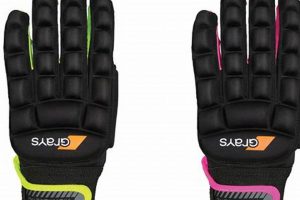
Thermoplastic elastomers (TPEs) are a class of polymers that possess both thermoplastic and elastomeric properties. Materials of this kind are utilized in various sporting applications due to their flexibility, durability, and processability. For instance, they can be found in the construction of hockey equipment, offering impact resistance and enhanced grip.
The incorporation of these materials in athletic gear contributes to improved player safety and performance. Their resilience ensures longevity and reliable protection during rigorous gameplay. Historically, the introduction of advanced polymers into sports equipment marked a significant advancement, allowing for lighter, stronger, and more comfortable designs.
Subsequent sections will delve into specific applications within the realm of hockey, examining the properties of these elastomers that make them suitable for high-performance equipment. The discussion will also cover manufacturing processes and consider future trends in material science relevant to the sport.
Guidance on Employing Thermoplastic Elastomers in Hockey Equipment
The following guidance provides insights into the effective utilization of materials with both thermoplastic and elastomeric qualities in the design and manufacture of hockey equipment. These tips aim to optimize performance and durability.
Tip 1: Material Selection: Choose a grade of thermoplastic elastomer appropriate for the specific application. Consider factors such as impact resistance, flexibility, and temperature performance requirements. A harder TPE might be suitable for components needing rigidity, while a softer grade could be preferable for grip enhancement.
Tip 2: Design Optimization: Incorporate design features that maximize the inherent properties of the elastomer. Overmolding TPE onto a rigid substrate can provide a combination of structural support and a comfortable, non-slip surface. Wall thicknesses should be carefully considered to balance flexibility and durability.
Tip 3: Processing Considerations: Adhere to recommended processing parameters during molding or extrusion. Proper temperature control and injection speeds are essential to prevent degradation and ensure consistent material properties. Pre-drying the material may be necessary to avoid defects.
Tip 4: Bonding Techniques: Employ compatible bonding techniques when joining TPE components to other materials. Surface preparation, such as priming, may be necessary to achieve a strong and durable bond. Consider using adhesives specifically formulated for bonding TPEs.
Tip 5: Testing and Validation: Conduct thorough testing to validate the performance of the final product. Impact testing, tensile testing, and environmental testing are crucial to ensure that the equipment meets the required safety standards and performance expectations. Data analysis will provide information for future material and design choices.
Tip 6: Recyclability and Sustainability: Favor grades that are recyclable and contribute to sustainable manufacturing practices. Design equipment with end-of-life considerations in mind to facilitate recycling or reuse. This reduces environmental impact.
The effective implementation of these materials relies on careful selection, design, and manufacturing. Adherence to best practices will contribute to the development of high-performance, durable, and safe hockey equipment.
The subsequent sections will expand on the specific applications of thermoplastic elastomers in hockey equipment, further exploring design considerations and material selection criteria.
1. Impact Energy Absorption

Thermoplastic elastomers (TPEs) used in hockey equipment rely heavily on their capacity for impact energy absorption. This characteristic is crucial in mitigating the effects of collisions and impacts, which are inherent risks in the sport. The effectiveness of energy absorption is directly related to the molecular structure of the TPE, allowing it to deform upon impact and convert kinetic energy into other forms, such as heat, thereby reducing the force transmitted to the player. Without adequate impact energy absorption, the risk of injury, particularly concussions and fractures, significantly increases. The use of TPE in hockey helmets, for example, exemplifies this. The TPE liner is designed to compress during a collision, absorbing a substantial portion of the impact force before it reaches the player’s head.
The selection of a specific TPE grade for impact absorption depends on factors such as the expected impact force, temperature range, and desired level of comfort. Certain TPE formulations are engineered with enhanced damping properties, meaning they can dissipate energy more efficiently. This can be achieved through modifications to the polymer’s molecular weight, crosslinking density, or the addition of specialized fillers. The design of the equipment also plays a critical role. A well-designed helmet, for instance, will incorporate a TPE liner that is strategically shaped and positioned to maximize energy absorption across a range of impact angles and locations. Periodic testing and validation of equipment are essential to ensure that it continues to meet safety standards and provide adequate protection. This includes subjecting helmets and other protective gear to controlled impact tests to measure the amount of force transmitted through the TPE layer.
In conclusion, impact energy absorption is a fundamental property of TPEs in hockey equipment. Its successful implementation reduces the risk of injuries. Ongoing research and development focus on improving the impact absorption capabilities of these materials, with the goal of creating safer and more protective equipment. However, challenges remain in balancing impact absorption with other performance characteristics, such as weight and comfort. Collaboration between material scientists, equipment designers, and sports medicine professionals is crucial for continuing advancement in this area.
2. Flexibility and Grip
Within the context of hockey equipment, thermoplastic elastomers (TPEs) significantly contribute to both flexibility and grip. The inherent elasticity of TPEs allows for the creation of components that can deform under stress and return to their original shape, a vital feature in items such as stick grips and skate supports. The capacity for controlled deformation translates to improved responsiveness and maneuverability for the player. Furthermore, TPEs can be formulated to offer a high coefficient of friction, resulting in enhanced grip. This is particularly crucial in hockey gloves and stick handles, where a secure hold is essential for precision and control. A direct correlation exists between the material properties of the TPE and the player’s ability to effectively handle their equipment; a lack of flexibility can restrict movement, while insufficient grip can lead to loss of control and potential injury.
The practical application of these properties can be observed in the design of high-performance hockey sticks. TPEs are often used in the handle to provide a comfortable and secure grip, even in wet or cold conditions. The flexibility of the TPE can also be tuned to optimize the stick’s flex profile, influencing shot power and accuracy. In skate construction, TPEs can be incorporated into the ankle support to provide a balance of flexibility and stability, allowing for agility while minimizing the risk of ankle sprains. Moreover, the manufacturing process allows for texturing of the TPE surface, further enhancing grip and tactile feel. This level of customization enables equipment manufacturers to tailor the performance characteristics of their products to meet the specific needs of different players and playing styles.
In summary, flexibility and grip are integral attributes conferred by TPEs in hockey equipment. These properties directly impact a player’s performance and safety. The ongoing development of TPE formulations and manufacturing techniques continues to refine the balance between these two critical characteristics, leading to advancements in equipment design and improved on-ice performance. However, challenges remain in optimizing these properties for specific applications and maintaining consistent performance across a range of environmental conditions. This underscores the need for continued research and collaboration between material scientists and equipment designers.
3. Material Durability

In the realm of hockey equipment, material durability stands as a paramount consideration. The capacity of components to withstand the rigors of gameplay directly influences performance, safety, and equipment longevity. Thermoplastic elastomers (TPEs) are employed in various hockey applications, and their inherent durability contributes significantly to the overall quality and reliability of the gear.
- Abrasion Resistance
Hockey equipment is subject to substantial abrasion from skates, sticks, and the ice surface. TPEs used in areas prone to friction, such as skate boots or stick handles, must exhibit high abrasion resistance to prevent premature wear and maintain their structural integrity. Failure to resist abrasion can lead to compromised performance and increased risk of failure during critical moments of play.
- Impact Resistance
The high-impact nature of hockey necessitates materials that can absorb and dissipate energy without fracturing or deforming permanently. TPEs designed for impact zones, such as helmet liners or padding, are formulated to withstand repeated blows and impacts. Inadequate impact resistance can result in injury to the player and necessitate frequent equipment replacement. This property is measured using standardized impact testing procedures, with performance requirements often dictated by regulatory bodies.
- Chemical Resistance
Hockey equipment is frequently exposed to moisture, sweat, and cleaning agents. TPEs must resist degradation from these substances to maintain their properties over time. Chemical degradation can lead to embrittlement, cracking, or loss of elasticity, compromising the equipment’s performance and longevity. Selection of chemically resistant TPE grades is crucial for ensuring that equipment remains reliable under varying environmental conditions.
- Fatigue Resistance
Repeated flexing and stress are common occurrences for components like skate tongues and stick shafts. TPEs used in these applications must exhibit high fatigue resistance to prevent crack propagation and eventual failure. Low fatigue resistance can lead to premature wear and reduced performance, ultimately requiring equipment replacement. Manufacturers employ fatigue testing methods to assess the long-term durability of TPE materials under cyclic loading.
The interplay between abrasion resistance, impact resistance, chemical resistance, and fatigue resistance defines the overall material durability of TPEs in hockey equipment. Balancing these properties is essential to create gear that can withstand the demands of the sport, providing players with reliable protection and performance. Ongoing research and development efforts focus on enhancing these properties to extend equipment lifespan and improve player safety. Moreover, selecting appropriate TPE materials, design considerations, and manufacturing processes for each application is crucial to maximizing the benefits of these elastomers.
4. Temperature Resistance

Temperature resistance is a critical performance parameter for thermoplastic elastomers (TPEs) utilized in hockey equipment. The variability of playing conditions, ranging from sub-zero outdoor rinks to warm indoor arenas, necessitates materials capable of maintaining their mechanical properties across a wide temperature spectrum. This attribute directly impacts the safety, performance, and longevity of the equipment.
- Cold Temperature Flexibility
At low temperatures, some polymers become brittle, losing their flexibility and impact resistance. TPEs used in hockey applications, particularly in components such as skate boots or helmet liners, must retain their pliability even in sub-zero conditions to prevent cracking and ensure adequate protection. Failure to maintain flexibility at low temperatures can lead to equipment failure and increased risk of injury. Specific TPE formulations are engineered to remain flexible at temperatures as low as -40C.
- Heat Stability
Conversely, exposure to elevated temperatures can cause TPEs to soften, deform, or lose their structural integrity. Hockey equipment stored in warm environments or exposed to direct sunlight can experience significant temperature increases. TPEs used in these applications must possess sufficient heat stability to prevent irreversible changes in their properties. Heat-induced deformation can compromise the fit and function of the equipment, leading to reduced performance and safety. Stabilization additives are often incorporated into TPE formulations to enhance their heat resistance.
- Thermal Expansion and Contraction
Significant temperature fluctuations can induce thermal expansion and contraction in TPE components. If the expansion and contraction rates of the TPE are mismatched with adjacent materials, it can lead to stress concentrations and potential failure points. For example, a TPE grip on a hockey stick may expand or contract at a different rate than the underlying composite shaft, potentially compromising the bond. Careful material selection and design considerations are necessary to mitigate these effects. Low coefficient of thermal expansion (CTE) formulations are preferred.
- Property Retention Over Time
Repeated exposure to temperature cycles can degrade the properties of TPEs over time. The material may gradually become more brittle, less elastic, or more susceptible to cracking. This degradation can be accelerated by the presence of moisture or UV radiation. Hockey equipment must be able to withstand numerous temperature cycles without significant loss of performance. Accelerated aging tests are often used to assess the long-term durability of TPEs under simulated environmental conditions. Furthermore, UV stabilizers are often added to TPE to keep it from drying out due to sunlight exposure.
The multifaceted nature of temperature resistance in TPEs is crucial for hockey equipment. Meeting the stringent requirements for both low-temperature flexibility and high-temperature stability necessitates careful material selection, formulation, and design. A comprehensive understanding of the interplay between these factors is essential for ensuring that hockey equipment performs reliably and safely across a range of environmental conditions.
5. Manufacturing Precision

The efficacy of thermoplastic elastomers (TPEs) in hockey equipment is inextricably linked to manufacturing precision. The inherent properties of TPEsflexibility, impact resistance, and temperature stabilityare only fully realized when the manufacturing process adheres to strict tolerances and quality control measures. Deviations from specified dimensions, material distribution, or bonding techniques can compromise the intended performance characteristics, leading to reduced safety, premature failure, or diminished player performance. For example, the precise molding of a TPE liner within a hockey helmet is crucial for ensuring consistent energy absorption across the entire surface area. If the liner’s thickness or density varies due to imprecise manufacturing, the helmet’s protective capabilities are inherently compromised.
Consider the overmolding of TPE onto a hockey stick handle to provide enhanced grip. The manufacturing process must ensure a uniform and secure bond between the TPE and the underlying composite material. Inconsistent application of adhesive or variations in molding temperature can result in delamination, leading to a loss of grip and reduced stick control. Similarly, the precise extrusion of TPE components for skate boots is critical for maintaining proper fit and support. Dimensional inaccuracies can cause discomfort, restrict movement, and increase the risk of injury. The implementation of advanced manufacturing techniques, such as computer-controlled injection molding and robotic assembly, is essential for achieving the required level of precision. Furthermore, rigorous quality control procedures, including dimensional inspections, material testing, and performance evaluations, are necessary to identify and rectify any manufacturing defects. The use of sophisticated simulation tools can also aid in optimizing the manufacturing process and minimizing the risk of errors.
In conclusion, manufacturing precision is a non-negotiable aspect of utilizing TPEs in hockey equipment. The successful translation of TPE material properties into tangible performance benefits hinges on the ability to consistently and accurately manufacture components to exacting specifications. Challenges remain in maintaining high levels of precision across diverse manufacturing processes and product lines. Continued investment in advanced manufacturing technologies and stringent quality control measures is essential for ensuring the safety, reliability, and performance of TPE-based hockey equipment. The pursuit of enhanced manufacturing precision is, therefore, directly aligned with the overarching goal of improving player protection and enhancing on-ice performance.
Frequently Asked Questions Regarding TPE in Hockey Equipment
The following section addresses common inquiries concerning the application of thermoplastic elastomers (TPEs) in hockey equipment. These questions aim to clarify key aspects of TPE utilization and performance characteristics.
Question 1: What specific properties make TPEs suitable for hockey equipment?
TPEs offer a combination of flexibility, impact resistance, abrasion resistance, and temperature stability that is advantageous in hockey applications. The materials can deform under stress, absorb impact energy, and withstand the rigors of gameplay.
Question 2: Are all TPEs the same in terms of performance?
No, TPEs are a diverse class of materials with varying properties. Different formulations offer different levels of flexibility, impact resistance, and temperature stability. Material selection depends on the specific application and performance requirements.
Question 3: How does temperature affect the performance of TPEs in hockey equipment?
Temperature can influence the flexibility and impact resistance of TPEs. Some TPEs become brittle at low temperatures, while others may soften at high temperatures. Selecting TPEs with appropriate temperature resistance is crucial for ensuring consistent performance across a range of playing conditions.
Question 4: What are the limitations of using TPEs in hockey equipment?
TPEs may have limitations in terms of their tensile strength and resistance to certain chemicals. These factors should be considered when selecting TPEs for specific applications.
Question 5: How is the durability of TPEs in hockey equipment assessed?
Durability is assessed through a combination of laboratory testing and field testing. Laboratory tests evaluate properties such as abrasion resistance, impact resistance, and fatigue resistance. Field tests assess the performance of equipment under real-world playing conditions.
Question 6: Are TPEs recyclable, and what is their environmental impact?
Some TPEs are recyclable, but recyclability depends on the specific formulation and the availability of recycling infrastructure. Selecting recyclable TPEs and implementing responsible manufacturing practices can minimize the environmental impact of hockey equipment.
TPEs are valuable materials in the design and manufacture of hockey equipment, but their selection and application require careful consideration of their properties and limitations. Continued research and development efforts are focused on enhancing the performance and sustainability of TPEs in this field.
The following section will explore the future trends and advancements in the application of TPEs within the realm of hockey equipment.
Conclusion
This exploration of tpe hockey has illuminated the pivotal role thermoplastic elastomers play in modern hockey equipment. The properties of these materials impact player safety, equipment durability, and overall performance, extending to areas such as impact absorption, flexibility, grip enhancement, temperature resistance, and the crucial demands of precise manufacturing processes. A comprehensive understanding of these characteristics is paramount for optimizing equipment design and ensuring its effectiveness.
Continued research and development in material science, coupled with rigorous testing protocols, are essential for further advancing the field. Manufacturers, designers, and players must collectively prioritize the integration of advanced TPE technologies to elevate safety standards and enhance the sport’s competitive landscape. The ongoing pursuit of innovation in tpe hockey promises to shape the future of player protection and performance enhancement.
![Conway Banks Hockey Bag: [Benefit] For Every Hockey Player | Your Ultimate Source for Hockey Updates, Training Guides, and Equipment Recommendations](https://ssachockey.com/wp-content/uploads/2026/05/th-61-300x200.jpg "Conway Banks Hockey Bag: [Benefit] For Every Hockey Player Your Ultimate Source for Hockey Updates, Training Guides, and Equipment Recommendations")