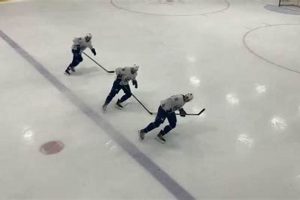
A demanding on-ice conditioning drill utilized in hockey, the practice pushes players to their physical limits through a series of intense skating exercises. Typically implemented as a disciplinary measure or to improve overall fitness, it involves repetitive sprints, often across the width or length of the rink, with minimal rest. The session is designed to be physically grueling and can serve as a significant deterrent to lackluster performance.
This rigorous training method serves multiple purposes. It can reinforce team discipline and accountability, improve players’ cardiovascular endurance and skating speed, and foster mental toughness. Historically, it has been a common tool employed by coaches at various levels of the sport, from youth leagues to professional teams, to emphasize the importance of hard work and dedication. It is often seen as a way to reset team focus after a poor performance.
The effectiveness and appropriateness of this approach are subjects of ongoing discussion within the hockey community. Modern training methodologies are increasingly emphasizing targeted skill development and injury prevention. The following sections will delve into the debate surrounding its use, alternative conditioning strategies, and its potential impact on player morale and performance.
Guidance on Implementing Intense On-Ice Conditioning
The following recommendations offer insights for coaches considering the utilization of demanding on-ice conditioning. Prudence and careful consideration of player welfare are paramount.
Tip 1: Assess Player Condition: Prior to initiating a strenuous skating regimen, evaluate each player’s current physical state. This includes recent injury history and general fitness levels. Individual modifications may be necessary to prevent overexertion or injury.
Tip 2: Define Clear Objectives: Establish specific goals for the session. Is the intent disciplinary, or is it aimed at improving particular aspects of on-ice performance? Clearly defined objectives will guide the intensity and duration of the drills.
Tip 3: Maintain Controlled Intensity: Monitor the players’ exertion levels throughout the session. The objective should be to push them, but not to the point of compromising technique or risking injury. Encourage players to communicate any discomfort.
Tip 4: Prioritize Proper Technique: Emphasize maintaining correct skating form, even under duress. Fatigue can lead to poor technique, which can increase the likelihood of strains or other injuries. Focus on short bursts with attention to form.
Tip 5: Provide Adequate Recovery: Allow sufficient time for rest and recovery between repetitions. Short breaks are crucial for preventing muscle fatigue and maintaining a reasonable level of performance throughout the duration of the exercise.
Tip 6: Offer Clear Communication: Articulate the rationale behind the session. Players are more likely to respond positively if they understand the purpose and benefits. Transparency can mitigate resentment and foster buy-in.
Tip 7: Adapt Based on Team Response: Be prepared to adjust the intensity or duration of the session based on the team’s overall response. Excessive negativity or signs of widespread exhaustion indicate a need to reassess the approach.
These recommendations highlight the importance of thoughtful implementation. A responsible approach to intense on-ice conditioning maximizes its potential benefits while minimizing the risks. Consider the long-term implications for player development and team cohesion.
The subsequent sections will examine alternative training methodologies and their comparative effectiveness in achieving optimal player conditioning.
1. Punishment

The application of demanding on-ice conditioning as a punitive measure in hockey stems from a traditional belief in its effectiveness as a deterrent. This approach, while controversial, aims to correct perceived deficiencies in performance or attitude through physical exertion.
- Deterrent Effect
The primary rationale for utilizing this method is to discourage future lapses in effort, discipline, or adherence to team strategy. The intense physical discomfort associated with the conditioning is intended to create a negative association with undesirable behaviors. For example, a team that consistently commits preventable penalties might be subjected to this as a means of emphasizing the importance of disciplined play. The underlying assumption is that the prospect of enduring such a session will motivate players to avoid repeating the actions that led to it.
- Accountability Reinforcement
When a team underperforms or fails to meet expectations, the implementation of demanding drills can be a way to underscore collective responsibility. The entire team shares the burden of the conditioning, regardless of individual contributions to the specific infraction. This shared experience aims to foster a sense of unity and encourage players to hold each other accountable for maintaining standards. A team that loses a game due to lack of effort in the third period might undergo a strenuous workout to reinforce the importance of consistent intensity.
- Symbolic Reprimand
Beyond its physical impact, it can serve as a symbolic gesture, demonstrating the coaching staff’s disapproval of a particular performance or behavior. The act of subjecting the team to the conditioning is a visible signal that the coaching staff is taking action to address the issue. This public display of dissatisfaction can be particularly impactful in situations where verbal reprimands might be insufficient to convey the severity of the perceived transgression. For instance, after a particularly embarrassing loss, the conditioning might be implemented as a means of signaling the coaching staff’s determination to rectify the situation.
- Potential for Negative Impact
While intended to motivate and correct, the use of rigorous conditioning as a punitive measure carries the risk of negative consequences. It can foster resentment, erode team morale, and potentially lead to injuries resulting from overexertion. Moreover, its effectiveness as a long-term solution is questionable, as it primarily addresses the symptoms of a problem rather than the underlying causes. Therefore, coaches must carefully weigh the potential benefits against the potential drawbacks before employing this method.
The association of physically demanding drills with punitive action is a complex and often debated practice. While it aims to instill discipline and accountability, it also carries the risk of negative repercussions. Alternative methods that focus on positive reinforcement and addressing the root causes of performance issues may offer more sustainable solutions for improving team performance and fostering a positive team environment.
2. Conditioning
The strenuous nature inherently links it to conditioning. The practice serves as an immediate and intense form of physical training, aiming to elevate players’ fitness levels rapidly. The drills, characterized by short bursts of maximal effort interspersed with minimal recovery, directly challenge cardiovascular endurance and muscular strength. The effect is the forced adaptation of the body to withstand prolonged periods of high-intensity activity, a critical attribute for successful hockey performance. For instance, a team struggling with late-game fatigue might use this form of conditioning to build the necessary stamina to maintain competitiveness throughout all periods.
Conditioning is not merely a byproduct; it is a fundamental component of the exercise. The imposed physical stress is designed to simulate the demands of a game, where players must execute complex skills while under pressure from opponents and fatigue. By repeatedly exposing players to these conditions, the drills aim to improve their ability to perform effectively even when physically taxed. A professional team preparing for a playoff series, where games are expected to be highly physical and demanding, would likely incorporate such sessions to ensure their players are adequately conditioned to withstand the rigors of the competition. This conditioning benefits not just the cardiovascular system but also strengthens the specific muscle groups used in skating, thereby improving agility and speed.
The practical significance of understanding this relationship lies in the ability to tailor training programs to specific needs. Coaches who recognize the conditioning benefits can strategically employ it to address weaknesses in their team’s physical preparation. However, they must also be cognizant of the potential risks associated with overtraining and prioritize player safety. Recognizing the dual nature of conditioningas both a direct physical benefit and a tool for instilling disciplineis crucial for maximizing its effectiveness while mitigating potential negative consequences. Balancing these considerations is a key challenge in optimizing player performance.
3. Discipline

Demanding on-ice conditioning and discipline are inextricably linked within the context of hockey training. This connection manifests in several ways. First, the imposition of demanding drills often serves as a direct consequence of disciplinary infractions or perceived lack of effort. Second, the very act of enduring a session requires significant self-discipline and mental fortitude from the players involved. The cause-and-effect relationship is apparent: a breach of team rules or standards can result in the team being subjected to the strenuous drills. The intended outcome is to instill a greater sense of accountability and adherence to established protocols. For example, a team repeatedly failing to execute defensive zone coverage as instructed might face intense skating drills to reinforce the importance of following the prescribed system. This is intended to be both a physical and mental recalibration, emphasizing the need for disciplined execution.
The importance of discipline as a component cannot be overstated. The drills demand that players push through physical discomfort and fatigue, requiring them to maintain focus and commitment even when their bodies are urging them to stop. This cultivates mental toughness, a crucial attribute for success in high-pressure competitive situations. Furthermore, the shared experience of enduring the session together can foster a sense of camaraderie and mutual support within the team, reinforcing the importance of collective discipline. A team that successfully navigates a demanding session is likely to exhibit greater resilience and cohesion on the ice. This is particularly noticeable when the team faces adversity during a game.
The understanding of this relationship holds practical significance for coaches and players alike. Coaches can strategically employ such sessions to address specific disciplinary issues or to reinforce team standards. However, they must exercise caution to avoid overusing this method, as it can lead to resentment and diminished morale. Players, on the other hand, must recognize that the demanding sessions are not merely exercises in physical endurance but opportunities to cultivate mental discipline and strengthen team unity. By approaching the exercise with the right mindset, players can transform a potentially negative experience into a valuable learning opportunity. Ultimately, the effective integration of demanding on-ice conditioning within a hockey program requires a balanced approach that prioritizes both physical development and the cultivation of discipline, with a keen awareness of the potential impact on player morale and team cohesion.
4. Endurance

Demanding on-ice conditioning is intrinsically linked to the development and assessment of endurance in hockey players. The very design of the conditioning emphasizes sustained physical exertion over a relatively short period. The drills simulate the stop-start nature of hockey, demanding repeated bursts of high-intensity skating interspersed with minimal recovery. As such, a player’s ability to withstand fatigue and maintain performance under duress is directly tested. The relationship is causal: consistent exposure to these sessions should, theoretically, lead to improvements in both cardiovascular and muscular endurance. Teams struggling with maintaining a consistent level of play throughout an entire game might employ such a session to bolster their players’ stamina. A junior team, for example, experiencing consistent drop-offs in performance in the third period could implement the exercises to increase the players’ tolerance for prolonged physical stress, thereby improving late-game performance.
The importance of endurance as a component of demanding on-ice sessions is evident in the physiological adaptations it promotes. The repeated sprints and skating drills force the cardiovascular system to become more efficient at delivering oxygen to the working muscles. This results in an increased ability to sustain high-intensity activity for longer periods. Simultaneously, the muscles themselves adapt to become more resistant to fatigue, enabling players to maintain speed and power even when they are physically exhausted. Consider a professional player returning from an injury; the training regime might include a structured on-ice program. This regime is to regain the lost endurance and conditioning necessary to compete effectively at the highest level. The development of both cardiovascular and muscular endurance is vital to overall hockey performance.
The practical significance of understanding this connection lies in the ability to tailor training programs effectively. Coaches who recognize the specific endurance demands of hockey can use this knowledge to design training sessions that target the appropriate physiological systems. However, the application requires careful consideration. Overemphasis on can lead to overtraining and increased risk of injury. A balanced approach that incorporates both high-intensity interval training and longer, less intense aerobic exercises is crucial for maximizing performance while minimizing the risk of adverse effects. Therefore, proper monitoring of player fatigue levels and careful planning of training schedules are essential to ensure that training sessions contribute to improved endurance without compromising player health and well-being. The ultimate goal is to build a team that is physically prepared to compete at a high level throughout an entire season, and tailored endurance training programs are fundamental to achieving this objective.
5. Mental Fortitude
Mental fortitude plays a crucial role during demanding on-ice conditioning. The exercises are designed to push players beyond their physical comfort zones, testing their resilience and determination. The ability to persevere through pain, fatigue, and the psychological pressure of the exercise is a direct reflection of mental toughness.
- Overcoming Discomfort
A key aspect is the capacity to manage and overcome physical discomfort. Players face the strain of intense skating, muscle fatigue, and the challenge of maintaining proper technique. Success depends on a player’s ability to tolerate and push through these sensations, resisting the urge to reduce effort or quit. For instance, a player with high mental fortitude might focus on the task at hand, setting small, achievable goals to maintain motivation. This ability translates directly to game situations where players must perform effectively under pressure and physical duress.
- Maintaining Focus
The exercises demand unwavering concentration. The repetitive nature of the drills and the overwhelming physical sensations can easily lead to mental fatigue and a loss of focus. Players with strong mental fortitude are able to maintain concentration on their technique, their pace, and the overall goals of the exercise. An example is a player consciously correcting their stride or maintaining consistent speed despite growing fatigue. The skill in maintaining focus is essential for making smart decisions during critical moments in a game.
- Resilience in the Face of Adversity
The sessions present a formidable mental challenge, often evoking feelings of frustration, exhaustion, and even discouragement. Players with strong mental fortitude can view the exercise as an opportunity for growth, rather than a punishment. They can recover quickly from setbacks, such as a missed sprint or a perceived lack of progress, and maintain a positive attitude. Professional athletes might use visualization techniques to prepare mentally, picturing themselves successfully completing the drills and focusing on the positive outcomes. This resilience is invaluable in overcoming the inevitable obstacles encountered during a hockey season.
- Commitment to Team Goals
The exercise can also serve as a test of a player’s commitment to the team. Although an individual experience, it is often implemented as a team-wide activity, demanding collective effort and support. Players with strong mental fortitude understand that their individual performance contributes to the overall success of the team, and they are willing to push themselves for the benefit of their teammates. A player might encourage their teammates during moments of difficulty, or offer assistance to those struggling to keep pace. This sense of collective purpose enhances team cohesion and strengthens the resolve to achieve common goals.
Collectively, these facets of mental fortitude illustrate the critical role that psychological strength plays in on-ice conditioning. The ability to overcome discomfort, maintain focus, demonstrate resilience, and remain committed to team goals during this challenging training is directly transferable to the demands of competitive hockey. This highlights the importance of cultivating mental toughness as an integral part of a player’s overall development.
Frequently Asked Questions Regarding Demanding On-Ice Conditioning
The following section addresses common inquiries and misconceptions surrounding demanding on-ice conditioning in hockey. The information is presented to provide clarity and context regarding this training method.
Question 1: What is the primary purpose of employing this method?
The primary purpose is multifaceted, encompassing physical conditioning, instilling discipline, and promoting mental toughness. It aims to improve cardiovascular endurance, reinforce accountability, and develop the ability to persevere under duress.
Question 2: Is this method solely a form of punishment?
While it is sometimes used as a disciplinary measure, its purpose extends beyond punishment. The conditioning component is a key element. It aims to improve physical fitness and resilience.
Question 3: Are there potential drawbacks associated with this conditioning?
Yes, potential drawbacks include the risk of overtraining, increased injury susceptibility, and the erosion of team morale if implemented inappropriately or excessively.
Question 4: How does this drill contribute to a player’s mental fortitude?
By forcing players to overcome physical discomfort and fatigue, it strengthens their ability to focus, maintain composure, and persevere through challenging situations, which are all critical components of mental toughness.
Question 5: At what levels of hockey is this type of conditioning typically used?
It has historically been employed at various levels, from youth leagues to professional teams. The suitability is dependent on the players’ age, physical maturity, and the coaching staff’s philosophy.
Question 6: Are there alternatives to this form of conditioning that achieve similar results?
Yes, alternative conditioning strategies include targeted skill development drills, interval training, and off-ice strength and conditioning programs. These alternatives may offer a more balanced and sustainable approach to improving player fitness.
In summary, while demanding on-ice conditioning can be an effective tool for physical and mental development, it is essential to consider its potential drawbacks and implement it judiciously. A holistic approach that prioritizes player welfare and incorporates a variety of training methods is crucial for optimizing player performance and fostering a positive team environment.
The next section will discuss the ethical considerations surrounding the use of demanding on-ice conditioning in hockey.
Conclusion
The preceding sections have explored the multifaceted nature of “bag skate hockey,” examining its historical use, purported benefits, and potential drawbacks. Its implementation, while intended to enhance conditioning, discipline, and mental fortitude, requires careful consideration of player welfare and alternative training methodologies. The drills represent a traditional approach to hockey training, one that is increasingly subject to scrutiny in light of evolving sports science and ethical considerations.
Ultimately, the effectiveness of “bag skate hockey” hinges on its judicious application and integration within a comprehensive training program. Coaches and organizations must prioritize the long-term development and well-being of players, ensuring that conditioning practices align with contemporary best practices. The continued debate surrounding this traditional method underscores the need for ongoing dialogue and a commitment to evidence-based decision-making within the hockey community.