Equipment designed for young athletes participating in roller hockey necessitates specialized features tailored to their developing physiques and the demands of the sport. This sporting footwear provides support, protection, and maneuverability crucial for optimal performance and safety on the rink. Typically, these come in smaller sizes and may offer adjustable features to accommodate growing feet, ensuring a proper and comfortable fit for extended use.
The use of appropriately sized and supportive footwear in roller hockey is paramount for young players. It contributes significantly to agility, balance, and the prevention of injuries. Historically, the development of specifically designed roller hockey footwear has evolved alongside the sport itself, with innovations in materials and construction aimed at enhancing both performance and protection. This evolution reflects a growing understanding of the biomechanics involved in roller hockey and the specific needs of young participants.
This article will delve into the selection criteria for appropriate roller hockey footwear for young players, examining key features such as boot construction, chassis materials, wheel types, and bearing performance. Furthermore, it will address maintenance considerations and best practices for ensuring longevity and optimal performance. The focus will remain on providing practical information relevant to parents, coaches, and young athletes involved in the sport of roller hockey.
Essential Considerations for Youth Roller Hockey Skates
Selecting appropriate roller hockey footwear for young athletes requires careful consideration of various factors to ensure safety, performance, and longevity. The following guidelines provide essential considerations.
Tip 1: Prioritize Proper Fit: Accurate sizing is paramount. Ill-fitting footwear can lead to discomfort, blisters, and impaired performance. Seek professional fitting assistance whenever possible.
Tip 2: Evaluate Boot Construction: The boot should provide adequate ankle support to prevent injuries. Consider boots with reinforced ankle support and durable outer materials.
Tip 3: Assess Chassis Quality: The chassis, or frame, connects the boot to the wheels. Opt for a sturdy chassis made from aluminum or composite materials for optimal power transfer and durability.
Tip 4: Consider Wheel Hardness: Wheel durometer, measured in A-scale, indicates hardness. Softer wheels (lower durometer) offer better grip but wear down faster, while harder wheels (higher durometer) provide less grip but greater durability. Select a durometer appropriate for the playing surface and skill level.
Tip 5: Examine Bearing Quality: Bearings impact the smoothness and speed of the wheels. Higher ABEC ratings generally indicate better precision and performance. Regularly clean and lubricate bearings to maintain optimal rolling efficiency.
Tip 6: Implement Regular Maintenance: Consistent maintenance extends the lifespan of the footwear. Clean the boots and chassis regularly, inspect wheels for wear, and replace bearings as needed.
Tip 7: Consider Adjustable Features: Adjustable models can accommodate growing feet, providing a more extended period of use. These are a practical investment, especially for younger players undergoing rapid growth spurts.
Adhering to these guidelines promotes a safer and more enjoyable roller hockey experience for young participants, maximizing their performance potential and minimizing the risk of injury.
The following section will address common problems, providing preventative and corrective maintenance strategies.
1. Precise fit

The correlation between precise fit and youth roller hockey footwear is foundational to performance and safety. Ill-fitting cause diminished control and heightened susceptibility to injury, a direct consequence of compromised stability and support. An improperly sized boot fails to adequately secure the foot, leading to excessive movement within the skate during dynamic maneuvers. This internal slippage disrupts power transfer, reducing skating efficiency and agility. For example, a boot that is too large can cause the foot to slide forward during acceleration, resulting in delayed response and diminished speed. A boot that is too small restricts circulation, causing discomfort and potentially leading to blisters or other foot ailments. These discomforts will detract from the player’s focus, decreasing overall skill and ability.
The impact of precise fit extends beyond immediate performance. Chronically wearing poorly fitted footwear can contribute to long-term musculoskeletal issues. Improper support can strain ligaments and tendons in the ankle and foot, increasing the risk of sprains and other injuries. In contrast, a skate that provides a snug, secure fit enables optimal foot alignment and support, minimizing stress on joints and muscles. Furthermore, a properly fitted skate enhances proprioception, allowing the young player to develop a better sense of balance and control. This improved awareness translates to increased confidence and a greater ability to execute complex skating techniques.
In conclusion, precise fit is an indispensable attribute of youth roller hockey equipment. It not only directly impacts performance metrics such as speed, agility, and power but also significantly contributes to injury prevention and long-term musculoskeletal health. Ensuring proper fitting requires careful measurement, consideration of individual foot anatomy, and, ideally, consultation with a knowledgeable equipment specialist. Investing in properly fitted equipment is a fundamental step in fostering a safe and successful roller hockey experience for young participants. The subsequent discussions on ankle support, chassis strength, wheel durometer, and bearing precision operate under the implied condition of appropriate fit, further reinforcing its foundational importance.
2. Ankle Support

Ankle support constitutes a critical feature in youth roller hockey footwear, directly influencing stability, control, and injury prevention during gameplay. The integrity of this support system dictates the athlete’s ability to execute rapid movements and withstand the physical demands of the sport.
- Role in Injury Prevention
Adequate ankle support mitigates the risk of sprains and other lower extremity injuries. The high-impact nature of roller hockey, coupled with frequent lateral movements and sudden stops, places considerable stress on the ankle joint. Robust ankle support restricts excessive range of motion, preventing the joint from exceeding its physiological limits. This is particularly important for young athletes whose musculoskeletal systems are still developing.
- Influence on Skating Technique
Effective ankle support enhances skating technique by providing a stable platform for power transfer. A secure ankle allows for more efficient energy transmission from the leg muscles to the skate wheels, resulting in improved speed and agility. Conversely, inadequate support can lead to instability and energy loss, hindering performance. For example, a skater with weak ankle support may struggle to maintain balance during crossovers or sharp turns, compromising their overall skating ability.
- Types of Ankle Support Systems
Various ankle support systems are incorporated into youth roller hockey footwear, ranging from reinforced boot materials to external support structures. Higher-end models often feature anatomically contoured padding and adjustable straps to customize the level of support. The selection of an appropriate system depends on factors such as the athlete’s skill level, playing style, and individual needs. Stiffer boot materials, such as molded composites, generally provide greater support than softer, more flexible materials.
- Importance of Proper Fit
Ankle support is only effective when the footwear fits properly. An ill-fitting boot can negate the benefits of even the most advanced support systems. A skate that is too large allows the foot to move excessively within the boot, undermining ankle stability. Conversely, a skate that is too small can restrict ankle movement and cause discomfort. Professional fitting is recommended to ensure that the footwear provides optimal support and comfort.
The implications of ankle support extend beyond immediate performance and injury prevention. Proper support during formative years can contribute to the development of sound skating mechanics and minimize the risk of chronic ankle problems later in life. The integration of robust ankle support systems into footwear exemplifies the ongoing advancements in equipment technology aimed at enhancing the safety and performance of young roller hockey participants. The subsequent considerations of chassis strength, wheel durometer, and bearing precision further complement the imperative of ankle stability in ensuring a positive experience.
3. Chassis Strength

Chassis strength, a critical attribute of youth roller hockey skates, directly influences performance, durability, and safety. The chassis serves as the foundational structure connecting the boot to the wheels, and its ability to withstand stress dictates the overall efficiency and responsiveness of the skate. Insufficient chassis strength leads to energy loss during acceleration and turning, diminishes control, and increases the risk of structural failure, potentially causing injury. For instance, a chassis constructed from weak material may flex excessively under load, reducing power transfer and making it difficult for a young player to maintain balance during aggressive maneuvers. Conversely, a robust chassis ensures that the skater’s energy is efficiently converted into forward motion, enhancing speed and agility. High-end models typically utilize aluminum alloys or reinforced composite materials to maximize strength-to-weight ratio, offering a balance of responsiveness and durability.
The practical significance of chassis strength extends beyond elite performance. During typical gameplay, young players subject their skates to a variety of stresses, including impacts with the rink surface, collisions with other players, and repeated loading during skating strides. A weak chassis is prone to bending, cracking, or even complete failure under these conditions, rendering the skate unusable and potentially exposing the player to harm. For example, a chassis crack can cause the wheels to misalign, leading to instability and increasing the risk of a fall. Regular inspection of the chassis for signs of damage is essential to ensure continued safety and performance. Replacing the chassis may be necessary if any cracks or significant bending are detected.
In summary, chassis strength is an indispensable component of youth roller hockey skates, impacting both performance and safety. A strong, durable chassis ensures efficient power transfer, enhances control, and minimizes the risk of structural failure. Parents and coaches should prioritize chassis quality when selecting skates for young players, considering factors such as material composition, construction techniques, and the anticipated level of use. Regular inspection and maintenance are crucial for identifying and addressing any potential issues, contributing to a safer and more enjoyable roller hockey experience. The understanding of the influence of chassis strength contributes to a broader appreciation of engineering and design considerations that underpin sports equipment.
4. Wheel Durometer
Wheel durometer, a measurement of wheel hardness, constitutes a significant factor in the selection of roller hockey skates for young players. It directly influences grip, speed, and durability, thereby impacting performance and safety on the rink. The appropriate durometer choice depends on the playing surface, skater weight, and skill level.
- Grip and Traction
Lower durometer wheels (e.g., 74A-78A) are softer and provide greater grip. This enhanced traction is beneficial for indoor surfaces like coated concrete or sport courts, enabling quicker stops, sharper turns, and improved acceleration. However, softer wheels wear down more quickly, especially under heavier loads or on abrasive surfaces. Young players learning fundamental skating skills often benefit from increased grip, aiding in stability and control.
- Speed and Roll
Higher durometer wheels (e.g., 82A-88A) are harder and offer less grip but provide greater roll speed. These wheels are typically preferred for smoother indoor surfaces or outdoor rinks with minimal debris. The reduced friction allows skaters to maintain speed with less effort. Experienced youth players focusing on speed and agility may opt for harder wheels to maximize their skating efficiency.
- Durability and Wear
Wheel durometer directly affects wear resistance. Softer wheels, while providing superior grip, degrade more rapidly with use. Harder wheels withstand abrasion and maintain their shape longer, offering greater longevity. The choice between durability and grip involves a trade-off, and the optimal selection depends on the frequency of use and the characteristics of the playing surface. For frequent players on rough surfaces, harder wheels represent a more economical choice.
- Surface Compatibility
Different rink surfaces demand varying wheel durometers. Smooth indoor surfaces generally accommodate harder wheels, while rougher outdoor surfaces necessitate softer wheels for adequate grip. Using inappropriately hard wheels on a slick surface can lead to loss of control and an increased risk of falls. Conversely, employing excessively soft wheels on a rough surface results in rapid wear and diminished performance. Matching wheel durometer to the playing surface ensures optimal skating performance and safety.
The selection of an appropriate wheel durometer constitutes a nuanced decision requiring consideration of multiple factors. The optimal choice balances grip, speed, durability, and surface compatibility to maximize the young player’s performance and ensure a safe and enjoyable skating experience. Furthermore, the young player’s weight can be a factor as heavier players tend to wear out softer wheels quicker, and should consider harder wheels.
5. Bearing Precision
Bearing precision in youth roller hockey skates directly affects speed, efficiency, and the overall skating experience. The quality and tolerances of bearings influence how smoothly the wheels rotate, impacting the ease with which young players can accelerate, maintain speed, and execute maneuvers. Inadequate bearing precision can result in friction, reduced speed, and increased exertion, hindering skill development and potentially leading to fatigue.
- ABEC Rating and its Significance
The Annular Bearing Engineers’ Committee (ABEC) rating system categorizes bearing precision, with higher numbers indicating tighter tolerances. While higher ABEC ratings generally denote superior performance, they do not encompass all aspects of bearing quality, such as materials and lubrication. In the context of youth roller hockey skates, an ABEC 5 or ABEC 7 rating often provides a balance between performance and durability for developing skaters. For example, bearings with higher ABEC ratings can allow wheels to spin with less resistance. Leading to more speed and efficiency on the rink. Lower-rated bearings have more friction.
- Impact on Rolling Resistance
Rolling resistance, the force opposing motion, is directly influenced by bearing precision. Bearings with tighter tolerances minimize friction between the inner and outer races, reducing rolling resistance and allowing for smoother, faster glide. This reduction in resistance translates to less effort required to maintain speed, conserving energy and improving endurance. For instance, a young player using skates with high-precision bearings may experience less fatigue during a game or practice session compared to using skates with lower-quality bearings.
- Maintenance and Longevity
Bearing precision is closely linked to maintenance requirements and longevity. High-precision bearings are often more susceptible to contamination from dirt and debris, necessitating regular cleaning and lubrication to maintain optimal performance. Neglecting maintenance can lead to increased friction, reduced speed, and premature bearing failure. For example, failing to clean and lubricate high-precision bearings after exposure to moisture or dirt can cause corrosion and degradation, ultimately shortening their lifespan. However, proper maintenance can extend the life and maintain the performance of these bearings. Cleaning and proper lubrication are important.
- Material Quality and Construction
The materials used in bearing construction and the precision of manufacturing processes significantly impact performance and durability. High-quality bearings typically utilize hardened steel races and precision-ground balls to minimize friction and wear. Furthermore, the type of lubricant used can influence rolling resistance and protection against corrosion. For example, ceramic hybrid bearings offer enhanced performance and durability due to their resistance to heat and wear compared to traditional steel bearings, but are more expensive.
The selection of appropriate bearings for youth roller hockey skates requires careful consideration of performance, durability, maintenance requirements, and cost. While higher ABEC ratings generally indicate greater precision, other factors such as material quality and lubrication also play a crucial role. Balancing these considerations ensures that young players have skates that provide optimal performance, longevity, and a positive skating experience. The relationship between bearing precision and performance is fundamental to skaters and coaches alike. They can find and identify the best gear for developing hockey players.
Frequently Asked Questions
The following addresses common inquiries concerning youth roller hockey equipment, specifically focusing on aspects relevant to parents, coaches, and young athletes.
Question 1: What criteria determine the appropriate size for youth roller hockey skates?
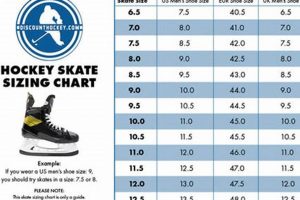
Proper sizing is paramount. It necessitates precise measurement of the child’s foot length and width. Consult a sizing chart specific to the skate brand to ensure accurate selection. Leave minimal room in the toe box, approximately the width of a finger. This prevents excessive movement and blisters.
Question 2: How frequently should youth roller hockey skates be replaced?
Replacement frequency depends on usage intensity and growth rate. Inspect skates regularly for signs of wear and tear, such as boot degradation, chassis damage, or worn wheels. Replace skates when the boot no longer provides adequate support or when the child outgrows the current size, typically every six to twelve months for rapidly growing children.
Question 3: What constitutes proper maintenance for youth roller hockey skates?
Maintenance includes regular cleaning of the boot and chassis to remove dirt and debris. Inspect wheels for wear and rotate them periodically to ensure even wear. Clean and lubricate bearings every one to three months, depending on usage frequency and environmental conditions. Replace worn or damaged parts promptly to maintain performance and safety.
Question 4: What wheel durometer is recommended for youth roller hockey skates?
The ideal wheel durometer depends on the playing surface. Softer wheels (74A-78A) provide greater grip on smooth indoor surfaces. Harder wheels (82A-88A) offer greater speed and durability on rougher outdoor surfaces. Select a durometer appropriate for the intended playing environment. Consider also the player weight and level. Heavier players can wear out softer wheels quick.
Question 5: What level of ankle support is necessary for youth roller hockey skates?
Adequate ankle support is crucial for stability and injury prevention. The boot should provide a snug fit around the ankle without restricting movement. Reinforced ankle support is recommended, especially for younger or less experienced players. Evaluate the skate’s construction to ensure sufficient support for lateral movements and quick stops.
Question 6: How do bearing ABEC ratings influence performance in youth roller hockey skates?
ABEC ratings indicate bearing precision. Higher ABEC ratings (e.g., ABEC 5, ABEC 7) generally correspond to smoother, faster rolling. However, ABEC rating is not the sole determinant of bearing quality. Consider material quality and lubrication. ABEC 5 or ABEC 7 bearings provide a balance between performance and durability for youth roller hockey skates.
In summary, selecting and maintaining roller hockey skates for young players requires careful attention to size, wear, wheel durometer, ankle support, and bearing quality. Regular inspection and appropriate maintenance are essential for ensuring safety and optimal performance.
The next section will cover advanced maintenance techniques and troubleshooting common skate issues.
Youth Roller Hockey Skates
This exploration of equipment designed for young roller hockey participants underscores the critical interplay between performance enhancement and injury mitigation. Accurate sizing, robust ankle support, durable chassis construction, appropriate wheel durometer selection, and precise bearing maintenance collectively contribute to an optimized skating experience. Disregarding these factors compromises athletic potential and elevates the risk of injury. This is especially important for young athletes who rely on the correct equipment for a safe and enjoyable hockey experience.
The information presented provides a foundation for informed decision-making. Prioritizing the features outlined is not merely a matter of preference but a fundamental aspect of responsible participation in the sport. Continued advancements in materials science and engineering promise further refinements in the design and construction, offering enhanced safety and performance capabilities for young athletes. The responsible investment in, and maintenance of, quality skating equipment reflects a commitment to the well-being and development of youth roller hockey players.