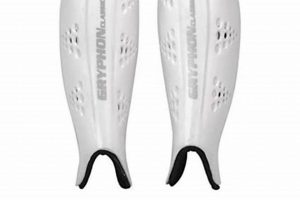
Protective equipment designed for lower leg safety in field hockey participation among young individuals is critical. This gear typically consists of a hard, molded shell that covers the shin and often extends to protect the ankle. An example includes a pair composed of a durable plastic exterior with a padded interior for comfort and impact absorption.
Adequate protection significantly reduces the risk of injuries such as contusions, fractures, and lacerations resulting from impacts with hockey sticks or balls. The use of such safeguards dates back to earlier forms of the sport where players fashioned their own rudimentary versions. Today, these items are essential for young athletes to safely engage in the dynamic environment of field hockey, fostering confidence and enabling them to focus on skill development.
This article will delve into different types, proper fitting techniques, material composition, and maintenance to ensure optimal safety and performance for young field hockey players.
Protective Gear Guidance
The following guidance outlines essential considerations for selecting and maintaining protective leg equipment in youth field hockey. Proper adherence to these guidelines will enhance player safety and prolong equipment lifespan.
Tip 1: Size Appropriately. Select equipment that corresponds with the player’s lower leg length. Overly large items may shift during play, while undersized items may leave areas exposed.
Tip 2: Ensure a Secure Fit. Verify that items fit snugly against the leg and remain in place during movement. Straps, if present, should be adjusted for a secure, yet comfortable, fit.
Tip 3: Consider Material Composition. Opt for equipment constructed from durable materials, such as high-density plastics, that can withstand repeated impacts. Interior padding should offer adequate cushioning and be moisture-wicking.
Tip 4: Regularly Inspect for Damage. Before each use, examine equipment for cracks, tears, or other signs of wear. Compromised equipment should be replaced immediately.
Tip 5: Maintain Hygiene. Clean equipment after each use to prevent the buildup of bacteria and odors. Follow the manufacturer’s instructions for cleaning, which may involve washing with mild soap and water.
Tip 6: Store Properly. When not in use, store equipment in a dry, well-ventilated area away from direct sunlight to prevent material degradation.
Tip 7: Prioritize Certified Equipment. Where possible, select equipment that meets relevant safety standards and certifications. These certifications indicate that the equipment has been tested and meets specific performance criteria.
By following these tips, coaches, parents, and young athletes can mitigate the risk of lower leg injuries and promote a safer playing environment.
The following sections will delve deeper into the specific types of protective leg equipment available, helping you make an informed choice.
1. Protection Level

The level of protection offered by lower leg equipment is paramount in mitigating injury risk in youth field hockey. The design and materials directly influence the degree to which impacts are absorbed and the severity of potential injuries is reduced.
- Impact Absorption Capacity
This refers to the ability of equipment to dissipate the force of a blow from a stick or ball. High-density plastics and specialized foams are commonly employed to absorb and distribute energy. Lower quality or improperly fitted equipment may fail to adequately absorb impact, increasing the likelihood of bruising, fractures, or other trauma. For example, equipment certified to meet specific safety standards will have undergone testing to demonstrate its impact absorption capabilities.
- Coverage Area
The extent to which the equipment protects the lower leg is crucial. Effective equipment shields the entire shin and often extends to cover the ankle joint. Gaps in coverage can leave vulnerable areas exposed to direct impact. In field hockey, where the ball and sticks frequently make contact with the lower legs, full coverage is essential for minimizing injury.
- Material Thickness and Density
The physical properties of the materials used directly correlate with the level of protection. Thicker, denser materials generally offer greater resistance to penetration and impact. However, excessive thickness can impede mobility. Manufacturers must balance protection with comfort and agility. For instance, composite materials that combine high strength with relatively low weight are often utilized.
- Attachment Security
Equipment that shifts or dislodges during play compromises its protective function. Secure attachment mechanisms, such as straps or integrated sleeves, ensure that the equipment remains in the correct position to provide consistent protection. A loose or improperly secured item may leave the leg vulnerable during critical moments, negating the intended safety benefits.
Collectively, these facets define the protection afforded by lower leg equipment. Selecting equipment that prioritizes impact absorption, comprehensive coverage, appropriate material density, and secure attachment is vital for safeguarding young field hockey players and minimizing the risk of injury.
2. Size Conformity

The adherence to correct dimensions in lower leg protective equipment is crucial for efficacy in youth field hockey. Improper sizing negates the intended protective features, potentially leading to increased injury risk. Selecting equipment that aligns with a player’s leg dimensions is, therefore, a primary concern.
- Protective Coverage Area
Correct sizing ensures that the equipment adequately covers the area between the ankle and the knee. Undersized equipment leaves portions of the lower leg exposed, rendering those areas vulnerable to impact from hockey sticks or balls. Oversized equipment, conversely, may shift during play, exposing previously protected areas. For instance, if equipment intended for a height of 5’0″ is used by a player who is 4’6″, the excess length can cause instability and reduced protection.
- Secure Fit and Stability
Appropriate dimensions facilitate a secure fit that minimizes movement during physical activity. Overly large equipment can shift or rotate, exposing the leg to impact. Equipment that is too small, in contrast, can create pressure points and discomfort, potentially distracting the player and affecting performance. Straps and fastening systems are designed to work effectively within a specific size range; deviating from this range compromises their functionality.
- Range of Motion and Agility
Conformity to size is essential for maintaining a player’s range of motion and agility. Ill-fitting equipment can restrict movement, impeding a player’s ability to react quickly and effectively during gameplay. For example, equipment that extends beyond the ankle can limit ankle flexion, affecting running and pivoting. Likewise, overly tight equipment can restrict blood flow and cause discomfort, negatively impacting performance.
- Long-Term Comfort and Adherence
Correctly sized equipment promotes comfort, which increases the likelihood that players will consistently wear it. Ill-fitting equipment, whether too tight or too loose, can cause discomfort, leading players to adjust or remove it, particularly during strenuous activity. This reduces protection. Consistent use of appropriately sized gear is essential for long-term safety and injury prevention.
In conclusion, adhering to appropriate sizing guidelines is fundamental to the functionality and effectiveness of protective lower leg equipment in youth field hockey. Compromises in size conformity directly translate to compromises in protection, stability, range of motion, and long-term adherence, underscoring the importance of accurate measurements and careful selection.
3. Material Durability

The longevity and resistance to wear of the materials used in protective youth field hockey lower leg equipment directly influences its efficacy in safeguarding players. Material degradation, such as cracking, tearing, or loss of impact absorption capacity, compromises the equipment’s ability to protect the lower leg from injury. This degradation is a direct consequence of repeated impacts with hockey sticks and balls, exposure to weather conditions, and general wear and tear during gameplay. Therefore, material durability is not merely a desirable attribute but a fundamental requirement for effective protection. For example, if the hard outer shell cracks after a few uses, the underlying padding is exposed and the level of protection is significantly reduced, increasing the risk of injury.
Material selection plays a pivotal role in determining the equipment’s lifespan and protective capabilities. High-density polyethylene (HDPE) and polypropylene are commonly employed for the outer shells due to their impact resistance and ability to withstand repeated stress. The inner padding often consists of closed-cell foams, such as ethylene-vinyl acetate (EVA), selected for their energy absorption and cushioning properties. The stitching and binding materials must also exhibit durability to prevent seams from unraveling under stress. A practical application of this understanding involves regular inspection of the equipment for signs of wear, such as cracks, tears, or thinning of the padding. Early detection of material degradation allows for timely replacement, ensuring continued protection.
In summary, the durability of materials in youth field hockey lower leg protection is inextricably linked to player safety. Compromises in material quality or maintenance lead to reduced protection and increased injury risk. Understanding the relationship between material durability and equipment performance enables informed decisions regarding selection, maintenance, and timely replacement. Continued research and development in material science aim to further enhance the durability and protective capabilities of youth field hockey protective equipment.
4. Comfort Factor
Comfort, when related to lower leg protective equipment in youth field hockey, is not merely a luxury but an essential component directly influencing safety and performance. A player’s willingness to consistently and correctly wear protective gear is intrinsically linked to its comfort level. This acceptance impacts a players focus on the game, reduces distractions, and promotes overall safety.
- Material Breathability and Moisture Management
The capacity of materials to allow air circulation and wick away moisture is pivotal. Inadequate breathability leads to perspiration buildup, causing discomfort and skin irritation. Excessive moisture also degrades the structural integrity of padding over time. Conversely, breathable materials like specialized synthetic fabrics facilitate evaporation, maintaining a comfortable and dry environment. For example, equipment incorporating moisture-wicking liners minimizes slippage and prevents the development of skin conditions, thereby enhancing player focus.
- Padding Design and Ergonomics
The configuration and contouring of padding significantly affect comfort. Poorly designed padding can create pressure points and restrict movement, leading to discomfort and chafing. Ergonomically designed padding conforms to the anatomical contours of the lower leg, distributing pressure evenly and allowing for a full range of motion. For instance, strategically placed gel or foam inserts provide targeted cushioning in high-impact areas, reducing discomfort without compromising protection.
- Weight and Bulk
The mass and dimensions of protective equipment influence a player’s agility and endurance. Overly heavy or bulky equipment restricts movement and contributes to fatigue, increasing the risk of errors and potential injury. Lightweight, streamlined designs minimize encumbrance while maintaining adequate protection. For example, equipment constructed from advanced composite materials balances impact resistance with reduced weight, enabling players to move freely and efficiently.
- Secure and Adjustable Fit
A secure, yet adjustable, fit is essential for maintaining comfort and stability. Equipment that shifts or slides during play can cause discomfort and distraction. Adjustable straps and fastening systems enable players to customize the fit, ensuring that the equipment remains securely in place without constricting movement. For example, elasticized straps with hook-and-loop closures allow for precise adjustments, accommodating individual leg sizes and shapes, promoting a comfortable and secure fit.
In conclusion, the comfort factor is inseparable from the effectiveness of lower leg protection in youth field hockey. Addressing material breathability, padding design, weight, and fit directly impacts a player’s willingness to consistently use the equipment, thereby maximizing protection and promoting a safer playing environment. Ignoring these elements increases the likelihood of discomfort, distraction, and ultimately, injury.
5. Cleanliness Ease
Cleanliness ease is a critical, yet often overlooked, factor directly affecting the longevity, hygiene, and performance of lower leg protective equipment used in youth field hockey. The accumulation of sweat, dirt, and bacteria within the padding and on the surface of this equipment creates an environment conducive to odor, skin irritation, and potential infection. Consequently, the design and material composition, specifically related to the ease of cleaning, significantly impact the overall value and usability of these protective items. For instance, if cleaning is difficult, equipment may not be cleaned as often as required, leading to the aforementioned negative consequences, which might increase the risk of staph infections.
Equipment incorporating removable, machine-washable liners exemplifies the practical application of cleanliness ease in design. These liners allow for thorough cleaning, removing accumulated contaminants and preventing the buildup of harmful microorganisms. Smooth, non-porous outer surfaces are also advantageous, as they can be easily wiped down with disinfectant solutions. Conversely, equipment with permanently affixed, multi-layered padding and intricate designs poses cleaning challenges. Dirt and sweat can become trapped in hard-to-reach areas, necessitating time-consuming and often ineffective cleaning procedures. A field test example includes the use of a product with velcro straps. If the velcro is weak and the padding bulky, it may lead to infrequent cleaning, causing an unsanitary situation.
Therefore, cleanliness ease should be a primary consideration during the selection process for youth field hockey lower leg protection. Equipment that is easily cleaned and maintained reduces the risk of hygiene-related issues, extends the product’s lifespan, and ensures consistent performance. Challenges remain in balancing ease of cleaning with impact protection and comfort. However, prioritizing designs and materials that facilitate cleaning is a crucial step in safeguarding the health and well-being of young athletes.
6. Secure Fitting

The stability of lower leg protection during youth field hockey is critical for mitigating injury risk. Equipment that shifts or dislodges during play provides inadequate protection, leaving the lower leg vulnerable to impacts from sticks or balls. A secure fit ensures that the protection remains correctly positioned, absorbing and dissipating force as intended. For instance, if an improperly fitted item slides down the leg during a tackle, the ankle area, typically covered for protection, becomes exposed and susceptible to injury. The practical result is a reduction in the level of safety offered by that equipment, despite its inherent protective capabilities.
A secure fit is achieved through a combination of appropriate sizing, adjustable fastening mechanisms, and ergonomic design. Sizing charts, typically provided by manufacturers, offer guidance for selecting equipment that corresponds with a player’s leg dimensions. Adjustable straps, buckles, or sleeves enable players to customize the fit, ensuring a snug and stable hold. Ergonomic designs, which contour to the natural shape of the lower leg, further enhance stability and minimize movement. As an example, elasticized straps are common because they allow for some flexibility during natural movement while keeping the equipment safely secure to the player’s leg. Such details provide stability needed for both playing and protection.
In summary, a secure fit is a fundamental component of effective lower leg protection in youth field hockey. Prioritizing appropriate sizing, adjustable fastening mechanisms, and ergonomic design maximizes equipment stability, ensuring consistent protection throughout gameplay and reducing the risk of lower leg injuries. Challenges are ongoing in perfecting secure fit without sacrificing comfort and range of motion, a balance crucial for both safety and performance.
7. Impact Resistance

Impact resistance is a defining characteristic of lower leg protective equipment designed for youth field hockey. Its significance stems from the inherent risks of the sport, which involve high-velocity impacts from hockey sticks and the ball. Equipment lacking sufficient impact resistance fails to adequately protect the lower leg, leading to injuries such as contusions, fractures, and lacerations. The effectiveness of a item in preventing these injuries is directly proportional to its capacity to absorb and dissipate impact energy. For example, a item constructed from low-density plastic may shatter upon impact with a hockey stick, offering minimal protection. In contrast, a item utilizing high-density polyethylene or composite materials is designed to withstand and deflect significant force, minimizing the risk of injury. This underscores the relationship, where impact resistance dictates the safety of young players.
The assessment of impact resistance involves standardized testing procedures that simulate real-world scenarios. These tests measure the amount of force transmitted through the equipment to the lower leg, with results compared to established safety standards. Certifications from organizations indicate that the equipment has met specific impact resistance criteria. Moreover, the design of the equipment influences its impact resistance. Contoured shapes and strategically placed padding contribute to energy dispersion, reducing the concentration of force on specific areas. Regularly inspecting protective equipment for signs of damage, such as cracks or delamination, is crucial, as compromised materials lose their ability to effectively resist impact. An incident resulting in a fracture despite the use of equipment highlights the importance of choosing products with demonstrated impact resistance and adhering to proper maintenance practices.
In summary, impact resistance is not merely a feature of youth field hockey lower leg protection but a prerequisite for its functionality. Selecting equipment that meets or exceeds recognized safety standards, combined with diligent inspection and maintenance, ensures that young players receive the necessary protection against impact-related injuries. Understanding the principles of impact resistance and its application in the design and materials of protective equipment is vital for promoting safety in youth field hockey.
Frequently Asked Questions
The following addresses common inquiries concerning lower leg protection for young field hockey players.
Question 1: How does one properly size shin guards for youth field hockey?
The correct size is determined by measuring the distance from just below the knee to the top of the foot while the individual is standing. The equipment should cover this area fully. Refer to the manufacturer’s sizing chart for precise measurements and corresponding sizes.
Question 2: What materials are commonly used in youth field hockey shin guards, and what are their advantages?
Typical materials include high-density polyethylene (HDPE) for the outer shell, providing impact resistance, and closed-cell foams like EVA for padding, offering cushioning and shock absorption. Some models incorporate composite materials for enhanced protection and reduced weight.
Question 3: How often should youth field hockey shin guards be replaced?
Replacement frequency depends on usage and wear. Regular inspection for cracks, tears, or thinning of padding is essential. Replace immediately if any damage is detected or if the equipment no longer fits properly due to growth.
Question 4: What is the best way to clean and maintain youth field hockey shin guards?
Remove dirt and sweat after each use. Wipe down the outer shell with a damp cloth and mild soap. If the liners are removable, wash them according to the manufacturer’s instructions. Ensure the equipment is completely dry before storage.
Question 5: Are there specific safety standards that youth field hockey shin guards must meet?
While specific mandatory standards may vary by region, it’s advisable to choose equipment certified by organizations that test for impact resistance and protection. These certifications indicate that the equipment has met specific performance criteria.
Question 6: How important is the fit of youth field hockey shin guards in preventing injuries?
A secure and proper fit is critical. Ill-fitting equipment can shift during play, exposing the lower leg to impacts. The equipment should fit snugly against the leg and remain in place during movement without restricting mobility.
Proper selection, maintenance, and usage of lower leg equipment are paramount in injury prevention for young field hockey participants.
The following section presents practical tips for selecting the most appropriate lower leg safety devices.
Conclusion
This article has systematically explored facets of youth field hockey shin guards, encompassing materials, sizing, maintenance, and protective capabilities. Emphasis has been placed on the interconnectedness of these elements, highlighting how each contributes to the overall safety and performance of young athletes.
The selection and proper utilization of youth field hockey shin guards are paramount in injury prevention. Continued vigilance in equipment maintenance, coupled with adherence to safety guidelines, remains crucial in fostering a secure sporting environment. Prioritizing these measures safeguards young participants and promotes the sustained growth of field hockey.