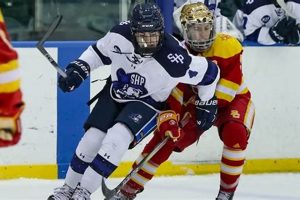
Practices designed to improve a player’s ability to move efficiently and powerfully on the ice are a cornerstone of development in the sport. These routines encompass a wide range of exercises targeting various aspects of on-ice movement. For example, edge work drills enhance balance and control, while speed drills focus on acceleration and top-end velocity.
Proficiency in on-ice mobility is fundamental to success in the sport. Improved skating translates directly to enhanced puck control, agility in maneuvering around opponents, and the capacity to quickly transition between offensive and defensive plays. Historically, emphasis on such training has increased as the game has evolved, demanding greater speed and finesse from its participants. Enhanced mobility can provide players with a competitive edge at all levels of play.
The following sections will delve into specific types of drills, detailing their execution, benefits, and applications within a comprehensive training program. Focus will be given to both individual skill development and team-oriented exercises that integrate these fundamental movement skills into game-like scenarios.
Essential Guidance for Optimizing On-Ice Movement Training
The following are crucial points to consider when implementing training programs designed to improve a hockey player’s on-ice mobility. Strict adherence to these guidelines maximizes the efficacy of training efforts and reduces the risk of injury.
Tip 1: Prioritize Proper Technique: Emphasis should be placed on mastering correct form before increasing speed or intensity. Incorrect technique can lead to the development of bad habits and increase the likelihood of musculoskeletal strain.
Tip 2: Progressive Overload Implementation: Gradually increase the difficulty and intensity of routines to continually challenge athletes and promote adaptation. Avoid abrupt increases in training volume or intensity, which can lead to overuse injuries.
Tip 3: Incorporate Varied Exercises: Integrate a diverse range of movements to address different aspects of on-ice mobility. This prevents plateaus and promotes well-rounded development. For example, include drills that focus on forward stride, backward stride, lateral movement, and transitions.
Tip 4: Emphasize Edge Work: Mastering edge control is paramount for agility and stability on the ice. Dedicated routines focusing on inside and outside edges are essential for developing superior balance and maneuverability.
Tip 5: Focus on Balance and Core Strength: Adequate core strength and stability are essential for maintaining balance and generating power. Incorporate off-ice exercises that target core muscles and improve overall stability.
Tip 6: Utilize Video Analysis: Recording and analyzing performance allows for identification of technical flaws and targeted improvement. This provides objective feedback to athletes and coaches.
Tip 7: Implement Sport-Specific Exercises: Integrate drills that replicate game situations to ensure that skills transfer effectively to on-ice performance. This bridges the gap between isolated skill development and practical application.
Consistent application of these principles yields significant improvements in a player’s ability to move effectively and efficiently on the ice, translating to enhanced overall performance and a reduced risk of injury.
The subsequent sections will examine specific on-ice and off-ice conditioning routines that can be implemented to maximize the benefits outlined above.
1. Technique Refinement

Technique refinement is fundamental to maximizing the benefits derived from on-ice movement practices. It ensures that players execute movements efficiently, powerfully, and with minimal risk of injury. Proper technique optimizes energy expenditure, allowing players to maintain high performance levels throughout extended periods.
- Stride Mechanics
Correct stride mechanics involve a full extension of the leg, a proper angle of the skate blade to the ice, and efficient transfer of power from the leg muscles to the ice surface. Refinement in this area reduces wasted energy and enhances forward velocity. Without proper stride mechanics, players may compensate with inefficient movements, leading to fatigue and reduced performance.
- Edge Work Proficiency
Edge control enables players to perform tight turns, maintain balance while maneuvering at high speeds, and execute rapid changes in direction. Refinement of edge work involves mastering both inside and outside edges, allowing for nuanced control and responsiveness. Proper edge work is crucial for both offensive puck handling and defensive positioning.
- Body Posture and Balance
Maintaining a low center of gravity and proper upper body posture is essential for balance and agility. Correct body positioning allows players to absorb impacts, maintain stability during contact, and execute quick pivots and turns. Refinement in body posture ensures that players remain balanced and responsive, even in challenging game situations.
- Arm Swing Coordination
Coordinated arm swing contributes to balance, momentum, and power generation. Efficient arm movement complements the stride cycle, enhancing overall skating efficiency and velocity. Refinement of arm swing technique ensures that players utilize their upper body to maximize speed and agility.
The aforementioned facets of technique are intertwined, and integrated improvement across all areas leads to substantial gains in on-ice mobility and overall performance. By focusing on technique refinement within skating drills, players develop a solid foundation for advanced skill development and competitive success.
2. Edge Control

Edge control, the ability to manipulate and maintain balance using the inner and outer edges of skate blades, is intrinsically linked to skating proficiency in ice hockey. Skating drills designed to enhance this aspect target the development of fine motor skills and proprioception, allowing players to execute precise turns, maintain balance under pressure, and generate power efficiently. The effectiveness of many skating drills hinges on a player’s ability to engage and control their edges, directly influencing their agility, speed, and overall on-ice performance. For example, a simple crossover drill becomes significantly more effective when players actively focus on using their inside edges for propulsion and their outside edges for balance and stability. Without adequate edge control, players struggle to maintain speed through turns, losing valuable time and potentially sacrificing scoring opportunities.
Beyond individual drills, the implications of edge control extend to game situations. A player with superior edge control can quickly change direction to evade a defender, maintain balance while battling for a puck along the boards, or execute a sharp cut to create a shooting lane. Furthermore, improved edge control contributes to enhanced puck handling skills. A player who is stable and balanced on their edges can maintain better control of the puck, make quicker decisions, and distribute the puck more effectively. Defensively, edge control is crucial for maintaining proper positioning, closing gaps, and effectively angling opponents towards the boards.
In conclusion, edge control is not merely a component of on-ice mobility; it is a foundational skill that directly impacts a player’s ability to execute fundamental skating techniques and perform effectively in game situations. The design and implementation of skating drills must prioritize the development of edge control to maximize player potential. Neglecting this aspect will limit overall skating proficiency and ultimately hinder a player’s contribution to the team’s success.
3. Speed Enhancement
The augmentation of velocity on the ice constitutes a critical aspect of skill development in the sport. Structured exercises designed to cultivate increased speed directly influence player effectiveness in various game scenarios, thereby requiring a targeted approach in the design and execution of associated training routines.
- Stride Length and Frequency Optimization
Achieving maximum speed necessitates the synergistic development of both stride length and stride frequency. Exercises designed to improve stride length often involve power skating drills that focus on full leg extension and forceful push-offs. Concurrently, drills targeting stride frequency emphasize rapid leg turnover and efficient use of edges. Optimal balance between these two components is crucial, as an overemphasis on one can compromise the other. Real-world examples include interval training programs that alternate between short bursts of maximal effort and periods of active recovery, promoting both power and endurance.
- Acceleration Mechanics
Initial acceleration is often more critical than top-end speed, as it determines a player’s ability to gain positional advantage or pursue loose pucks. Drills focused on acceleration involve explosive starts, low body positioning, and rapid arm movements to generate momentum. The application of plyometrics, both on and off the ice, can further enhance acceleration capabilities by improving explosive power in the leg muscles. In game situations, a player with superior acceleration can consistently win races to the puck and create separation from defenders.
- Transition Speed
The ability to transition quickly between forward and backward skating, as well as lateral movements, is essential for maintaining positional awareness and reacting effectively to changes in game dynamics. Drills targeting transition speed often involve rapid changes in direction, pivoting exercises, and backward skating sprints. A player who can seamlessly transition between different skating styles can effectively support both offensive and defensive plays.
- Aerobic and Anaerobic Conditioning
Sustained high-speed skating requires a robust aerobic and anaerobic energy system. Interval training, long-distance skating drills, and off-ice cardiovascular conditioning are crucial for developing the stamina necessary to maintain speed throughout a game. Players with superior conditioning can maintain their speed and agility even during the late stages of a game when fatigue begins to set in.
Collectively, the aforementioned facets of speed enhancement represent an integrated approach to improving on-ice velocity. The deliberate incorporation of these elements into specifically designed routines allows for significant gains in player performance, thereby underscoring the importance of a comprehensive and scientifically informed approach to training.
4. Agility Development

Agility, defined as the capacity to rapidly change direction and velocity while maintaining balance, constitutes a critical determinant of success in ice hockey. Skating drills specifically designed to enhance agility are integral to developing a player’s ability to evade opponents, quickly transition between offensive and defensive roles, and maintain positional advantage within the dynamic environment of the game.
- Lateral Movement Proficiency
Lateral movement proficiency encompasses the ability to skate efficiently and effectively in a sideways direction. Drills focusing on lateral movement often involve shuffle steps, c-cuts, and t-pushes, all of which demand precise edge control and lower body coordination. For example, a defensive player utilizing strong lateral movement can effectively close gaps on opposing forwards and maintain optimal positioning relative to the puck. A player with well-developed lateral agility can quickly adjust their position to intercept passes, block shots, and disrupt offensive plays.
- Pivoting and Turning Skills
Pivoting and turning skills enable players to rapidly change direction and orientation on the ice. Drills targeting these skills include forward-to-backward transitions, mohawks, and tight turns executed at high speeds. A player capable of executing quick, efficient pivots can seamlessly transition from offense to defense, create scoring opportunities by cutting towards the net, or evade pressure from opposing players. The efficiency of these movements directly impacts a player’s ability to maintain momentum and effectively respond to dynamic game situations.
- Reactive Agility
Reactive agility refers to the ability to respond quickly and effectively to unexpected stimuli, such as changes in puck direction or the movements of opposing players. Drills designed to improve reactive agility often involve unpredictable patterns, visual cues, and decision-making elements that force players to react spontaneously. An example would be a drill where a coach points in a random direction, and the player must immediately accelerate and skate towards that point. Developing reactive agility enhances a player’s ability to anticipate plays, react to turnovers, and make split-second decisions under pressure.
- Balance and Stability Under Pressure
Maintaining balance and stability while executing agile movements is essential for retaining control and preventing turnovers. Drills focusing on balance often involve single-leg skating, edge work exercises, and drills that simulate physical contact. A player with superior balance and stability can withstand pressure from opposing players, maintain possession of the puck during battles along the boards, and execute agile maneuvers without losing control. Enhancing these aspects directly translates to improved puck control and a reduced likelihood of turnovers.
The various facets of agility are interconnected and mutually reinforcing. The targeted application of specifically designed skating drills cultivates a player’s ability to move with precision, speed, and control, thereby enhancing overall on-ice effectiveness. Therefore, incorporating agility-focused routines into training regimens is critical for maximizing player potential and contributing to team success.
5. Power Generation
The effective transfer of energy into on-ice velocity and maneuverability is a critical determinant of a hockey player’s performance. Specialized movement practices are essential for cultivating this capacity, linking lower-body strength, stride mechanics, and core stability to maximize propulsive force. These practices serve as a means of transforming muscular effort into kinetic energy, a direct correlation to enhanced player efficacy.
- Stride Extension and Recovery
Complete stride extension is fundamental for maximizing the distance covered with each skating motion. The power phase of the stride involves full engagement of the glutes, hamstrings, and quadriceps, extending the leg completely to drive the skate blade across the ice. Equally important is the efficient recovery phase, in which the leg is brought back into position for the next stride without impeding momentum. Drills that emphasize stride extension and recovery include overspeed training using resistance cords and focused practice on maintaining a low center of gravity throughout the stride cycle. Such enhancements directly affect a player’s ability to accelerate quickly and maintain high speeds during sustained skating sequences.
- Edge Engagement and Angle of Attack
The angle at which the skate blade engages the ice surface directly influences the amount of force that can be generated with each stride. Optimal edge engagement involves using the inside and outside edges of the skate to grip the ice and generate propulsion. Drills that focus on edge engagement include figure-eight patterns, c-cuts, and mohawks, which require players to maintain balance and control while applying pressure to their edges. Proper angle of attack allows players to convert muscular force into forward momentum, resulting in increased speed and agility.
- Core Stability and Rotational Power
A stable core is essential for transferring power from the lower body to the upper body, and for maintaining balance and control during dynamic movements. Core muscles act as a bridge between the legs and the upper body, allowing for efficient transfer of energy. Power generation is further enhanced by rotational power, which involves engaging the obliques and transverse abdominis muscles to generate torque. This rotation allows for a more powerful and explosive stride. Drills that improve core stability and rotational power include medicine ball rotations, plank variations, and skating exercises that require players to maintain a stable core while changing direction. A strong and stable core is a prerequisite for efficient skating mechanics and enhanced power output.
- Ankle and Foot Strength
The muscles in the ankle and foot play a critical role in controlling the skate blade and generating power. Strong ankles and feet allow players to maintain balance, generate force through their edges, and react quickly to changes in direction. Drills that strengthen the ankles and feet include calf raises, toe raises, and balance exercises performed on a wobble board or balance pad. Enhanced ankle and foot strength translates to improved edge control, stability, and power output, leading to more effective skating mechanics and increased on-ice performance.
The integration of these aspects within a comprehensive movement training program optimizes the transfer of muscular force into propulsive energy. By focusing on stride mechanics, edge engagement, core stability, and ankle strength, players can maximize their power output, leading to enhanced speed, agility, and overall on-ice effectiveness. These specialized movement practices serve as the foundation for advanced skill development and competitive success.
Frequently Asked Questions about On-Ice Movement Training
The following questions address common inquiries regarding the implementation and benefits of structured training designed to enhance a player’s ability to move effectively on the ice. The answers provide concise, evidence-based information to optimize training programs.
Question 1: At what age should structured on-ice movement routines commence?
The introduction of structured routines should align with the athlete’s developmental stage. Foundational skills, such as balance and basic stride mechanics, can be introduced at a young age. Progression to more complex exercises should coincide with improvements in physical maturity and coordination.
Question 2: What is the optimal frequency for these training sessions?
The frequency depends on the player’s age, skill level, and overall training load. Generally, two to three dedicated sessions per week, integrated with regular team practices, can yield significant improvements. Adequate rest and recovery are crucial to prevent overtraining.
Question 3: How can technique errors be effectively addressed?
Video analysis provides objective feedback and allows for the identification of technical flaws. Qualified instructors can offer individualized coaching to correct improper form and promote efficient movement patterns.
Question 4: What role does off-ice conditioning play in enhancing performance?
Off-ice conditioning is integral to developing the strength, power, and endurance necessary for on-ice success. Exercises targeting core stability, lower body strength, and cardiovascular fitness directly contribute to enhanced performance and injury prevention.
Question 5: How can training be adapted to address individual player weaknesses?
Individualized training programs should be developed based on a thorough assessment of a player’s strengths and weaknesses. Targeted exercises can be implemented to address specific areas for improvement, such as edge control, agility, or speed.
Question 6: What are the key indicators of successful training?
Indicators of successful training include improved skating speed, enhanced agility, increased power output, and a reduction in the frequency of skating-related injuries. Objective measurements, such as sprint times and agility tests, can be used to track progress.
In summary, structured and properly implemented on-ice movement routines, when coupled with appropriate off-ice conditioning and individualized coaching, yield significant improvements in player performance and contribute to a reduced risk of injury.
The subsequent section will explore advanced strategies for integrating on-ice movement training into team practice sessions and game situations.
The Indispensable Role of On-Ice Movement Training
This exploration of skating drills for ice hockey underscores their crucial position in player development. Mastery of these routines, focusing on technique refinement, edge control, speed enhancement, agility development, and power generation, equips athletes with the foundational skills necessary for competitive success. Effective implementation requires a strategic approach, incorporating progressive overload, varied exercises, and continuous assessment.
The continued evolution of the sport demands an unwavering commitment to optimizing on-ice mobility. Organizations and coaches must prioritize the integration of advanced movement practices to cultivate athletes capable of meeting the increasing demands of the game. Investment in this area will yield significant returns, fostering a new generation of skilled and dynamic competitors.