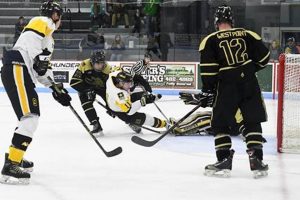
The term designates a team’s effort to defend while one or more of its players are serving a penalty. This strategic maneuver involves specific player positioning, aggressive puck retrieval, and disciplined defensive tactics aimed at preventing the opposing team from scoring with a player advantage. For example, if a player receives a minor penalty, their team must operate with one fewer skater for two minutes, requiring the remaining players to execute specialized defensive strategies.
Success in this area is crucial for a team’s overall performance. A strong capacity to effectively negate opponent power plays can significantly shift momentum and prevent critical goals, often proving to be the difference between winning and losing. Historically, teams renowned for their defensive prowess have consistently demonstrated exceptional performance in this area, contributing significantly to their championship aspirations.
The following sections will delve into the key components of successful penalty-killing systems, examining specific tactics, player roles, and the strategic considerations involved in maintaining a robust defensive posture while shorthanded.
Strategies for Short-Handed Situations
The following outlines crucial strategic elements for teams navigating penalty situations effectively.
Tip 1: Aggressive Forechecking Disruption: Employ assertive pressure in the opposing zone to disrupt the power play setup. This minimizes sustained offensive zone time for the opponent and forces hurried passes or clearing attempts.
Tip 2: Disciplined Lane Coverage: Prioritize blocking passing lanes and shooting lanes to prevent optimal scoring opportunities. Maintain positional awareness to anticipate and intercept passes, thus minimizing shot volume.
Tip 3: Strategic Puck Clearing: When possessing the puck, execute controlled and purposeful clearing attempts to relieve pressure and gain territorial advantage. Avoiding icing calls is critical.
Tip 4: Quick Player Rotation: Maintain energy levels by implementing frequent and efficient player rotations. This ensures players remain fresh and can execute defensive strategies effectively throughout the penalty duration.
Tip 5: Communication Enhancement: Emphasize clear and concise communication among players to coordinate defensive efforts and anticipate opponent movements. This includes verbal cues and non-verbal signals to optimize defensive positioning.
Tip 6: Special Teams Expertise: Specialize on face-off, especially when start the pk situation, it is the most important way in pk.
Adherence to these strategies enhances the likelihood of successfully negating opponent power plays, improving overall defensive performance.
The subsequent sections will elaborate on specific player roles and tactical variations within these defensive strategies.
1. Defensive Zone Structure

Defensive zone structure is fundamental to successful penalty killing. The effectiveness of a team’s shorthanded unit is directly correlated to its ability to maintain a disciplined and organized presence within its defensive zone. A well-defined structure dictates player positioning, responsibilities, and communication protocols, all of which are essential for disrupting the opposing team’s power play setup. A disorganized defensive approach creates vulnerabilities, allowing the power play to generate scoring chances. This, in turn, leads to an increased likelihood of conceding goals while shorthanded. For instance, a team employing a box-plus-one formation aims to cover key areas while limiting passing lanes and shot opportunities. Failure to maintain the integrity of this formation, due to individual errors or lack of communication, can easily expose a high-danger scoring area.
The impact of defensive zone structure extends beyond simply preventing goals. A strong defensive posture can frustrate the opposition, leading to turnovers and clearing opportunities. A clearly defined system allows for quick transitions from defense to offense, potentially generating shorthanded scoring chances. Teams known for their penalty-killing prowess often prioritize structural integrity and disciplined adherence to the system. Consider the historical success of teams like the Detroit Red Wings, who consistently displayed exceptional defensive zone coverage as a cornerstone of their penalty-killing strategy. Their emphasis on positional awareness and unwavering commitment to the system minimized scoring chances and allowed their goaltenders to effectively manage the shots they faced. An example can be seen in the 2007-2008 Red Wings team, which had the number one penalty-kill percentage in the NHL. Their system involved exceptional defenseman who covered key areas.
In conclusion, defensive zone structure is not merely a component of effective penalty killing; it is its foundation. Recognizing the causal relationship between structured defense and shorthanded success is crucial for coaches and players alike. While individual skill and goaltending ability are important, they are ultimately amplified by a well-executed defensive zone system. The challenge lies in consistently implementing and maintaining this structure under pressure, a task that demands diligent practice, clear communication, and unwavering commitment from every player on the penalty-killing unit. The defensive zone structure is the single most important element on a team’s penalty kill.
2. Aggressive Forechecking

Aggressive forechecking, when strategically implemented, is a valuable tactic during penalty kill situations. It disrupts the opponent’s power play setup, forcing errors and reducing sustained pressure. The success of this approach depends on player execution, risk assessment, and the team’s overall defensive strategy.
- Disrupting Power Play Entry
Aggressive forechecking aims to prevent the opposing team from cleanly entering the offensive zone. Applying pressure at the blue line or in the neutral zone forces rushed passes or dump-ins, which can be intercepted or easily cleared. For example, a forward might aggressively pursue the puck carrier, limiting their options and forcing a turnover. This proactive approach minimizes sustained pressure and reduces scoring opportunities against the penalty-killing unit.
- Creating Shorthanded Chances
A well-executed forecheck can create shorthanded scoring opportunities. If the opposing team makes a mistake while attempting to break out of their zone, the penalty-killing unit can capitalize on the turnover and generate an odd-man rush. This not only relieves defensive pressure but also forces the power play to focus on defense, potentially disrupting their offensive flow. An example of this is a quick interception leading to a two-on-one break, forcing the power play unit into defensive mode.
- Energy Expenditure Management
Aggressive forechecking requires significant energy exertion. It is crucial to balance the intensity of the forecheck with the need to conserve energy, particularly during longer penalty kills. Overly aggressive play can lead to fatigue, making the penalty-killing unit vulnerable later in the penalty. Strategic player rotation and calculated forechecking efforts are essential to maintain effectiveness throughout the entire penalty duration.
- Risk-Reward Assessment
An aggressive forecheck involves inherent risks. Over-pursuing the puck can create gaps in the defensive coverage, leaving the penalty-killing unit vulnerable to skilled power play units. A failed forecheck can result in an outnumbered situation for the defenders. Therefore, the decision to forecheck aggressively should be based on a careful assessment of the situation, considering the opponent’s strengths and weaknesses, the score of the game, and the remaining time on the penalty.
Aggressive forechecking as a facet of penalty killing is a high risk high reward strategy. The success of this strategy pivots on the balance between its potential for disruption and creation of scoring opportunities on one hand, and the necessity to manage fatigue and mitigate the risk of conceding outnumbered attacks on the other hand. When employed judiciously, forechecking elevates the teams ability to successfully execute the penalty kill.
3. Shot Blocking Discipline

Shot blocking discipline is an indispensable component of effective penalty killing. Its presence directly impacts a team’s ability to suppress scoring opportunities and successfully navigate shorthanded situations. The primary causal relationship is straightforward: disciplined shot blocking directly reduces the number of shots reaching the goaltender, decreasing the likelihood of goals being scored. Without this discipline, the penalty kill unit becomes significantly more vulnerable, allowing the opposing team’s power play to operate with greater efficiency and generate high-quality scoring chances. For instance, a team lacking disciplined shot blockers will allow clear shooting lanes, resulting in more shots on goal and increased rebound opportunities for the power play unit. Conversely, a team demonstrating consistent shot blocking discipline will force the power play into less advantageous shooting positions and disrupt their offensive flow.
The practical application of shot blocking discipline involves specific techniques and strategic positioning. Players must prioritize blocking shots effectively without compromising their defensive structure or putting themselves at undue risk of injury. This requires precise timing, strategic positioning within shooting lanes, and the ability to anticipate the opposing team’s offensive patterns. A prime example is the defensive strategy employed by teams like the Boston Bruins, who consistently prioritize shot blocking and have historically exhibited strong penalty-killing statistics. Their emphasis on disciplined shot blocking, coupled with strong goaltending and effective clearing strategies, has contributed significantly to their overall defensive success. The importance of shot blocking discipline extends beyond simply preventing shots from reaching the net. It also serves to disrupt the opposing team’s momentum, forcing them to alter their offensive strategy and creating potential turnover opportunities. It is important to note that effective shot-blocking requires intelligent risk assessment, as sacrificing positional integrity for the sake of a block can result in gaps that allow for a higher quality shot.
In summary, shot blocking discipline is not merely a desirable trait in penalty killing; it is a fundamental requirement for success. Its direct impact on reducing shots on goal and disrupting the opposing team’s offensive flow makes it an indispensable element of any effective penalty-killing system. The challenge lies in consistently implementing and maintaining this discipline under pressure, requiring significant practice, clear communication, and unwavering commitment from every player on the penalty-killing unit. The lack of shot-blocking discipline will lead to a failing pk. Recognizing this, teams must emphasize its importance and prioritize its development to improve their overall defensive capabilities.
4. Puck Clearing Efficiency
Puck clearing efficiency is a critical determinant of success during penalty kill situations. Its influence on defensive zone pressure, transition opportunities, and overall shorthanded effectiveness necessitates careful consideration and strategic implementation.
- Minimizing Sustained Defensive Zone Pressure
Efficient puck clearing directly reduces the duration and intensity of pressure exerted by the opposing team within the defensive zone. By effectively removing the puck from the zone, the penalty-killing unit gains valuable respite, preventing fatigue and minimizing scoring opportunities. Examples include precise clearing passes to open ice or rimming the puck around the boards to exit the zone, denying the power play sustained possession and cyclical play.
- Creating Shorthanded Scoring Chances
Effective puck clearing can create opportunities for shorthanded counterattacks. Quick, accurate clearing passes that transition the puck to a teammate in the neutral zone can lead to odd-man rushes and scoring chances. For instance, a defenseman executing a stretch pass to a forward breaking out of the zone can quickly turn defensive pressure into an offensive threat, forcing the power play to react defensively.
- Reducing Icing Penalties
Efficient puck clearing requires a strategic approach to avoid incurring icing penalties. Simply firing the puck down the ice without regard for strategic placement or the presence of opposing players can result in an icing call, negating the benefits of the clear and prolonging defensive zone pressure. Teams that prioritize controlled clears, utilizing the boards or strategically targeting areas of the ice, are less likely to commit icing penalties and maintain control of the game’s momentum.
- Maintaining Player Energy Levels
Efficient puck clearing techniques conserve player energy. Well-executed clears minimize the need for prolonged defensive zone coverage and intense physical battles along the boards. By effectively removing the puck from the zone, players can conserve energy for critical defensive tasks and potential offensive opportunities, enhancing their overall effectiveness throughout the penalty kill.
The multifaceted impact of puck clearing efficiency underscores its vital role in penalty killing success. From alleviating defensive pressure to creating offensive chances and conserving player energy, efficient clearing techniques contribute significantly to a team’s ability to effectively negate opponent power plays. Success in this aspect is essential for overall shorthanded effectiveness and, consequently, the team’s ability to win games. Teams can be measure success in pk through the percentage.
5. Face-Off Win Rate

The face-off win rate exerts a demonstrably significant influence on a team’s efficacy when short-handed. A high face-off win rate directly correlates with the immediate establishment of defensive zone possession at the commencement of the penalty kill. Winning the face-off provides the penalty-killing unit with the opportunity to clear the puck, relieving initial pressure and disrupting the power play’s setup. Conversely, losing the face-off cedes immediate possession to the opposing power play, necessitating immediate defensive action under duress. This is not just theoretical. For instance, the Los Angeles Kings’ consistently high face-off win percentage during their Stanley Cup-winning seasons was a frequently cited factor in their penalty kill success. Controlling the puck from the outset of the penalty allows for strategic puck placement and controlled zone exits, minimizing scoring opportunities.
The strategic advantage gained from face-off dominance extends beyond initial puck possession. Consistently winning face-offs in the defensive zone can disrupt the power play’s rhythm, forcing the opposing team to expend energy retrieving the puck and resetting their offensive structure. This disruption can lead to turnovers, failed zone entries, and a reduction in the overall number of scoring chances generated by the power play. Furthermore, a team proficient in face-offs can strategically position players and adjust their formation based on the anticipated outcome of the face-off, further optimizing their defensive posture. The ability to anticipate and react effectively to the face-off outcome represents a tactical advantage that significantly enhances penalty-killing performance.
In conclusion, a high face-off win rate is an essential, albeit often overlooked, component of a successful penalty kill. Its impact extends from immediate puck possession and strategic zone exits to the disruption of the opposing power play’s rhythm and the creation of turnover opportunities. While numerous factors contribute to penalty-killing effectiveness, face-off dominance provides a tangible advantage that enhances a team’s ability to negate power plays and maintain a competitive edge. Recognizing and prioritizing face-off skills is therefore crucial for teams seeking to improve their shorthanded performance.
6. Goaltender Performance

Goaltender performance is inextricably linked to the success of penalty killing in hockey. The goaltender serves as the final line of defense, and the effectiveness of the shorthanded unit is significantly determined by their ability to stop shots, control rebounds, and maintain composure under pressure. A capable goaltender can compensate for defensive breakdowns, while subpar goaltending can negate even the most structurally sound penalty-killing system. For example, a goaltender with a high save percentage while shorthanded instills confidence within the defensive unit and discourages the opposing team from taking low-percentage shots. This effect is amplified when the penalty kill percentage is high.
The impact of goaltender performance extends beyond simply preventing goals. A goaltender’s ability to control rebounds minimizes second-chance opportunities for the power play, allowing the defensive unit to clear the puck and relieve pressure. Furthermore, a goaltender who can effectively track the puck and anticipate passing lanes can disrupt the power play’s offensive flow, forcing them to alter their strategy and potentially commit turnovers. A good example is the performance of Carey Price, whose exceptional play during penalty kills has been consistently cited as a key factor in the Montreal Canadiens’ success. The pressure is always on the goaltender to make a save, but with the pk, that pressure is felt more.
In summary, goaltender performance is not merely a contributing factor to penalty-killing success; it is an essential determinant. Their ability to stop shots, control rebounds, and maintain composure under pressure directly influences the outcome of shorthanded situations. Recognizing this critical connection, teams must prioritize the development and strategic deployment of skilled goaltenders to maximize their penalty-killing effectiveness and enhance their overall defensive capabilities. A high performing penalty kill percentage is associated with quality goaltenders.
7. Special Teams Coaching
The quality of special teams coaching directly dictates the effectiveness of a team’s penalty kill. The coach’s role extends beyond simply drilling fundamental skills; it encompasses strategic planning, personnel selection, in-game adjustments, and detailed video analysis. A knowledgeable special teams coach identifies weaknesses in the opponent’s power play, develops tailored defensive strategies, and effectively communicates these strategies to the players. Furthermore, the coach is responsible for fostering a culture of discipline, accountability, and unwavering commitment to the penalty-killing system. For instance, successful coaches meticulously review video footage of both their own penalty kill and the opposing power play to identify tendencies, patterns, and exploitable vulnerabilities. This data then informs the development of customized defensive schemes designed to neutralize the opponent’s strengths.
Personnel selection is another crucial aspect of special teams coaching. The coach must identify players possessing the specific skill sets and attributes necessary for successful penalty killing, such as hockey sense, shot-blocking ability, skating speed, and face-off proficiency. This involves not only identifying talent but also developing players to excel in these specialized roles. In-game adjustments are equally critical. The coach must monitor the flow of the game, recognize changes in the opponent’s power play strategy, and make timely adjustments to the penalty-killing system accordingly. This requires a deep understanding of the game, quick decision-making skills, and the ability to effectively communicate adjustments to the players on the ice. An example is in the NHL, teams consistently ranked among the top penalty-killing units often have experienced coaches who specialize in special teams, such as Rick Bowness and Craig Berube. Their detailed preparation and in-game adjustments have consistently contributed to their team’s shorthanded success.
In conclusion, special teams coaching is not merely a supplementary aspect of hockey; it is a foundational element of a successful penalty kill. The coach’s expertise in strategic planning, personnel selection, in-game adjustments, and detailed video analysis directly determines the effectiveness of the shorthanded unit. Recognizing this causal relationship, teams must prioritize the selection and development of skilled special teams coaches to maximize their penalty-killing effectiveness and enhance their overall chances of success. A great coach is the key to winning games.
Frequently Asked Questions about Penalty Killing in Hockey
The following addresses common inquiries concerning penalty killing strategy, effectiveness, and related aspects of the sport.
Question 1: What constitutes a successful penalty kill?
A successful penalty kill is defined as preventing the opposing team from scoring while one or more players are serving penalties. Success is often measured by the penalty-killing percentage, which represents the proportion of penalties successfully killed.
Question 2: What are the primary defensive formations used during penalty kills?
Common defensive formations include the box, diamond, and wedge. The selection of a particular formation depends on the team’s personnel, the opposing team’s power play strategy, and the overall game situation.
Question 3: How important is goaltending during a penalty kill?
Goaltending is crucial. The goaltender serves as the final line of defense and can significantly impact the outcome of a penalty kill through saves, rebound control, and communication with the defensive unit.
Question 4: What role does aggressive forechecking play during a penalty kill?
Aggressive forechecking can disrupt the opposing team’s power play setup, forcing turnovers and reducing sustained offensive pressure. However, it must be executed strategically to avoid creating defensive vulnerabilities.
Question 5: How can a team improve its penalty-killing percentage?
Improvements can be achieved through a combination of factors, including improved defensive zone coverage, disciplined shot blocking, efficient puck clearing, a high face-off win rate, and strong goaltending.
Question 6: What are the potential risks of excessive penalty killing?
Excessive penalty killing can lead to player fatigue, increased scoring opportunities for the opposing team, and potential momentum shifts in the game. It also indicates a lack of discipline within the team.
Effective penalty killing involves a multifaceted approach, combining strategic formations, disciplined execution, and strong individual performances. Sustained success requires ongoing evaluation and adaptation to evolving opponent strategies.
The subsequent section will delve into specific drills and training techniques designed to enhance penalty-killing skills.
Conclusion
This exploration has elucidated the multifaceted nature of penalty killing in hockey. Effective execution necessitates a convergence of strategic planning, disciplined player performance, and exceptional goaltending. The interplay between defensive zone structure, aggressive forechecking when appropriate, disciplined shot blocking, efficient puck clearing, face-off wins, and goaltender prowess dictates the ultimate success or failure when shorthanded.
Ultimately, consistent success in penalty killing requires a commitment to continuous improvement, strategic adaptation, and unwavering dedication from every member of the team. The ability to effectively negate opponent power plays remains a critical determinant of competitive advantage and overall success in the sport.