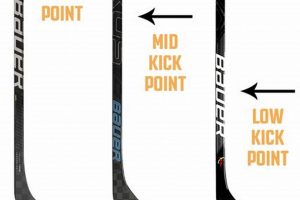
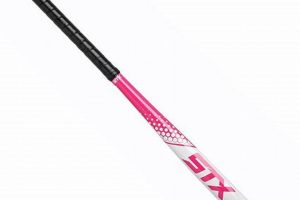
Hockey sticks are engineered with varying flex points along the shaft, dictating where the stick bends most during a shot. A design prioritizing a lower area near the blade facilitates quicker release times. This configuration concentrates the flex closer to the hands, enabling a rapid transfer of energy to the puck.
This design characteristic is favored by players prioritizing swift puck release in close-quarters situations. The enhanced responsiveness lends itself to snapshots and wrist shots, providing an advantage in high-pressure scenarios where reaction time is paramount. Historically, this design gained prominence as offensive strategies evolved to emphasize quick passing and scoring in tight spaces. Its benefits include improved puck control and greater shot accuracy when executed properly.
Understanding the mechanics and advantages associated with this design prepares individuals to further explore specific models, materials, and usage techniques that optimize performance on the ice.
Optimizing Performance with Low Flex Point Hockey Sticks
The selection and effective use of hockey sticks with a specific flex profile requires attention to detail and an understanding of its inherent characteristics. Consider the following tips to maximize on-ice performance.
Tip 1: Match Flex to Strength and Style: A lower flex point facilitates easier loading, but selecting the appropriate flex rating correlating with an individual’s strength is crucial. Overly flexible shafts may lack power, while overly stiff options impede efficient energy transfer.
Tip 2: Emphasize Wrist and Snap Shots: These designs are most conducive to quick-release wrist shots and snap shots. Practicing these shot types enhances utilization of the stick’s intended flex profile.
Tip 3: Adjust Grip for Optimal Load: Lowering the grip slightly can maximize the stick’s bending potential during a shot. Experimentation with grip position can lead to improved shot velocity and accuracy.
Tip 4: Prioritize Puck Feel: The enhanced flex can provide improved puck feel, particularly during stickhandling and receiving passes. Focus on developing a soft touch to exploit this advantage.
Tip 5: Maintain Proper Technique: While the stick enhances quick release, fundamental shooting mechanics remain paramount. Maintaining proper weight transfer and follow-through maximizes effectiveness.
Tip 6: Consider Blade Curve and Lie: Pairing a compatible blade curve and lie angle optimizes puck control and shot accuracy. Experiment with different combinations to find the ideal fit for the individual’s playing style.
Tip 7: Regularly Inspect for Damage: Stress concentrations occur at the flex point, thus increasing susceptibility to damage. Routine inspection for cracks or deformation is crucial to ensure safe and optimal performance.
Adhering to these guidelines, in combination with consistent practice and experimentation, allows players to leverage the benefits of a lower flex point hockey stick and optimize their overall performance on the ice.
The preceding tips offer valuable insights for selecting and utilizing the equipment effectively, facilitating enhanced performance and contributing to a more informed understanding of its applications.
1. Quick release advantage

The low flex point hockey stick’s most prominent attribute is its quick release advantage. This characteristic directly stems from the stick’s design, where the lower flex point allows for a more rapid loading and unloading of energy during a shot. The reduced time required to transfer energy from the player to the puck translates to a quicker release. This is crucial in hockey, where split-second decisions and rapid reactions dictate scoring opportunities. For instance, in a crowded net-front situation, a player utilizing this stick can elevate the puck before a defender can react, turning a seemingly blocked shot into a goal. The causality is clear: the flex point enables faster puck acceleration.
The significance of this advantage lies in its ability to negate a defender’s reaction time and capitalize on small openings. A delayed release allows opposing players to block shots, intercept passes, or disrupt the shooter’s technique. A quick release effectively minimizes these risks. Consider a scenario where a player receives a pass in the offensive zone with minimal space; the rapid release enables them to shoot before the defender can close the gap, thus maximizing the chance of scoring. This advantage provides a competitive edge by converting challenging situations into viable scoring plays.
Ultimately, the quick release advantage derived from a low flex point hockey stick is a pivotal element for offensive-minded players. This ability to generate shots quickly can be the difference between success and failure. The understanding of this advantage, its mechanics, and applications enhances a player’s scoring potential. However, the advantage is only maximized through consistent practice and adapting shooting techniques to effectively exploit the stick’s inherent responsiveness.
2. Enhanced Puck Control

The design characteristics of hockey sticks influence an individual’s capacity to maintain possession and manipulate the puck effectively. Sticks engineered with a low flex point contribute uniquely to enhanced puck control. The connection between design and control warrants detailed examination.
- Increased Responsiveness
The reduced distance between the hands and the primary flex point allows for heightened sensitivity to the puck. Small adjustments in hand position translate more directly into changes in the blade’s orientation. For example, quick dekes or subtle puck handling maneuvers benefit from this enhanced responsiveness. The stick essentially becomes an extension of the hands, enabling precise control.
- Improved Feel
A lower flex point often yields a softer feel when receiving passes or handling the puck. The added flex absorbs some of the impact, preventing the puck from bouncing off the blade. This quality is particularly beneficial for players who receive hard passes or must control the puck in tight spaces. This characteristic allows for quicker transitions from reception to puck manipulation.
- Optimized Weight Distribution
The overall balance of the stick contributes to puck control. A low flex point design often shifts the balance slightly towards the blade, enhancing the player’s ability to cradle and protect the puck. This balance assists in maintaining control during skating and physical contact. The stick effectively becomes an extension of the player’s center of gravity when handling the puck.
- Facilitated Deception
The increased responsiveness and feel enable players to execute deceptive maneuvers with greater ease. Quick changes in blade angle and subtle puck movements can be used to misdirect opponents and create scoring opportunities. This characteristic requires a high degree of skill but is augmented by the qualities of this design. Successful deception often leads to increased offensive opportunities.
In summary, the relationship between low flex point hockey sticks and enhanced puck control is multifaceted. The stick’s responsiveness, improved feel, optimized weight distribution, and facilitation of deception all contribute to a heightened level of control. However, it is important to note that these advantages are realized through proper technique and consistent practice.
3. Ideal Wrist Shots

The performance characteristics of wrist shots are intrinsically linked to the design features of hockey sticks. Equipment engineered with a low flex point significantly influences the execution and effectiveness of this shot type.
- Enhanced Loading Efficiency
A lower flex point facilitates easier and more rapid loading of the stick’s shaft during a wrist shot. The proximity of the flex point to the hands allows for a more direct transfer of energy, minimizing the effort required to bend the stick. The efficiency optimizes energy for superior puck velocity.
- Quicker Release Times
The location of the flex point contributes to reduced release times. The more immediate transfer of energy means the puck leaves the blade sooner, decreasing the window for defensive reactions. This quick release is particularly advantageous in close-quarters scenarios where reaction time is limited.
- Optimized Puck Feel
The flex point contributes to puck feel during the wrist shot motion. The increased flexibility enhances the sensation of the puck on the blade, enabling finer control over shot placement and accuracy. Optimal puck feel is critical for executing deceptive wrist shots.
- Improved Shot Accuracy
The combination of enhanced loading efficiency, faster release times, and optimized puck feel culminates in improved accuracy. The player maintains enhanced control over the puck trajectory, enabling consistent targeting. This is pivotal for converting offensive opportunities into goals.
The described aspects collectively demonstrate the synergistic relationship between low flex point hockey sticks and the execution of ideal wrist shots. The interplay of these factors enables players to maximize the velocity, quickness, and accuracy of their wrist shots, contributing to a more effective offensive game.
4. Lower Shaft Bending

Lower shaft bending, a primary characteristic of low flex point hockey sticks, is a direct consequence of the stick’s engineering. In these designs, the region of maximum flex is intentionally located closer to the blade, lower on the shaft than in mid- or high-kick point models. This deliberate shift in the bending profile significantly alters how energy is stored and released during a shot. The result is a concentrated area of flex that allows for a quicker, more responsive transfer of energy to the puck. As an example, consider a player attempting a quick wrist shot in a congested area; the sticks ability to bend low enables a rapid release even with limited space for a full shooting motion.
The practical significance of lower shaft bending is multifaceted. It reduces the load time required to initiate a shot, making it easier to get the puck off quickly. This is particularly beneficial for players who excel at close-range scoring or who frequently find themselves in situations where reaction time is crucial. Moreover, it enhances puck feel, giving the player a better sense of control and precision when stickhandling and shooting. A player utilizing this design may find an enhanced ability to elevate the puck quickly, creating scoring opportunities that would otherwise be unavailable.
In essence, lower shaft bending is not merely a design feature but a functional component that defines the performance envelope of low kick point hockey sticks. Its influence extends from quicker release times to improved puck control, impacting the player’s overall effectiveness. Understanding its role allows players to choose equipment that aligns optimally with their playing style and situational demands. Correctly harnessing the benefits of this design requires proper technique and consistent practice, ultimately leading to improved performance on the ice.
5. Faster energy transfer

The accelerated transmission of force from player to puck is a defining characteristic of low flex point hockey sticks. The design’s emphasis on a lower flex point directly contributes to this enhanced energy transfer efficiency.
- Proximity of Flex Point
The reduced distance between the hands and the primary bending zone minimizes energy loss during the loading phase of a shot. The shorter lever arm allows for more direct application of force, leading to faster acceleration of the puck. For example, a player executing a quick wrist shot experiences a more immediate transfer of energy compared to using a stick with a higher flex point.
- Reduced Shaft Deflection
The location of the flex point results in less overall shaft deflection, concentrating the bending near the blade. This reduces the amount of energy absorbed by the stick itself, channeling it instead towards the puck. Consequently, the puck benefits from more of the player’s applied force, resulting in increased velocity.
- Optimized Loading Mechanics
The low flex point facilitates a quicker loading process. Players can engage the stick’s flex more rapidly, reducing the time required to prepare for and execute a shot. This is particularly advantageous in situations where reaction time is limited, such as in tight spaces around the net.
- Enhanced Responsiveness
The faster energy transfer contributes to a more responsive feel. Players experience a greater sense of connection with the puck, enabling finer control over shot placement and trajectory. The responsiveness is crucial for executing deceptive shots and quickly adjusting to changing game situations.
In summary, the faster energy transfer characteristic of low flex point hockey sticks stems from the design’s ability to optimize the loading and release of energy during a shot. The proximity of the flex point, reduced shaft deflection, optimized loading mechanics, and enhanced responsiveness collectively contribute to a more efficient and powerful transfer of energy to the puck, resulting in improved shot performance.
6. Specific Flex Profile
The performance of a low kick point hockey stick is fundamentally governed by its specific flex profile. This profile dictates the manner in which the stick bends and stores energy during a shot, and it is a critical factor in determining the stick’s suitability for a particular player and playing style.
- Low Kick Point Location
The defining characteristic of this flex profile is the positioning of the primary bending zone. Located closer to the blade than in other stick designs, this lower placement allows for a more rapid and efficient transfer of energy during a shot. This lower location directly impacts the stick’s ability to produce a quick release, which is advantageous in close-quarters situations.
- Flex Rating Compatibility
The flex rating, indicating the stiffness of the shaft, must be appropriately matched to the player’s strength and shooting style. A flex profile tailored to a low kick point requires a balance that allows for easy loading without sacrificing shot power. An improperly matched flex rating can negate the benefits of the low kick point, leading to diminished performance.
- Torsional Stiffness Considerations
Torsional stiffness refers to the stick’s resistance to twisting. A profile that optimizes quick release necessitates a balance between flexibility for loading and torsional stiffness for maintaining accuracy. Excessive twisting can compromise shot precision, especially when executing wrist shots or snapshots.
- Blade Integration Impact
The connection between the shaft’s flex profile and the blade’s construction is essential. The blade must be designed to complement the low kick point, facilitating efficient energy transfer and maintaining puck control. Blade stiffness, curve, and lie angle all contribute to the overall performance of the stick.
The interplay of these elements within a low kick point hockey stick’s specific flex profile determines its responsiveness and overall effectiveness. A comprehensive understanding of this profile is crucial for selecting a stick that optimizes individual performance and aligns with a player’s particular game.
7. Close-quarters advantage
In ice hockey, offensive scenarios often unfold within the confines of the offensive zone’s high-traffic areas. The ability to execute plays effectively in these congested spaces frequently dictates scoring opportunities. Sticks engineered with a low flex point offer distinct advantages in such close-quarters engagements. The nuanced interplay between stick design and close-range performance warrants detailed examination.
- Rapid Puck Release
A lower flex point facilitates a quicker release, allowing players to shoot the puck before defenders can react. In close proximity to the net, this speed is paramount. For example, a player receiving a pass in the slot can quickly elevate the puck before a defender can block the shot. This immediate release minimizes the window for defensive intervention, enhancing scoring potential. The efficiency and minimized action time is the reason for low kick point in close quarters.
- Enhanced Puck Handling
The design often improves a player’s capacity to manipulate the puck in confined spaces. The reduced distance between the hands and the flex point enhances responsiveness, enabling quick dekes and subtle puck adjustments. In traffic, this translates to greater control and the ability to evade defenders effectively. For example, a player can quickly change the puck’s position to create a shooting lane or evade a check. Because quick dekes are required in closed environments, low kick point is the better option.
- Improved Shot Accuracy
Sticks with a low kick point often contribute to enhanced accuracy, particularly during wrist shots and snap shots. The stick’s flex and responsiveness allow players to maintain control over the puck’s trajectory, ensuring consistent targeting. This control is critical in close quarters, where small openings are common. For example, a player can target a specific corner of the net or elevate the puck over a sprawling goalie. When accuracy is needed in closed environments, low kick point is the optimum choice.
- Adaptability in Tight Spaces
The design’s adaptability is useful when needing quick adjustment to make a play in a fast environment. This is a huge factor when in tight spaces since action needs to be done right away. Low kick point increases the chances of a good play that can cause scoring opportunities. When in a tight spot, having this feature can benefit you.
The characteristics outlined above underscore the distinct advantages offered by low flex point hockey sticks in close-quarters situations. Quick release, enhanced puck handling, and improved shot accuracy combine to optimize offensive performance in high-traffic areas. The equipment is only a tool. Effective utilization requires proper technique and consistent practice, leveraging the stick’s characteristics to maximize scoring opportunities and maintain puck control in demanding conditions.
Frequently Asked Questions
This section addresses common inquiries regarding hockey sticks designed with a low flex point. The information provided aims to clarify the characteristics, applications, and limitations of this specific equipment configuration.
Question 1: What defines a low kick point in a hockey stick?
A low kick point signifies that the area of maximum flex along the stick’s shaft is located closer to the blade, typically near the lower third of the stick. This design promotes a quicker release during shooting.
Question 2: What are the primary benefits associated with this design?
The primary benefits include a faster release of the puck, enhanced puck control, and optimized performance during wrist shots and snap shots. This configuration facilitates quicker shooting in close-quarters situations.
Question 3: Are these sticks suitable for all player types?
While beneficial for many, these sticks are generally favored by players who prioritize quick releases and agile puck handling. Players who rely heavily on powerful slap shots may find other flex profiles more suitable.
Question 4: How does flex rating affect the performance?
The flex rating indicates the stick’s stiffness. Selecting an appropriate flex rating is crucial for maximizing energy transfer and shot power. A flex rating that is too stiff or too flexible can negatively impact performance.
Question 5: What is the expected durability compared to other stick designs?
Stress concentrations at the lower flex point may increase the likelihood of breakage. Regular inspection for cracks or damage is recommended to ensure safety and optimal performance. Durability is also influenced by materials and construction techniques.
Question 6: Can the blade curve affect the efficiency of a low kick point stick?
Yes, the blade curve should complement the stick’s flex profile. A compatible blade curve optimizes puck control and shot accuracy, ensuring efficient energy transfer. Experimentation with different curves is encouraged to find the optimal configuration.
In conclusion, a hockey stick is an instrument. Its design influences the on-ice performance. Consider individual playing style to optimize effectiveness.
This information lays the foundation for further exploration of advanced techniques and equipment selection.
Conclusion
This exposition has dissected the core characteristics of low kick point hockey sticks. Emphasis was placed on the designs impact on puck release speed, control, and suitability for specific playing styles. The analysis encompassed the interplay between flex profiles, blade curves, and player attributes, underscoring the equipment’s performance potential.
Ultimately, low kick point hockey sticks represent a design choice informed by strategic priorities on the ice. As equipment technology evolves, a continued understanding of these nuances remains essential for maximizing competitive advantage. Careful consideration of individual needs and performance goals will determine the efficacy of this equipment in achieving success.