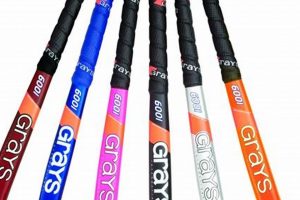
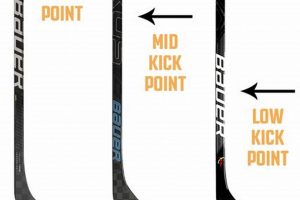
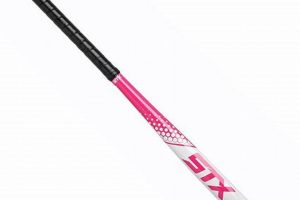
A field hockey stick designed for use by players who prefer to hold the stick with their left hand as the dominant hand is not typically manufactured. The standardized design of field hockey sticks is such that they are intended for right-handed use only. The curve and flat face of the stick are specifically configured to facilitate striking the ball from the right side of the body. Therefore, a true “left-handed” stick, mirroring the right-handed design for the opposite hand, is uncommon in standard production.
The standardization of the right-handed stick promotes uniformity and safety within the sport. The rules of field hockey explicitly prohibit the use of the non-flat side of the stick to strike the ball, mitigating the risk of unpredictable deflections and potential injuries. The historical development of the sport has solidified this right-handed dominance, making it the industry norm. This design promotes a consistent skill set across players and allows for easier coaching and instruction.
Because of the lack of commercially available products, players who are naturally left-handed must adapt to using a right-handed stick. It is important to consider the implications of stick design on player development, potential advantages or disadvantages of playing with the dominant hand, and the rare instances of custom-made solutions or adaptations for players who struggle with the standard configuration. The following sections will explore the challenges and strategies involved in adapting to standard equipment, alongside potential modifications to enhance gameplay.
Adaptation Strategies for Left-Handed Field Hockey Players
The following provides guidance for left-handed individuals navigating the standard right-handed equipment in field hockey. These strategies focus on technique refinement and compensatory adjustments to maximize performance despite the equipment limitations.
Tip 1: Strengthen Right-Side Ball Control: Emphasize drills that enhance dexterity and control on the right side of the body. Frequent practice with dribbling, passing, and receiving the ball predominantly on the right side is essential.
Tip 2: Refine Reverse-Stick Technique: Master the reverse-stick hit and reverse-stick dribble. These techniques, while requiring specific training, allow for effective ball manipulation on the left side of the field and create shooting opportunities.
Tip 3: Optimize Body Positioning: Adjust body positioning to consistently present the right side to the ball. Focus on footwork drills that enable rapid re-orientation to maximize stick-to-ball contact opportunities.
Tip 4: Develop Peripheral Vision: Enhance peripheral vision to improve awareness of players and the ball’s position on the field. This enables quicker reactions and informed decision-making regarding positioning and passing.
Tip 5: Focus on Tactical Awareness: Cultivate a deep understanding of game strategy. Compensate for potential handling limitations by anticipating plays and positioning effectively to intercept passes or create advantageous angles.
Tip 6: Condition Core Strength: Build core strength and stability. A strong core is crucial for maintaining balance and executing powerful hits and passes with the right-handed stick, especially when reaching or stretching.
Tip 7: Practice Short Corner Variations: In short corner situations, concentrate on perfecting set plays that leverage right-side strikes. Precise passing and well-rehearsed routines can overcome the inherent disadvantage of a less-dominant hand.
Adherence to these recommendations should enable left-handed players to achieve a high level of competency and effectiveness in field hockey, despite the current equipment standardization.
The subsequent section will address strategies for equipment customization and the ongoing discussion regarding inclusive stick designs within the sport.
1. Adaptation

Adaptation is central to the experience of left-handed field hockey players, representing the necessary modifications to technique, strategy, and equipment usage to accommodate the right-handed orientation of standard field hockey sticks. The degree of adaptation required impacts a player’s development, performance, and potentially their long-term participation in the sport.
- Technique Modification
Left-handed players adapt by refining specific skills to compensate for the non-dominant hand usage. For example, they will work on their reverse stick technique so that they can more easily get their stick on the ball from the left side. This also forces the player to focus on right-side dribbling. Adapting to the current field hockey world, they have to have a right-side hit which forces them to adapt.
- Positional Adjustments
To effectively utilize a right-handed stick, left-handed players often make positional adjustments on the field. They might favor positions on the right side of the field to align with the stick’s natural orientation for striking and receiving the ball. However, this is also a form of positional limitation.
- Strength and Conditioning Focus
Adaptation extends to strength and conditioning programs. Left-handed players might emphasize strengthening the right side of their body to improve stick handling, hitting power, and overall control. This can also mean working on core strength to allow for better stability in maintaining the right side.
- Strategic Play Development
Adapting involves developing strategic plays that maximize the strengths of a right-handed stick while minimizing the limitations for a left-handed player. This includes practicing set plays in short corners and penalty corners that are best for a right-handed configuration.
The adaptations made by left-handed field hockey players highlight both the challenges and the resilience within the sport. While these adjustments can enable successful participation, they also raise questions about the potential benefits of a more inclusive equipment design that could minimize the need for such extensive adaptation and offer a more natural playing experience.
2. Standardization
Standardization in field hockey equipment design is fundamentally linked to the scarcity of equipment designed for left-handed players. The uniform design of field hockey sticks, favoring right-handed use, stems from historical practices and industry-wide agreement on a single configuration. This standardization influences manufacturing processes, coaching methodologies, and ultimately, player development. The cause of limited availability of “left handed field hockey stick” is standardization because manufacturers are following the trend of standardizing production and focusing on right-handed designs due to market demand and perceived efficiency. This prioritization creates a situation where left-handed players face equipment limitations, requiring them to adapt to a design not naturally suited to their dominant hand.
The importance of standardization lies in its ability to create uniform rules, playing conditions, and training methodologies. By adhering to a standardized stick design, coaches can develop common skills and tactics across all players. However, this standardization overlooks the potential benefits of catering to a diverse player base. The practical significance of understanding this relationship is in acknowledging the challenges it presents for left-handed players. For example, a left-handed player must spend additional time and effort to master the reverse-stick technique to compensate for the awkwardness of using a right-handed stick on their left side. Another practical significance is that it limits the natural potential of certain players and may discourage some from entering or continuing in the sport.
In conclusion, standardization, while creating uniformity and efficiency in field hockey, has inadvertently marginalized left-handed players by limiting equipment choices. This creates a challenge for inclusive player development. Recognizing this imbalance highlights the need for further discussion on potential adaptations, customized solutions, or even a re-evaluation of standardization to improve player accessibility and promote greater participation in the sport.
3. Customization

Customization, in the context of equipment designed for field hockey, represents a deviation from standardized manufacturing practices. When a standard “left handed field hockey stick” is not readily available, the avenue of customization becomes critical. This necessity for customization arises directly from the industry’s established preference for right-handed stick designs. One key cause for seeking customization is the desire for a more ergonomic fit, aligning the equipment with the player’s natural handedness to potentially improve ball control, striking power, and overall comfort. For example, some players may seek customized grips, shaft lengths, or head angles to better suit their individual playing style and physical attributes. The effect of opting for customization includes incurring additional expenses and longer lead times compared to purchasing mass-produced equipment.
The importance of customization lies in its ability to address the specific needs of athletes who do not conform to the dominant right-handed paradigm. The practical significance of acknowledging this extends beyond merely satisfying player preference; it involves optimizing performance and potentially reducing the risk of injury. For example, a left-handed player who struggles with the standard right-handed stick might find that a customized stick, mirroring the design for the opposite hand, allows for a more natural and powerful strike. Real-world examples of customization include players working with specialized sports equipment manufacturers to create bespoke sticks that precisely meet their individual requirements. Furthermore, some coaches may encourage customized adaptations to existing sticks to enhance player comfort and performance. However, the absence of readily accessible customized equipment introduces barriers to participation, particularly for athletes with limited financial resources.
In conclusion, the link between customization and the absence of a readily available “left handed field hockey stick” highlights a critical issue within the sport: the lack of inclusive equipment design. Customization, while offering a solution for some players, remains a costly and less accessible alternative to widespread availability of left-handed equipment. Acknowledging this discrepancy calls for continued discussion and advocacy for a more equitable approach to equipment manufacturing, which could foster greater participation and success for left-handed field hockey players.
4. Reverse-stick

The “reverse-stick” technique in field hockey holds particular significance in the context of the limited availability of equipment for left-handed players. Because standard sticks are designed for right-handed use, mastering the reverse-stick becomes a crucial adaptation for those who naturally favor their left side.
- Compensatory Tool
The reverse-stick provides a means to effectively play the ball on the left side of the body. Due to the inherent difficulty of using a right-handed stick with the non-dominant hand, the reverse stick becomes an essential tool. It offers the ability to hit, dribble, and receive passes that would otherwise be challenging or impossible with standard stick orientation. Example: a left-handed player receiving a pass on their left side can use the reverse stick to quickly control the ball and transition into an offensive maneuver.
- Technical Execution
The effective execution of the reverse-stick demands a high level of technical proficiency. It requires precise hand-eye coordination, balance, and the ability to generate power from an unconventional body position. Example: elite players dedicate significant training time to perfecting their reverse-stick hits, enabling them to execute accurate and powerful shots from difficult angles. Players can adjust to this by practicing with a right-handed stick on their left.
- Tactical Implications
The reverse-stick affects tactical play, influencing positioning and strategic decision-making. Players must strategically position themselves to maximize opportunities for reverse-stick play, and teams may develop specific plays that leverage this technique. Example: a forward positioned on the left side of the attacking circle may use the reverse-stick to cut inside and create a scoring chance, exploiting the defender’s positioning.
- Skill Development Disparity
The reliance on the reverse-stick may contribute to skill development disparity. While mastering the technique is beneficial, excessive reliance on it can potentially limit the development of other fundamental skills, particularly those involving the standard right-handed orientation. This is especially true if left-handed players are not properly trained in adapting to right-handed play. Example: a young left-handed player might become highly proficient at the reverse-stick but lack proficiency in basic right-handed dribbling or passing skills, creating a tactical vulnerability.
The integration of the reverse-stick technique into the gameplay of left-handed players represents a compelling example of adaptation within the constraints of standardized equipment. While this technique allows for effective play, it also raises questions about the potential advantages of more inclusive equipment design. The ability to perform maneuvers which are normally difficult, because of the inherent design, by adjusting their playing style. If equipment can accommodate players from either side, the need to adapt will be minimized and will be more focused on the game instead.
5. Ergonomics

Ergonomics, the science of designing and arranging items for efficient and safe human use, bears direct relevance to equipment considerations in field hockey, particularly for players who might benefit from a “left handed field hockey stick.” The standard right-handed design presents an ergonomic challenge for left-handed players, potentially leading to compromised technique, reduced power, and increased risk of strain or injury. Custom-made sticks can offer more comfort. One effect of using standard stick designs for left handed players is discomfort or injury. The ergonomic fit of sports equipment has a direct impact on athlete well-being and long-term playing sustainability.
The importance of ergonomic design in field hockey extends beyond simple comfort. A stick that fits well promotes better biomechanics, enabling more efficient transfer of power during striking and improved control during dribbling and passing. For example, a left-handed player forced to use a right-handed stick may develop compensatory movements that place undue stress on the wrists, elbows, and shoulders. A more ergonomically suitable left-handed stick would allow for a more natural and balanced posture, reducing the risk of overuse injuries. A custom grip, shaft angle, or overall stick weight can be tailored to the individual’s physical characteristics and playing style, optimizing performance while minimizing physical strain. Real-world examples include left-handed players seeking adjustments to their sticks’ grips or curves to better accommodate their natural hand positioning.
In conclusion, the link between ergonomics and the availability of a “left handed field hockey stick” underscores the need for a more inclusive approach to equipment design in field hockey. While adaptation and reverse-stick techniques can mitigate some of the ergonomic challenges, a stick designed specifically for left-handed players would offer a more natural and potentially safer playing experience. This improved comfort can also lead to better performance over time. Addressing the ergonomic needs of all players, regardless of handedness, is essential for promoting athlete well-being and fostering greater participation in the sport.
6. Accessibility

Accessibility, in the context of field hockey equipment, refers to the availability and affordability of equipment options, including the potential for a “left handed field hockey stick.” A primary cause of limited accessibility stems from the historical standardization of right-handed stick designs, resulting in limited manufacturing and distribution of equipment for left-handed players. This lack of supply creates a situation where left-handed players face significant challenges in acquiring suitable equipment. The effect is that their participation and development in the sport may be hindered by the need to adapt to equipment not designed for their natural handedness. The importance of accessibility in this context lies in ensuring equitable opportunities for all athletes, regardless of handedness. A lack of accessibility can perpetuate disparities and limit the potential of talented players.
Real-life examples of accessibility challenges include left-handed players being forced to use right-handed sticks, incurring additional expenses to customize standard sticks, or foregoing participation due to a lack of suitable equipment. The practical significance of understanding this connection is in recognizing the barriers that exist for left-handed players and advocating for more inclusive manufacturing and distribution practices. One instance would be promoting youth programs that provide access to adapted or custom sticks, or advocating for manufacturers to produce and distribute left-handed options more widely and at reasonable prices. The practical benefits would mean that more players will join and it can lead to increased competitiveness across different players.
In conclusion, the link between accessibility and the availability of a “left handed field hockey stick” highlights the need for greater inclusivity in equipment design and manufacturing. Addressing this issue requires collaborative efforts from equipment manufacturers, sporting organizations, and advocacy groups to ensure that all players have the opportunity to participate and excel in field hockey. This leads to less disparity in skill development and allows for a larger skill pool. This increased accessibility and equipment parity would promote a more equitable and diverse sporting environment.
7. Inclusivity

Inclusivity, within the context of field hockey equipment, directly addresses the equitable participation of all athletes, irrespective of handedness. The scarcity of equipment specifically designed for left-handed players, namely a “left handed field hockey stick”, raises fundamental questions about fairness and equal opportunity within the sport. Promoting inclusivity requires addressing these disparities in equipment availability and design.
- Equitable Equipment Access
Equitable equipment access necessitates that all players, regardless of handedness, have access to equipment that supports their natural playing style. The current standardization around right-handed sticks effectively excludes left-handed players from readily accessing equipment optimized for their use. This lack of access can limit skill development and overall enjoyment of the sport. For instance, if left-handed players consistently lag in performance due to the ergonomic disadvantage, their continued participation may be jeopardized.
- Design Diversity
Design diversity calls for manufacturers to develop and offer equipment that caters to a wider range of player needs, including left-handed options. By providing sticks designed for both right- and left-handed players, manufacturers can create a more inclusive environment. This entails not only producing “left handed field hockey stick” designs but also ensuring they are readily available and competitively priced, fostering equal opportunities for all participants.
- Skill Development Parity
Skill development parity seeks to minimize any performance gaps arising from equipment disparities. When left-handed players are forced to adapt to right-handed sticks, their development in fundamental skills may be hindered. Inclusivity demands that coaches and trainers actively support left-handed players in adapting their techniques and provide targeted training to compensate for the equipment disadvantage. The goal is to ensure that all players have an equal opportunity to develop their full potential, regardless of handedness.
- Fair Play Promotion
Fair play promotion encompasses the implementation of rules and policies that support inclusivity in equipment usage. While the current rules do not explicitly prohibit the use of modified or custom-made left-handed sticks, governing bodies should explore options for allowing or even promoting such modifications to level the playing field. This may involve setting standards for equipment modifications or encouraging manufacturers to offer affordable, compliant left-handed options. By promoting fair play through inclusive equipment policies, the sport can attract and retain a more diverse player base.
Addressing the issue of “left handed field hockey stick” availability is not merely about providing convenience; it is about fostering a more inclusive and equitable sporting environment. By ensuring that all players have access to equipment that supports their natural abilities, the sport can unlock the full potential of its participants and promote greater diversity and participation.
Frequently Asked Questions
The following addresses common inquiries regarding field hockey stick design and the specific challenges faced by left-handed players. It aims to provide clear and factual information about existing equipment standards and potential alternatives.
Question 1: Are field hockey sticks specifically manufactured for left-handed players?
Standard field hockey sticks are not manufactured for left-handed players. The industry standard dictates that sticks are designed for right-handed use only, with the curved face intended to be used on the right side of the player’s body.
Question 2: Why are there no readily available left-handed field hockey sticks?
The absence of readily available left-handed sticks is due to historical standardization within the sport, market demand, and manufacturing considerations. The rules of field hockey, coaching practices, and the established player base are all geared towards right-handed stick usage.
Question 3: Is it permissible to use a modified field hockey stick designed for left-handed play?
While the official rules do not explicitly prohibit modifications, the use of the non-flat side of the stick is illegal during play. Any modifications to a standard stick must not violate this rule or compromise player safety. Furthermore, if you choose to modify your stick, the organization will not be held liable for any harm or injury.
Question 4: What alternatives are available for left-handed field hockey players?
Left-handed players typically adapt by using a standard right-handed stick and developing techniques like the reverse-stick hit. Some players may explore customized stick options, although these are typically more expensive and less accessible.
Question 5: Does using a right-handed stick disadvantage left-handed players?
Using a right-handed stick presents a challenge for left-handed players, potentially requiring them to compensate with modified techniques and adjustments to their playing style. However, skillful adaptation can minimize any potential disadvantage. It can be a large disadvantage but can be adjusted to over time.
Question 6: Are there ongoing discussions about the possibility of introducing left-handed field hockey sticks?
Discussions regarding inclusive equipment design, including the introduction of left-handed field hockey sticks, occur periodically within the sport. However, widespread adoption would require significant changes to manufacturing standards, coaching practices, and potentially, the rules of the game. The game can undergo many changes over time, and this may be a change in the long run.
Key takeaways include the understanding that standard field hockey equipment favors right-handed play, necessitating adaptation from left-handed individuals. Alternatives like customized sticks exist, but are less accessible. Discussions around equipment inclusivity continue, though widespread change faces considerable hurdles.
The next section will examine the implications of stick design on player safety and the role of governing bodies in promoting equitable equipment standards.
Conclusion
The exploration of “left handed field hockey stick” reveals a significant disparity within the sport. The historical standardization of right-handed equipment creates challenges for left-handed players, necessitating adaptation, specialized training, and potential modifications to existing equipment. While players can learn to effectively play with a right-handed stick, the lack of readily available left-handed options raises important questions about inclusivity and equitable access within field hockey.
The insights underscore a call for critical evaluation by equipment manufacturers and governing bodies. Further investigation into the ergonomic impact and potential benefits of inclusive stick designs is warranted. A commitment to addressing the needs of all players, regardless of handedness, is essential for promoting fair play and maximizing the potential of every athlete within the sport.