These drills are a subset of practice exercises employed within the sport focusing on condensed playing surfaces. These activities emphasize heightened player engagement, accelerated decision-making, and refined puck control in confined spaces. For instance, a 2-on-2 drill in a restricted zone near the net exemplifies this type of training, fostering quick passes and strategic positioning.
The implementation of such focused activities offers numerous advantages to player development. Improved agility, enhanced creativity, and increased intensity are commonly observed outcomes. Historically, these focused drills have become increasingly prevalent as coaches recognize their efficiency in translating practice skills to game-day performance. They represent a targeted approach to skill refinement within a team setting.
The subsequent sections will delve into specific types of these practice drills, exploring their targeted skill development areas. Furthermore, this article will examine the implementation strategies coaches utilize to maximize the effectiveness of these exercises, ensuring optimal player growth and improved team cohesion.
Optimizing Focused Hockey Drills
Effective execution hinges on thoughtful planning and strategic implementation. The following tips are crucial for maximizing their benefits in player development.
Tip 1: Controlled Space Definition: Clearly delineate boundaries to maintain intensity and focus on confined-area skills. Utilize cones or markings to establish precise zones, tailoring the size to the specific skills being developed.
Tip 2: Structured Drill Progression: Begin with simple exercises and gradually increase complexity. This allows players to master fundamental skills before advancing to more intricate scenarios, fostering confidence and competence.
Tip 3: Emphasis on Puck Support: Reinforce the importance of quick passes and strategic positioning for effective puck movement within the small area. This simulates game-like scenarios where puck possession and distribution are critical.
Tip 4: Incorporate Game-Specific Scenarios: Design drills that replicate common in-game situations, such as net-front battles or breakout plays in tight spaces. This improves players’ ability to react effectively under pressure.
Tip 5: Prioritize Repetition and Feedback: Consistent repetition is essential for skill development. Provide constructive feedback to players, addressing areas for improvement and reinforcing positive habits.
Tip 6: Adapt to Skill Levels: Modify drill parameters to suit the age and skill level of the participants. This ensures that all players are challenged appropriately and can experience success, fostering engagement and motivation.
Tip 7: Maintain a High Tempo: Encourage a fast pace to simulate game intensity. This improves players’ conditioning, decision-making speed, and overall reactivity in confined spaces.
By adhering to these principles, coaches can effectively leverage these practice exercises to enhance players’ agility, puck control, and strategic thinking. The result is a more well-rounded and adaptable hockey player.
The subsequent sections will explore specific examples of effective drill design and implementation, providing coaches with practical tools to optimize their training programs.
1. Puck Control Refinement

Puck control refinement constitutes a fundamental skill set within the context of ice hockey, significantly enhanced through implementation of focused, reduced-space training methodologies. These targeted drills isolate and intensify the demands on a player’s puck-handling abilities, leading to demonstrable improvements in overall performance.
- Hand-Eye Coordination Enhancement
The reduced spatial dimensions of these focused exercises necessitate heightened hand-eye coordination. Players must react more quickly to changing puck trajectories and opposing players, forcing a refinement of their coordination. Real-world examples include maneuvering through tight defensive coverage near the net or maintaining possession along the boards. This improvement directly translates to better puck retention and more effective offensive opportunities.
- Edge Control Proficiency
Confined spaces require precise and subtle adjustments in skating technique. Specifically, edge control becomes paramount for maintaining balance, changing direction quickly, and protecting the puck from opposing players. Drills that emphasize puck protection in tight areas naturally force players to refine their edge work, resulting in greater agility and maneuverability on the ice. Elite players consistently demonstrate exceptional edge control in high-pressure situations.
- Deceptive Maneuvering Skill
The restricted environment of focused exercises fosters the development of deceptive puck-handling techniques. Players learn to utilize fakes, dekes, and subtle body movements to create space and evade defenders. These skills are critical for generating scoring chances in congested areas, such as around the crease or during power plays. Success in these drills translates to an increased ability to outmaneuver opponents during game play.
- Puck Protection Under Pressure
These exercises simulate the high-pressure scenarios encountered during game situations, forcing players to develop strategies for protecting the puck. This includes utilizing body positioning, proper stick placement, and quick passing to maintain possession despite intense forechecking pressure. Players who excel at these drills exhibit a greater ability to shield the puck and make smart decisions under duress.
Ultimately, the relationship between puck control refinement and these focused exercises is symbiotic. The controlled environment provides an ideal setting for honing puck-handling skills, while the resulting improvement in puck control directly enhances a player’s overall effectiveness in real-game scenarios. This targeted approach to skill development is integral to the advancement of both individual players and entire teams.
2. Decision-making speed

Decision-making speed is critically enhanced through the implementation of reduced-space ice hockey drills. The confined environment necessitates rapid assessment of available options and swift execution, thereby training players to process information more efficiently. This cause-and-effect relationship stems from the limited time and space afforded within such drills, forcing athletes to make instantaneous judgments regarding puck movement, player positioning, and potential scoring opportunities. For example, a 3-on-2 drill in the offensive zone requires players to quickly identify open teammates, anticipate defensive movements, and execute accurate passes under pressure.
The importance of decision-making speed within the context of reduced-space drills is paramount. It is not merely a desirable attribute, but a fundamental component that dictates success. Players who can quickly analyze the situation and make informed choices are more likely to maintain puck possession, create scoring chances, and minimize defensive lapses. Consider a scenario where a player gains possession near the boards; the ability to instantly recognize an open lane for a pass or a gap in the defense for a drive to the net can be the difference between a scoring opportunity and a turnover. Furthermore, drills often incorporate variations and constraints that challenge players to adapt their strategies on the fly, further refining their decision-making prowess.
In summary, reduced-space drills directly contribute to improved decision-making speed by creating a dynamic and demanding environment. This enhanced cognitive processing translates to better on-ice performance, enabling players to react more effectively in game situations. While these drills offer significant benefits, coaches must carefully design them to progressively increase the complexity and pressure, thereby ensuring continuous improvement in players’ cognitive abilities. The application of these drills should be seen as an integral component of a comprehensive player development strategy.
3. Spatial awareness increase

Reduced-area hockey drills demonstrably enhance a player’s spatial awareness. The limited playing surface necessitates a heightened understanding of positioning, both individual and collective. Players are compelled to constantly assess distances, angles, and the relative locations of teammates, opponents, and the net. This constant cognitive engagement translates directly into improved on-ice perception. A practical example is a 2-on-2 drill near the blue line, requiring players to anticipate passing lanes and defensive rotations, fostering a greater awareness of the surrounding environment.
The importance of heightened spatial awareness within these drills stems from its direct impact on decision-making and puck control. Players with improved spatial awareness can more effectively anticipate plays, exploit open ice, and make informed choices regarding puck distribution. This translates to a more fluid and dynamic offensive attack and a more resilient defensive structure. Consider a breakout drill executed within a confined zone; a player with strong spatial awareness can quickly identify the optimal passing route, even under pressure, leading to a successful zone exit.
In summation, focused hockey drills are instrumental in cultivating enhanced spatial awareness. This improvement arises from the constant need for players to assess and react to the dynamic environment within the confined playing area. The resulting increase in spatial awareness directly improves decision-making, puck control, and overall on-ice performance. The consistent integration of these drills into training regimens represents a critical element in developing well-rounded and adaptable hockey players.
4. Competitive intensity simulation

The integration of competitive intensity simulation within targeted, confined-space ice hockey drills serves as a crucial catalyst for skill development and performance enhancement. These exercises are deliberately designed to replicate the physical and mental demands of actual game scenarios, fostering adaptability and resilience among players.
- Condensing Decision-Making Time
These focused exercises significantly reduce the time available for players to make decisions. The limited space and increased proximity of opponents necessitate quicker assessments and responses. This accelerated pace mirrors the pressure experienced during game situations, enabling players to develop instincts and refine their reaction times. A practical example involves drills that restrict the number of touches allowed before passing or shooting, forcing players to think and act decisively.
- Heightened Physical Contact
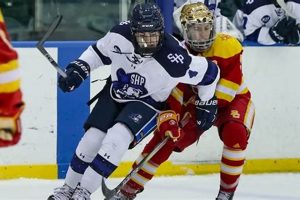
The constricted playing areas inevitably lead to increased physical contact between players. This contact forces players to compete for puck possession, maintain balance, and execute plays while under pressure. The resulting physical engagement prepares players for the rigors of game situations, where body checking and battling for position are commonplace. Drills that incorporate forechecking or backchecking within the small area specifically target the development of physical resilience and puck protection skills.
- Increased Emotional Engagement
The inherent competitiveness of these exercises fosters heightened emotional engagement among participants. Players are motivated to win puck battles, score goals, and prevent the opposition from succeeding. This emotional investment enhances focus, determination, and the willingness to exert maximum effort. Furthermore, the controlled environment allows coaches to observe and address players’ emotional responses, promoting sportsmanship and emotional regulation.
- Replication of Game-Specific Scenarios
Effective exercises are designed to simulate common in-game situations, such as net-front battles, power-play opportunities, or penalty-kill scenarios. By replicating these specific scenarios within a confined space, players can develop targeted skills and strategies that directly translate to improved performance during actual games. For instance, a drill that focuses on defending against a power play in a reduced area reinforces defensive positioning, puck clearance techniques, and communication skills.
The ability of these drills to simulate game-like competitive intensity is paramount to their effectiveness. By compressing decision-making time, increasing physical contact, fostering emotional engagement, and replicating game-specific scenarios, coaches can effectively prepare players for the demands of high-level competition. These exercises, therefore, represent a critical component of a comprehensive training program.
5. Offensive creativity boost
The augmentation of offensive creativity represents a significant benefit derived from the strategic implementation of targeted, reduced-space hockey drills. These exercises, by their very nature, necessitate innovative problem-solving and unconventional approaches to scoring opportunities, fostering a more imaginative offensive mindset.
- Improvisational Skill Development
Confined spaces demand spontaneous and unrehearsed reactions. Players are forced to adapt to rapidly changing circumstances and generate novel solutions to overcome defensive pressure. Examples include executing unexpected passes, attempting unorthodox shots, or employing deceptive puck-handling maneuvers. The iterative nature of these drills cultivates a player’s ability to improvise effectively in game situations, resulting in a more unpredictable and dynamic offensive presence.
- Risk-Taking Encouragement
The controlled environment of drills provides a safe space for players to experiment with higher-risk plays. The potential consequences of turnovers or failed attempts are minimized, allowing players to push their boundaries and develop a greater comfort level with unconventional tactics. This fostered willingness to take calculated risks translates to a more proactive and creative approach during actual games. Players become more inclined to attempt passes to tight spaces or try unconventional shots, potentially leading to increased scoring opportunities.
- Enhanced Puck-Handling Dexterity
The close-quarters nature of drills necessitates refined puck-handling skills. Players must develop the ability to control the puck in tight spaces, execute quick changes of direction, and maintain possession under pressure. These refined puck-handling skills enable players to execute more complex and creative offensive maneuvers, such as dekes, toe drags, and quick passes to teammates in scoring positions. The improvement in puck control directly enhances a player’s overall offensive creativity.
- Strategic Awareness Elevation
Reduced-space drills often require players to make quick decisions regarding puck distribution and player movement. This heightened cognitive engagement forces players to develop a more acute awareness of the ice, including identifying open lanes, anticipating defensive movements, and recognizing scoring opportunities. This elevated strategic awareness enables players to make more informed and creative decisions on the ice, leading to a more effective and unpredictable offensive attack.
In summation, the correlation between these practice drills and offensive creativity is demonstrable. The drills’ emphasis on improvisation, risk-taking, puck-handling dexterity, and strategic awareness collectively contributes to a significant boost in a player’s offensive capabilities. These benefits translate directly to improved scoring opportunities and a more dynamic and unpredictable offensive presence on the ice.
6. Defensive positioning focus

Defensive positioning constitutes a cornerstone of effective ice hockey strategy. Focused, reduced-area drills offer a potent mechanism for honing these critical skills, demanding precise awareness and tactical discipline within confined spaces.
- Angle and Gap Control Proficiency
Reduced-space scenarios necessitate precise angle and gap control to restrict offensive opportunities. Defenders are forced to actively manage the space between themselves, the puck carrier, and the net, minimizing passing lanes and shooting angles. A defender effectively angling an attacker towards the boards in a 1-on-1 drill exemplifies this skill. This directly translates to a reduced likelihood of high-quality scoring chances.
- Active Stick Engagement
The constricted environment demands active and intelligent use of the stick to disrupt passing lanes, intercept pucks, and impede offensive progress. Defenders learn to effectively position their stick to deny entry into scoring areas and force turnovers. A defender using their stick to break up a cross-crease pass in a net-front battle highlights this skill. The result is a more proactive and disruptive defensive presence.
- Defensive Zone Coverage Principles
These activities provide a platform for reinforcing fundamental defensive zone coverage principles. Players learn to rotate effectively, communicate clearly, and maintain proper positioning relative to teammates and opponents. Successfully executing a zone exit after gaining possession within the defensive zone demonstrates this collective understanding. This fosters a more cohesive and organized defensive structure.
- Quick Transition Reaction
The dynamic nature of these drills requires swift transitions from offense to defense and vice versa. Defenders must quickly recognize turnovers, adjust their positioning, and initiate counterattacks. A defender immediately transitioning to a forechecking position after an offensive zone turnover illustrates this skill. This improved transition capability contributes to a more balanced and adaptable team performance.
The integration of defensive positioning training into reduced-area activities is paramount for developing fundamentally sound and tactically astute players. The confined environment intensifies the demands on defensive skills, leading to demonstrable improvements in on-ice performance and a more resilient defensive capability.
7. Transition skill improvement

Ice hockey demands seamless transitions between offensive and defensive phases. Focused drills, conducted within constricted areas, serve as a catalyst for honing these abilities. The limited space inherently necessitates rapid shifts in player mindset and physical execution, accelerating the development of transition proficiency. The cause-and-effect relationship is direct: smaller playing areas force quicker reactions and more decisive movements, translating to improved transition skills. Without the capacity to swiftly transition, players become liabilities, unable to contribute effectively to either offensive or defensive efforts. Consider a scenario where a team loses possession within the offensive zone during one of these drills; the immediate reaction of the players to transition to a defensive posture, applying pressure and disrupting the opposition’s breakout, exemplifies the significance of this skill.
The design of these targeted activities often includes specific elements that further enhance transition skill development. Incorporating quick changes in direction, encouraging rapid puck movement, and emphasizing immediate defensive pressure after a turnover are common strategies. Furthermore, coaching feedback plays a crucial role in refining transition techniques. Instructors can provide guidance on optimal positioning, proper body angles, and effective stick work, maximizing the effectiveness of these focused exercises. For instance, a coach might emphasize the importance of quickly closing the gap on the opposing player after a turnover to prevent a clean breakout, or highlight the need for precise passing to maintain puck possession during a transition from defense to offense.
In summation, enhanced transition capabilities are a demonstrable outcome of strategically implemented confined-space drills. The exercises demand rapid adaptation and decisive execution, fostering improved reaction times and tactical awareness. While these drills offer significant benefits, their effectiveness hinges on careful design and thoughtful implementation, ensuring that the exercises accurately simulate game-like scenarios. The development of transition skills represents a crucial investment in player development, contributing to a more balanced and adaptable team.
Frequently Asked Questions
This section addresses common inquiries regarding the application and benefits of focused hockey drills, providing clarification and insight into their role in player development.
Question 1: What constitutes a “small area game” within the context of ice hockey training?
The term refers to drills conducted within a limited portion of the ice surface, typically one-third or less of the full rink. These exercises are designed to replicate game-like scenarios in a condensed environment, emphasizing quick decision-making, puck control, and tactical awareness.
Question 2: How do focused hockey drills contribute to improved puck control?
The limited space necessitates heightened puck-handling precision and agility. Players are forced to maintain possession under pressure, refine their stickhandling techniques, and develop greater control over the puck’s movement in confined areas. This translates to improved puck security and offensive capabilities.
Question 3: What are the key benefits of incorporating competitive intensity simulation into these exercises?
Simulating game-like intensity fosters adaptability, resilience, and improved reaction times. Players are exposed to the physical and mental demands of actual competition, enabling them to develop the skills and mental fortitude necessary to perform under pressure. This includes condensed decision-making time, increased physical contact, and heightened emotional engagement.
Question 4: Why is spatial awareness considered crucial in focused hockey drills?
The confined playing area demands a heightened awareness of the positioning of teammates, opponents, and the net. Players must constantly assess distances, angles, and potential passing lanes, leading to improved anticipation, decision-making, and overall tactical effectiveness. This heightened awareness allows players to better exploit open ice and anticipate plays.
Question 5: How do these drills specifically enhance offensive creativity?
The inherent challenges within confined spaces necessitate innovative problem-solving and unconventional approaches to scoring opportunities. Players are encouraged to experiment with new techniques, take calculated risks, and develop a more imaginative offensive mindset. This leads to a more unpredictable and dynamic offensive attack.
Question 6: What role does coaching play in maximizing the effectiveness of these focused training exercises?
Effective coaching is paramount for optimizing player development. Coaches provide guidance on proper technique, tactical positioning, and strategic decision-making. They also monitor player progress, provide constructive feedback, and adjust drill parameters to ensure that each player is challenged appropriately and can experience success.
Focused hockey drills offer a valuable tool for enhancing a wide range of skills, from puck control and spatial awareness to competitive intensity and offensive creativity. The strategic implementation of these exercises, combined with effective coaching, can significantly contribute to player development and overall team performance.
The subsequent section will provide practical examples of specific drill designs and their targeted skill development areas, offering actionable insights for coaches and players alike.
Conclusion
Ice hockey small area games represent a crucial component of modern player development. This exploration has highlighted their multifaceted benefits, spanning skill refinement, tactical awareness, and competitive readiness. The deliberate application of these drills, targeting specific areas for improvement, yields demonstrable enhancements in player capabilities.
Continued research and refinement of ice hockey small area games methodologies remain vital. A commitment to implementing these strategies, coupled with ongoing analysis of their effectiveness, will ensure the sustained growth and competitiveness of athletes at all levels. Their strategic deployment is an investment in the future of the sport.