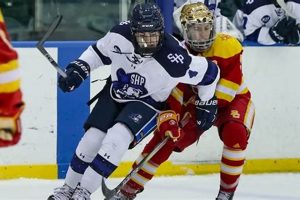
Financial aid opportunities exist for student-athletes demonstrating exceptional ability in ice hockey. These awards, typically offered by universities, colleges, and other post-secondary institutions, help offset the costs associated with tuition, room and board, and other educational expenses. An example of such assistance could be a partial grant covering 50% of tuition fees for a player displaying outstanding defensive skills.
These forms of assistance significantly reduce the financial burden of higher education, making it accessible to talented athletes who might otherwise be unable to afford it. Historically, such support has played a crucial role in the development of competitive collegiate hockey programs and has allowed many individuals to pursue both academic and athletic excellence. The availability of these programs fosters a higher level of competition and allows institutions to attract top-tier talent.
The following sections will detail the various types of aid available, the eligibility requirements, the application process, and strategies for maximizing chances of securing such awards. Further discussion will address navigating the recruitment landscape and understanding the National Collegiate Athletic Association (NCAA) regulations surrounding amateurism and eligibility.
Successfully securing financial aid related to ice hockey requires a strategic and diligent approach. The following guidelines aim to provide aspiring student-athletes with actionable steps to maximize their chances of obtaining needed support.
Tip 1: Academic Excellence is Paramount: Institutions prioritize candidates demonstrating strong academic performance. Maintaining a high GPA and excelling in standardized tests significantly enhances the likelihood of receiving consideration, even with exceptional athletic skills.
Tip 2: Proactive Recruitment Engagement: Initiate contact with college coaches early in the recruiting process. Sending personalized emails and highlight reels showcasing skills increases visibility and demonstrates genuine interest in the program.
Tip 3: Develop a High-Quality Highlight Reel: The video should showcase a player’s strengths, including skating ability, puck handling skills, shooting accuracy, and on-ice decision-making. Ensure the video is concise, professionally edited, and highlights key game situations.
Tip 4: Participate in Reputable Showcases and Camps: Exposure to college coaches is crucial. Attending established hockey showcases and camps provides opportunities to demonstrate abilities in front of numerous recruiters simultaneously. Thoroughly research the events to ensure credible coach attendance.
Tip 5: Understand NCAA Eligibility Requirements: Adherence to NCAA regulations is mandatory. Familiarize with the academic eligibility standards, amateurism rules, and clearinghouse registration procedures well in advance of the desired enrollment date. Non-compliance can result in ineligibility.
Tip 6: Seek Guidance from Coaches and Mentors: Leverage the expertise of current coaches, teachers, and mentors who possess experience with the recruitment process. Their insights and advice can prove invaluable in navigating the complexities of scholarship acquisition.
Adherence to these guidelines provides a structured path toward optimizing scholarship prospects. Combining on-ice prowess with diligent preparation off the ice is essential for success.
The subsequent sections will delve into the various types of available aid and explore detailed strategies for negotiating offers to ensure the most favorable outcome.
1. Eligibility Requirements

Eligibility requirements represent the foundational criteria that determine a prospective student-athlete’s qualification for financial aid related to ice hockey programs. Failure to meet these standards renders candidates ineligible for scholarship consideration, regardless of athletic prowess. A primary factor centers on academic performance, specifically grade point average (GPA) and standardized test scores. Institutions mandate minimum GPA thresholds and SAT/ACT scores to ensure that recipients can maintain academic standing while balancing athletic commitments. A student with exceptional hockey skills may be denied a scholarship if their academic record does not meet the institution’s stipulated minimums. This stems from a dual emphasis on athletic performance and academic preparedness.
The National Collegiate Athletic Association (NCAA) further dictates eligibility standards that extend beyond academic performance. These standards encompass amateurism rules, requiring that athletes have not engaged in activities that jeopardize their amateur status, such as accepting payment for athletic performance. Compliance with these regulations is meticulously scrutinized, often necessitating documentation of prior athletic participation and financial transactions. For instance, accepting endorsement money prior to college enrollment could render an athlete ineligible under NCAA rules. Additionally, specific course requirements must be met at the high school level to ensure adequate preparation for college-level coursework. The failure to fulfill these prerequisites can result in delayed eligibility or complete disqualification.
Therefore, understanding and proactively addressing eligibility requirements constitutes a critical component of the scholarship pursuit. Student-athletes must diligently monitor their academic progress, ensure compliance with amateurism guidelines, and meticulously fulfill all necessary documentation. Neglecting these elements jeopardizes their prospects of obtaining financial aid, emphasizing the significance of rigorous preparation beyond the ice rink. This proactive approach mitigates potential challenges and enhances the likelihood of successfully securing financial assistance.
2. Athletic Ability Assessment

Athletic ability assessment forms a cornerstone in the allocation of financial aid for ice hockey. Institutions utilize various evaluation methods to determine a prospective student-athlete’s potential contribution to the team and the program’s overall success. These assessments directly impact the level and type of support offered.
- On-Ice Performance Evaluation
Coaches and scouts meticulously observe players during games and practices. Key metrics assessed include skating speed, puck-handling skills, shooting accuracy, defensive capabilities, and overall hockey sense. Performance in high-stakes situations, such as power plays and penalty kills, is also scrutinized. For instance, a player consistently demonstrating exceptional puck retrieval and distribution in the defensive zone might receive a more substantial scholarship offer.
- Statistical Analysis
Quantitative data plays an increasingly significant role in evaluation. Statistics such as goals scored, assists, plus/minus rating, save percentage (for goalies), and penalty minutes provide objective measures of a player’s impact. Advanced analytics, tracking metrics like zone entries, scoring chances generated, and shot quality, offer deeper insights into performance. A defenseman with a consistently high plus/minus rating and a low penalty minute total may be viewed more favorably.
- Physical Attributes and Fitness Testing
Physical characteristics and athletic conditioning are assessed through standardized tests. Measures such as skating speed (timed sprints), agility (shuttle runs), strength (bench press, squats), and endurance (VO2 max testing) provide information about a player’s physical preparedness. A forward demonstrating exceptional speed and agility may be deemed a valuable asset to the program.
- Game Film Analysis
Reviewing game footage allows coaches to analyze a player’s decision-making, positional awareness, and overall understanding of the game. It provides a holistic view of a player’s performance beyond raw statistics. Examining game film enables coaches to assess how a player reacts to different game situations and implements strategies effectively.
The multifaceted nature of athletic ability assessment ensures a comprehensive evaluation of a player’s potential. These assessments, combined with academic qualifications and other factors, ultimately determine the allocation of financial assistance, highlighting the crucial role athletic prowess plays in securing ice hockey scholarship opportunities.
3. Academic Qualifications

Academic qualifications constitute a critical, often underestimated, factor in the pursuit of financial aid for ice hockey. While athletic prowess is undoubtedly essential, academic standing significantly influences an athlete’s eligibility and attractiveness to prospective institutions. Strong academic performance broadens opportunities and provides a competitive advantage in securing scholarships.
- Minimum GPA Requirements
Colleges and universities mandate minimum grade point average (GPA) thresholds for scholarship eligibility. The NCAA also establishes minimum GPA standards that must be met to compete at the collegiate level. Failing to meet these requirements, irrespective of athletic talent, will disqualify an athlete from receiving an athletic scholarship. For example, an athlete with exceptional hockey skills but a GPA below the NCAA minimum will be ineligible to compete and receive related financial assistance.
- Standardized Test Scores
Standardized tests, such as the SAT and ACT, play a crucial role in demonstrating academic aptitude. High scores on these exams enhance an athlete’s overall profile and increase the likelihood of scholarship offers. Institutions often use these scores to assess an applicant’s ability to succeed in a rigorous academic environment. A strong test score can offset perceived shortcomings in other areas of the application.
- Course Selection and Rigor
The types of courses taken during high school, and their level of rigor, are carefully evaluated by college admissions committees and athletic departments. A curriculum that includes advanced placement (AP) or International Baccalaureate (IB) courses demonstrates a commitment to academic challenge and preparation for college-level work. Selecting challenging courses signals to institutions that an athlete possesses the intellectual capacity to balance academics and athletics successfully.
- Overall Academic Standing
Beyond specific metrics like GPA and test scores, an athlete’s overall academic record is considered. This includes factors such as class rank, teacher recommendations, and demonstrated academic improvement over time. A consistent record of academic excellence, supported by positive recommendations, strengthens an applicant’s profile and enhances their chances of securing financial aid.
The aforementioned facets collectively illustrate the undeniable link between academic qualifications and scholarship prospects. While athletic talent opens doors, strong academic credentials are essential for navigating the selection process and maximizing financial support. Consequently, prospective student-athletes should prioritize both athletic development and academic achievement to enhance their overall eligibility and appeal to institutions offering ice hockey opportunities.
4. Recruitment Strategies

Effective recruitment strategies are inextricably linked to securing financial aid opportunities in ice hockey. Scholarship allocation is often a direct consequence of a student-athlete’s proactive and strategic engagement with college coaches and recruiters. Early and consistent communication, coupled with compelling demonstrations of skill, significantly increases the likelihood of attracting scholarship offers. For instance, a player who actively attends college showcases and engages in personalized correspondence with coaching staff is more likely to be considered for financial assistance than a similarly skilled player who relies solely on unsolicited evaluations.
The creation and dissemination of high-quality highlight reels showcasing on-ice abilities further enhances recruitment prospects. These videos, often distributed electronically, provide a concise yet impactful representation of a player’s strengths. Coaches use these reels to pre-screen potential recruits, effectively narrowing down the pool of candidates they will further evaluate. A player who invests in a professionally edited reel, strategically highlighting their key skills, demonstrates a commitment that can resonate with recruiters. Furthermore, participation in reputable hockey camps and tournaments that are known for attracting college scouts provides valuable exposure and opportunities for direct interaction with coaching staff. The effect of such actions can be an amplified chance of consideration, assessment, and a heightened offer.
The understanding and implementation of effective recruitment strategies are, therefore, crucial for aspiring student-athletes seeking financial assistance to pursue collegiate ice hockey careers. While athletic talent is a prerequisite, the ability to proactively market oneself and demonstrate genuine interest in a specific program plays a decisive role in attracting scholarship opportunities. The challenges reside in navigating the complexities of the recruitment landscape, understanding individual college program needs, and consistently demonstrating value to potential recruiters. Successfully implementing recruitment strategies, therefore, represents a significant component of accessing and securing ice hockey financial assistance.
5. Financial Need Consideration

Financial need assessment plays a significant, albeit often nuanced, role in the allocation of financial aid related to ice hockey programs. While athletic talent and academic achievement are primary determinants, demonstrated financial need can influence the type and amount of assistance awarded. The extent to which need is considered varies considerably across institutions and funding sources.
- Need-Based Grants and Aid Packages
Many universities offer need-based grants to supplement athletic scholarships. These grants are awarded based on a family’s demonstrated financial circumstances, as determined by information submitted through the Free Application for Federal Student Aid (FAFSA) or institutional financial aid forms. For instance, a student-athlete receiving a partial athletic scholarship may qualify for additional grant money to cover the remaining tuition costs if their family’s income falls below a certain threshold. The combined athletic scholarship and need-based grant can significantly reduce the financial burden of attending college.
- Institutional Priorities and Endowment Funds
The emphasis placed on financial need is often dictated by an institution’s mission, values, and available resources. Institutions with substantial endowment funds may be more inclined to provide need-based aid to attract a diverse student body, including talented athletes from lower-income backgrounds. Some institutions earmark specific endowment funds for student-athletes who demonstrate both athletic ability and financial need. This commitment reflects a belief that talent should not be limited by socioeconomic circumstances.
- Federal and State Aid Programs
Student-athletes are eligible to apply for federal and state financial aid programs, such as Pell Grants and state-sponsored grant programs, irrespective of their athletic scholarships. These programs provide need-based aid to students from low-income families, and can supplement athletic scholarships to cover educational expenses. For example, a student-athlete from a qualifying low-income family might receive a Pell Grant to help with living expenses, books, or other educational costs, even while receiving an athletic scholarship covering tuition.
- Impact on Scholarship Negotiation
Knowledge of a family’s financial circumstances can influence the negotiation of athletic scholarship offers. If a student-athlete demonstrates significant financial need, a coach or athletic department may be more willing to increase the scholarship amount or provide additional support, such as assistance with travel expenses or equipment costs. While athletic talent remains the primary negotiating factor, demonstrating financial need can serve as a secondary point of leverage in securing a more comprehensive financial aid package.
The interplay between financial need and athletic scholarships represents a complex dynamic. While athletic talent and academic achievement generally remain the primary drivers of scholarship awards, demonstrated financial need can significantly impact the overall affordability of a collegiate ice hockey education. Understanding the various avenues for need-based aid and leveraging this information effectively can enhance a student-athlete’s opportunity to participate in collegiate hockey, regardless of socioeconomic background.
6. NCAA Compliance and Ice Hockey Scholarships
NCAA compliance constitutes an indispensable component of ice hockey scholarships, directly influencing eligibility for and retention of financial aid. Failure to adhere to NCAA regulations results in immediate forfeiture of scholarship opportunities and potential ineligibility to compete. The NCAA establishes strict guidelines regarding amateurism, academic eligibility, and recruiting practices, and these guidelines serve as the foundational framework for awarding and maintaining athletic scholarships. For example, a player accepting payment beyond permissible limits or failing to meet academic progress requirements will be deemed ineligible, leading to immediate revocation of scholarship funds. This rigorous enforcement mechanism ensures competitive equity and protects the integrity of collegiate athletics.
The relationship between compliance and scholarships extends beyond initial eligibility. Student-athletes must maintain continuous compliance with NCAA regulations throughout their collegiate careers. This includes adhering to academic standards, reporting any impermissible benefits received, and avoiding activities that could jeopardize their amateur status. For instance, a student-athlete who endorses a commercial product without proper authorization could face sanctions, including scholarship reduction or suspension. Furthermore, institutions are obligated to monitor their student-athletes’ compliance diligently, implementing educational programs and monitoring activities to prevent violations. Negligence in institutional oversight can lead to severe penalties, including scholarship reductions and postseason bans, as has been seen in cases where institutions failed to adequately monitor recruiting practices.
In summary, NCAA compliance is not merely a procedural formality, but an intrinsic requirement for ice hockey scholarships. Student-athletes must proactively familiarize themselves with NCAA rules and regulations, maintain academic eligibility, and avoid any actions that could compromise their amateur status. The practical significance of this understanding cannot be overstated: sustained NCAA compliance is paramount to ensuring continued access to scholarship funding and the opportunity to compete at the collegiate level. The continuous nature of compliance requires sustained dedication and monitoring for continued funding.
7. Offer Negotiation

Offer negotiation represents a critical phase in the process of securing ice hockey financial aid. This stage involves strategic communication and evaluation to maximize the financial support provided by prospective institutions, potentially bridging the gap between available resources and educational expenses.
- Assessing the Initial Offer
The initial offer from a university should be meticulously evaluated to understand its components, including tuition coverage, room and board provisions, book allowances, and other potential benefits. A thorough understanding of the offer’s value allows for informed negotiation. For example, an offer covering only tuition may require further negotiation to include room and board, especially when considering the overall cost of attendance.
- Leveraging Multiple Offers
Receiving offers from multiple institutions provides leverage during negotiation. Communicating these offers to prospective schools demonstrates demand and allows for competitive adjustments. For example, informing University A of a more comprehensive offer from University B may prompt University A to improve their initial offer, potentially leading to increased financial aid.
- Highlighting Unique Value and Contributions
Articulating the unique value the student-athlete brings to the team can justify increased scholarship funding. This includes highlighting exceptional skills, leadership qualities, and academic achievements that contribute to the program’s overall success. A player demonstrating exceptional leadership and academic performance may warrant increased financial consideration.
- Understanding Institutional Constraints
Negotiation must occur within the context of institutional budgets and NCAA regulations. Understanding these limitations helps manage expectations and formulate realistic requests. Recognizing that athletic departments operate within finite budgets can guide the negotiation process toward mutually beneficial outcomes.
The ability to effectively negotiate offers constitutes a valuable skill for aspiring ice hockey student-athletes. Strategic communication, comprehensive assessment, and an understanding of institutional constraints are crucial for maximizing financial aid and securing the most favorable terms. Success in offer negotiation enhances the affordability of pursuing collegiate ice hockey while mitigating financial burdens.
Frequently Asked Questions Regarding Ice Hockey Scholarships
The following questions address common concerns and misconceptions surrounding financial assistance opportunities in collegiate ice hockey. Accurate information is crucial for aspiring student-athletes and their families.
Question 1: What constitutes an “ice hockey scholarship”?
An ice hockey scholarship is a form of financial aid awarded to student-athletes based on their athletic ability and potential contribution to a collegiate ice hockey program. It may cover tuition, room and board, books, and other educational expenses, either partially or fully.
Question 2: How are scholarship recipients selected?
Recipients are selected based on a combination of factors, including athletic skill, academic performance, character, and overall fit within the team’s culture. College coaches and recruiters evaluate prospective athletes through game film analysis, in-person evaluations, and academic transcripts.
Question 3: Are “full-ride” scholarships common in ice hockey?
Full athletic scholarships covering all expenses are less common in ice hockey than in some other sports due to NCAA scholarship limits and roster sizes. Partial scholarships are more prevalent, often requiring supplementation through need-based aid or family contributions.
Question 4: What is the difference between NCAA Division I and Division III scholarships?
NCAA Division I programs are permitted to offer athletic scholarships, while Division III programs are not. Division III institutions may offer need-based financial aid, but scholarships cannot be awarded based solely on athletic ability.
Question 5: How does NCAA eligibility impact scholarship opportunities?
Compliance with NCAA eligibility requirements is mandatory for receiving and maintaining an ice hockey scholarship. These requirements include meeting minimum academic standards, maintaining amateur status, and adhering to recruiting regulations. Non-compliance results in scholarship revocation and potential ineligibility to compete.
Question 6: Can an ice hockey scholarship be revoked?
Yes, an athletic scholarship can be revoked under certain circumstances, including failing to meet academic standards, violating team rules, sustaining a career-ending injury, or voluntarily withdrawing from the team. Scholarship agreements typically outline the specific conditions under which aid may be terminated.
Understanding these fundamental aspects of ice hockey scholarships is essential for navigating the recruitment process and securing financial assistance for collegiate hockey aspirations. The information presented here clarifies key aspects of scholarship acquisition and maintenance.
The subsequent section will provide a detailed summary of best practices for maximizing scholarship opportunities.
Concluding Remarks on Ice Hockey Scholarships
The preceding discussion has illuminated the multifaceted nature of ice hockey scholarships, encompassing eligibility requirements, athletic and academic evaluations, recruitment strategies, NCAA compliance, and offer negotiation. The pursuit of these scholarships demands a comprehensive understanding of the interdependencies between these factors. Strong academic performance, proactive recruitment efforts, and adherence to NCAA regulations are paramount for maximizing opportunities. While athletic talent is a prerequisite, it is the convergence of these elements that ultimately determines a student-athlete’s likelihood of securing financial assistance.
Prospective student-athletes are encouraged to diligently pursue academic excellence, proactively engage with college coaches, and maintain scrupulous adherence to NCAA guidelines. The attainment of ice hockey scholarships represents a significant investment in both athletic and academic futures, necessitating thorough preparation and strategic execution. The information herein serves as a foundational resource, empowering individuals to navigate the complex landscape of collegiate athletic financial aid with informed purpose and steadfast determination.