Practices designed to improve a team’s ability to prevent the opposition from scoring goals are fundamental to success in the sport. These activities focus on enhancing the skills, positioning, and decision-making of players responsible for protecting their own net. For example, a common exercise involves simulating a two-on-one attack to train defenders on how to effectively angle the puck carrier towards the boards while providing support for their goaltender.
Proficiency in these exercises yields significant advantages, including a reduction in goals conceded and improved team confidence. Historically, teams with a strong defensive foundation have consistently demonstrated greater competitiveness and a higher probability of securing championships. A well-organized rearguard frustrates attacking plays, generates turnovers, and supports offensive transitions.
The following discussion will delve into specific types of exercises that target various facets of defensive play, including skating techniques, stick-checking skills, zone coverage strategies, and communication protocols. A detailed examination of these components provides a clearer understanding of how to build a robust and effective defensive unit.
Essential Guidance for Enhanced Rearguard Play
The subsequent points offer targeted advice to improve defensive capabilities, focusing on crucial skills and strategies. Consistent application of these principles will contribute to a more formidable defensive presence.
Tip 1: Master Positional Play: Consistent correct positioning provides a solid foundation. Players must understand their responsibilities within the defensive zone, anticipating opponent movements and maintaining proper spacing. For example, during zone entries, the first defender should challenge the puck carrier, while the second defender provides support and covers passing lanes.
Tip 2: Perfect Stick-Checking Techniques: Refine poke checks and sweep checks to disrupt attacking plays effectively. Accurate stick work can separate an opponent from the puck without drawing penalties. Emphasize aiming for the puck and avoiding contact with the body.
Tip 3: Prioritize Body Positioning: Utilizing body position to guide opponents towards the boards or away from high-scoring areas is essential. Maintain a strong stance, forcing the attacker to the outside while protecting the net. This minimizes scoring chances and allows teammates to provide support.
Tip 4: Enhance Skating Agility: Rapid transitions between forward and backward skating, coupled with quick pivots, are crucial for reacting to changing game situations. Practice lateral movement drills to maintain proper positioning and close gaps effectively.
Tip 5: Develop Clear Communication: Verbal and non-verbal communication is paramount for seamless coordination. Designate specific terms for various defensive scenarios, such as switching assignments or alerting teammates to incoming pressure. Consistent communication minimizes confusion and enhances team cohesion.
Tip 6: Improve Puck Retrieval Efficiency: Quick and decisive puck retrieval is crucial for initiating offensive transitions. Practice drills that simulate contested puck battles in the defensive zone, emphasizing puck protection and accurate passing to teammates.
Tip 7: Focus on Angling Techniques: Effectively angling the puck carrier towards the boards limits their options and creates opportunities for turnovers. Force the attacker to a less dangerous area of the ice by controlling their direction with precise angling.
Adhering to these guidelines will foster improved performance, contributing to a more resilient and effective defensive component of a team. A commitment to these principles enhances individual skills and fortifies team strength.
The following section will elaborate on specific examples of rearguard excercises, providing practical applications of these core concepts.
1. Positioning

Positioning is a cornerstone of effective rearguard play, directly influencing the outcome of situations within the defensive zone. Improper placement can lead to scoring opportunities for the opposition, while strategic positioning can effectively neutralize threats and regain puck possession. In hockey defense drills, positioning is emphasized to cultivate awareness of spatial relationships between players, the puck, and the net. As an example, the ‘net-front presence’ drill focuses on maintaining a defensive stance between the attacker and the goal, preventing screens and deflections. Poor positioning during this drill invariably results in simulated goals against, illustrating the direct cause-and-effect relationship.
Effective positioning within a structured practice translates to game-day results. Drills such as the ‘triangle coverage’ exercise aim to instill automatic responses to various offensive alignments. Defenders learn to adjust their locations based on puck movement and the positioning of their teammates, creating a coordinated and impenetrable barrier. A team practicing these drills regularly can anticipate offensive plays, intercept passes, and deny shooting lanes far more effectively. The practical significance is evident in improved goals-against averages and increased team success.
In summary, positioning is not merely a component of rearguard excercises, but the foundational element upon which other defensive skills are built. Developing and maintaining optimal positioning requires consistent effort and focused practice. While challenges exist in simulating the dynamic nature of a live game within static training environments, the investment in this element is essential for building a resilient and championship-caliber rearguard.
2. Stick-Checking

Stick-checking, the art of dislodging the puck from an opponent’s control using one’s own stick, forms a fundamental component of effective ice hockey defense. Effective drills target the refinement of this skill, influencing a team’s capacity to disrupt offensive plays and regain possession. Improper technique, however, can lead to penalties, negating any potential benefit. Consider the poke check, a core skill taught within a range of rearguard routines: if executed with precision, it separates the puck from an attacker while maintaining a safe distance. Conversely, a poorly timed or executed poke check can result in a hooking or tripping penalty, placing the team at a disadvantage.
The practical application of effective stick-checking within defensive drills extends to various game scenarios. For example, drills simulating a one-on-one encounter emphasize angling the opponent while simultaneously employing controlled stick-checks to force them towards the boards or away from the net. Such scenarios are prevalent during actual gameplay, particularly along the boards and in front of the goal, making the mastery of stick-checking paramount. Furthermore, drills involving puck retrieval in the defensive zone often incorporate stick-checking as a means of dispossessing the opposing player and initiating a breakout pass. These applications showcase the interconnectedness of stick-checking and overall rearguard efficacy.
In summation, the connection between stick-checking and ice hockey defense is direct and significant. While the potential rewards are considerablenamely, puck possession and reduced scoring opportunitiesthe risk of penalties necessitates rigorous training and precise execution. The challenge lies in developing the ability to apply stick-checking techniques effectively and legally under the pressure of a game situation. Regular and focused practice in a variety of scenarios is crucial for honing this essential rearguard skill.
3. Body Control

Body control, in the context of ice hockey defense, is the ability to effectively utilize one’s body to influence the movement and positioning of opposing players, protecting the net and limiting scoring opportunities. Rehearsing body control within dedicated exercises develops fundamental defensive skills crucial for thwarting offensive plays.
- Positional Shielding
Positional shielding involves using one’s body to create a barrier between an opponent and the puck or the net. In practice, a defender might use their body to prevent an attacker from reaching a loose puck near the goal crease, effectively denying a scoring chance. Rehearsal routines for this skill focus on maintaining a strong, balanced stance and anticipating the opponent’s movements to maintain optimal positioning. Its importance lies in minimizing clear shots on goal and disrupting offensive flow.
- Board Play Dominance
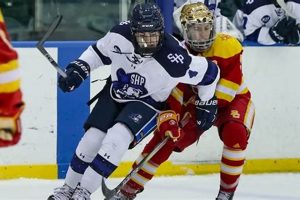
Along the boards, body control enables defenders to win puck battles and maintain possession. A demonstration of this is effectively pinning an opponent against the boards to prevent them from advancing the puck or creating a scoring opportunity. Training excercises designed to build this skill incorporate drills that simulate contested puck situations along the boards, emphasizing leverage and balance to outmuscle the opponent. Skill in this area is important for winning crucial puck battles and initiating zone exits.
- Angling Techniques
Angling involves using body positioning to direct an opponent towards a specific area of the ice, typically away from high-scoring zones. For example, a defender might angle an attacking forward towards the boards, limiting their shooting angle and making it easier for teammates to provide support or intercept the puck. The use of training exercises that teach proper footwork and body positioning helps refine this skill. This tactic controls the opponent’s movement, reducing the likelihood of dangerous scoring plays.
- Net-Front Clearance
Clearing the net-front area requires the use of body control to remove opposing players who are screening the goaltender or looking for rebounds. An illustration includes physically moving an opponent away from the front of the net to provide the goalie with a clear view of the puck. Training excercises for net-front clearance typically involve drills that simulate chaotic situations around the net, emphasizing the use of body positioning and controlled physical contact to establish dominance. Successfully clearing the net ensures the goaltender has an unobstructed view of incoming shots, significantly improving the team’s defensive capabilities.
These facets of body control are integrated into numerous defensive workouts, providing players with the tools to effectively protect their own zone. The consistent application of these principles within practice builds a robust and reliable defensive foundation, significantly increasing a team’s chances of success.
4. Skating Agility

Skating agility serves as a foundational skill for effective defensive play in ice hockey. Defensive positioning, gap control, and the ability to react quickly to rapidly changing offensive scenarios rely directly on a player’s skating capabilities. Excercises focusing on skating agility within ice hockey defense routines enhance a player’s capacity to maintain proper positioning, close gaps on attacking players, and execute quick transitions between forward and backward skating. A defender lacking sufficient skating agility will struggle to contain faster, more skilled forwards, leading to increased scoring opportunities for the opposition. For instance, during a two-on-one situation, a defender’s ability to quickly adjust their skating direction and speed is crucial for effectively angling the puck carrier towards the boards or disrupting a pass.
Practical application of skating agility manifests in numerous defensive zone scenarios. Consider the execution of a quick pivot and transition from forward to backward skating when an opposing player gains possession inside the blue line. A defender must possess the agility to rapidly change direction and maintain a close gap on the attacker, limiting their time and space to make a play. Similarly, the ability to execute tight turns and maintain balance is crucial for navigating traffic in front of the net and preventing screens or deflections. Drills focusing on these scenarios, such as figure-eight skating with puck control and quick-stop drills, directly translate to improved on-ice performance. Defenders are trained to instinctively react to evolving situations, enhancing their overall defensive effectiveness.
In summary, skating agility is inextricably linked to successful ice hockey defense. Routine workouts that improve skating agility address the core requirements of defensive play, enabling players to maintain superior positioning, react quickly to offensive threats, and effectively support their teammates. While the development of skating agility requires consistent training and dedication, the resulting enhancement in defensive capabilities is essential for building a strong and competitive team. Challenges in this area often stem from a lack of focus on fundamental skating techniques, highlighting the need for a structured and progressive training approach.
5. Communication

Communication represents a critical element within successful rearguard strategies, directly influencing the effectiveness of ice hockey defense workouts. Effective communication facilitates coordinated action, minimizes errors, and allows for rapid adjustments to evolving offensive threats.
- Verbal Cues for Zone Coverage
Clear verbal cues are essential for maintaining proper zone coverage and preventing breakdowns. For example, during a defensive zone faceoff, defenders might use specific terms to communicate their intended coverage assignments, ensuring that all players are aware of their responsibilities. These verbal cues are rehearsed and reinforced during defensive zone coverage drills, enabling players to react instinctively without hesitation. Miscommunication in this context can lead to uncovered players and increased scoring opportunities for the opposition.
- Non-Verbal Signals for Positional Adjustments
Non-verbal signals, such as hand gestures or eye contact, provide a rapid and discreet means of communicating positional adjustments. Defenders might use a subtle hand signal to indicate a switch in defensive responsibilities or to alert a teammate to an incoming forechecker. These non-verbal signals are developed and practiced within transition drills, where quick reactions and seamless coordination are paramount. Failure to recognize or respond to these signals can result in defensive gaps and increased pressure on the goaltender.
- Alerting Teammates to Threats
The ability to quickly and accurately alert teammates to potential threats, such as an oncoming player or a developing scoring chance, is crucial for effective rearguard play. Defenders might use phrases like “man on,” “wheel,” or “shot” to provide immediate warnings, allowing teammates to prepare accordingly. These communication protocols are integrated into a range of exercises, including two-on-one and three-on-two drills, where rapid decision-making and proactive communication are vital for success. A lack of clear and timely communication in these situations can lead to defensive breakdowns and increased scoring chances for the opposition.
- Coordination During Breakouts
Effective communication is essential for executing clean and efficient zone exits. Defenders must communicate their intentions regarding puck retrieval and breakout passes, ensuring that teammates are prepared to receive the puck and transition to offense. These communication strategies are reinforced during breakout drills, where defenders practice making quick decisions and delivering accurate passes to designated targets. Miscommunication or a lack of coordination in this phase can result in turnovers and prolonged defensive zone pressure.
These facets of communication are intrinsically linked to the efficacy of ice hockey defense exercises, underscoring the necessity of prioritized focus on effective exchange. Rehearsing and refining these specific communication skills results in greater team cohesion and decreased scoring opportunity for the opposition.
6. Puck Retrieval

Puck retrieval, the act of gaining possession of a loose puck, constitutes a critical phase within ice hockey defense routines. The efficacy of defensive tactics is directly contingent upon the capacity to swiftly and securely recover the puck following a shot, rebound, or turnover. Failure to secure puck possession prolongs defensive zone pressure, increasing the likelihood of subsequent scoring opportunities for the opposition. A common workout might simulate a net-front scramble, where multiple players compete for a loose puck. The ability to win this battle, secure the puck, and initiate a breakout pass showcases the practical application of proficient retrieval skills. If the retrieval fails, the defensive unit remains under duress.
Specific drills designed to enhance puck retrieval abilities often incorporate elements of body positioning, stick-checking, and skating agility. For example, a defender might be tasked with winning a puck battle along the boards, requiring them to use their body to shield the puck from the opponent while simultaneously employing effective stick-checking techniques to gain control. Upon securing possession, the defender must then execute a quick and accurate pass to a teammate, initiating a zone exit. The success of this drill hinges on the seamless integration of multiple skills, highlighting the interconnectedness of puck retrieval and overall defensive effectiveness. A real-world scenario mirroring this exercise is common during penalty kills.
In conclusion, puck retrieval is not merely an isolated skill but an integral component of a comprehensive ice hockey defense system. Its mastery requires a combination of physical strength, technical proficiency, and strategic awareness. While the chaotic nature of in-game puck battles can pose challenges, consistent practice and focused training on puck retrieval techniques can significantly improve a team’s ability to regain possession, relieve defensive pressure, and transition to offense, all essential elements for defensive success.
Frequently Asked Questions
The following questions address prevalent inquiries regarding exercises designed to enhance defensive capabilities in ice hockey. The information provided aims to clarify common misconceptions and offer insights into effective training methodologies.
Question 1: At what age should players begin participating in specialized practices?
While foundational skating and puck-handling skills should be prioritized at younger ages, incorporating basic defensive concepts can begin around the age of 10 or 12. The focus should be on fundamental positioning and responsible stick usage, progressing to more complex tactical exercises as players mature.
Question 2: How often should these be conducted to see noticeable improvements?
Consistent application is essential. Integrating defensive elements into at least two practices per week, with a focus on repetition and gradual progression, will yield tangible improvements in player awareness and execution. Regular evaluation and feedback are critical components of the training process.
Question 3: What are the most common mistakes made during defensive zone workouts?
Common errors include improper stick positioning leading to penalties, poor gap control resulting in increased offensive pressure, inadequate communication hindering effective zone coverage, and insufficient skating agility limiting the ability to react to evolving plays.
Question 4: How can coaches effectively simulate game-like intensity during these exercises?
Implementing time constraints, incorporating competitive elements, and emphasizing consequences for errors are effective methods for simulating game pressure. Maintaining a structured, focused environment encourages players to execute skills accurately under duress.
Question 5: What specific equipment is required beyond standard ice hockey gear?
While specialized equipment is not mandatory, training aids such as cones, pucks, and potentially weighted vests can enhance the effectiveness of certain routines. Focus should remain on fundamental skill development, regardless of supplementary equipment.
Question 6: How should coaches address individual differences in player skill levels during these sessions?
Differentiated instruction is crucial. Coaches should provide individualized feedback and modify exercises to accommodate varying skill levels. Focusing on individual progress rather than direct comparison fosters a positive training environment.
These FAQs serve as a valuable resource for coaches and players seeking to optimize their approach to ice hockey defense training. The principles outlined here emphasize the importance of consistent practice, focused attention to detail, and individualized instruction.
The following segment transitions into strategies for evaluating the effectiveness of said workout routines.
Conclusion
This exploration has emphasized the integral role of dedicated practice for the development of a robust and reliable defensive unit. Ice hockey defense drills targeting positioning, stick-checking, body control, skating agility, communication, and puck retrieval form the foundation of effective rearguard play. The mastery of these elements directly translates to a reduced number of goals conceded and an increased probability of success.
Consistent commitment to these training regimens is not merely an optional supplement, but a fundamental requirement for achieving competitive excellence. Continued investment in these strategic activities is essential for ensuring long-term sustainability and continued competitiveness in the dynamic and demanding sport of ice hockey.