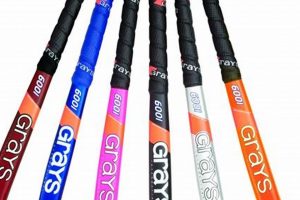
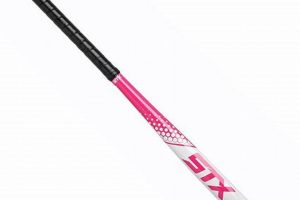
The process of applying tape to the grip area of a hockey stick, commonly known as the handle, serves multiple functional purposes. This adhesive wrapping enhances the player’s control and feel of the stick, providing a more secure grip and reducing the likelihood of slippage during gameplay. For example, a properly taped handle allows for quicker hand movements and more precise stick handling.
The implementation of this technique is crucial for optimizing performance and preventing injuries. A well-taped grip can minimize hand fatigue and blisters, which commonly occur from the repetitive motions and pressure exerted during a hockey game. Historically, players have experimented with different taping styles and materials to achieve personalized comfort and performance characteristics. These choices often reflect player preferences regarding thickness, texture, and level of grip.
Understanding the correct methods for this application ensures optimal performance and longevity of the taped area. Key considerations include selecting the appropriate tape material, determining the desired grip thickness, and executing the wrapping technique to maximize adhesion and durability. Detailed instructions on these aspects follow.
Guidance on Securing Hockey Stick Grip
Effective handle preparation significantly impacts performance and stick control. The following guidelines provide a foundation for proper application and maintenance of grip tape.
Tip 1: Choose the Right Tape: Cloth tape is standard due to its balance of grip and durability. Electrical tape can provide a smoother, more water-resistant finish, but may offer less tackiness.
Tip 2: Ensure a Clean Surface: Before applying tape, thoroughly clean the handle with a mild solvent to remove any dirt, residue, or pre-existing adhesive. This promotes optimal adhesion.
Tip 3: Overlap Consistently: Maintain a consistent overlap (approximately one-quarter to one-half inch) with each wrap to ensure uniform thickness and prevent gaps that could lead to blistering.
Tip 4: Vary Thickness Strategically: Adjust tape layering to create variations in grip thickness. Build up thicker sections in key areas for enhanced control and cushioning.
Tip 5: Consider a Knob: Create a knob at the top of the handle to prevent the hand from slipping off the end of the stick. This is typically achieved by wrapping a thicker layer of tape or using specialized grip tape.
Tip 6: Apply Finishing Tape: After the primary taping, apply a thin layer of electrical tape at the top and bottom to secure the edges and prevent fraying. This also improves water resistance.
Tip 7: Regularly Inspect and Replace: Routinely examine the tape for wear and tear. Replace worn or damaged tape to maintain optimal grip and prevent premature stick damage.
Adhering to these principles facilitates a comfortable, secure, and durable grip, ultimately enhancing a player’s on-ice performance.
The following sections address advanced techniques and alternative taping methods for specialized applications.
1. Tape type selection

Tape type selection is a foundational element within the overarching process of preparing a hockey stick handle. The choice of tape directly influences the grip’s texture, durability, moisture resistance, and overall tactile feel. This decision is not arbitrary; it dictates the effectiveness of the taping job and consequently impacts player performance. For example, using cloth tape provides a textured surface that enhances grip, beneficial for players requiring maximum control. Conversely, opting for electrical tape delivers a smoother, more water-resistant finish, appealing to players prioritizing dryness and ease of hand movement.
The interplay between tape selection and the desired outcome is evident in various scenarios. A player seeking a pronounced knob at the handle’s end might utilize a combination of cloth tape for bulk and electrical tape for secure finishing. Failure to select an appropriate tape can lead to inadequate grip, slippage during play, premature tape wear, and even blisters or hand fatigue. Correct tape selection, therefore, is an integral prerequisite to successful handle taping.
Ultimately, tape type selection represents a crucial first step in effectively preparing a hockey stick handle. The choice directly impacts grip characteristics, durability, and overall player comfort and control. Understanding the nuances of different tape materials is essential for optimizing the final product and ensuring peak on-ice performance. While the selected method of taping, such as the overlap amount or the knob creation, is important, the tape is the base component and will dictate if the stick handle taping is a success or a failure.
2. Grip thickness preference

Grip thickness preference, a highly individualized aspect of hockey stick handle preparation, directly influences a player’s feel for the stick and their ability to execute various maneuvers. The process of achieving the desired thickness is inextricably linked to the method of applying tape to the handle. A thicker grip can enhance control for players with larger hands or those who prefer a more substantial feel, while a thinner grip can improve dexterity and quickness for players with smaller hands or those who prioritize finesse. For example, a defenseman might prefer a thicker grip for increased power and stability during defensive plays, while a forward might opt for a thinner grip for quicker puck handling and shooting.
The method of applying tape serves as the primary means of achieving the desired grip thickness. A higher degree of tape overlap and the strategic layering of tape in specific areas of the handle result in a thicker grip. Conversely, minimal overlap and thinner tape layers produce a slimmer profile. The choice of tape material also plays a role; cloth tape, due to its greater bulk, contributes to a thicker grip more readily than electrical tape. The skill in this process lies in consistently executing the chosen technique across the entire handle to avoid unevenness, which can compromise comfort and control. Practical application involves iteratively adjusting the taping process until the player achieves the precise grip thickness that aligns with their individual preferences and playing style.
Ultimately, grip thickness preference is not merely a matter of comfort; it is an integral component of a player’s ability to maximize their potential on the ice. The successful translation of this preference into a tangible grip requires a thorough understanding of taping techniques and material properties. Challenges arise when players struggle to articulate their desired grip thickness or when inconsistencies in taping technique lead to unsatisfactory results. Recognizing the practical significance of grip thickness preference and its direct correlation with the tape application method is therefore essential for both players and equipment managers seeking to optimize performance.
3. Overlapping consistency

Overlapping consistency represents a critical element in the successful execution of hockey stick handle taping. The uniformity with which the tape is overlapped directly influences the grip’s texture, thickness, and overall durability. Inconsistent overlapping leads to uneven surfaces, creating pressure points and diminishing the player’s tactile sensitivity. A consistent overlap, conversely, promotes a smooth, uniform surface that maximizes comfort and control. For instance, if the overlap varies significantly along the handle, the player may experience localized bulges or thin spots, impairing their ability to maintain a secure and comfortable grip during gameplay. This principle underscores the necessity for meticulous technique in achieving a functional and reliable stick handle.
The practical application of overlapping consistency directly impacts the longevity of the taped handle. Uneven overlapping creates stress points within the tape structure, making it more susceptible to tearing and fraying. Consistent overlapping, on the other hand, distributes the stress more evenly, increasing the tape’s resistance to wear and tear. An illustrative example involves comparing two identically used hockey sticks: one with inconsistently overlapped tape and another with uniformly overlapped tape. The former will exhibit premature wear and require more frequent re-taping, whereas the latter will maintain its integrity for a longer period. This demonstrates the direct correlation between overlapping consistency and the lifespan of the taped handle. This level of control and feel in applying tape ensures the player is in the right position.
In conclusion, overlapping consistency is not merely an aesthetic consideration but a fundamental aspect of effective hockey stick handle taping. It directly influences grip comfort, control, and durability. Challenges arise when players lack the experience or focus required to maintain a uniform overlap throughout the taping process. However, recognizing the practical significance of this element, and consciously striving for consistency, significantly enhances the player’s connection with the stick and their overall performance on the ice. Furthermore, a player’s tape job has a direct impact on the condition of the stick as well, if not done correctly. The way the tape is applied will result in a great or terrible tape job.
4. Knob formation technique

Knob formation technique is an integral component of the overall process to tape a hockey stick handle, directly impacting grip security and player control. The knob, a built-up area of tape at the top of the handle, prevents the player’s hand from slipping off the end of the stick during gameplay. Its creation and design are deliberate manipulations of the tape, reflecting specific player needs and preferences. For example, a larger knob may be preferred by players who apply significant downward force during stick handling, while a smaller knob might suit players who prioritize wrist mobility. The method of knob formation, therefore, directly influences grip stability and the player’s capacity to maintain control of the stick during dynamic movements.
The practical execution of knob formation involves a variety of techniques, all variations on the fundamental principle of adding localized tape volume. Some players employ a spiraling, conical build-up, gradually increasing the tape layers to form a smooth transition. Others prefer a more abrupt, multi-layered approach, creating a distinct ridge. Regardless of the method, consistent tension and overlapping are essential for structural integrity. The consequence of a poorly formed knob one that is loose, uneven, or too small is an increased risk of hand slippage, potentially leading to missed passes, inaccurate shots, or even loss of the stick entirely. This highlights the critical role knob formation technique plays in mitigating such risks and enhancing performance.
In conclusion, knob formation technique is not merely an optional addendum but a crucial step in completing a functionally effective hockey stick handle. Its successful execution depends on understanding the interplay between tape manipulation and player-specific requirements. The challenge lies in achieving the desired knob size, shape, and firmness while maintaining a secure and durable structure. Mastery of this technique, alongside other aspects of handle taping, contributes significantly to a player’s confidence and control on the ice, improving performance.
5. Surface preparation cleanliness

Prior to initiating the procedure to tape a hockey stick handle, meticulous surface preparation is a non-negotiable prerequisite. Cleanliness directly influences the adhesion and longevity of the tape application, subsequently affecting the player’s grip and control. Failure to adequately prepare the surface can compromise the integrity of the entire process.
- Removal of Existing Residue
Existing adhesive residue, dirt, or wax can create a barrier between the new tape and the handle surface. This impedes direct contact, reducing the tape’s ability to bond effectively. For example, if old tape residue remains, the new tape will adhere to this unstable layer rather than directly to the stick, leading to premature peeling and slippage. Cleaning with a solvent removes these contaminants, ensuring a clean bonding surface.
- Elimination of Moisture
Moisture, whether from sweat, water, or condensation, can negatively impact the tape’s adhesive properties. Water molecules interfere with the bonding process, preventing the tape from forming a strong, lasting connection. This is particularly critical in humid environments or during games where sweat accumulation is prevalent. Thoroughly drying the handle after cleaning eliminates this potential source of adhesive failure. Improper handling of moisture will result in a slip of the tape from moisture.
- Smoothing Surface Imperfections
While not always necessary, addressing significant surface imperfections, such as splinters or sharp edges, can improve tape adhesion and prevent premature wear. These imperfections can create stress points that concentrate pressure on the tape, leading to tears or fraying. Light sanding or filing can smooth these areas, providing a more uniform surface for the tape to adhere to and increasing its overall lifespan.
- Enhancing Tape Adhesion
Certain cleaning agents, such as isopropyl alcohol, can subtly alter the handle surface to promote better tape adhesion. Alcohol cleans the surface and slightly softens the existing material, creating a more receptive bonding environment. This is particularly beneficial for composite sticks where the surface may be inherently less porous than wooden sticks. By utilizing appropriate cleaning methods, the tape forms a stronger, more durable bond.
The importance of surface preparation cleanliness cannot be overstated in the context of taping a hockey stick handle. Neglecting this step undermines all subsequent efforts, regardless of the quality of tape or the precision of the taping technique. Proper cleaning ensures a secure, long-lasting grip, ultimately enhancing player performance and extending the lifespan of the tape application. A player who fails to handle the surface of the hockey stick handle will cause issues taping the stick handle.
6. Durability monitoring frequency

Durability monitoring frequency, an often-overlooked aspect of hockey stick maintenance, is inextricably linked to the effectiveness of handle taping. The act of taping a handle is not a singular event but the beginning of an ongoing process that requires periodic inspection and maintenance. Consistent monitoring reveals early signs of wear, tear, or loosening, indicating the need for repair or re-taping. For example, a player who routinely inspects the handle tape before each game is more likely to identify a developing tear, preventing it from worsening during play and potentially compromising grip security. The consequences of neglecting durability monitoring include reduced grip effectiveness, increased risk of slippage, and premature damage to the stick itself. Regular monitoring is a critical component of maintaining the performance and longevity of a properly taped hockey stick handle.
The practical application of durability monitoring extends to various levels of play. Professional teams often have equipment managers who meticulously inspect each stick before every game, ensuring optimal tape condition. Amateur players can implement a similar approach, albeit on a smaller scale, by establishing a routine of pre-game and post-game inspection. The frequency of monitoring should also adapt to playing conditions. Games played in wet or humid environments, or those involving particularly physical play, may necessitate more frequent inspections. Re-taping worn areas promptly, rather than waiting for complete failure, minimizes downtime and maintains a consistent grip profile. Failing to monitor the tape of the handle of the hockey stick may result in the damage of the handle.
In summary, durability monitoring frequency is not an independent activity but an essential element of the entire process to tape a hockey stick handle. It serves as a feedback loop, informing maintenance decisions and preventing minor issues from escalating into significant problems. Challenges in implementation stem from time constraints and a lack of awareness regarding the importance of this process. However, incorporating durability monitoring into routine equipment maintenance practices ultimately enhances player performance, reduces equipment costs through extended tape lifespan, and promotes a greater sense of preparedness on the ice. Making sure hockey stick handle is taped correctly to protect the performance and the hockey stick itself.
Frequently Asked Questions About Applying Tape to a Hockey Stick Handle
The following addresses common inquiries regarding the techniques and best practices for wrapping the grip area of a hockey stick. The intent is to clarify misconceptions and offer practical guidance based on established procedures.
Question 1: What type of tape offers the best grip for the handle?
Cloth tape is generally preferred due to its balance of tackiness and durability. Electrical tape can provide a smoother, more water-resistant finish, but typically offers less grip. The optimal choice depends on individual player preference.
Question 2: How often should the tape be replaced on a hockey stick handle?
The frequency of replacement depends on usage and environmental conditions. Regularly inspect the tape for wear, tears, or loss of adhesion. Replace the tape as soon as these issues are observed to maintain optimal grip.
Question 3: Is there a recommended method for cleaning the handle prior to taping?
Prior to taping, the handle should be cleaned with a mild solvent to remove any dirt, wax, or adhesive residue. Isopropyl alcohol is commonly used for this purpose. Ensure the handle is completely dry before applying tape.
Question 4: What is the purpose of the knob at the top of the handle?
The knob serves as a physical barrier, preventing the player’s hand from slipping off the end of the stick during play. It provides enhanced grip security and control.
Question 5: How can grip thickness be adjusted when applying tape?
Grip thickness can be adjusted by varying the overlap of the tape. Greater overlap results in a thicker grip, while minimal overlap creates a thinner profile. Layering tape strategically in specific areas can also customize grip thickness.
Question 6: What is the best way to prevent tape from unraveling or fraying?
To prevent unraveling, secure the edges of the tape with a thin layer of electrical tape. This provides a water-resistant seal and reinforces the edges, minimizing fraying. Consistent tension during application is also crucial.
Proper understanding of these principles ensures a secure, comfortable, and durable grip, ultimately enhancing on-ice performance.
The following section provides a summary and concluding remarks on the process to tape a hockey stick handle.
Conclusion
This exploration of how to tape a hockey stick handle underscores the multifaceted nature of a seemingly straightforward process. The selection of appropriate tape, the meticulous preparation of the handle surface, the consistent application technique, and the diligent monitoring of tape integrity each contribute to the creation of a functional and durable grip. Furthermore, the individualized adjustments made to grip thickness and knob formation reflect the nuanced preferences of the player and the specific demands of the game.
The knowledge and skillful execution of how to tape hockey stick handle, therefore, directly translates to improved performance, enhanced control, and a greater sense of confidence on the ice. Mastering this technique represents a commitment to precision, detail, and the optimization of the essential link between player and equipment. It is recommended to take the steps that have been explored within this article.