The process of determining the appropriate shaft size for a hockey stick is critical for optimal player performance and safety. This measurement typically involves standing the stick upright against the player. The general guideline is that the top of the stick should reach somewhere between the player’s chin and nose while standing in skates. This range allows for a comfortable and functional stance on the ice.
Selecting the correct shaft dimension offers multiple advantages. An appropriately sized stick promotes better puck control, more accurate shooting, and enhanced skating agility. Furthermore, it helps to prevent potential injuries resulting from using a shaft that is too long or too short, which can strain the back, shoulders, and wrists. Historically, players have relied on feel and anecdotal evidence to guide their choice, but modern coaching emphasizes accurate sizing for improved skill development.
Understanding this core concept is just the first step. To fully appreciate the nuances of stick selection, one must consider the specific measurement techniques, the impact of player position on the ideal shaft size, and the materials used in shaft construction. These factors all play a significant role in finding the perfect stick for any given player.
Tips for Determining Hockey Stick Shaft Dimensions
Accurately assessing the hockey stick shaft dimension is paramount for performance and safety. The following tips provide guidance for achieving an optimal fit.
Tip 1: Utilize the Skated Stance: Conduct the measurement while the player is wearing skates. The elevated height provided by the skates significantly alters the reference point.
Tip 2: Chin-to-Nose Guideline: A general rule dictates the top of the stick should reach between the players chin and nose when standing upright in skates. This provides a baseline for initial assessment.
Tip 3: Consider Player Position: Defensive players often prefer longer shafts for extended reach and poke-checking. Offensive players may opt for shorter shafts to enhance puck handling in tight spaces.
Tip 4: Account for Personal Preference: While guidelines exist, individual comfort and playing style should be considered. Some players deviate from the standard recommendations based on their experience.
Tip 5: Evaluate Stick Flex: The shaft dimension is intricately linked to the stick’s flex. A longer shaft increases the leverage, effectively decreasing the flex. Adjust flex accordingly after determining shaft dimension.
Tip 6: Observe Puck Handling: After selecting a stick, observe the player’s puck-handling abilities. Adjust the shaft dimension as needed to optimize control and maneuverability.
Tip 7: Seek Expert Advice: Consult with a knowledgeable hockey equipment professional for personalized guidance. Their expertise can help fine-tune the selection process.
Adhering to these guidelines facilitates a more precise and effective stick selection process, contributing to improved on-ice performance and reduced risk of injury.
With these practical tips in mind, the subsequent sections will delve into the nuances of specific stick attributes and their impact on gameplay.
1. Skated Height

The player’s height while wearing skates, or “skated height,” is a primary determinant when establishing appropriate hockey stick shaft dimensions. The elevation provided by skates fundamentally alters the reference point used for measurement compared to standing barefoot or in shoes. A player’s increased height directly correlates with the need for a longer shaft to maintain proper posture and leverage on the ice. Failure to account for “skated height” will invariably result in a stick that is either too short, leading to hunching and reduced reach, or too long, hindering puck handling and agility.
For instance, a player who is 5’10” without skates might find a stick reaching their chin to be suitable off-ice. However, once wearing skates, the additional 2-3 inches of height necessitates a longer stick to maintain that same chin reference point. Professional equipment managers consistently emphasize “skated height” as the initial and most crucial measurement when fitting players with sticks. They commonly employ tools to accurately assess this height and use it to guide the selection process.
Therefore, neglecting to measure and properly adjust for “skated height” introduces significant error into the shaft dimension selection process. It undermines the effectiveness of all subsequent adjustments related to player position, stick flex, and personal preference. The accurate assessment of “skated height” is not merely a detail but a foundational element ensuring that the final shaft dimension facilitates optimal performance and minimizes the risk of injury.
2. Chin or Nose

The “chin or nose” guideline represents a critical, readily accessible approximation within the broader process of determining appropriate hockey stick shaft dimensions. When a player stands upright in skates, the end of the stick shaft should ideally align within this rangereaching no lower than the chin and no higher than the nose. This benchmark facilitates a balanced stance, allowing for sufficient reach while simultaneously maintaining adequate control over the stick. The position relative to the “chin or nose” directly impacts the player’s ability to execute fundamental skills, such as puck handling, shooting, and passing. A stick that extends significantly beyond the nose may hinder close-quarters maneuvering, whereas a stick ending below the chin might compromise the player’s reach during defensive plays or slap shots.
The “chin or nose” measurement serves as a practical starting point, especially for novice players or those lacking access to professional equipment fitting services. For instance, a youth hockey coach might utilize this guideline to quickly assess the suitability of sticks among a team of players, ensuring that each individual possesses a shaft length that falls within a functional range. However, the “chin or nose” measurement is not an absolute rule. Variations in player skating style, body proportions, and preferred playing position can necessitate deviations from this standard. A player with a more upright skating posture, for example, might favor a stick that reaches slightly higher than the nose, while a player with a deeper knee bend could prefer a shaft that ends closer to the chin.
In conclusion, the “chin or nose” guideline is a foundational element in the overall process of determining hockey stick shaft dimensions. While it offers a convenient and easily understood reference point, it should be regarded as a preliminary estimate rather than a definitive prescription. A comprehensive assessment also incorporates consideration of factors such as skating style, playing position, stick flex, and individual player preferences to achieve an optimized stick fit. The “chin or nose” measurement provides a useful starting point, but it must be complemented by a more nuanced evaluation to ensure the stick adequately supports the player’s specific needs and playing style.
3. Player Position
The specific role a player occupies on the ice significantly influences the selection of appropriate hockey stick shaft dimensions. Different positions demand distinct skill sets and tactical responsibilities, necessitating adjustments to stick length to optimize performance. This connection between player position and shaft dimension selection is not arbitrary but rooted in the biomechanics of skating and stickhandling.
- Defensemen and Extended Reach
Defensemen frequently benefit from longer shafts to extend their reach for poke checks, intercepting passes, and clearing the defensive zone. The increased length provides additional leverage, enabling them to disrupt opposing plays from a greater distance. For example, a defenseman attempting to prevent a zone entry may use a longer stick to impede the puck carrier’s progress, effectively acting as a physical barrier. However, excessive length can compromise close-quarters puck control and agility, which are also crucial for defensemen.
- Forwards and Puck Handling
Forwards, particularly those specializing in offensive roles, often prefer shorter shafts to enhance puck handling in confined spaces and facilitate quicker stick movements. A shorter stick allows for tighter control during dekes and maneuvers around defenders. A skilled forward navigating through traffic in the offensive zone would typically benefit from the enhanced responsiveness of a shorter stick. However, sacrificing too much length can limit shooting power and the ability to win puck battles along the boards.
- Centers and Versatility
Centers, often tasked with both offensive and defensive responsibilities, typically seek a compromise in shaft length. Their role requires a balance between puck control, passing accuracy, and defensive coverage. The ideal length for a center is often a middle ground between the longer sticks favored by defensemen and the shorter sticks preferred by offensive wingers. A center executing a face-off, for instance, requires sufficient reach but also needs the agility to quickly transition to offensive or defensive plays.
- Goaltenders and Paddle Length (Indirect Influence)
While goaltenders do not use a traditional hockey stick, the paddle length of their goal stick indirectly relates to the overall concept of shaft dimension. A longer paddle provides more coverage in the butterfly position, while a shorter paddle may enhance stickhandling ability. The selection is highly individualized and depends on the goaltender’s style and preferences. Although not directly related to player position in the same way as skaters, the goalie’s stick selection exemplifies how equipment choices are tailored to specific roles on the ice.
In conclusion, the selection of hockey stick shaft dimensions is intrinsically linked to player position. The optimal length depends on the specific skills and responsibilities associated with each role, requiring players and coaches to consider the trade-offs between reach, puck control, and overall versatility. A nuanced understanding of these positional requirements is crucial for maximizing on-ice performance.
4. Stick Flex

Stick flex, a measure of a hockey stick’s stiffness, is inextricably linked to shaft dimension. Altering the shaft dimension inherently impacts the flex characteristics, necessitating a comprehensive understanding of this relationship to optimize stick performance.
- Leverage and Flex Deflection
A longer shaft provides increased leverage. This increased leverage results in greater flex deflection for a given applied force. Consequently, a player who increases the length of their stick may perceive a reduction in stiffness, even if the designated flex number remains unchanged. For example, extending a 75-flex stick by several inches can make it behave more like a 70-flex stick, influencing shot power and release.
- Cutting and Stiffening
Conversely, reducing the shaft dimension, through cutting, increases the stick’s overall stiffness. Shortening the shaft reduces the lever arm, requiring more force to achieve the same degree of flex. This can be advantageous for players seeking a stiffer feel and more direct energy transfer, particularly those with well-developed upper body strength. Trimming a 75-flex stick might effectively raise it to an 80-flex or higher.
- Flex Points and Shaft Dimension
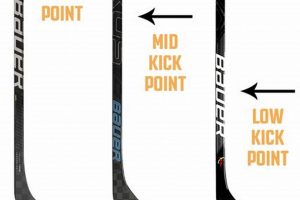
The designated flex point, or the area of the shaft engineered to bend most readily, interacts with the overall shaft dimension. Changes in length can shift the effective location of this flex point, influencing the type of shot the stick is best suited for. A longer shaft can emphasize a mid-kick point, conducive to powerful slap shots, while a shorter shaft may enhance the performance of quick wrist shots.
- Player Strength and Technique
The interplay between shaft dimension, flex, and player biomechanics is paramount. A shorter, stiffer stick may benefit a player with strong wrists and refined shooting technique, while a longer, more flexible stick can assist those who rely more on body weight and raw power. Proper evaluation requires considering a player’s individual strength profile, skating style, and shooting mechanics.
The relationship between “Stick Flex” and “how do you measure hockey stick length” highlights the need for a holistic approach to stick selection. Adjusting the shaft dimension without considering its impact on flex can lead to suboptimal performance. It underscores the importance of testing and experimentation to find the ideal combination of shaft dimension and flex that aligns with a player’s specific attributes and playing style.
5. Blade Curve
The blade curve, encompassing the shape and lie of the stick’s blade, exerts an indirect but significant influence on the determination of appropriate shaft dimensions. The geometry of the blade alters the player’s posture and hand positioning when handling the puck, which, in turn, affects the perceived optimal length of the shaft. A more pronounced blade curve, designed for quicker puck lift and enhanced shooting accuracy, may cause a player to adopt a slightly more upright stance, potentially favoring a slightly shorter shaft to maintain control. Conversely, a flatter blade, often preferred for passing and backhand shots, might lead to a more leaned-over posture, suggesting a slightly longer shaft for greater reach. The impact of blade curve is not merely aesthetic; it directly affects the biomechanics of stick handling and shooting.
Consider a player transitioning from a relatively flat blade to one with a significant curve designed for quick releases. The steeper curve will naturally raise the puck off the ice more easily. To maintain optimal puck control and a consistent shooting platform, the player may find that shortening the shaft by a small amount allows for more precise handling and improved accuracy. Conversely, a player adapting to a flatter blade may discover that a slightly longer shaft compensates for the reduced puck lift, enabling them to maintain adequate elevation during shots and passes. These adjustments highlight the interplay between blade characteristics and shaft dimensions, emphasizing the need for comprehensive evaluation when selecting equipment.
In summary, while the measurement of shaft dimensions primarily focuses on the length of the stick, an informed selection process must consider the interplay between shaft length and blade curve. Recognizing the impact of blade geometry on posture and hand positioning is crucial for optimizing puck control and shooting performance. Therefore, the selection process requires a comprehensive approach that carefully balances shaft dimensions with blade characteristics to create a cohesive and effective tool for the player. Neglecting this interdependency can lead to suboptimal performance and potentially hinder the player’s development.
6. Personal Preference
The subjective element of “personal preference” plays a pivotal, though often understated, role in the final determination of hockey stick shaft dimensions. While established guidelines provide a foundation, individual comfort, playing style nuances, and prior experience can significantly influence the ideal shaft length for a given player. The application of objective measurements must be tempered by the player’s own sense of feel and control.
- Comfort and Ergonomics
The physical sensation of handling a stick is paramount. A shaft dimension that aligns with established norms may nonetheless feel awkward or unwieldy to a particular player. Factors such as hand size, grip style, and arm length ratios contribute to this subjective perception. A player with larger hands, for example, might prefer a slightly thicker shaft diameter or a longer overall length to facilitate a more secure and comfortable grip. Disregarding this ergonomic aspect can lead to fatigue, reduced puck control, and even an increased risk of injury.
- Established Playing Style
Individual playing styles, honed over years of practice and competition, often dictate subtle deviations from standard recommendations. A player who predominantly relies on quick wrist shots and close-quarters stickhandling may prefer a shorter shaft dimension to maximize maneuverability, even if it sacrifices some reach. Conversely, a player specializing in long passes and powerful slap shots might opt for a longer shaft to enhance leverage, regardless of the potential impact on close-quarters puck control. Attempting to impose a standardized shaft dimension on a player with a deeply ingrained playing style can prove counterproductive.
- Prior Experience and Muscle Memory
Years of using a specific shaft length can create ingrained muscle memory, making it difficult for a player to adapt to a significantly different dimension, even if the new length is theoretically more optimal. Altering the shaft length too drastically can disrupt a player’s timing, coordination, and overall feel for the puck. The process of adapting to a new shaft dimension can take time and require conscious effort to reprogram muscle memory. Therefore, gradual adjustments, informed by the player’s feedback, are often more effective than abrupt changes.
- Psychological Confidence
The psychological aspect of stick selection cannot be ignored. A players confidence in their equipment directly translates to on-ice performance. If a player believes a particular shaft dimension optimizes their play, even if it deviates from conventional guidelines, the resulting boost in confidence can outweigh any theoretical disadvantages. Forcing a player to use a stick that feels unfamiliar or uncomfortable can undermine their confidence and negatively impact their performance. Addressing these psychological factors requires open communication between the player and equipment specialists.
In conclusion, while objective measurement provides a valuable starting point, the final selection of hockey stick shaft dimensions is ultimately a collaborative process informed by the players “personal preference.” This encompasses a nuanced consideration of comfort, playing style, prior experience, and psychological factors. Recognizing and accommodating these subjective elements is crucial for optimizing performance and ensuring player satisfaction.
Frequently Asked Questions
This section addresses common inquiries regarding the process of measuring and selecting appropriate hockey stick shaft dimensions, providing clarity on key considerations and best practices.
Question 1: Why is accurate measurement of hockey stick shaft dimensions essential?
Accurate determination of shaft dimensions is crucial for optimizing player performance, promoting proper skating posture, and reducing the risk of injuries related to improper stick handling. A correctly sized stick enhances puck control, shooting accuracy, and overall agility on the ice.
Question 2: How does the presence of skates affect shaft measurement?
The use of skates elevates the player, necessitating a longer shaft compared to measurements taken without skates. Failure to account for the height gained from skates results in a stick that is too short, compromising posture and reach.
Question 3: Is the “chin-to-nose” rule a definitive guideline for shaft dimension?
The “chin-to-nose” rule provides a useful starting point but is not absolute. It serves as a general approximation that must be adjusted based on individual skating style, playing position, and personal preference. A more nuanced evaluation is necessary for optimal stick selection.
Question 4: How does player position influence the optimal shaft dimension?
Different playing positions demand varying shaft lengths to support specialized roles. Defensemen typically favor longer shafts for extended reach, while forwards often prefer shorter shafts to enhance puck control in tight spaces. Centers require a balance between the two.
Question 5: How does altering the shaft dimension affect the stick’s flex?
Changing the shaft dimension inherently alters the stick’s flex. A longer shaft reduces the effective stiffness, while a shorter shaft increases it. Compensation in flex rating may be necessary to maintain optimal shooting performance.
Question 6: Is personal preference a valid consideration in stick selection?
Personal preference plays a significant role in stick selection. Individual comfort, prior experience, and playing style nuances can outweigh theoretical advantages of standardized measurements. It is essential to accommodate these subjective elements for optimal player satisfaction.
The key takeaway is that selecting appropriate hockey stick shaft dimensions requires a balanced approach. While following established guidelines, consider individual factors for optimal comfort, performance, and injury prevention.
The subsequent section will explore advanced customization options for hockey sticks, providing further insights into fine-tuning equipment for peak performance.
Conclusion
This exploration of “how do you measure hockey stick length” underscores the multifaceted nature of this seemingly straightforward task. The determination extends beyond simple linear measurement, encompassing a complex interplay of skated height, playing position, stick flex, blade curve, and individual player preferences. Adherence to generalized guidelines, while helpful as a starting point, cannot supplant a holistic assessment that considers the unique biomechanics and playing style of each athlete.
The significance of precise measurement lies not only in enhanced on-ice performance but also in the prevention of potential injuries stemming from improperly sized equipment. Continued research and development in stick technology, coupled with advancements in biomechanical analysis, hold the potential to further refine the selection process, enabling players to optimize their equipment for peak performance and long-term well-being. Diligence in equipment selection remains a crucial aspect of responsible hockey participation.