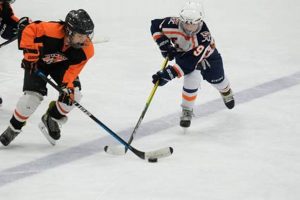
Dedicated flexibility routines designed to prepare the body for the demands of ice hockey. These movements target muscle groups commonly used during skating, shooting, and physical contact, increasing range of motion and minimizing the risk of injury. An example includes dynamic leg swings to loosen hip flexors before practice.
The incorporation of targeted flexibility exercises is crucial for optimizing athletic performance and longevity in the sport. Benefits range from improved skating speed and agility to enhanced puck handling and reduced muscle strain. Historically, the importance of pre- and post-activity routines have been increasingly recognized as preventative measures against common hockey-related injuries.
The following sections will detail specific exercises, focusing on their execution, benefits, and integration into a comprehensive training regimen for ice hockey athletes.
Tips for Implementing Effective Hockey Stretches
The following recommendations are provided to optimize the incorporation of flexibility routines for hockey players. Consistent application of these principles can contribute to injury prevention and performance enhancement.
Tip 1: Prioritize Dynamic Stretches Pre-Activity: Before engaging in hockey-related activities, focus on dynamic movements that mimic skating motions, such as leg swings and torso twists. This primes the muscles for exertion and improves blood flow.
Tip 2: Incorporate Static Stretches Post-Activity: Following practice or games, hold static stretches for 20-30 seconds to improve flexibility and promote muscle recovery. Focus on major muscle groups like hamstrings, hip flexors, and groin.
Tip 3: Target Sport-Specific Muscle Groups: Hockey relies heavily on lower body strength and core stability. Pay particular attention to stretching hip flexors, adductors, and the muscles surrounding the spine to support these areas.
Tip 4: Maintain Consistency: Stretching should be a consistent part of the training regimen, performed multiple times per week, even on off-days, to sustain and improve flexibility.
Tip 5: Engage the Core: Certain routines can engage and stretch the core simultaneously, improving stability and balance on the ice. Planks with torso rotations are one example.
Tip 6: Ensure Proper Technique: Incorrect stretching form can lead to injury. It is essential to learn the correct technique from a qualified coach or physical therapist to maximize benefits and minimize risks.
Tip 7: Listen to the Body: Avoid pushing stretches beyond a comfortable range of motion. Discomfort is acceptable, but sharp pain indicates potential injury. Modify stretches as needed based on individual flexibility levels and physical condition.
Consistent application of these routines, with attention to detail and proper form, can contribute significantly to injury prevention and enhance overall athletic performance in ice hockey.
The subsequent sections will examine specific routines tailored to various player positions and skill levels.
1. Preparation

The effectiveness of flexibility routines in ice hockey is intrinsically linked to the preparation undertaken prior to activity. Insufficient or inappropriate preparatory measures elevate the risk of muscular strains and joint injuries, undermining subsequent performance. These routines act as a crucial preliminary step, increasing muscle temperature, improving blood flow, and enhancing joint range of motion. Proper preparation is essential to allow players to safely generate explosive power and agility throughout a game or practice. A team that engages in a short, inadequate warm-up, for instance, may experience a higher incidence of groin pulls or hamstring injuries compared to a team adhering to a structured, progressive regimen.
Detailed warm-up protocols, including dynamic movement, and a structured regimen have several benefits for teams. A hockey team with a well-designed strategy will experience an improvement in flexibility and a decrease in lower-body injury. This will result in fewer player injuries and better team mobility. A player’s preparation should include sport specific exercise, which will result in reduced muscle soreness and improved on-ice performance.
In summary, adequate preparation through appropriate routines is not merely an optional addendum to hockey training but a fundamental component for injury prevention and performance optimization. A failure to prioritize this aspect undermines the benefits of these routines and increases the likelihood of adverse outcomes. Integrating preparation will help players maximize the physical demands of hockey while minimizing the risk of injury.
2. Mobility Improvement

The efficacy of hockey-specific flexibility exercises is inextricably linked to improvements in joint mobility. These routines directly address restrictions in range of motion, fostering more efficient skating mechanics, powerful shot execution, and enhanced agility on the ice. A lack of adequate mobility restricts a player’s ability to achieve optimal body positioning and generate maximal force. This limitation can manifest as reduced skating stride length, diminished shot velocity, and an increased susceptibility to imbalances and subsequent injury. For example, a player with limited hip mobility may struggle to achieve a deep knee bend during skating, hindering their power output and increasing stress on knee joints.
Focused exercises counteract these limitations by lengthening shortened muscle fibers, releasing joint stiffness, and promoting optimal movement patterns. For instance, consistent implementation of hip flexor exercises improves a player’s ability to extend the leg fully during the skating stride, thereby increasing stride length and overall speed. Ankle routines also contribute to enhanced edge work and maneuverability. The practical significance is evident in players exhibiting smoother skating techniques, more explosive starts, and a greater capacity to maintain balance and control in dynamic game situations. Such improvements in mobility translate directly to a competitive advantage.
In summary, improvements in mobility are not merely a byproduct of flexibility exercise, but a fundamental outcome driving enhanced performance and injury prevention. The deliberate and targeted approach to mobility improvement via routine is a key determinant in a player’s ability to realize their full potential on the ice. Challenges persist in accurately assessing and addressing individual mobility deficits, necessitating individualized routine design. The integration of such analysis into training protocols provides valuable insights into the overall performance and wellness of players.
3. Injury Prevention

Injury prevention is a cornerstone of any comprehensive hockey training program, and the strategic implementation of flexibility exercises constitutes a critical component of such preventative measures. The physical demands of ice hockey, characterized by high-speed skating, abrupt changes in direction, and frequent physical contact, place substantial stress on the musculoskeletal system. This inherent stress elevates the risk of various injuries, including muscle strains, ligament sprains, and joint dislocations. Routines, when properly executed, mitigate these risks by increasing tissue elasticity, improving joint range of motion, and enhancing neuromuscular control. A team that consistently integrates routines into their training regimen will likely experience a reduced incidence of common hockey-related injuries compared to a team neglecting these preparatory measures. An example is the reduced likelihood of groin strains among players who regularly perform hip adductor flexibility exercises.
The importance of incorporating routines into injury prevention strategies extends beyond merely reducing the occurrence of acute injuries. Regular flexibility training also addresses chronic imbalances and postural deviations that can contribute to overuse injuries. By promoting optimal alignment and movement patterns, these exercises help to distribute stress more evenly across joints and tissues, minimizing the risk of repetitive strain injuries. For instance, hamstring exercises can address tightness in this muscle group, a common contributor to lower back pain and hamstring strains in hockey players. Furthermore, enhanced flexibility can improve a player’s ability to absorb impact forces, thereby reducing the severity of injuries sustained during collisions or falls. A study on elite hockey players demonstrated a significant correlation between hamstring flexibility and the incidence of knee injuries, further emphasizing the practical significance of targeted stretching programs.
In summary, injury prevention is an integral element of the relationship between routines and player well-being. The deliberate and consistent application of appropriate flexibility protocols is essential for minimizing the risk of both acute and chronic injuries. While the benefits of routines are well-documented, challenges remain in ensuring adherence to these protocols and tailoring programs to individual player needs. Further research is warranted to optimize routines for injury prevention and to develop strategies for promoting long-term compliance among hockey players at all levels of competition. This approach must emphasize personalized application for routines to prevent injuries.
4. Performance Enhancement

Effective execution of routines yields tangible improvements in on-ice performance. Increased flexibility allows for a greater range of motion, directly impacting skating speed, agility, and shooting power. Improved mobility enables players to achieve more efficient skating strides, generate greater force when shooting, and execute quicker changes in direction. For example, a player with enhanced hip mobility can achieve a deeper knee bend during skating, resulting in a longer and more powerful stride. Similarly, increased shoulder flexibility allows for a greater range of motion when shooting, contributing to increased shot velocity and accuracy. The implementation of hamstring exercises can improve skating speed and reduce the risk of muscle strains. Enhanced flexibility in the groin and hip adductors leads to improved lateral movement, which translates to enhanced agility and puck-handling abilities during gameplay.
Routines contribute to enhanced balance and stability on the ice. Improved joint mobility and neuromuscular control enhance a player’s ability to maintain their balance and control in challenging situations, such as when absorbing contact or maneuvering through traffic. Core strengthening exercises, often integrated into comprehensive routine, further enhance stability and enable players to execute more precise movements. This heightened balance and stability translate into improved puck protection, increased efficiency in puck battles, and a reduced risk of losing control in high-pressure situations.
The relationship between routines and performance is multifaceted, encompassing enhanced physical capabilities, improved technique, and reduced risk of injury. A comprehensive flexibility training program, tailored to the specific needs of each player, is essential for maximizing athletic potential and achieving peak performance in the demanding sport of ice hockey. Challenges remain in effectively assessing individual flexibility deficits and developing personalized programs that address these specific needs. Future research should focus on optimizing routine protocols for performance enhancement and developing strategies for promoting long-term adherence to these programs among hockey players at all levels of competition.
5. Recovery Facilitation

The implementation of targeted routines is integrally linked to the facilitation of recovery following the strenuous physical demands of ice hockey. Intense periods of skating, physical contact, and rapid directional changes induce muscle fatigue, micro-trauma, and the accumulation of metabolic waste products. Failure to adequately address these physiological stressors can impede recovery, prolong muscle soreness, and increase the susceptibility to injury. Routines, when strategically employed post-activity, promote blood flow to fatigued muscles, facilitate the removal of metabolic waste, and restore muscle length and elasticity. An example is the use of static hamstring routines following a practice or game, which aids in reducing muscle stiffness and soreness, thereby accelerating the recovery process.
The benefits of using routines extend beyond merely alleviating muscle soreness. These exercises also contribute to the restoration of optimal joint range of motion, which can be compromised during intense physical activity. By addressing joint stiffness and promoting fluid movement patterns, flexibility exercises help to prevent the development of compensatory movement patterns that can predispose athletes to overuse injuries. Furthermore, the incorporation of mindfulness techniques, such as deep breathing exercises, during routine can promote relaxation, reduce stress levels, and facilitate the parasympathetic nervous system response, which is essential for recovery and repair. A hockey team that incorporates a structured routine into its post-game protocol will experience a faster recovery rate, reduced muscle soreness, and improved readiness for subsequent training sessions or games.
In summary, recovery facilitation is an important component of routines, playing a crucial role in mitigating the physiological consequences of intense physical activity and promoting optimal tissue repair and regeneration. Addressing the specific needs of individual athletes and integrating mindfulness techniques, further enhances the effectiveness of routines in facilitating recovery. Additional research is needed to develop personalized protocols for facilitating recovery and to optimize adherence to these programs among hockey players at all levels of competition. This approach is important for routines to be effective in facilitating the overall recovery and wellness of players.
6. Flexibility Maintenance

Flexibility maintenance, in the context of ice hockey, is directly reliant on the consistent and correct application of hockey stretches. It signifies the sustained effort to preserve the range of motion achieved through initial flexibility training. Diminished joint mobility and muscle elasticity arise without regular routine, potentially negating prior gains and increasing the susceptibility to injuries. A player who achieves optimal hamstring flexibility through targeted stretching, but then abandons the routine, will likely experience a gradual return to pre-training levels of tightness. This underscores the cause-and-effect relationship where consistent routines are causative and sustained flexibility is the result.
The importance of flexibility maintenance as an integral component of hockey routines stems from the sport’s physical demands. The repetitive and explosive nature of skating, shooting, and checking necessitates a sustained range of motion to perform efficiently and safely. Consider a defenseman executing a hip check; a reduced range of motion in the hips limits their ability to generate power and increases the risk of muscle strains. Similarly, a goalie requires exceptional flexibility to execute saves in various positions; neglecting maintenance can compromise reaction time and increase vulnerability to injury. Moreover, a decline in flexibility can alter biomechanics, leading to compensatory movements that increase stress on other joints and muscles. The practical significance lies in its long-term impact; maintaining flexibility prolongs a player’s career and reduces the likelihood of chronic injuries.
In conclusion, flexibility maintenance is not merely an optional addendum to hockey training but rather an essential element intertwined with hockey routines. Neglecting this aspect undermines the benefits of initial flexibility gains and elevates the risk of injury. The challenge lies in fostering adherence to routines and integrating these seamlessly into a player’s training regimen. Future research should focus on developing innovative and time-efficient routine that can be easily incorporated into the demanding schedules of hockey players at all levels of competition. The ultimate goal is to instill a culture of proactive flexibility management to enhance performance, reduce injuries, and prolong careers within the sport.
Frequently Asked Questions About Hockey Stretches
This section addresses common inquiries regarding the implementation and benefits of flexibility exercises for ice hockey players. The answers provided are intended to offer clarity and inform evidence-based practice.
Question 1: Are hockey stretches solely for preventing injuries, or do they offer other advantages?
While a primary benefit is injury prevention, flexibility exercises also enhance athletic performance. Improved range of motion contributes to increased skating speed, agility, and shooting power.
Question 2: What is the optimal timing for incorporating routines into a training regimen?
Dynamic routines are recommended prior to activity to prepare muscles for exertion. Static routines are beneficial post-activity to promote recovery and improve flexibility.
Question 3: How often should hockey players engage in routines?
Routines should be a consistent part of the training regimen, ideally performed multiple times per week, even on off-days, to maintain flexibility.
Question 4: Is there a risk of overstretching, and if so, what are the consequences?
Overstretching can lead to muscle strains or joint instability. Exercises should be performed within a comfortable range of motion, avoiding sharp pain.
Question 5: Are specific exercises more effective for certain player positions?
While some fundamental movements benefit all players, targeted exercises may be more advantageous for specific positions. For instance, goalies may require greater hip flexibility.
Question 6: Can routine alone compensate for inadequate conditioning or poor skating technique?
routines are a valuable adjunct to a comprehensive training program but cannot replace proper conditioning, skating technique, or other essential elements of athletic preparation.
Effective flexibility training for ice hockey players involves understanding the principles of proper technique, timing, and frequency, as well as recognizing the limitations of routine as a standalone solution.
The following sections will delve into various hockey routines.
Conclusion
The preceding analysis underscores the multifaceted importance of hockey stretches within a comprehensive training framework. From injury prevention and performance enhancement to recovery facilitation and flexibility maintenance, the benefits of consistent and targeted flexibility routines are substantial for athletes at all levels of competition. The evidence suggests a strong correlation between dedicated flexibility protocols and improved on-ice performance and overall player well-being.
As the sport of ice hockey continues to evolve, so too must the strategies employed to optimize player health and maximize athletic potential. Continued emphasis on the integration of evidence-based flexibility protocols is warranted. By prioritizing this critical aspect of training, coaches, trainers, and athletes can collaboratively foster a culture of proactive injury prevention and performance optimization, ensuring the long-term success and sustainability of the sport.