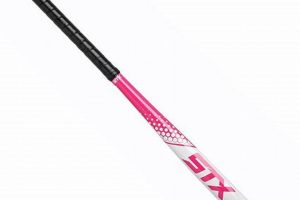
The application of adhesive fabric to the handle of a hockey stick creates a specialized surface for enhanced control. This modification, typically achieved through tightly wrapping a cloth or synthetic material around the upper portion of the stick, provides a more secure and comfortable hold. For instance, players often apply multiple layers to build up the thickness to their preferred feel.
This customization is vital for optimizing performance, enabling improved dexterity and reducing slippage during gameplay. A properly prepared handle enhances the player’s ability to maneuver the stick effectively, leading to more accurate shots and passes. Historically, this practice has evolved from simple cloth wrappings to sophisticated, specialized tapes designed for durability and grip.
The subsequent sections will delve into the various types of materials used, application techniques, and the impact of this element on overall stick handling proficiency. We will also examine its effects on comfort, injury prevention, and strategies for maintaining a high-quality setup.
Application and Maintenance Recommendations
The following are best practices for application and upkeep, designed to maximize performance and extend the lifespan of the treated handle.
Tip 1: Material Selection: Choose a tape type that complements the player’s grip style and playing conditions. Cloth variants offer a traditional feel and moisture absorption, while synthetic options provide enhanced durability and water resistance.
Tip 2: Surface Preparation: Ensure the handle surface is clean and dry before application. Removing any existing residue or moisture promotes optimal adhesion and prevents premature peeling.
Tip 3: Proper Tension: Apply the tape with consistent tension to avoid bumps and wrinkles. Maintain a firm, even pressure while wrapping to create a uniform surface.
Tip 4: Overlap Technique: Overlap each layer by approximately one-quarter to one-half inch. This ensures complete coverage and creates a secure, continuous bond.
Tip 5: Secure the Ends: Finish the application by tightly securing both the top and bottom ends. Use electrical tape or a similar adhesive to prevent unraveling during use.
Tip 6: Regular Inspection: Inspect the wrapped area regularly for signs of wear or damage. Replace or repair sections as needed to maintain optimal performance and prevent injury.
Tip 7: Moisture Management: If excessive moisture buildup occurs, consider using an absorbent powder or allowing the tape to air dry between uses. This prevents slippage and extends the lifespan of the wrap.
Adhering to these guidelines promotes enhanced stick control, reduced hand fatigue, and improved overall playing performance. Proper maintenance extends the life of the treated handle, reducing the need for frequent reapplication.
The subsequent sections will address common challenges and offer troubleshooting advice for ensuring a consistently high-quality setup.
1. Material Durability
Material durability directly influences the longevity and effectiveness of any application. The ability of the material to withstand abrasion, impact, and environmental factors dictates how often the handle needs re-wrapping and how consistently it maintains its intended grip. For instance, a low-quality cotton cloth might quickly fray and lose its adhesive properties, particularly in wet conditions, requiring frequent replacement. This contrasts with synthetic materials engineered for higher tensile strength and resistance to moisture. Therefore, selecting robust materials directly translates to reduced maintenance and sustained stick handling performance.
The choice between cloth and synthetic options depends largely on playing style, frequency of use, and environmental conditions. Cloth often provides a more traditional feel and better moisture absorption, but it is generally less durable. Synthetic alternatives, while sometimes lacking the same tactile feedback, offer significantly enhanced resistance to wear and tear. For example, a player who frequently engages in physical battles along the boards might benefit more from the abrasion resistance of a synthetic version.
In summary, material durability is a critical consideration when applying this application. The trade-offs between cost, feel, and longevity must be carefully evaluated based on individual needs and circumstances. A durable material reduces maintenance frequency, ensures consistent performance, and ultimately contributes to a more reliable and effective playing experience.
2. Application Technique

The method of applying adhesive materials to a hockey stick handle significantly impacts the resulting grip’s effectiveness and longevity. Proper execution ensures a secure, comfortable, and durable surface, while flawed techniques can lead to slippage, premature wear, and diminished control.
- Tension Consistency
Maintaining uniform tension throughout the wrapping process is paramount. Uneven tension can create bumps, wrinkles, or loose spots that compromise the grip’s surface integrity. Consistent tension ensures a smooth, even layer that conforms tightly to the handle. An example would be starting each wrap with slight pressure to secure the material, followed by maintaining that pressure throughout the process, this would lead to having a perfect application. Without consistent tension, the result will be inconsistent. This is important, because the handle surface has to have a firm grip to be safe to handle.
- Overlap Precision
The degree of overlap between successive layers directly influences grip thickness, durability, and moisture resistance. Insufficient overlap creates gaps that expose the handle to wear and moisture, while excessive overlap can result in a bulky, uncomfortable surface. A controlled, consistent overlap, typically between one-quarter and one-half inch, optimizes both coverage and thickness. This provides better durability and overall grip.
- End Security
Properly securing the ends of the tape prevents unraveling during use. Using electrical tape, tightly binding the end, ensures that it does not loosen, which can be a safety hazard. This requires folding over the end and tightly securing it. Failing to do so results in the material quickly unraveling, rendering the application ineffective and potentially unsafe.
- Surface Preparation
Before applying, ensuring the handle surface is clean and dry maximizes adhesion and prevents premature peeling. Residue or moisture can compromise the tape’s ability to bond effectively, leading to slippage and reduced durability. Wiping the handle down with a clean cloth before application ensures optimal bonding. This creates a good application that ensures the safety of its handler.
In conclusion, application technique is an inextricable component of achieving a functional and long-lasting enhancement. Mastering tension consistency, overlap precision, end security, and surface preparation enables players to create a customized handle that optimizes performance and minimizes maintenance, and increases durability.
3. Grip Thickness

The built-up material on the handle, directly determined by the number of layers and material type, influences the feel and control. This attribute is a customizable element, tailored to individual player preference. Thicker configurations can dampen vibrations and provide a more substantial feel, while thinner applications offer enhanced tactile feedback and dexterity. For instance, a player recovering from a wrist injury may opt for a thicker setup to reduce strain, whereas a finesse player might favor a slimmer application to maximize stick handling precision. The effect of grip thickness on performance is significant, impacting both comfort and control.
The method of building up the material directly relates to its effectiveness. Uneven or inconsistent layers create pressure points and diminish control. A uniform, layered application ensures a consistent feel throughout the hand. Experimentation allows players to identify the optimal thickness for their playing style and hand size. A grip that is too thin can lead to fatigue and reduced control, while one that is too thick can hinder dexterity and responsiveness. An example is, a professional hockey player might spend hours adjusting the thickness until it aligns perfectly with their sense of balance and control.
Understanding the impact of thickness is crucial for achieving optimal stick handling and comfort. It’s crucial to address some challenges. Finding the ideal thickness requires experimentation and consideration of various factors, including hand size, playing style, and personal preference. The wrong thickness can negatively impact performance and increase the risk of injury. The ability to customize handle dimensions through taping allows players to fine-tune their equipment to maximize their on-ice effectiveness. Proper execution is a fundamental element of a well-executed overall application.
4. Moisture Management

Moisture management is a critical consideration in maintaining the integrity and effectiveness of the applied surface. The accumulation of moisture, whether from sweat, ice, or environmental humidity, can significantly degrade the adhesive properties and structural integrity, thereby diminishing control and increasing the risk of slippage.
- Material Selection for Absorbency
The choice of material directly influences its capacity to absorb and retain moisture. Cloth-based options, such as cotton, offer inherent absorbency, effectively wicking away sweat. However, this absorption can lead to saturation, reducing grip and increasing weight. Conversely, synthetic alternatives often repel moisture but lack the same absorbent qualities. The selection process involves balancing moisture management with durability and tactile feel. For instance, a player prone to excessive sweating may benefit from a cloth-based application, but must also consider the increased maintenance requirements. Furthermore, a player will be likely to maintain their handle application by reapplying as necessary.
- Ventilation and Drying Techniques
Proper ventilation and drying techniques are essential for mitigating the negative effects of moisture. Allowing the stick to air dry between uses facilitates the evaporation of accumulated moisture, preventing the growth of mold and bacteria. Techniques include storing the stick in a well-ventilated area or using absorbent powders to accelerate the drying process. For example, shaking off excess moisture after a practice and storing the stick in an open space helps in its preservation.
- Impact on Adhesive Properties
Moisture significantly impairs the adhesive properties, leading to slippage and reduced control. Prolonged exposure to moisture weakens the bond, causing the material to separate from the handle. This effect is particularly pronounced in high-humidity environments. Regular inspection and replacement are necessary to maintain optimal grip. For example, a player noticing slippage should promptly replace the tape to ensure consistent performance and prevent injuries.
- Use of Moisture-Resistant Coatings
The application of moisture-resistant coatings can enhance the material’s ability to repel water and maintain its adhesive qualities. These coatings create a protective barrier, preventing moisture from penetrating the material and compromising its structural integrity. The effectiveness of such coatings varies depending on the specific formulation and application technique. For example, a player may apply a specialized spray to enhance the water resistance and extend the lifespan of its wrapped handle.
These facets illustrate the intricate relationship between moisture and the applied surface. Effective moisture management strategies are critical for preserving grip, ensuring player safety, and maximizing performance. Incorporating absorbent materials, implementing proper ventilation, and employing moisture-resistant coatings contribute to a more reliable and durable setup. Regular maintenance is also necessary to maintain the integrity and effectiveness and ensure the player handles the stick properly.
5. Secure Ends

The practice of securing the terminal points is integral to the overall functionality and durability of a hockey stick handle. Without proper attention to these details, the wrap is prone to unraveling, compromising grip consistency and potentially leading to hazardous conditions during gameplay.
- Taping Over Technique
This method involves folding over the initial or terminal edge and tightly adhering it to itself and the underlying layers. The fold creates a reinforced edge, resisting the peeling effect caused by friction and impact. Professional players often employ this technique to extend the lifespan of their handles. A failure of the foldover results in loose strands that can interfere with hand movements.
- Electrical Tape Reinforcement
Wrapping the ends with electrical tape provides an additional layer of protection against unraveling. The smooth, non-porous surface of electrical tape minimizes friction and prevents moisture from penetrating the wrap. This approach is particularly effective in wet or high-contact environments. If neglected, the cloth material will separate, reducing handle effectiveness.
- Adhesive Application at Terminals
Applying a small amount of adhesive glue to the starting and ending points provides a stronger initial bond. This method is most effective when paired with a taping over or electrical tape reinforcement, increasing the overall resistance to wear and tear. An improper application of adhesive can compromise the materials texture and feel. A common practice is to apply adhesive glue at the location the taper will begin and end.
- Regular Inspection and Maintenance
Periodic examination and timely repairs prevent minor unraveling from escalating into significant problems. Addressing loose ends promptly maintains consistent feel and safety. Neglecting maintenance allows unraveling to spread, eventually necessitating complete reapplication. One inspection technique is to run a finger along the end to check for loose strands.
These practices are essential for optimizing stick handling performance and minimizing the need for frequent reapplication. Combining proper securing methods with regular maintenance provides a cost-effective approach to maintaining a functional setup, ensuring that the interface between the player and the stick remains secure and reliable throughout intense play.
Frequently Asked Questions
The following addresses common inquiries regarding the selection, application, and maintenance, providing clarity on best practices and troubleshooting techniques.
Question 1: What factors should be considered when selecting hockey stick tape grip material?
Material selection should account for playing style, frequency of use, and environmental conditions. Cloth variants offer enhanced moisture absorption, while synthetic options provide superior durability and water resistance. Individual preferences for tactile feel also play a significant role in this decision.
Question 2: How often should a hockey stick tape grip be replaced?
Replacement frequency depends on usage intensity and environmental factors. Signs of wear, such as fraying, slippage, or reduced adhesion, indicate the need for reapplication. Regular inspection allows for timely replacement and prevents compromised performance.
Question 3: What is the optimal technique for applying hockey stick tape grip to ensure a secure hold?
Consistent tension is crucial for uniform coverage and adhesion. Overlapping each layer by approximately one-quarter to one-half inch creates a continuous bond. Securing the ends with electrical tape prevents unraveling during gameplay.
Question 4: How does hockey stick tape grip thickness affect stick handling and control?
Grip thickness is a customizable element that impacts stick feel and dexterity. Thicker configurations dampen vibrations and provide a more substantial feel, while thinner applications enhance tactile feedback and responsiveness. Selecting the appropriate thickness depends on personal preference and playing style.
Question 5: What measures can be taken to manage moisture accumulation and prevent slippage?
Employing absorbent materials, such as cloth variants, mitigates moisture buildup. Allowing the stick to air dry between uses or applying moisture-resistant coatings helps maintain the integrity and adhesive properties. Consistent replacement prevents slippage and ensures a secure hold.
Question 6: What are common signs of a poorly applied or worn hockey stick tape grip?
Indications of inadequate application or wear include uneven surfaces, loose spots, fraying edges, and diminished adhesive properties. These issues compromise grip and control, necessitating immediate repair or reapplication.
These answers provide a comprehensive overview of common concerns and considerations. A proactive approach to selection, application, and maintenance ensures optimal performance and player safety.
The following section will explore advanced customization techniques for further optimizing the user experience.
Conclusion
This exploration of hockey stick tape grip has illuminated its multifaceted role in optimizing player performance. From material selection and application techniques to the critical aspects of thickness and moisture management, each element contributes significantly to a player’s control, comfort, and overall effectiveness on the ice. The importance of securing the ends cannot be overstated, ensuring a lasting and safe grip throughout rigorous gameplay.
The deliberate application and maintenance of hockey stick tape grip represents a commitment to precision and control. Its strategic implementation translates to enhanced stick handling, improved shot accuracy, and a reduced risk of equipment-related performance issues. Continuing research and development in this area promise further advancements, potentially leading to materials and methods that redefine the interface between player and equipment.