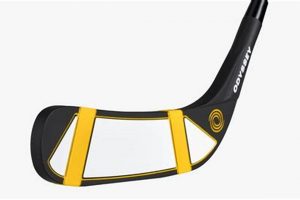
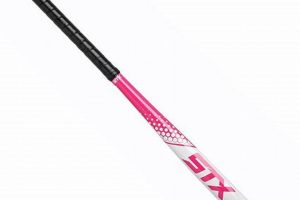
Detachable components designed to affix to a composite or wood hockey stick shaft, these items are constructed from various materials, including wood, fiberglass, carbon fiber, or composites. These components enable players to exchange damaged or worn-out portions of their stick without replacing the entire unit. For example, a player who breaks the lower portion of their stick during a game can quickly insert a new one and continue playing.
Employing these components offers economic and performance advantages. They reduce the overall cost of hockey equipment by allowing players to replace only the broken part instead of purchasing an entirely new stick. Furthermore, different types of construction materials can offer varying levels of flexibility and stiffness, allowing players to customize the feel and performance of their stick to suit their playing style. The use of replaceable parts also extends the lifespan of a hockey stick shaft, reducing waste and promoting sustainability. Historically, these components were less common, but advancements in composite materials and manufacturing processes have significantly improved their durability and performance, leading to increased adoption among players at all levels.
The following article will examine the factors to consider when selecting these components, explore the different types available on the market, and provide guidance on proper installation and maintenance to maximize performance and longevity.
Essential Considerations for Hockey Stick Replacement Blades
Selecting the appropriate component for a hockey stick can significantly impact performance and durability. The following guidelines offer practical advice to optimize the selection and use of these items.
Tip 1: Material Selection: Carbon fiber offers superior stiffness and responsiveness, ideal for players seeking enhanced power and puck control. Wood components, while less expensive, provide a softer feel and are more suitable for beginners or those prioritizing comfort.
Tip 2: Curve and Lie: Choosing a component with the correct curve (blade shape) and lie (angle of the blade relative to the shaft) is crucial for optimal puck handling and shooting accuracy. Experiment with different options to determine which best complements the player’s style and position.
Tip 3: Compatibility: Ensure the selected component is compatible with the hockey stick shaft’s dimensions and connection system. Incompatible pairings can lead to structural instability and potential breakage.
Tip 4: Installation Method: Follow the manufacturer’s instructions meticulously when installing. Improper installation can compromise the bond between the component and the shaft, reducing performance and increasing the risk of failure.
Tip 5: Regular Inspection: Regularly inspect components for signs of wear and tear, such as cracks, chips, or delamination. Promptly replacing damaged ones prevents further deterioration and potential injury.
Tip 6: Adhesive Selection: Using a high-quality epoxy adhesive specifically designed for hockey equipment ensures a strong and durable bond. Thoroughly clean and prepare surfaces before applying the adhesive to maximize adhesion.
Tip 7: Consider Player Level: Novice players may benefit from more flexible components that promote puck control, while advanced players may prefer stiffer options for increased power and accuracy.
Adhering to these guidelines will maximize the performance and lifespan of the replacement component, contributing to enhanced gameplay and reduced equipment costs.
The subsequent sections will provide a detailed overview of available types, offering a deeper understanding of the choices available.
1. Material Composition

Material composition is a fundamental determinant of performance, durability, and overall cost for hockey stick replacement blades. The selection of materials directly influences a component’s weight, flex profile, and resistance to impact, thus affecting a player’s ability to control the puck, generate power, and maintain equipment integrity throughout gameplay.
- Wood Construction
Traditionally, wood, particularly ash or birch, was the primary material. Wood offers a natural feel and good shock absorption, resulting in softer puck handling. However, it is prone to moisture absorption, leading to increased weight and decreased durability compared to modern composites. Wood replacement parts are generally the least expensive option.
- Fiberglass Reinforcement
Fiberglass-reinforced components represent an intermediate step in material evolution. Fiberglass provides increased strength and durability compared to wood while retaining a degree of flexibility. These components are often constructed with a wood core wrapped in layers of fiberglass, offering a balance between feel and resistance to breakage. They are a mid-range option in terms of cost.
- Carbon Fiber Composites
Carbon fiber composites represent the high end of material selection. These components are significantly lighter, stiffer, and more responsive than wood or fiberglass options. The directional nature of carbon fiber allows manufacturers to tailor the flex profile to specific player preferences. However, carbon fiber components are also the most expensive and can be more brittle than other materials, making them susceptible to damage from high-impact collisions. Performance increases with carbon fiber usage in the components. The material also resists against most forms of moisture.
- Composite Blends
Many replacement blades utilize blends of different materials, such as carbon fiber and fiberglass, to achieve a specific balance of performance characteristics and cost-effectiveness. These blends allow manufacturers to fine-tune the stiffness, weight, and durability of the component to meet the needs of a wide range of players. For example, a blade might incorporate carbon fiber in the heel and toe for increased stiffness and responsiveness while using fiberglass in the middle section for enhanced durability. Various blends of components are most common in the market due to pricing.
In conclusion, the material composition of a component dictates its performance characteristics and lifespan. Players should carefully consider their playing style, budget, and desired level of performance when selecting a replacement, recognizing that advancements in composite technology offer increasingly refined options for optimizing stick performance.
2. Curve Configuration

Curve configuration significantly influences puck control, shot accuracy, and overall on-ice performance when selecting hockey stick replacement blades. The curvature of the component affects how the puck sits on the blade, dictating the trajectory and spin of shots, as well as the ease with which a player can handle and pass the puck.
- Toe Curve
The toe curve, characterized by an upward bend near the tip, facilitates quick releases and elevated shots. This configuration is favored by players who frequently shoot from close range or require the ability to lift the puck quickly over defenders. Examples include forwards specializing in deflections or rebounds in front of the net. Choosing a component with an aggressive toe curve can increase the likelihood of successfully lifting the puck, but may require more practice to control accurately.
- Mid-Curve
A mid-curve, featuring a bend in the middle of the component, offers a balanced combination of puck control and shooting power. This versatile option is suitable for players who adopt a variety of shooting styles and playing positions. A player who both stickhandles and shoots from varying distances would often choose components of this nature. This balances handling of the puck and powerful shots.
- Heel Curve
The heel curve, characterized by a bend near the heel, promotes powerful shots and accurate passing. This configuration allows players to load the puck effectively and generate maximum force when shooting from a distance. Defensemen frequently use this. Components with a heel curve often facilitate more accurate passing. However, the enhanced power is achieved by more difficulty puck handling.
- Blade Face
The “face” of the replacement component ( the part of the component where the puck is placed to be hit, controlled, or passed) affects shooting angle. “Open” or “closed” ( more or less angled) faces affect puck trajectory. A more closed face makes it easier to keep shots low, whereas a more open face allow the puck to be lifted more easily. The blade face will affect shooting preference and playstyle.
The selection of an appropriate curve configuration is paramount when choosing hockey stick replacement blades. Considerations must be made about the player’s skill level, their position on the ice, and playing style. Matching the component curve to the player’s needs will optimize performance, contributing to improved puck control, shot accuracy, and overall effectiveness during gameplay.
3. Lie Angle Selection

Lie angle, the angle between the hockey stick shaft and the blade when the blade is flat on the ice, critically influences a player’s posture, puck control, and shooting accuracy. Proper lie angle selection ensures the player’s hands are positioned comfortably and efficiently, facilitating optimal energy transfer during shooting and accurate puck handling. Incorrect lie angle can lead to improper skating posture, inefficient energy transfer and diminished control.
Within the context of hockey stick replacement blades, selecting the appropriate lie angle is essential. Since the blade is a modular component, players have the flexibility to customize this crucial aspect of their stick’s performance. For instance, a taller player who typically skates in a more upright position requires a higher lie angle to maintain a flat blade on the ice. Conversely, a shorter player who leans further forward would benefit from a lower lie angle. Failure to choose a replacement blade with a suitable lie angle can result in the heel or toe of the blade lifting off the ice, leading to missed shots and compromised puck control. Consider a player accustomed to a lie angle of 6 using a replacement component with a lie angle of 4; this player would find the heel of the blade digging into the ice, negatively impacting their skating posture and hindering their ability to receive and pass effectively.
Understanding lie angle and its connection to replacement blades allows players to fine-tune their equipment for peak performance. This selection enables a customized fit beyond simply replacing a damaged component. It allows for adapting equipment to evolving playing styles or physical changes. By carefully considering their height, skating style, and typical shooting positions, players can leverage replacement blades with appropriate lie angles to optimize their on-ice performance.
4. Shaft Compatibility
Shaft compatibility constitutes a critical factor when selecting hockey stick replacement blades. Proper compatibility ensures a secure and functional connection between the shaft and the component, directly influencing the stick’s performance, durability, and safety.
- Taper Dimensions
Taper dimensions, referring to the physical size and shape of the connection point between the shaft and the component, must align precisely. Hockey shafts and components are manufactured with varying taper dimensions, such as standard or tapered, each requiring a corresponding blade for proper fit. An incompatible taper will result in a loose or unstable connection, compromising energy transfer during shooting and increasing the risk of breakage. For example, attempting to insert a standard taper blade into a tapered shaft will result in a loose fit, rendering the stick unusable.
- Connection System Type
The connection system, which refers to the method by which the blade attaches to the shaft, must be compatible. Common connection systems include adhesives, compression fittings, or interlocking mechanisms. Each system requires specific blade and shaft designs to ensure a secure connection. Utilizing an incorrect connection system can lead to a weak or unstable bond, increasing the likelihood of blade separation during gameplay. For instance, using an adhesive-based blade with a shaft designed for a compression fitting will likely result in a compromised connection.
- Shaft Material Composition
The material composition of the shaft can influence compatibility with certain replacement blades. While most composite shafts are designed to accommodate a variety of blade materials, significant differences in material properties, such as stiffness or thermal expansion, can impact the connection’s long-term integrity. Using a blade made of a material significantly different from the shaft may lead to stress concentrations and premature failure. For example, pairing a very stiff carbon fiber blade with a flexible composite shaft might result in excessive stress on the connection point during high-impact shots.
- Manufacturer-Specific Systems
Some manufacturers employ proprietary connection systems designed to work exclusively with their own blades and shafts. These systems may offer enhanced performance or durability but limit the user’s ability to use replacement blades from other brands. Ignoring these manufacturer-specific systems will ultimately leave the equipment useless. For example, one brand uses an exclusive interlock mechanism to connect it’s shafts and blades, no other component would fit.
Shaft compatibility is of the utmost importance, with direct and lasting implications. Properly selected components will improve the equipment while reducing stress on equipment. Shaft compatibility ensures optimal performance and extends the lifespan of hockey equipment.
5. Installation Integrity

Installation integrity, in the context of hockey stick replacement blades, is the degree to which the connection between the blade and shaft is secure, stable, and capable of withstanding the forces generated during gameplay. It is not merely a matter of physical attachment but also involves proper alignment, appropriate adhesive application (if applicable), and adherence to the manufacturer’s recommended procedures. Compromised installation integrity directly translates to reduced performance, increased risk of equipment failure, and potential for player injury. For example, a blade that is loosely connected to the shaft will not efficiently transfer energy during a shot, resulting in diminished power and accuracy. Moreover, a poorly installed blade is more likely to detach during a game, potentially causing a tripping hazard or impacting another player. The practical significance of this understanding is that meticulous installation procedures are paramount for maximizing the lifespan and performance of hockey equipment.
The process of ensuring proper installation integrity involves several critical steps. First, the surfaces of both the blade and shaft must be thoroughly cleaned and prepared to promote optimal adhesion. This may involve sanding, degreasing, or the application of a bonding agent, depending on the materials and the manufacturer’s specifications. Second, the appropriate adhesive, if required, must be applied evenly and in the correct quantity. Insufficient adhesive will result in a weak bond, while excessive adhesive can create air pockets or interfere with proper alignment. Third, the blade must be precisely aligned with the shaft to ensure optimal balance and energy transfer. Misalignment can lead to uneven stress distribution and premature failure. Finally, the connection must be allowed to cure or set properly, following the manufacturer’s recommended time and temperature parameters. Rushing the curing process can compromise the integrity of the bond. As an illustrative example, consider a player who hastily installs a replacement blade using an inadequate amount of adhesive and fails to allow sufficient curing time. This player will likely experience a significant reduction in shot power and accuracy, and the blade may detach during a critical moment in the game.
In summary, installation integrity is an indispensable element in the effective utilization of hockey stick replacement blades. Careful attention to surface preparation, adhesive application (when applicable), alignment, and curing procedures is essential for achieving a secure and reliable connection. Neglecting these aspects can lead to diminished performance, equipment failure, and potential injury. While the process may seem straightforward, the cumulative effect of these steps significantly influences the overall quality and longevity of the hockey stick. Therefore, a thorough understanding of installation best practices and strict adherence to manufacturer guidelines are paramount for all players and equipment managers.
Frequently Asked Questions
The following addresses common inquiries concerning the selection, use, and maintenance of hockey stick replacement blades. The information provided aims to clarify best practices and inform decision-making.
Question 1: What are the primary benefits of using hockey stick replacement blades?
Employing replacement blades offers cost savings by allowing players to replace only the damaged portion of the stick, rather than the entire unit. Replacement blades also afford customization, allowing players to fine-tune stick performance based on material, curve, and lie preferences. The use of replacement blades extends the lifespan of a hockey stick shaft, reducing overall waste.
Question 2: How does material composition influence the performance of a hockey stick replacement blade?
Material composition directly affects blade weight, stiffness, and durability. Wood offers a softer feel but is less durable. Fiberglass provides a balance of durability and feel. Carbon fiber composites offer maximum stiffness and responsiveness for enhanced power and puck control.
Question 3: What factors should be considered when selecting a replacement blade’s curve?
Curve selection should be based on playing style, position, and shooting preferences. Toe curves facilitate quick releases, mid-curves offer versatility, and heel curves promote powerful shots. The blade face, whether open or closed, influences the trajectory of the shot.
Question 4: How does the lie angle of a replacement blade affect a player’s stance and performance?
The lie angle affects a player’s posture, puck control, and shooting mechanics. The correct lie angle ensures the blade sits flat on the ice, optimizing energy transfer and control. Taller players generally require higher lie angles, while shorter players benefit from lower angles.
Question 5: What are the key considerations for ensuring shaft compatibility with a replacement blade?
Shaft compatibility hinges on matching taper dimensions and connection system types. Mismatched tapers or incompatible connection systems can lead to a weak or unstable bond, compromising performance and safety. Consideration of the material composition of the shaft and blade is also advisable to avoid undue stress.
Question 6: What are the essential steps for properly installing a hockey stick replacement blade?
Proper installation requires thorough cleaning and preparation of both blade and shaft surfaces. The appropriate adhesive, if applicable, must be applied evenly and in the correct quantity. Precise alignment of the blade and shaft is critical. Adequate curing time, as specified by the manufacturer, must be observed to ensure a secure bond.
In summary, informed selection and proper installation are essential for maximizing the benefits of hockey stick replacement blades. Attention to material, curve, lie angle, shaft compatibility, and installation procedures contributes to enhanced performance and equipment longevity.
The subsequent section will provide guidance on proper maintenance and care for replacement blades.
Conclusion
This exploration has illuminated the critical considerations surrounding hockey stick replacement blades. From the nuanced selection of materials and curve configurations to the imperative of shaft compatibility and installation integrity, each facet contributes to the overall performance and longevity of the equipment. The informed player understands that these components are not mere accessories but integral elements that directly impact on-ice effectiveness.
Therefore, a commitment to diligent research, careful selection, and meticulous maintenance is paramount. As technology advances and new materials emerge, a continued focus on understanding the interplay between these components and the demands of the sport will ensure that players are equipped to perform at their best. The responsible use of hockey stick replacement blades represents an investment in both performance and sustainability.