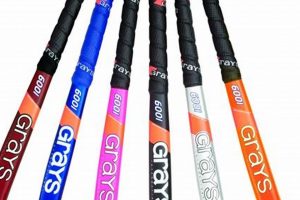
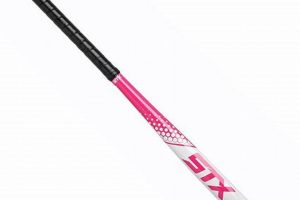
A hockey stick is composed of distinct sections, each contributing to its overall performance. These include the blade, which makes contact with the puck; the shaft, providing the handle and main structural support; the heel, connecting the blade and shaft; and often, a grip or tape applied to the upper portion of the shaft for enhanced control. Damage or wear to any of these specific areas can significantly affect a player’s ability to effectively handle the puck, shoot, and pass.
Understanding the role and characteristics of each section is crucial for optimizing performance and equipment maintenance. Selecting appropriate materials and construction techniques for each area directly impacts the stick’s weight, flex, and durability. Historically, advancements in materials science have led to significant improvements in stick design, allowing for increased power, precision, and reduced risk of breakage. This knowledge helps players and coaches make informed decisions when choosing equipment and diagnosing potential issues.
The following discussion will delve into the specific materials used in construction, the various performance characteristics associated with different designs, and guidelines for proper care and maintenance to maximize the lifespan of a hockey stick. This examination includes common failure points, methods for repair, and considerations for selecting a stick that best suits individual playing styles and skill levels.
Guidance on Hockey Stick Maintenance and Selection
Optimal performance and longevity of hockey equipment are contingent upon diligent maintenance and informed selection. The following guidelines offer practical advice applicable to various hockey stick models and playing styles.
Tip 1: Inspect the Blade Regularly: Examine the blade for cracks, chips, or delamination. Damage to this component directly affects puck control and shot accuracy. Replacement or repair may be necessary if significant wear is observed.
Tip 2: Monitor the Shaft for Structural Integrity: The shaft bears the brunt of force during gameplay. Frequent inspection for stress fractures or weakening is crucial. Signs of damage warrant immediate attention to prevent potential breakage and injury.
Tip 3: Apply Protective Tape Strategically: Tape not only enhances grip but also shields the shaft and blade from abrasion. Proper application techniques and regular replacement of worn tape are vital for maintaining equipment condition.
Tip 4: Address Heel Damage Promptly: The heel, connecting the blade and shaft, is a common point of failure. Inspect for cracks or separation, and implement appropriate repair measures to prevent further damage and compromised performance.
Tip 5: Store Sticks Properly: Proper storage minimizes exposure to extreme temperatures and humidity, which can degrade materials. Store sticks in a cool, dry environment, preferably in a vertical position to prevent warping.
Tip 6: Consider Flex Profile and Length: Matching the stick’s flex and length to an individual’s playing style and strength is crucial for maximizing performance. Consult with experienced players or equipment specialists for guidance on appropriate selection.
Adherence to these maintenance and selection practices will contribute to enhanced on-ice performance, reduced equipment costs over time, and a safer playing experience.
These practices establish a foundation for long-term equipment management, thereby providing a segue to a comprehensive analysis of advanced repair techniques and material science innovations in the realm of hockey stick technology.
1. Blade Material

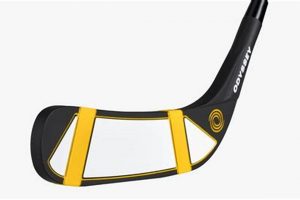
The blade constitutes a critical component of hockey stick, directly impacting puck control, shot accuracy, and overall durability. Its material composition influences the transmission of energy from the player to the puck, affecting shot power and precision. The choice of material also dictates the level of feedback the player receives, influencing their ability to handle the puck effectively. For example, a wood blade offers a softer feel and enhanced puck control, while a composite blade provides greater stiffness and power. Damage to the blade, such as cracks or delamination, significantly impairs performance and can lead to equipment failure. Regular inspection and appropriate maintenance are therefore essential for optimal play.
Diverse materials are employed in blade construction, each presenting distinct advantages and disadvantages. Wood, historically the standard, offers affordability and a dampened feel, but is susceptible to moisture absorption and degradation. Composite materials, including carbon fiber and fiberglass, provide superior strength-to-weight ratios and enhanced durability. These materials also allow for greater customization of blade stiffness and flex, catering to individual player preferences and playing styles. Some blades incorporate a foam core to further dampen vibrations and improve puck feel. The selection of material directly affects the player’s ability to execute precise passes and powerful shots.
Understanding the interplay between blade material and stick performance is crucial for informed equipment selection and maintenance. The choice of blade material directly influences a player’s ability to control the puck, generate shot power, and maintain the stick’s structural integrity over time. Although advancements in material science continue to improve blade durability and performance, regular inspection and appropriate care remain essential for maximizing the lifespan and effectiveness of this critical piece of hockey equipment.
2. Shaft Composition

The composition of the hockey stick shaft dictates its flex characteristics, weight, and overall durability. The materials used in its construction significantly influence a player’s ability to transfer energy efficiently during shooting and passing.
- Fiberglass Reinforcement
Fiberglass, often used in entry-level and mid-range sticks, provides a balance of affordability and durability. Its layered structure offers impact resistance, preventing catastrophic failure from slashes or puck contact. However, fiberglass shafts generally exhibit less responsiveness and a higher weight compared to carbon fiber alternatives, potentially hindering quick stick handling and shot release.
- Carbon Fiber Laminates
Carbon fiber composites, prevalent in high-performance sticks, offer superior strength-to-weight ratios. Varying the carbon fiber layup and weave patterns allows manufacturers to fine-tune the shaft’s torsional stiffness and flex profile. This customizability translates to increased power transfer during shots and improved responsiveness for puck control. The use of unidirectional carbon fibers, oriented along the shaft’s longitudinal axis, maximizes stiffness in the direction of force application.
- Resin Systems
The resin system used to bind the fibers in the composite material plays a crucial role in the shaft’s performance and longevity. Epoxy resins are commonly employed due to their high strength and chemical resistance. Advanced resin formulations can further enhance the stick’s durability and impact resistance by improving the fiber-matrix bond. The type of resin and curing process directly affect the shaft’s stiffness, flex, and resistance to delamination under repeated stress.
- Hybrid Constructions
Many hockey sticks utilize hybrid constructions, combining different materials to achieve a specific balance of performance characteristics. For example, a stick might incorporate a carbon fiber laminate in the lower portion of the shaft for increased shot power, while using a fiberglass layup in the upper portion for enhanced feel and vibration dampening. These hybrid designs aim to optimize both performance and cost-effectiveness by strategically leveraging the strengths of different materials.
The interplay between these material characteristics significantly impacts the overall performance of hockey sticks. Understanding the properties of fiberglass, carbon fiber, resin systems, and hybrid constructions informs player selection and influences stick longevity. These elements are key considerations within the broader discussion of hockey stick parts.
3. Heel Construction

The heel represents a critical nexus within a hockey stick, seamlessly uniting the blade and the shaft. Its structural integrity directly impacts the transfer of energy during shooting and puck handling. Proper design and robust construction are essential for optimizing performance and ensuring the stick’s overall durability.
- Material Selection and Bonding
The materials used in heel construction must be compatible with both the blade and shaft materials. Wood, composite materials, and specialized adhesives are commonly employed. The quality of the bonding process between the heel and adjacent components is paramount; inadequate bonding can lead to premature failure under the stresses of gameplay. Examples include epoxy resins for composite sticks and reinforced wood joints for traditional wooden sticks. A weak heel drastically reduces shot power and control.
- Heel Shape and Profile
The heel’s shape influences the distribution of stress and the overall feel of the stick. Some designs feature a gradual transition between the blade and shaft, while others incorporate a more abrupt angle. The profile must be optimized to provide adequate surface area for bonding while minimizing stress concentrations. A well-designed heel enhances puck feel and provides a smooth transition of force during shooting and stickhandling.
- Reinforcement Techniques
To enhance durability, manufacturers often employ reinforcement techniques in the heel area. These can include the use of carbon fiber overlays, internal reinforcing sleeves, or specialized resin systems. These reinforcements mitigate stress concentrations and improve resistance to impact damage. Reinforced heels are especially important for high-performance sticks subjected to intense use.
- Failure Modes and Prevention
The heel is a common point of failure in hockey sticks due to the high stresses concentrated in this area. Cracking, delamination, and separation are typical failure modes. Proper maintenance, including regular inspection for signs of damage, is essential for preventing premature failure. Protective tape applied to the heel can also provide added reinforcement and abrasion resistance.
The interrelation between heel construction, material selection, shape, reinforcement, and failure prevention underscores its importance as a component of hockey stick assembly. Attention to these facets ensures durability and optimal performance, highlighting its relevance within the overall context of hockey stick parts.
4. Grip Application

Grip application on a hockey stick significantly influences a player’s control, comfort, and ultimately, on-ice performance. It is an integral element of the overall hockey stick configuration, interacting directly with other components to optimize handling and shot execution. The choice of grip material, application method, and maintenance routine all contribute to its effectiveness.
- Material Selection and Texture
Grip materials range from traditional cloth tape to synthetic polymers, each offering different levels of tackiness, moisture absorption, and durability. Cloth tape provides a classic feel and is highly customizable but can become slippery when wet. Synthetic grips offer improved moisture management and consistent grip in various conditions. Texture plays a crucial role, with ribbed or patterned surfaces enhancing tactile feedback and grip security. The selection of a suitable material directly impacts stick control, especially during rapid movements.
- Application Technique and Coverage
The method of grip application significantly affects its performance. Overlapping tape applications create a uniform, cushioned surface, while spaced applications offer a more direct feel of the shaft. Coverage varies based on player preference, with some extending the grip along the entire shaft for maximum control, while others prefer a minimal grip concentrated near the top hand. Proper tension during application is critical to prevent slippage and maintain a secure connection between the player’s hand and the stick.
- Impact on Torque and Control
A well-applied grip enhances a player’s ability to apply torque to the stick, improving shot power and accuracy. The grip facilitates a secure hold, allowing the player to transfer force efficiently during wrist shots, slap shots, and other shooting techniques. Enhanced control translates to improved puck handling, passing accuracy, and overall agility on the ice. Inadequate grip can lead to missed shots, turnovers, and reduced overall performance.
- Maintenance and Replacement
Grip maintenance is essential for preserving its effectiveness. Regular cleaning removes dirt and sweat, preventing the material from becoming slippery or degrading. Over time, grip materials wear down and lose their tackiness, necessitating replacement. The frequency of replacement depends on the intensity of use and the type of material. Timely replacement ensures consistent grip and optimal stick control.
Collectively, these facets of grip application underscore its critical role in the overall function of hockey sticks. The choice of material, application technique, impact on torque, and maintenance all contribute to its significance within the broader context of hockey stick parts and their influence on player performance.
5. Taper Design

Taper design, referring to the narrowing of the hockey stick shaft near the blade, constitutes a critical performance-enhancing feature among hockey stick parts. The taper’s geometry, specifically its length and rate of narrowing, directly affects the stick’s flex point and torsional stiffness. A shorter taper, found in some modern designs, concentrates the flex closer to the blade, facilitating a quicker release and potentially increasing shot velocity. Conversely, a longer taper distributes the flex more evenly along the shaft, providing a softer feel and potentially enhancing puck control. The specific taper design is therefore a critical determinant of the stick’s responsiveness and suitability for different playing styles. For instance, defensemen, who often prioritize powerful slapshots, might prefer a stick with a stiffer taper and higher flex point, whereas forwards, focused on quick wrist shots, might benefit from a softer flex and lower taper point.
The materials used in conjunction with the taper design further influence performance. Composite materials, such as carbon fiber, allow for precise manipulation of the taper’s stiffness and flex characteristics. Manufacturers can vary the fiber orientation and layup patterns to create specific taper profiles that cater to different playing styles and skill levels. For example, incorporating high-modulus carbon fiber in the taper region can increase its stiffness and responsiveness, resulting in a more powerful shot. The interplay between the taper’s geometry and the materials used in its construction is therefore fundamental to achieving the desired performance characteristics. This is evident in the marketing of various stick models, where manufacturers emphasize the specific taper technology used and its purported benefits.
In summary, taper design is a critical element within the broader context of hockey stick parts, profoundly affecting a stick’s performance. It is interlinked with shaft material, flex profile and blade construction, as well as player technique. Manufacturers’ continuous innovations in taper technology reflects its impact on shot power, puck control, and overall player effectiveness. Understanding the principles of taper design is thus essential for both players seeking to optimize their equipment and equipment manufacturers striving to create high-performance hockey sticks.
6. Flex Profile

Flex profile, denoting the stiffness distribution along a hockey stick shaft, is inextricably linked to the constituent parts of the stick and their interplay. This characteristic dictates how the stick bends under load, influencing energy transfer during shooting and passing. Understanding this relationship is crucial for optimizing performance based on individual player attributes and playing styles.
- Shaft Material and Stiffness Distribution
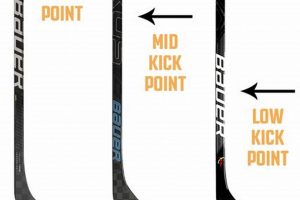
The material composition of the shaft, typically involving carbon fiber or fiberglass composites, governs the overall stiffness of the stick. Manufacturers strategically vary material layering and fiber orientation along the shaft’s length to achieve the desired flex profile. For example, reinforcing the lower portion of the shaft near the blade can create a low-kick point, facilitating quicker shot release. Conversely, reinforcing the upper portion can produce a high-kick point, maximizing power for slapshots. This manipulation of material properties directly shapes the flex characteristics of the stick.
- Taper Geometry and Flex Point
The taper, the narrowing of the shaft near the blade, significantly affects the flex point, which is the location along the shaft where the majority of bending occurs under load. A longer, gradual taper typically results in a higher flex point, while a shorter, more abrupt taper creates a lower flex point. This design element interacts directly with shaft material to determine the stick’s bending behavior. For instance, a stick with a stiff lower shaft and a short taper will exhibit a very low kick point, ideal for quick releases in tight spaces.
- Grip Application and Perceived Flex
While the grip does not directly alter the inherent flex of the shaft, its application and texture can influence a player’s perception of the stick’s flexibility. A thicker grip can dampen vibrations and provide a more cushioned feel, potentially making the stick feel softer. Conversely, a thinner grip allows for a more direct feel of the shaft’s bending, potentially making the stick feel stiffer. Player preference and grip selection, therefore, can fine-tune the subjective experience of flex.
- Blade Integration and Torque Response
The manner in which the blade is integrated into the shaft influences the stick’s torsional stiffness, which is the resistance to twisting. A poorly integrated blade can result in excessive twisting during shooting, reducing accuracy and power. Manufacturers often employ specialized heel designs and bonding techniques to minimize torsional flex and optimize energy transfer. This aspect of blade integration directly impacts the overall feel and performance of the stick.
These facets of the flex profile, each intrinsically tied to the construction and materials of hockey stick parts, collectively define the stick’s performance characteristics. The interplay between shaft material, taper geometry, grip application, and blade integration determines how effectively a player can load and release energy during gameplay. Understanding these relationships allows players to make informed equipment choices tailored to their specific needs and playing styles.
7. Weight Distribution
Weight distribution within a hockey stick is a critical design parameter directly influenced by the selection and arrangement of its components. Precise allocation of mass impacts balance, maneuverability, and ultimately, a player’s ability to control the stick and execute plays effectively. Deviations from optimal weight distribution can hinder performance, regardless of the quality of individual components.
- Blade Mass and Balance Point
The mass of the blade significantly influences the stick’s balance point. A heavier blade shifts the balance point towards the lower end, potentially improving puck feel and shot power. However, it can also reduce maneuverability and quickness in stick handling. Conversely, a lighter blade raises the balance point, enhancing stick handling speed but possibly diminishing shot power. Composite blades allow for targeted mass distribution, offering designers greater control over balance.
- Shaft Construction and Material Density
The density and layering of materials within the shaft also affect weight distribution. High-density materials concentrated in the lower portion of the shaft can shift the balance point downward. Conversely, lightweight materials in the upper shaft section can improve balance and reduce overall stick weight. Strategic use of carbon fiber and resin systems allows for precise control over the shaft’s weight profile. This, in turn, affects how the stick feels in the player’s hands and their ability to wield it effectively during gameplay.
- Grip Application and Upper-Hand Control
The type and amount of grip material applied near the top of the shaft can subtly alter the stick’s balance and feel. A thicker, heavier grip shifts the balance point upward, potentially enhancing upper-hand control and quickness in stick handling. However, excessive grip material can add unnecessary weight, reducing overall stick speed. The grip application should be carefully considered in relation to the overall weight distribution of the stick. This fine-tuning is most often down to personal preference.
- Taper Design and Mass Concentration
The taper, where the shaft narrows towards the blade, influences mass concentration near the lower end of the stick. A longer, more gradual taper can distribute mass more evenly, while a shorter, more abrupt taper concentrates mass closer to the blade. This, in turn, affects the stick’s flex point and overall balance. Optimizing the taper design in conjunction with blade and shaft materials is critical for achieving the desired weight distribution characteristics.
These factors collectively illustrate the complex interplay between hockey stick parts and weight distribution. Each component contributes to the overall balance and feel of the stick, impacting a player’s ability to perform optimally. Manufacturers continually refine their designs and material selection to achieve the ideal weight distribution characteristics for various playing styles and skill levels, recognizing the critical role it plays in on-ice performance. The understanding of these relationships is therefore crucial for both equipment designers and players.
Frequently Asked Questions About Hockey Stick Parts
The following addresses common inquiries concerning hockey stick components and their impact on performance and longevity.
Question 1: What materials are typically used in the construction of hockey stick blades?
Hockey stick blades are commonly constructed from wood, composite materials (such as carbon fiber and fiberglass), or a combination thereof. Wood blades offer a traditional feel and affordability but are susceptible to moisture absorption and degradation. Composite blades provide enhanced durability, stiffness, and power transfer but may lack the dampened feel of wood.
Question 2: How does the flex profile of a hockey stick affect performance?
The flex profile, indicating the stiffness distribution along the shaft, dictates how the stick bends during shooting. A low-kick point facilitates a quicker release for wrist shots, while a high-kick point maximizes power for slapshots. Selecting an appropriate flex profile is crucial for optimizing performance based on individual playing style and strength.
Question 3: What is the purpose of grip tape on a hockey stick?
Grip tape serves multiple functions, including enhancing hand control, absorbing moisture, and protecting the shaft from abrasion. The type of tape and application technique influence grip tackiness and feel, allowing players to customize their stick handling experience.
Question 4: How does taper design impact shot velocity?
The taper, the narrowing of the shaft near the blade, influences the stick’s flex point and stiffness. A shorter, more abrupt taper concentrates the flex closer to the blade, potentially increasing shot velocity. A longer, more gradual taper distributes the flex more evenly, providing a softer feel and potentially enhancing puck control.
Question 5: What are common failure points in hockey sticks, and how can they be prevented?
Common failure points include the heel (connection between blade and shaft), the shaft (especially near the mid-point), and the blade (due to impact damage). Prevention measures include regular inspection for cracks or delamination, proper storage, and strategic use of protective tape.
Question 6: How does weight distribution affect a player’s control over the hockey stick?
Weight distribution significantly impacts balance and maneuverability. A heavier blade can improve puck feel and shot power, while a lighter blade enhances stick handling speed. Optimal weight distribution allows for efficient energy transfer and precise stick control.
Understanding these fundamental aspects of hockey stick parts enables informed equipment selection and maintenance, ultimately contributing to enhanced on-ice performance.
This understanding provides a strong foundation for further exploration of advanced materials and manufacturing techniques used in modern hockey stick production.
Conclusion
This examination has detailed the essential hockey stick parts and their individual contributions to overall performance. From the blade’s material composition to the shaft’s flex profile and the heel’s structural integrity, each element plays a crucial role in a stick’s responsiveness, power transfer, and durability. Informed selection and diligent maintenance of these components directly correlate with enhanced on-ice capabilities and prolonged equipment lifespan.
Ongoing advancements in materials science and manufacturing techniques continuously reshape the landscape of hockey stick design. A comprehensive understanding of these advancements remains vital for players, coaches, and equipment managers seeking to optimize performance and ensure safety. Further research and development in this area promise to yield even greater improvements in stick technology, benefiting players at all skill levels.