Structured exercises designed to improve defensive capabilities on the ice are fundamental to any hockey team’s success. These activities focus on developing key skills such as skating backward efficiently, maintaining a tight gap control with opposing forwards, executing effective poke checks, and clearing the defensive zone with precision. A typical example includes a two-on-one drill where defenders practice angling the puck carrier to the outside while the supporting defender covers the passing lane, preventing a scoring opportunity.
The significance of skillful defensive play extends beyond simply preventing goals. A robust defensive structure allows a team to transition quickly from defense to offense, creating counter-attacking opportunities. Historically, teams with consistently strong defensive units have demonstrated a greater capacity for sustained success in league play and tournament competition. Mastery of defensive tactics and techniques offers a substantial competitive advantage, minimizing opponent scoring chances and maximizing puck possession.
The following sections will delve into specific categories of these exercises, outlining their objectives and providing detailed explanations of their execution. Areas covered include positional awareness drills, puck retrieval strategies, and communication techniques essential for a cohesive defensive unit.
Effective Hockey Defence Strategies
The following represent essential considerations for enhancing defensive performance on the ice, applicable across skill levels and game situations.
Tip 1: Maintain Positional Discipline: Adherence to assigned defensive positioning is paramount. Avoid chasing the puck excessively, which can create gaps and leave teammates vulnerable. Focus on maintaining proper zone coverage and supporting your defensive partner.
Tip 2: Emphasize Gap Control: Reducing the space between the defender and the attacking forward minimizes offensive opportunities. Maintain a consistent gap, forcing the attacker to make rushed decisions or commit turnovers.
Tip 3: Perfect Angling Techniques: Directing the puck carrier toward the boards limits their options. Employ proper angling techniques to steer the attacker away from high-danger scoring areas.
Tip 4: Master the Poke Check: Accurate and timely poke checks disrupt offensive plays without committing a penalty. Focus on targeting the puck directly, avoiding contact with the opponent’s body or skates.
Tip 5: Prioritize Effective Zone Exits: Clearing the defensive zone efficiently is crucial. Identify the best passing lane or skating option to transition the puck up ice, minimizing pressure and creating offensive opportunities.
Tip 6: Enhance Communication Skills: Clear and concise communication among defensive partners is essential. Use verbal and non-verbal cues to indicate player assignments, zone coverage responsibilities, and potential threats.
Tip 7: Focus on Backward Skating Proficiency: Effective backward skating is fundamental for maintaining gap control and reacting to offensive threats. Consistent practice of backward skating techniques is crucial for defensive success.
Consistent application of these principles will contribute significantly to a team’s overall defensive strength and effectiveness. Prioritizing these elements ensures a more structured and resilient defensive presence on the ice.
The subsequent sections will provide comprehensive examples of ice based training to accomplish these.
1. Skating Agility

Skating agility forms the bedrock of effective defensive performance in hockey. Its influence permeates almost every facet of defensive play, directly impacting a player’s ability to execute essential skills and tactical maneuvers within defensive scenarios. Agility provides the necessary foundation for quickly adjusting positioning, maintaining proper gap control with opposing forwards, and reacting effectively to rapidly changing offensive threats. The direct causal relationship between improved skating agility and enhanced defensive capabilities is demonstrable through focused training.
Within standard defensive training regimens, skating agility development is often integrated into exercises designed to simulate game-like situations. For example, shuttle drills, involving rapid changes of direction and acceleration, directly improve a player’s ability to transition seamlessly between forward and backward skating, essential for maintaining gap control. Crossovers and edge work exercises enhance lateral movement and stability, critical for angling opponents and preventing them from accessing high-scoring areas. Furthermore, drills that incorporate puck handling while navigating obstacle courses develop both skating agility and puck control under pressure, enabling defenders to effectively retrieve pucks and initiate zone exits. Elite level players are routinely observed exhibiting superior skating agility within defensive contexts, directly translating to minimized scoring opportunities for the opposition.
In summation, the development of skating agility is not merely an ancillary skill, but rather a fundamental component of effective hockey defense. Its impact on positional play, gap control, and overall responsiveness to offensive pressure is undeniable. While tactical understanding and puck-handling skills are crucial, their effective application hinges upon a solid foundation of skating agility. Continued focus on this fundamental skill is paramount for developing well-rounded and highly effective defensive players at all levels of competition.
2. Positional Awareness

Positional awareness constitutes a critical component within structured hockey defence. It directly influences a defender’s effectiveness in preventing scoring opportunities and controlling the flow of play within the defensive zone. Correct positioning allows a defender to anticipate opponent movements, intercept passes, and maintain optimal gap control, thereby minimizing offensive threats. Defence practices often incorporate exercises specifically designed to enhance this skill. For example, drills involving simulated offensive zone entries require defenders to identify and occupy strategic locations based on the puck’s position and the movement of opposing players. Failure to maintain proper positioning creates vulnerabilities that opposing offenses can exploit, leading to increased scoring chances.
The relationship between positional awareness and defensive efficiency is demonstrable across all levels of hockey. Drills focusing on defensive zone coverage, such as the triangle drill or box-plus-one formation exercises, force defenders to adapt their positioning based on evolving game scenarios. These drills emphasize the importance of supporting teammates, covering passing lanes, and protecting the net front. Furthermore, video analysis sessions, commonly used in conjunction with on-ice drills, allow players to visually assess their positioning in past game situations, identifying areas for improvement and reinforcing correct defensive principles. A practical example involves observing professional hockey games, analyzing how elite defenders adjust their positioning based on the location of the puck and the movements of opposing forwards, particularly during power-play situations.
In conclusion, positional awareness is not merely a passive understanding of one’s location on the ice, but an active and dynamic skill honed through targeted training. Effective hockey defence, therefore, necessitates consistent integration of positional awareness drills within training regimens. While individual skating ability and puck-handling skills are important, their impact is amplified by a strong foundation of positional awareness. Continued emphasis on this core skill is essential for developing consistently reliable and effective defensive players. The challenge lies in creating realistic training simulations that replicate the dynamic and unpredictable nature of game situations, maximizing the transfer of learned skills to actual game performance.
3. Puck Retrieval

Puck retrieval represents a fundamental, causative element within effective hockey defensive systems. The ability of a defender to efficiently and effectively secure possession of the puck within the defensive zone directly influences subsequent transitional play and overall defensive stability. Without proficient puck retrieval skills, a team remains consistently vulnerable to sustained offensive pressure, resulting in increased scoring opportunities for the opposition. Standard defence exercises therefore dedicate significant time to developing techniques that prioritize speed, decisiveness, and puck protection during retrieval scenarios. For instance, a common drill involves a defender retrieving a dumped-in puck under pressure from a forechecking forward, emphasizing quick assessment of passing options and a forceful exit from the zone. The skill itself is thus a core component to defensive systems and cannot be divorced from it.
Practical applications of effective puck retrieval are readily apparent in competitive gameplay. A defender who can quickly gain possession and make a sound passing decision prevents prolonged cycles in the defensive zone, minimizing the risk of turnovers and scoring chances. Drills designed to simulate these scenarios often incorporate variations in forechecking pressure, requiring defenders to adapt their retrieval strategies based on the opposition’s approach. One example involves a defender practicing retrieval from behind the net, facing varying degrees of forechecking intensity and having to choose between a short breakout pass, a rim pass along the boards, or a controlled skate out of the zone. Moreover, observation of professional hockey games reveals consistent emphasis on puck protection and efficient passing following retrieval, demonstrating the correlation between these skills and sustained defensive success. A team’s failure to effectively retrieve pucks, even with strong positional play, can negate any systematic defensive advantages and ultimately influence game outcomes.
In summary, proficient puck retrieval is not merely a supplemental defensive skill but an integral component of a cohesive defensive strategy. Its effective execution, honed through targeted training and practical application, minimizes offensive pressure and facilitates swift transitions from defense to offense. The challenges in developing this proficiency lie in replicating the unpredictable nature of game situations within the structured environment of hockey defence exercises and in instilling within defenders the decisiveness and composure required to make optimal retrieval decisions under pressure. Mastering puck retrieval is a prerequisite for building a formidable and adaptable defensive unit capable of controlling the game’s tempo and minimizing opponent scoring chances.
4. Gap Control

Gap control, a foundational skill in defensive hockey, dictates the proximity between a defender and an opposing forward. Targeted training exercises are essential for its effective implementation. Proper gap control limits the forward’s time and space, forcing rushed decisions or turnovers, and thus impacting scoring opportunities.
- Maintaining Proper Distance
Effective gap control necessitates consistently judging and adjusting the distance between the defender and the attacker. Too much space allows the forward to gain speed and exploit openings; too little space risks being beaten wide or drawing a penalty. Hockey defence drills addressing this facet often involve defenders skating backward, mirroring the forward’s movements while maintaining a consistent, pre-determined gap. Example drills include mirroring exercises along the blue line and reacting to changes in speed and direction.
- Angling and Positioning
Gap control is intrinsically linked to angling techniques, which direct the forward toward less threatening areas of the ice. Defenders must combine gap control with strategic positioning, forcing the attacker towards the boards or away from the net. Triangle drills and defensive zone coverage exercises are used to cultivate this integrated skill, ensuring defenders understand how gap control and angling complement each other.
- Stick Positioning and Active Stick
An active stick is crucial in conjunction with gap control. Defenders use their stick to disrupt the forward’s puck control, intercept passes, and deter attacks. Hockey defence drills designed to improve this facet involve practicing poke checks and stick lifts while maintaining appropriate gap control. Such exercises often simulate one-on-one scenarios where defenders must use their stick effectively to break up plays without committing penalties.
- Transitioning from Defense to Offense
Effective gap control not only prevents goals but also facilitates quick transitions from defense to offense. By forcing turnovers or limiting the forward’s options, defenders can create counter-attacking opportunities. Drills focusing on defensive zone exits often integrate gap control, requiring defenders to quickly retrieve the puck and initiate breakouts after successfully containing the opposing forward.
The successful integration of gap control techniques within hockey defence drills culminates in a more cohesive and effective defensive unit. Consistent application of these facets translates to minimized scoring chances for the opposition, enhanced puck possession, and improved overall team performance. The importance of honing these skills through structured exercises cannot be overstated, as mastery of gap control fundamentally strengthens the defensive foundation of any hockey team.
5. Communication Clarity
Communication clarity constitutes a pivotal element within the framework of hockey defence exercises. Its efficacy directly correlates with the successful execution of defensive strategies, influencing player positioning, reaction times, and overall team cohesion during pressure situations. Clear communication serves to mitigate errors, anticipate opponent movements, and ensure seamless transitions between defensive and offensive plays.
- Verbal Cues and Callouts
Verbal communication allows defenders to relay immediate information regarding opponent positioning, potential threats, and planned actions. Established callouts, such as “Man on!” or “Switch!”, provide concise instructions during dynamic play. Hockey defence drills incorporating verbal communication often simulate game-like scenarios requiring rapid decision-making and clear, concise instructions. This reinforces instinctive verbal responses, reducing hesitation and promoting unified action. For example, during a 2-on-1 drill, the defending player may call out “take the shot,” indicating which attacker to prioritize.
- Non-Verbal Signals and Gestures
Non-verbal communication complements verbal cues, particularly in situations where audibility is compromised or rapid signaling is essential. Gestures, such as pointing to a specific area of the ice or tapping a teammate’s shoulder, can convey positional instructions or warnings. Effective integration of non-verbal signals into hockey defence drills allows players to communicate discreetly and efficiently, especially during high-pressure situations or within noisy arena environments. Practicing pre-determined signals for defensive zone coverage shifts, such as hand signals for zone exits, enhances team synchronization.
- Pre-Determined Tactical Language
The use of pre-determined tactical language ensures all players understand specific defensive strategies and responsibilities. Consistent terminology for zone coverage, puck retrieval patterns, and power-play kill formations minimizes ambiguity and promotes uniform execution. Hockey defence drills emphasizing tactical language often incorporate whiteboard sessions and simulated game scenarios where players must accurately identify and execute pre-defined defensive plays based on verbal prompts. These drills solidify comprehension and ensure consistent application of defensive tactics.
- Constructive Feedback and Clarification
Effective communication extends beyond instruction and signaling, encompassing constructive feedback and clarification of defensive assignments. During and after hockey defence drills, players should engage in open communication, providing feedback on positioning, coverage, and execution. This process allows for immediate correction of errors and reinforces successful strategies. Coaches facilitate this communication by creating an environment where players feel comfortable asking questions and offering suggestions, fostering a culture of continuous improvement and collective understanding of defensive principles.
The synergy between these elementsverbal cues, non-verbal signals, tactical language, and constructive feedbacktransforms communication clarity from a supplemental skill to a fundamental driver of effective hockey defence exercises. Continued emphasis on these aspects within training regimens cultivates a cohesive and adaptable defensive unit, capable of responding effectively to the dynamic challenges encountered during competitive gameplay. The ultimate goal is to foster a team environment where clear, consistent, and actionable communication becomes second nature, enhancing both individual performance and collective defensive efficacy.
6. Defensive Zone Exits
Efficient defensive zone exits represent a critical transition within hockey gameplay, directly influencing a team’s ability to shift from a defensive posture to an offensive one. The successful completion of these maneuvers relies heavily on structured training, specifically through carefully designed hockey defence drills. These drills serve to develop the necessary skills and tactical awareness required for players to effectively clear the defensive zone under pressure. Failure to execute zone exits proficiently results in prolonged defensive pressure, increased scoring opportunities for the opposition, and reduced offensive momentum for the team in possession.
Hockey defence drills aimed at improving zone exits incorporate various elements, including puck retrieval under pressure, accurate passing, and effective skating techniques. For example, breakout drills simulate real-game scenarios, requiring defenders to quickly collect the puck from behind the net, assess their passing options, and deliver a precise pass to a teammate moving up the ice. These drills often emphasize quick decision-making, puck protection, and the ability to execute both short and long passes accurately. Furthermore, they frequently incorporate simulated forechecking pressure, forcing defenders to adapt their strategies based on the opposing team’s approach. Elite teams often dedicate significant practice time to refining these skills, understanding that a clean zone exit can quickly turn into a scoring chance at the opposite end of the ice.
In summary, defensive zone exits are intrinsically linked to hockey defence drills. The ability to transition effectively from defense to offense hinges on mastering the skills and tactics honed through targeted training exercises. The challenges inherent in perfecting these maneuvers require consistent practice, attention to detail, and a deep understanding of game situations. Continued emphasis on improving defensive zone exit strategies through structured drills remains paramount for developing well-rounded and defensively sound hockey teams. The resulting improvement has a direct impact on minimizing opponent scoring chances and maximizing a team’s offensive potential.
7. Physical Engagement

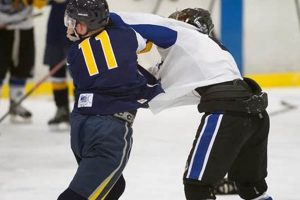
Physical engagement, executed within the defined rules of the sport, serves as a vital component in hockey defensive strategies. It directly influences the opposition’s offensive capabilities and puck possession. Systematic hockey defence drills incorporate physical engagement techniques to develop a defender’s ability to legally impede opponents, disrupt puck carriers, and create turnovers. These drills, therefore, are not solely focused on skating and positioning, but also on the controlled application of physical force. The impact of effective physical engagement manifests as diminished scoring opportunities and increased transition plays.
A standard hockey defence drill for physical engagement includes corner battles, where defenders practice using their body to separate opponents from the puck along the boards. Shoulder checks and controlled hip checks, when applied legally, are also practiced to create space and dispossess the puck carrier. However, these drills emphasize discipline and adherence to regulations to avoid penalties. Furthermore, controlled scrimmages with specific parameters provide a practical setting for integrating physical engagement into overall defensive play. An observable example is the increased physical play exhibited during playoff hockey, where teams often prioritize physical dominance to gain an advantage. Teams with robust physical engagement strategies typically demonstrate improved defensive zone performance and reduced shot volume against them.
In summary, physical engagement, as a component of hockey defence drills, is intrinsically linked to enhancing a team’s defensive efficacy. Legal and strategic application of physical force, honed through targeted exercises, directly contributes to disrupting offensive plays, securing puck possession, and minimizing scoring threats. While skill and strategy are essential, the ability to effectively engage physically provides a distinct advantage in controlling the flow of the game and protecting the defensive zone. Continued refinement of physical engagement techniques within hockey defence drills remains paramount for developing resilient and formidable defensive units. The challenge, lies in the fact that this engagement has to adhere to the rules of the game.
Frequently Asked Questions
This section addresses common inquiries regarding hockey defence drills, providing clarity and guidance for coaches and players aiming to improve defensive performance.
Question 1: What constitutes an effective hockey defence drill?
An effective exercise should simulate game-like scenarios, targeting specific defensive skills such as gap control, puck retrieval, and positional awareness. The drill should also incorporate elements of speed, pressure, and decision-making, ensuring players develop the necessary skills to perform effectively under game conditions.
Question 2: How frequently should hockey defence drills be incorporated into training sessions?
The frequency depends on the team’s needs and developmental goals. However, consistent integration is generally recommended, with defence exercises comprising a significant portion of each practice session. Regular repetition reinforces fundamental skills and tactical understanding, contributing to sustained improvement.
Question 3: What are the key indicators of progress during hockey defence drills?
Indicators include improved reaction time, increased success rate in puck retrieval, enhanced gap control, and more efficient zone exits. Coaches should monitor player performance closely, providing feedback and adjusting training as needed to optimize progress. Objective metrics, such as completion times and success percentages, can also be used to track improvement.
Question 4: How does the age and skill level of players influence the selection of hockey defence drills?
Younger and less experienced players should focus on fundamental skills, such as skating agility, stick handling, and basic positional play. More advanced players can engage in complex drills that emphasize tactical decision-making, team coordination, and advanced defensive techniques. Drill complexity should increase progressively as players develop their skills.
Question 5: What role does communication play in successful hockey defence drills?
Communication is paramount. Players should be encouraged to communicate clearly and effectively during exercises, using verbal cues and non-verbal signals to coordinate their movements and anticipate opponent actions. Drills should specifically incorporate communication elements, such as callouts for player assignments and coverage responsibilities.
Question 6: How can coaches ensure that hockey defence drills translate into improved game performance?
Drills should closely mimic game situations, incorporating elements of pressure, speed, and decision-making. Coaches should also provide regular feedback, emphasizing the importance of applying learned skills and strategies during games. Regular video analysis can also help players identify areas for improvement and reinforce correct defensive principles.
Effective execution of hockey defence drills hinges on consistent practice, targeted skill development, and clear communication. Coaches should prioritize creating a structured and supportive training environment that fosters player improvement and tactical understanding.
The subsequent sections will delve into specific examples of drills tailored to address the defensive concepts discussed.
Conclusion
The preceding examination of hockey defence drills underscores their indispensable role in cultivating a robust and effective defensive unit. These exercises, when implemented systematically, facilitate the development of crucial skills encompassing skating agility, positional awareness, puck retrieval, gap control, communication clarity, defensive zone exits, and legally compliant physical engagement. Mastery of these elements, achieved through targeted training, directly impacts a team’s ability to minimize scoring opportunities and transition efficiently from defense to offense.
The ongoing pursuit of excellence in defensive performance necessitates a continued emphasis on refining and adapting hockey defence drills to meet the evolving demands of the sport. Coaches and players should prioritize incorporating these exercises into their training regimens, recognizing their profound influence on overall team success. A commitment to rigorous training and strategic execution of defensive principles remains essential for achieving sustained competitive advantage.