Quality wheeled footwear designed for the sport of inline hockey provides support, maneuverability, and protection. These skates generally feature a supportive boot, a sturdy chassis (or frame), durable wheels optimized for indoor or outdoor surfaces, and reliable bearings for smooth rolling. The combination allows players to accelerate quickly, turn sharply, and maintain stability during gameplay.
Properly designed roller hockey equipment allows athletes to perform at their best and reduces the risk of injuries. They contribute to a player’s overall performance, enabling faster skating speeds, quicker reactions, and improved control. Furthermore, the gear has evolved considerably since the sport’s inception, incorporating advanced materials and technologies to enhance both performance and safety.
The following sections will delve into the specific components of performance-oriented equipment, explore the factors that influence purchasing decisions, and provide guidance on maintenance and longevity.
Selection Guidance
Choosing appropriate roller hockey equipment requires careful consideration of several factors. Matching skate characteristics to playing style and surface type is critical for optimal performance.
Tip 1: Boot Stiffness: Consider boot stiffness based on skating style. Stiffer boots provide enhanced ankle support and responsiveness for powerful strides, while more flexible boots allow for greater agility and maneuverability.
Tip 2: Chassis Material: Evaluate the chassis material (aluminum, composite). Aluminum offers superior power transfer and durability for competitive play. Composite chassis provide lighter weight and increased shock absorption.
Tip 3: Wheel Durometer: Select wheel durometer (hardness) appropriate for the playing surface. Softer wheels (74A-78A) offer better grip on smooth indoor surfaces, while harder wheels (82A-84A) are more durable on abrasive outdoor surfaces.
Tip 4: Wheel Size: Consider wheel size to impact speed and maneuverability. Larger wheels offer greater speed and roll, while smaller wheels enhance agility and acceleration.
Tip 5: Bearing Quality: Ensure high-quality bearings (ABEC rating) for smooth and efficient rolling. Higher ABEC ratings indicate tighter tolerances and greater precision, leading to improved speed and glide.
Tip 6: Proper Fit: Prioritize a secure and comfortable fit. Ill-fitting footwear can lead to blisters, discomfort, and reduced performance. Ensure adequate toe space and heel lock.
Tip 7: Consider Player Weight: Heavier players may require sturdier chassis and harder wheels to withstand greater stress and wear. Select components designed for the intended weight range.
Selecting the appropriate equipment tailored to individual needs and playing conditions is essential for maximizing performance, ensuring safety, and extending the lifespan of the equipment.
The subsequent section will address proper maintenance procedures to prolong the life of inline hockey equipment.
1. Fit

Appropriate fit is paramount in selecting quality wheeled footwear for inline hockey. It directly influences player comfort, control, and the prevention of injuries, thereby determining the effectiveness of the equipment.
- Foot Measurement Accuracy
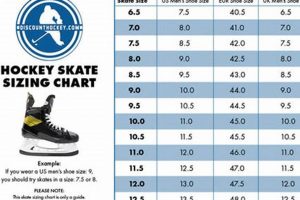
Precise measurement of foot length and width is essential. Variations in sizing across manufacturers necessitate accurate measurements to ensure a proper match. Failure to obtain accurate measurements may result in selecting a product that is either too large or too small, leading to discomfort and compromised performance. Retailers typically offer sizing charts specific to their products.
- Internal Boot Volume
The internal volume of the boot must adequately accommodate the player’s foot shape. A boot that is too narrow may cause pressure points and discomfort, while a boot with excessive volume may result in heel slippage and reduced control. Liners can be used to fine-tune the fit, but the underlying volume must still be appropriate.
- Ankle Support Integration
Ankle support should conform comfortably to the ankle without restricting range of motion. Insufficient support can lead to instability and increased risk of injury, particularly during rapid turns or stops. Conversely, excessive restriction can hinder agility and reduce overall performance. The degree of ankle support should align with the player’s skill level and playing style.
- Toe Box Room
Adequate room in the toe box is crucial to prevent toe cramping and blistering. The toes should be able to move freely without being compressed against the front of the boot. However, excessive space in the toe box can diminish control and responsiveness. A snug, but not constricting, fit in the toe box is optimal.
The composite effect of accurate foot measurement, appropriate internal boot volume, integrated ankle support, and sufficient toe box room collectively define the concept of “fit.” Neglecting any of these facets compromises the performance benefits associated with these sports accessories and increases the potential for discomfort and injury. Optimizing fit allows players to perform at their peak potential while minimizing risks.
2. Support

Adequate support is a critical attribute of performance inline hockey footwear. It provides the stability and structural integrity required to execute demanding maneuvers, reduces the risk of ankle and foot injuries, and enhances energy transfer for improved skating efficiency.
- Ankle Stability
Ankle stability is maintained through the rigid construction of the boot’s upper portion, often reinforced with composite materials or external supports. Insufficient ankle support can lead to excessive pronation or supination, increasing the risk of sprains. Properly designed equipment limits lateral movement, allowing players to maintain balance and control during sharp turns and rapid stops. For example, high-end models often feature heat-moldable boots, enabling a customized fit that optimizes ankle stabilization.
- Footbed Contouring
The footbed, or insole, provides support to the arch and heel, influencing the alignment of the foot within the boot. A contoured footbed distributes pressure evenly, reducing fatigue and preventing plantar fasciitis. Variations in arch height necessitate different levels of support; aftermarket footbeds are available to accommodate individual needs. Without proper footbed contouring, players may experience discomfort and compromised power transfer.
- Chassis Rigidity
The chassis, the frame that holds the wheels, contributes significantly to overall support. A stiff chassis minimizes energy loss during push-offs and maximizes responsiveness. High-grade aluminum alloys are commonly used for chassis construction due to their strength and rigidity. A flexible chassis may absorb energy, reducing skating efficiency and control. Competitive players prioritize chassis stiffness to achieve optimal performance.
- Closure System Integration
The closure system, typically consisting of laces, straps, or buckles, ensures a secure and customizable fit. A well-integrated closure system prevents heel lift and maintains consistent contact between the foot and the boot. Inadequate closure can lead to slippage, compromising control and increasing the likelihood of blisters. Performance models often feature a combination of closure mechanisms to optimize fit and support.
The combined effect of ankle stabilization, footbed contouring, chassis rigidity, and closure system integration defines the level of support provided by roller hockey equipment. Optimizing these elements allows players to execute demanding maneuvers with confidence, reduces the risk of injuries, and enhances overall skating performance. The selection of equipment should consider the individual needs and playing style of the athlete to ensure adequate support.
3. Maneuverability
Maneuverability, in the context of inline hockey footwear, refers to the equipment’s capacity to enable rapid directional changes, agile movements, and precise control on the playing surface. It is a critical performance attribute directly influencing a player’s ability to evade opponents, maintain possession, and execute strategic plays.
- Wheel Configuration and Rocker
Wheel configuration, including wheel size and arrangement, and the presence of a rocker (where the front and rear wheels are slightly elevated) significantly affect maneuverability. Smaller wheels generally offer increased agility and faster acceleration, while a rocker allows for tighter turns and quicker transitions. The configuration must align with the player’s style, favoring speed or agility. For example, a forward might prefer a smaller wheel diameter for rapid directional changes in offensive zones.
- Chassis Length and Design
Chassis length influences turning radius and stability. Shorter chassis enable quicker turns and enhanced agility, while longer chassis provide greater stability at higher speeds. The design of the chassis, including its profile and material composition, also plays a role. A lightweight chassis facilitates faster acceleration and reduces fatigue. For instance, defensive players might benefit from a longer chassis for increased stability when skating backwards.
- Boot Flexibility and Responsiveness
The flexibility of the boot impacts the ability to transfer energy efficiently and react quickly to changes in direction. A stiffer boot offers greater responsiveness and power transfer, while a more flexible boot allows for greater range of motion and enhanced agility. The boot’s construction should balance support and flexibility. A player prioritizing agility would select equipment with a slightly more flexible boot.
- Wheel Hardness and Grip
Wheel hardness, measured in durometer, determines the level of grip and roll. Softer wheels provide greater grip on smooth surfaces, enabling sharper turns and quicker stops. Harder wheels offer increased speed and durability on abrasive surfaces. The wheel’s durometer must be appropriate for the playing surface. For example, softer wheels are preferred on indoor rinks with polished surfaces to maximize grip and maneuverability.
The combination of wheel configuration, chassis length, boot flexibility, and wheel hardness directly influences the maneuverability of inline hockey equipment. Optimized maneuverability allows players to perform complex maneuvers, maintain control in dynamic situations, and enhance overall performance on the rink. Selecting components that complement playing style and surface conditions is essential for maximizing this critical performance attribute.
4. Durability
Durability, in the context of quality inline hockey footwear, signifies the equipment’s resistance to wear, tear, and degradation under the stresses of rigorous gameplay. It represents the lifespan and reliability of the product, influencing the total cost of ownership and the frequency of replacement. Components subjected to constant impact, abrasion, and stress fractures directly affect the long-term viability of the equipment.
The materials selected for boot construction, chassis fabrication, wheel composition, and bearing design are primary determinants of durability. Boots constructed from reinforced nylon or composite materials offer enhanced resistance to impacts and abrasions compared to those using less robust materials. High-grade aluminum alloys in the chassis minimize bending or fracturing under stress, maintaining alignment and performance. Urethane wheels formulated for abrasion resistance extend their lifespan on rough surfaces. Sealed bearings prevent contaminant ingress, reducing friction and wear. A real-world example involves two sets of skates used by players in the same league; the skates with higher-quality materials consistently outlast the cheaper pair.
Ultimately, enhanced durability translates to a lower total cost of ownership, fewer equipment failures during critical game situations, and reduced environmental impact through decreased replacement frequency. However, a trade-off may exist between durability and other performance factors, such as weight and flexibility. Manufacturers must balance these characteristics to optimize equipment performance and longevity. Therefore, assessing the durability of different components is a crucial aspect of evaluating equipment, ensuring reliable performance throughout its intended lifespan.
5. Wheel Hardness

Wheel hardness, measured on the durometer scale (typically “A” scale), is a defining characteristic influencing performance. It directly impacts grip, speed, wear resistance, and overall suitability for specific playing surfaces. Higher durometer values indicate harder wheels, while lower values denote softer wheels. Selecting the appropriate durometer is crucial for optimizing performance and equipment longevity. Incorrect selection can lead to diminished grip, reduced speed, accelerated wear, and a compromised playing experience. The interaction between wheel hardness and surface friction determines rolling resistance and energy transfer.
For instance, softer wheels (74A-78A) exhibit enhanced grip on smooth, polished indoor surfaces, enabling quicker acceleration, tighter turns, and more controlled stops. However, these wheels wear more rapidly on abrasive surfaces. Conversely, harder wheels (82A-86A) provide increased speed and durability on rough outdoor surfaces, but they offer less grip on smooth indoor rinks, potentially leading to slippage and reduced control. Competitive indoor players often opt for softer wheels to maximize agility and responsiveness, even at the expense of increased wear. A practical scenario involves a player using outdoor wheels indoors, experiencing a loss of control and diminished performance due to insufficient grip.
Therefore, understanding the relationship between wheel hardness and playing surface is essential for selecting optimal components for inline hockey. The correct choice enhances performance, prolongs equipment lifespan, and ensures a safe and enjoyable playing experience. Considerations must also factor in player weight and skating style, as heavier players or those with aggressive skating styles may require harder wheels for increased durability. Wheel hardness is therefore a critical determinant when evaluating performance-oriented inline hockey footwear.
6. Bearing Quality
Bearing quality is a pivotal factor differentiating superior inline hockey equipment. The bearings, situated within the wheels, minimize friction and facilitate smooth rotation. Inferior bearings introduce excessive friction, impeding speed, increasing energy expenditure, and diminishing overall performance. Conversely, high-quality bearings contribute to efficient energy transfer, enabling faster acceleration, enhanced glide, and reduced fatigue. For instance, professional-grade skates invariably incorporate high-precision bearings constructed from hardened steel, showcasing their commitment to optimized rolling resistance. The correlation between bearing quality and performance is direct and quantifiable.
The practical implications of bearing quality extend beyond mere speed enhancement. High-quality bearings contribute to greater control and stability, particularly during high-speed maneuvers and abrupt directional changes. Their precise construction minimizes wobble and vibration, providing a more predictable and responsive skating experience. The longevity of bearings also varies considerably based on quality. Well-sealed and lubricated bearings are less susceptible to contamination and corrosion, extending their lifespan and reducing maintenance requirements. Consider two players using identical equipment, differing only in bearing quality; the player with higher-grade bearings will experience noticeably improved glide and reduced rolling resistance, translating to enhanced on-rink performance.
In conclusion, bearing quality represents a critical investment in equipment performance and longevity. While often overlooked, the subtle differences in bearing construction and materials can significantly impact skating efficiency, control, and overall playing experience. Selecting equipment that incorporates high-quality bearings, properly maintained and matched to the intended use, is essential for realizing the full potential of inline hockey footwear.
7. Chassis Strength
The chassis, serving as the structural foundation for wheeled footwear, directly connects to equipment efficacy. A robust chassis withstands the forces generated during intense skating. The strength of this component directly affects power transfer. A weak chassis flexes and dissipates energy, diminishing acceleration and speed. Material composition, such as high-grade aluminum alloys, influences the chassiss load-bearing capacity. Superior chassis designs can withstand repeated impacts without deformation. The absence of adequate chassis strength compromises performance and increases risk of structural failure.
Chassis integrity influences the precision with which directional changes are executed. A chassis that deforms under load introduces instability. This diminishes control during rapid turns and stops. Consider, for example, a skater attempting a sharp pivot; a flexing chassis delays response time, impeding maneuverability. Competition-level equipment emphasizes chassis strength to ensure predictable handling. The strength of this part influences the predictability of the action. It is crucial for quick reactions and maintaining stability during high-intensity play. A high-quality unit contributes to a confident and precise skating experience, particularly in the execution of complex maneuvers.
The relationship between chassis strength and wheeled sports accessories extends beyond immediate performance. Long-term durability depends on this factor. A stronger chassis resists fatigue and degradation, extending the equipment’s lifespan. Skates with robust frames require less frequent replacement. Regular inspection for cracks or deformation is essential for maintaining safety and optimal performance. In conclusion, chassis strength is an indispensable characteristic, influencing energy transfer, maneuverability, durability, and safety. Its selection requires careful consideration to ensure a dependable and high-performing product.
Frequently Asked Questions
This section addresses prevalent inquiries regarding the selection, use, and maintenance of high-quality roller hockey footwear.
Question 1: What constitutes “good inline hockey skates” and how do they differ from recreational models?
High-performance models are engineered for the demands of competitive play, emphasizing ankle support, chassis rigidity, and wheel performance. They utilize advanced materials and construction techniques to optimize energy transfer, responsiveness, and durability, contrasting with recreational models that prioritize comfort and affordability over performance.
Question 2: How does wheel durometer impact on-ice performance, and what is the ideal durometer for different surfaces?
Wheel durometer, measured on the A scale, affects grip, speed, and wear resistance. Softer wheels (74A-78A) provide enhanced grip on smooth indoor surfaces, while harder wheels (82A-86A) offer increased speed and durability on abrasive outdoor surfaces. The optimal durometer depends on the playing surface and individual playing style.
Question 3: What role does chassis material play in the overall performance and longevity of good inline hockey skates?
Chassis material influences energy transfer, weight, and durability. Aluminum alloys offer superior power transfer and resistance to bending or fracturing, making them suitable for competitive play. Composite chassis provide lighter weight and increased shock absorption, but may compromise stiffness.
Question 4: How crucial is bearing quality, and what specifications define high-quality bearings?
Bearing quality directly impacts rolling resistance and gliding efficiency. High-quality bearings feature precision construction, hardened steel components, and effective sealing mechanisms. ABEC ratings indicate manufacturing tolerances, with higher ratings generally indicating improved performance. Proper lubrication is also vital.
Question 5: What are the key factors to consider when determining appropriate skate fit, and how does improper fit impact performance and safety?
Key factors include accurate foot measurement, proper boot volume, adequate ankle support, and sufficient toe box room. Ill-fitting equipment can cause discomfort, blisters, reduced control, and an increased risk of injury. A snug, secure fit is essential for optimal performance and safety.
Question 6: What maintenance procedures are essential for prolonging the lifespan of high-quality roller hockey equipment?
Regular maintenance includes cleaning and lubricating bearings, inspecting chassis for damage, rotating or replacing worn wheels, and ensuring proper boot ventilation. Promptly addressing minor issues prevents them from escalating into major problems, extending the equipment’s usable lifespan.
Proper equipment choice and maintenance are essential for the safety, performance, and enjoyment of inline hockey.
The subsequent section will address relevant safety measures.
Good Inline Hockey Skates
The preceding discussion explored the multifaceted attributes defining quality wheeled footwear for inline hockey. It illuminated key considerations for selecting appropriate components, emphasizing the interdependence of fit, support, maneuverability, durability, wheel characteristics, and bearing precision. These factors collectively determine the efficacy, longevity, and safety of this specialized sporting equipment.
Careful attention to these criteria is essential for optimizing on-rink performance and minimizing injury risk. Equipment selection must align with individual playing style, skill level, and intended usage environment. Prudent purchasing decisions, coupled with diligent maintenance practices, represent a commitment to both athletic excellence and personal well-being within the sport of inline hockey.