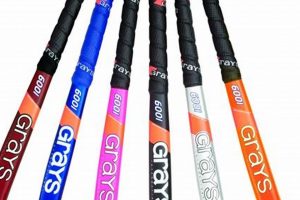
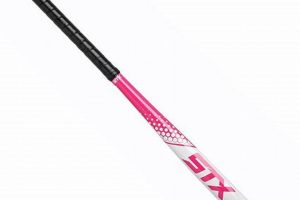
Equipment selection for field hockey players in defensive positions requires consideration of specific performance needs. These athletes benefit from implements that offer enhanced control, power for clearing the ball, and durability to withstand frequent tackles and defensive maneuvers. The characteristics of suitable equipment typically include a balance of weight, length, and head shape designed to facilitate effective defensive play.
The strategic advantage gained from appropriate equipment contributes significantly to a team’s defensive capabilities. Historically, advancements in materials and design have led to improved performance, allowing defenders to execute precise passes, intercept opponents, and maintain possession under pressure. The correct tool enables a defender to contribute more effectively to both defensive solidity and offensive transitions.
Subsequent sections will examine the key features to consider when selecting equipment for defensive field hockey players. Factors such as material composition, balance point, and specific design elements will be discussed to provide a comprehensive understanding of optimal equipment selection.
Equipment Selection Guidance for Defensive Field Hockey Players
The following guidance outlines crucial considerations for choosing optimal equipment to enhance defensive field hockey performance.
Tip 1: Material Composition: Prioritize composite materials such as carbon fiber or fiberglass blends. These materials offer a superior strength-to-weight ratio, enhancing both power and control during defensive tackles and clearances. For instance, a higher carbon content translates to increased stiffness and power.
Tip 2: Length Considerations: Select a length appropriate for height and playing style. Longer equipment facilitates reach for interceptions and tackles, while shorter length enhances close control and maneuverability. Proper length minimizes strain and maximizes efficiency in defensive actions.
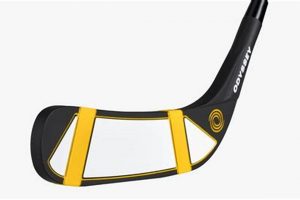
Tip 3: Head Shape and Design: Opt for a head shape that complements defensive play. A straighter, thicker head design provides a larger surface area for blocking and intercepting passes. A slightly heavier head can also aid in powerful clearances.
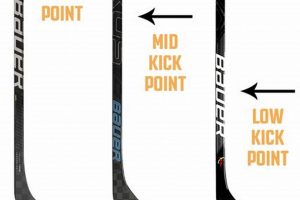
Tip 4: Weight Distribution and Balance Point: Evaluate the balance point. A balance point closer to the head will increase power, while a balance point closer to the grip enhances control. Defenders often benefit from a slightly head-heavy balance for impactful tackles.
Tip 5: Grip and Handling: Ensure a secure and comfortable grip. A textured or specialized grip surface prevents slippage, particularly in wet conditions. Proper grip promotes confident handling during critical defensive plays.
Tip 6: Durability and Impact Resistance: Assess the overall construction and materials used. Defensive implements are subjected to frequent impacts. Prioritize equipment designed for high impact resistance to ensure longevity and consistent performance.
Tip 7: Consider the Bow: A more aggressive bow (lower placement) can enhance drag flicking capabilities, useful for penalty corner defense, but may slightly reduce control for flat hits. Choose a bow that aligns with the defender’s skill set and role on the team.
Careful consideration of these factors will contribute to improved defensive capabilities, enabling athletes to perform effectively in critical game situations. The correct tool empowers defenders to contribute significantly to team success.
The subsequent section will delve into advanced strategies for utilizing specialized equipment to maximize defensive effectiveness.
1. Balance

Balance, in the context of field hockey implements for defensive players, refers to the distribution of weight along the length of the equipment. This distribution significantly impacts handling, power generation, and reaction time, ultimately influencing a defender’s ability to perform effectively.
- Balance Point Location
The balance point denotes the location along the implement’s shaft where the weight is evenly distributed. A balance point closer to the head will result in a heavier feel, enhancing power for clearances and tackles. Conversely, a balance point closer to the grip provides a lighter feel and quicker handling, facilitating interceptions and close-quarters maneuvering. Defensive players often benefit from a balance slightly towards the head to maximize impact during tackles.
- Swing Weight and Moment of Inertia
Swing weight reflects the effort required to swing the equipment. It is closely related to the moment of inertia, which measures an object’s resistance to rotational acceleration. A lower swing weight allows for faster swing speeds, crucial for reacting swiftly to incoming passes and executing quick tackles. However, reducing swing weight excessively can diminish power. Selecting equipment requires a compromise between swing speed and hitting power.
- Impact on Control and Stability
The distribution of weight affects control and stability during defensive actions. An imbalanced implement, either excessively head-heavy or grip-heavy, can lead to instability during tackles and difficulty in maintaining control of the ball. Proper balance contributes to a more stable platform for executing passes and intercepts, minimizing errors in critical defensive situations.
- Customization and Adjustment
Some implements offer limited customization options, such as adjustable weights in the head or grip, allowing players to fine-tune the balance to suit their individual preferences and playing styles. While these options are not universally available, they provide an opportunity to optimize equipment performance for specific defensive roles and techniques.
The optimal balance is not a fixed value but rather a characteristic tailored to the individual player’s physical attributes, playing style, and specific defensive responsibilities. The correct balance, contributes significantly to the overall effectiveness of “good field hockey sticks for defenders”. It ensures both the ability to react quickly and apply adequate power in defensive actions, making it a critical factor in equipment selection.
2. Weight

Weight, a critical attribute of field hockey equipment, significantly influences a defender’s performance. Its effect on handling speed, power generation, and fatigue management makes it a primary consideration for those seeking suitable equipment for defensive roles.
- Swing Speed and Reaction Time
Lighter equipment generally allows for faster swing speeds. In defensive situations, quick reactions are paramount. A lighter implement enables a defender to intercept passes, execute tackles, and adjust position more rapidly than with heavier equipment. However, excessively light equipment may compromise power generation.
- Power Generation and Impact Force
Heavier equipment, conversely, can generate greater power upon impact. This is advantageous for clearing the ball out of the defensive zone and executing forceful tackles. While a lighter implement may facilitate quick reactions, a heavier one transmits more energy upon contact, potentially disrupting an opponent’s attack more effectively.
- Fatigue and Endurance
The weight directly affects a player’s fatigue level over the course of a game. Heavier equipment can lead to quicker muscle fatigue, especially during prolonged defensive efforts. Lighter equipment reduces the energy expenditure required for each action, promoting greater endurance and consistent performance throughout the game.
- Balance and Weight Distribution Synergy
Weight does not operate in isolation; its interaction with the balance point is critical. A heavier implement with a balanced weight distribution can provide the benefits of both power and control. Conversely, a poorly balanced implement, regardless of its overall weight, may hinder performance. Thus, the synergy between weight and balance is a crucial consideration.
The optimal weight depends on the individual defender’s physical characteristics, playing style, and defensive responsibilities. Achieving the right balance between swing speed, power, and endurance is essential for maximizing defensive effectiveness. Selecting an implement that aligns with these considerations directly contributes to identifying and utilizing effective implements, ensuring that the equipment enhances rather than hinders a player’s defensive capabilities.
3. Length

Equipment length profoundly influences a defender’s reach, control, and overall effectiveness on the field. Inadequate or excessive length can hinder a defender’s ability to intercept passes, execute tackles, and effectively clear the ball, impacting defensive performance. A suitable length ensures the defender can maintain a balanced stance while extending the reach to intercept incoming passes or make necessary tackles. Defenders with shorter equipment may find it difficult to intercept passes or make tackles against opponents with longer equipment. Conversely, excessively long equipment may impede close control and increase the likelihood of tripping.
Proper length also affects posture and movement during gameplay. A defender utilizing equipment of appropriate length can maintain a lower center of gravity, facilitating quicker changes in direction and improved stability during tackles. For example, defenders frequently positioned in close proximity to the goal often benefit from slightly shorter equipment, promoting quicker reactions and tighter control in confined spaces. The effectiveness of defensive techniques, such as the block tackle or reverse chip, is directly correlated to the equipment’s length and its suitability for the player’s physique and style.
Therefore, selecting equipment of appropriate length is integral to ensuring optimal defensive performance. Equipment should facilitate a balanced stance, extended reach, and agile movements without compromising ball control. By recognizing the relationship between length and defensive efficacy, players can select the right tool to enhance their abilities and contribute more effectively to the team’s defensive strategy.
4. Head Shape

The head shape significantly influences the functionality of equipment, especially for defenders. The design dictates how effectively a player can intercept passes, block shots, and control the ball during defensive maneuvers. A straighter, thicker head provides a larger surface area, increasing the likelihood of successfully intercepting passes. Conversely, a more curved head design, while potentially advantageous for offensive skills, may reduce the contact area available for defensive stops.
Consider the practical implications on the field. A defender employing equipment with a head shape optimized for interceptions can disrupt opponent attacks more effectively, minimizing scoring opportunities. For instance, a short corner defense often requires quick reactions and precise intercepts. Head shape directly impacts a defenders ability to execute these critical defensive actions. Furthermore, the material composition and structural integrity of the head must withstand repeated impacts. If the head shape is compromised, it may affect the overall durability, leading to suboptimal defensive performance.
Therefore, the selection of equipment must account for the defenders particular role and defensive techniques. Recognizing the relationship between head shape and defensive efficacy ensures that defenders can choose equipment that supports their capabilities and contributes effectively to team strategy. Evaluating equipment requires careful consideration of how head shape intersects with a defenders need for intercepting passes, blocking shots, and controlling the ball during intense defensive plays.
5. Material
The selection of materials significantly impacts the performance characteristics of equipment. Different materials impart distinct properties affecting power, control, durability, and overall suitability for defensive play.
- Carbon Fiber Composites
Carbon fiber offers a high strength-to-weight ratio, enhancing power and responsiveness. A higher carbon content generally translates to increased stiffness, resulting in more powerful clearances and tackles. For defenders, carbon fiber construction allows for rapid reactions and forceful defensive plays without excessive weight.
- Fiberglass Composites
Fiberglass provides a balance of durability and affordability. While not as stiff or powerful as carbon fiber, fiberglass construction offers good impact resistance and a more forgiving feel. This makes it a practical option for defenders prioritizing consistent performance and longevity.
- Aramid Fibers (e.g., Kevlar)
Aramid fibers are often incorporated into equipment construction to enhance impact resistance. These materials are highly resistant to cracking and splintering, increasing the overall durability and safety. Reinforcing critical areas with aramid fibers is essential for defenders who endure frequent tackles and collisions.
- Wood Core Construction
Traditional equipment design often features a wood core, providing a solid feel and consistent performance. However, wood is generally heavier and less responsive than composite materials. Modern designs may incorporate wood cores in conjunction with composite materials to combine the benefits of both technologies.
The choice of material directly influences a defender’s ability to execute key defensive techniques. Prioritizing materials that balance power, control, and durability ensures that the selected equipment enhances performance and withstands the demands of intense defensive play. The appropriate material selection ensures a reliable, responsive, and long-lasting implement, providing a crucial advantage on the field.
6. Grip
Grip, as a component of equipment designed for defensive field hockey players, directly impacts control, stability, and maneuverability. The interface between a player’s hands and the equipment facilitates the transmission of force and the execution of precise movements. Inadequate grip can lead to slippage, reduced control during tackles, and compromised execution of passing or clearing actions. Conversely, a well-designed grip enhances handling and provides a secure connection, enabling defenders to react quickly and effectively in defensive situations. The selection of appropriate grip material, texture, and profile directly influences a player’s confidence and performance. For example, textured grips with moisture-wicking properties prevent slippage during wet conditions, ensuring consistent control throughout a game.
The influence of grip extends beyond basic handling. Its design can mitigate vibrations and enhance comfort, reducing fatigue and enabling players to maintain focus during prolonged periods of defensive play. Specialized grip patterns may incorporate ridges or contours to improve finger placement and maximize grip strength. Furthermore, the thickness and cushioning of the grip can affect a player’s feel for the ball, influencing the accuracy of passes and the effectiveness of tackles. A defender employing equipment with a grip tailored to their hand size and playing style can execute defensive maneuvers with greater precision and power. Conversely, a poorly designed grip may cause discomfort, reduce sensitivity, and ultimately compromise the quality of defensive play.
Therefore, grip represents an essential element in the overall design and functionality of “good field hockey sticks for defenders”. Its influence extends from basic handling to advanced control and vibration dampening, affecting a player’s confidence, performance, and long-term comfort. Understanding the practical significance of grip design enables players to select equipment that supports their individual needs and maximizes their effectiveness in critical defensive situations. Neglecting grip in equipment selection poses risks, potentially leading to compromised control, increased fatigue, and reduced defensive efficacy. A suitable grip contributes significantly to an overall better defensive play.
7. Durability

Equipment durability represents a paramount characteristic for implements used by defensive field hockey players. The rigors of defensive play, characterized by frequent tackles, blocks, and collisions, place significant stress on equipment. A direct correlation exists between equipment durability and its long-term performance and reliability. Insufficient durability leads to premature failure, resulting in diminished performance and potential safety risks. For example, equipment constructed from substandard materials may crack or splinter under repeated impact, compromising its structural integrity and rendering it ineffective. Choosing equipment designed for high impact resistance is crucial for defenders who endure substantial physical contact during gameplay. The ability of equipment to withstand repeated stress directly influences its lifespan and the consistency of its performance.
The practical significance of equipment durability is evident in competitive scenarios. A defender whose equipment fails during a critical moment can leave their team vulnerable, potentially resulting in a scoring opportunity for the opposition. Equipment failure can also disrupt a player’s confidence and rhythm, negatively impacting their overall performance. In contrast, equipment designed with durable materials and robust construction provides defenders with the assurance needed to execute aggressive tackles and blocks without fear of equipment failure. For instance, equipment reinforced with aramid fibers or featuring multi-layer composite construction offers increased resistance to cracking and splintering, ensuring reliable performance under demanding conditions. Regular inspection and maintenance further contribute to equipment longevity and consistent performance.
In summary, durability constitutes an indispensable attribute. The demands of defensive play necessitate the use of equipment engineered to withstand substantial impact and stress. Prioritizing durability translates to improved performance, enhanced safety, and long-term cost-effectiveness. Defenders selecting equipment with robust construction and high-quality materials can confidently execute their roles, knowing that their tools are capable of enduring the rigors of the game. A well-maintained equipment contributes significantly to consistent performance, enabling defenders to focus on their tactical responsibilities without concern for equipment failure.
Frequently Asked Questions
The following section addresses common inquiries regarding equipment selection for defensive field hockey players, providing clarity on key considerations and dispelling potential misconceptions.
Question 1: What length of equipment is most appropriate for a defensive player?
Optimal equipment length is determined by player height, playing style, and defensive position. Longer equipment facilitates reach for interceptions, while shorter equipment enhances close control. Defenders should select a length that allows for a balanced stance and effective execution of defensive techniques without compromising maneuverability.
Question 2: Is a higher carbon content always preferable for defensive equipment?
While higher carbon content generally increases power and stiffness, it can also reduce feel and control. Defenders should seek a balance between carbon content and other material properties to optimize both power and handling. A moderate carbon content often provides an ideal compromise.
Question 3: How important is grip selection for defensive players?
Grip selection is crucial for maintaining control and preventing slippage, particularly in wet conditions. A textured grip with moisture-wicking properties enhances handling and provides a secure connection, enabling defenders to react quickly and execute precise defensive actions.
Question 4: Should a defensive player prioritize weight over balance?
Both weight and balance are critical factors. A lighter weight facilitates quicker reactions, while a balanced weight distribution ensures stability and control. Defensive players should strive for a synergy between weight and balance, optimizing both handling speed and defensive effectiveness.
Question 5: What head shape is best suited for defensive play?
A straighter, thicker head provides a larger surface area for intercepting passes and blocking shots. This design enhances defensive capabilities, particularly in high-pressure situations. A curved head may be more suitable for offensive skills but can compromise defensive effectiveness.
Question 6: How can defensive players ensure equipment durability?
Selecting equipment constructed from high-quality materials, such as carbon fiber, fiberglass, and aramid fibers, enhances durability. Regular inspection and maintenance further contribute to equipment longevity and consistent performance. Replacing worn or damaged grips is essential for maintaining control and preventing injuries.
Understanding these common concerns and selecting equipment based on individual needs and playing style will contribute to improved defensive capabilities. Proper equipment, enhances defensive effectiveness.
The subsequent section will explore specific brands and models of equipment commonly favored by defensive field hockey players.
Concluding Remarks on Defensive Field Hockey Equipment
The preceding exploration underscores the crucial interplay between equipment characteristics and defensive performance in field hockey. Factors such as balance, weight, length, head shape, material composition, grip, and durability each contribute significantly to a defender’s ability to execute essential skills effectively. The selection process must consider the individual player’s physical attributes, playing style, and specific defensive role to optimize equipment suitability. Compromises are often necessary, and achieving the right balance across all attributes ensures maximum performance on the field. “Good field hockey sticks for defenders” are not defined by a single attribute but rather by a holistic integration of features that collectively enhance defensive capabilities.
As equipment technology advances, continued research and innovation remain essential for refining design principles and optimizing material properties. Recognizing the significance of equipment in defensive performance, players and coaches must prioritize informed selection practices and ongoing evaluation. Ultimately, the proper equipment serves not merely as a tool but as a vital enabler of skilled defensive play, contributing to team success and player confidence on the field. Thoughtful evaluation of equipment will yield the best outcomes for defensive players.