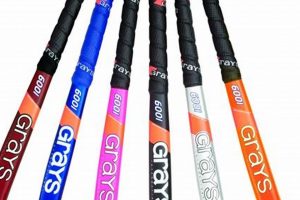
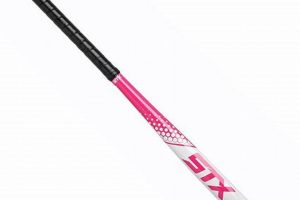
Equipment used in the sport significantly impacts player performance and overall game dynamics. The selection of appropriate apparatus, tailored to individual playing style and skill level, is essential. Optimal equipment facilitates precise ball control, powerful strikes, and comfortable handling, which enhances the ability to execute complex maneuvers and contribute effectively to the team’s strategy.
Selecting high-quality implements offers several advantages. They contribute to improved accuracy, increased power generation, and reduced risk of injury due to equipment failure. Furthermore, durable and well-designed tools provide a more comfortable and responsive feel, allowing players to develop a stronger connection with the game. Historically, advancements in equipment technology have paralleled the evolution of field hockey tactics and techniques.
The following sections will delve into the construction materials, weight and balance considerations, head shapes, and bow designs relevant to selecting appropriate equipment for this sport.
Equipment Selection Guidelines
Proper equipment selection is crucial for optimizing performance and ensuring player safety. The following guidelines offer insights into choosing implements that align with individual needs and playing styles.
Tip 1: Material Assessment. Prioritize composite materials, such as carbon fiber and fiberglass blends. These materials offer a superior strength-to-weight ratio compared to traditional wood options, enhancing both power and control.
Tip 2: Weight and Balance Evaluation. Opt for a weight that feels comfortable and manageable, allowing for quick movements and precise handling. Balance should be slightly head-heavy for increased striking power, but not excessively so as to compromise control.
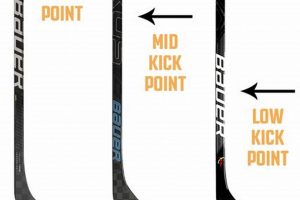
Tip 3: Bow Profile Consideration. Select a bow profile that complements the player’s dominant skills. A lower bow is advantageous for drag-flicking and 3D skills, while a mid-bow offers a versatile option for all-around play.
Tip 4: Head Shape Examination. The head shape should be chosen based on playing position and style. A short head is suitable for close control and quick passing, while a maxi head provides a larger surface area for receiving and striking.
Tip 5: Grip and Handle Evaluation. Ensure the grip provides a secure and comfortable hold, even in wet conditions. The handle thickness should be appropriate for the player’s hand size to prevent slippage and maintain control.
Tip 6: Durability and Construction Review. Assess the overall construction quality and durability of the implement. Look for reinforced areas in high-stress zones, such as the head and handle, to ensure longevity.
These guidelines emphasize the importance of carefully considering various factors when selecting equipment. By prioritizing appropriate materials, weight distribution, and design features, players can optimize their performance and enhance their overall experience.
The subsequent sections will provide further information on maintenance and care, extending the lifespan of chosen equipment and ensuring consistent performance.
1. Material composition

The materials used in manufacturing directly influence the performance characteristics of field hockey sticks. Superior performance is often correlated with composite materials like carbon fiber, fiberglass, and aramid, due to their high strength-to-weight ratio. Increased carbon fiber content generally yields enhanced stiffness, leading to greater power transfer upon impact. However, excessive stiffness can reduce feel and control. The judicious blending of various materials is critical to achieve an optimal balance between power and feel. For example, a stick with a high carbon fiber composition may be preferred by advanced players prioritizing power, while a stick with a greater proportion of fiberglass may be suitable for developing players seeking more forgiving feel.
Traditional wooden sticks, while less expensive, lack the performance capabilities and durability of composite models. Wooden sticks typically provide less power and are more susceptible to damage. The evolution of field hockey stick materials reflects a continuous pursuit of improved performance and longevity. For example, modern manufacturing processes allow for the precise layering of different materials to create sticks with specific performance profiles, such as increased power in the hitting zone or enhanced shock absorption in the handle.
In conclusion, the selection of materials is a critical determinant of field hockey stick quality. Choosing the correct blend of materials, considering the player’s skill level and playing style, significantly impacts the stick’s performance capabilities and its suitability for specific playing conditions. Continuous advancements in material science promise further improvements in field hockey stick design and performance in the future.
2. Weight distribution

Weight distribution is a critical design parameter influencing a field hockey stick’s handling characteristics and overall performance. The balance point affects the ease with which a player can maneuver the stick, control the ball, and generate power. A well-optimized weight distribution is essential for creating a high-performing implement.
- Balance Point Location
The balance point, measured from the base of the handle, dictates the perceived weight and swing weight. A balance point closer to the head increases swing weight, potentially enhancing striking power. Conversely, a balance point closer to the handle reduces swing weight, facilitating quicker stick handling and improved control. Manufacturers strategically adjust material distribution to fine-tune the balance point according to the intended user profile. For instance, sticks designed for defensive players often prioritize a balance point closer to the handle for rapid reactions, while those intended for forwards may feature a more head-heavy balance to maximize shot velocity.
- Swing Weight
Swing weight is a measure of the force required to rotate the stick during a swing. Higher swing weight can be advantageous for generating power in shots and hits, enabling players to drive the ball further downfield. However, excessive swing weight can compromise agility and quickness in stick handling, making it more difficult to execute rapid changes in direction. The ideal swing weight is contingent on the player’s strength, skill level, and playing style. Stronger players may benefit from heavier swing weights, while those emphasizing finesse and control may prefer lighter options.
- Overall Weight
While not directly a component of distribution, the total weight of the stick is intrinsically linked. Weight impacts the ability to react quickly and reduces fatigue. Heavier sticks may offer enhanced power but can be more fatiguing over extended periods. Lighter sticks offer greater agility but might compromise shot power. The ideal total weight should balance power potential with maneuverability and endurance, allowing players to maintain optimal performance throughout a game. Players should select a weight that suits their physical strength and endurance capabilities.
- Material Density Distribution
Manufacturers manipulate weight distribution by strategically placing materials of varying densities throughout the stick. Dense materials, such as tungsten or specialized resins, can be incorporated into specific zones to shift the balance point or increase the swing weight. This technique enables fine-tuning of performance characteristics without significantly altering the overall weight. For example, a manufacturer might concentrate denser material in the head of the stick to increase striking power while maintaining a manageable overall weight. Careful consideration of material density distribution is paramount for achieving the desired performance profile.
The interaction of balance point, swing weight, overall weight, and material density distribution determines the suitability of the implement. Selecting a stick with optimized weight distribution allows players to maximize their performance potential. Consequently, careful assessment of these factors is essential when choosing equipment.
3. Bow placement

Bow placement on a field hockey stick directly influences its performance characteristics and suitability for various playing styles. A well-chosen bow can enhance a player’s ability to execute specific skills, while an inappropriate bow can hinder their performance. Consequently, understanding the relationship between bow placement and playing style is critical when selecting effective equipment.
- Low Bow Placement
Low bow placement, typically positioned closer to the head of the stick, is optimized for specialized skills such as drag-flicking and 3D maneuvers. This bow location facilitates lifting the ball more easily, enabling powerful aerial passes and shots. Advanced players often prefer low bows for their ability to generate significant lift and spin on the ball, which is particularly advantageous in penalty corner situations. For example, a drag-flick specialist will benefit from a low bow as it provides the leverage needed for a powerful and accurate shot.
- Mid Bow Placement
Mid bow placement offers a versatile option suitable for players who perform a wide range of skills. This bow position provides a balance between ball control, hitting power, and the ability to execute aerial maneuvers. Players who adopt an all-around playing style, contributing both offensively and defensively, may find a mid bow to be the most appropriate choice. The mid bow allows for consistent performance across diverse game situations, offering a compromise between specialized skills and general playability. For instance, a midfielder who needs to both distribute passes and defend effectively would benefit from a mid-bow stick.
- Standard Bow Placement
A standard bow, located higher up the shaft, is characterized by a subtle curve and tends to suit players transitioning from beginner equipment or those prioritizing flat hits and control. While not optimized for specialized aerial skills, standard bows promote a more traditional playing style with a focus on ground-level passes and controlled ball movement. These are generally favored by players who prioritise accuracy and consistent passing over aerial manoeuvres. Defensive players or those focusing on ground passes often benefit from a standard bow.
- Bow Height and Skill Level
The ideal bow height often correlates with the player’s skill level and experience. Beginners may find it easier to learn fundamental skills with a stick featuring a standard or mid bow. As players develop their skills, they may transition to a low bow to enhance their ability to perform advanced techniques such as drag-flicking and 3D skills. Selecting the appropriate bow height that aligns with a player’s skill level is crucial for optimizing performance and facilitating skill development.
The significance of bow placement in selecting appropriate equipment cannot be overstated. Different placements offer distinct advantages and disadvantages, catering to specific playing styles and skill levels. Players should carefully evaluate their individual needs and preferences before choosing a stick to ensure that the bow placement complements their game and allows them to perform at their best. Therefore, when evaluating “good field hockey sticks,” bow placement must be a primary consideration.
4. Head shape

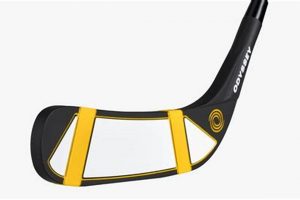
The head shape of a field hockey stick significantly influences ball control, striking efficiency, and overall playability. Different designs cater to specific playing styles and positions, making head shape a crucial factor in assessing the quality of equipment.
- Short Head
Short head designs offer increased maneuverability and are beneficial for close ball control and quick passing. These heads allow players to execute rapid changes in direction and maintain possession in tight spaces. The reduced surface area may, however, sacrifice some power in hitting. Defensive midfielders, focusing on interceptions and distribution, find these heads particularly advantageous.
- Maxi Head
Maxi head designs provide an enlarged surface area for improved receiving and striking, facilitating powerful hits and solid connections with the ball. The increased size also enhances the ability to trap the ball effectively, especially in challenging situations. Forwards who prioritize scoring and need to generate power on their shots often prefer maxi heads.
- Midi Head
Midi head designs represent a compromise between short and maxi heads, offering a balance of control and power. This versatile shape suits players who perform a variety of roles and require proficiency in both ball handling and striking. Midfielders, who must contribute to both offense and defense, often select midi heads.
- Hook Head
Hook head designs provide an increased contact surface and offer better control for lifting the ball. They’re typically seen on specialized models for drag-flicking, allowing players to perform the flick with increased precision and power. They are commonly used in penalty corner situations, where lifting the ball quickly and accurately is required.
Selecting the appropriate head shape necessitates careful consideration of the player’s role, skill set, and playing preferences. The relationship between head shape and playing style underscores its importance in determining the overall quality and effectiveness of equipment. Good field hockey sticks are, therefore, defined in part by their adherence to these functional considerations, ensuring that the head shape complements the player’s individual needs.
5. Grip comfort

Grip comfort, often underestimated, represents a critical factor in the overall performance and handling of implements used in field hockey. Its direct impact on control, feel, and fatigue reduction necessitates careful consideration during equipment selection, ultimately contributing to a device’s functional efficacy.
- Material Composition and Tactility
The materials used in the grip’s construction dictate its tactile properties and ability to absorb moisture. High-quality grips often employ synthetic rubbers or polymers with textured surfaces, enhancing traction and preventing slippage even in wet conditions. For instance, grips incorporating polyurethane (PU) offer a balance of comfort and durability, while those with embossed patterns further improve grip security. Inadequate material selection results in diminished control and an increased risk of mishandling.
- Grip Thickness and Circumference
The grip’s thickness and circumference influence the hand’s ability to securely grasp the equipment without excessive strain. A grip that is too thick can compromise dexterity and tactile feedback, whereas a grip that is too thin may lead to discomfort and reduced control. The ideal dimensions are contingent on the player’s hand size and personal preference. Manufacturers provide options with varying thicknesses and shapes to accommodate diverse needs.
- Shock Absorption and Vibration Dampening
Effective grips mitigate vibrations transmitted from ball contact, reducing fatigue and enhancing comfort during prolonged use. Materials with inherent damping properties, such as gel inserts or layered foam, dissipate impact energy, minimizing stress on the hands and wrists. Insufficient shock absorption can contribute to discomfort and potential injury over time.
- Taping and Customization
Grip comfort can be further optimized through the application of specialized tapes. Taping allows players to customize the grip’s thickness, texture, and feel to suit their individual preferences. Overlapping tape layers can increase the grip’s diameter or create a more secure and cushioned surface. Proper taping techniques enhance control and minimize the risk of slippage.
The attributes of grip directly correlates with the ability to execute complex movements and maintain consistent control throughout a match. Assessing grip characteristics is an integral component when selecting implements, contributing significantly to its overall performance and user satisfaction. Therefore, when discerning implements of superior quality, grip comfort should be considered a paramount criterion.
6. Durability

Durability is a cardinal attribute of equipment designed for field hockey. The forces exerted during gameplay, including impacts with the ball, ground, and other sticks, necessitate robust construction capable of withstanding substantial stress over extended periods. Therefore, the longevity of implements is a primary indicator of its overall value and suitability for the sport.
- Material Resilience
The composition of materials directly influences resistance to damage. Composite materials, such as carbon fiber and fiberglass, exhibit superior resilience compared to traditional wood. Layering techniques and resin formulations further enhance material integrity, reducing the risk of fractures, delamination, and wear. Instances of catastrophic failure due to material fatigue are less frequent in implements constructed from high-quality composites, ensuring consistent performance and minimizing replacement costs. For example, field hockey sticks utilizing high-modulus carbon fiber demonstrate increased resistance to impact forces, resulting in prolonged service life.
- Construction Integrity
The manufacturing process significantly impacts the structural integrity of a stick. Advanced molding techniques, such as resin transfer molding (RTM), ensure uniform material distribution and minimize the presence of weak points. Reinforcements in high-stress areas, such as the head and handle, provide additional protection against impact and bending forces. Implements produced with meticulous attention to construction detail exhibit fewer instances of structural failure, contributing to enhanced durability and player safety. A stick manufactured using a one-piece construction method eliminates potential weak points associated with bonded joints.
- Surface Finish and Protection
The surface finish provides a protective barrier against environmental factors and abrasion. Durable coatings, such as epoxy resins and polyurethane varnishes, shield the underlying materials from moisture, ultraviolet radiation, and surface scratches. These coatings reduce the rate of degradation, preserving the aesthetic appearance and structural integrity of the equipment. Implements with well-maintained surface finishes exhibit extended lifespans and reduced susceptibility to environmental damage. Application of a protective film can shield the surface against scratches.
- Stress Distribution Design
The design of a stick influences how impact forces are distributed throughout its structure. Optimized designs minimize stress concentrations, reducing the likelihood of failure in specific areas. For example, curved profiles and reinforced edges can redirect impact forces, preventing damage to vulnerable zones. Sticks engineered with finite element analysis (FEA) techniques demonstrate superior stress distribution characteristics, leading to increased durability and resistance to fatigue. The overall shape and internal structure are configured to disperse impact energy effectively.
The interrelation of material resilience, construction integrity, surface protection, and stress distribution defines the durability of equipment used in field hockey. Selecting implements engineered with these factors in mind ensures prolonged performance, reduces the frequency of replacements, and minimizes the risk of equipment-related injuries. Therefore, implements of extended lifespan invariably constitute better value.
Frequently Asked Questions
The following section addresses common inquiries regarding selection criteria and maintenance.
Question 1: How does carbon fiber content impact equipment performance?
Increased carbon fiber content generally results in heightened stiffness, thereby enhancing power transfer upon impact. However, excessive stiffness can reduce “feel” and ball control.
Question 2: What role does bow placement play in skill execution?
Bow placement significantly influences the execution of specialized skills. Lower bow placement is optimized for drag-flicking and 3D maneuvers, while a mid-bow offers versatility.
Question 3: How should the weight be determined?
The optimal weight balances power potential with maneuverability and endurance. Players should select a weight suited to physical strength and endurance capabilities.
Question 4: Is grip thickness a factor in control?
Grip thickness influences the hand’s ability to securely grasp the equipment. The ideal dimensions depend on hand size, facilitating control without excessive strain.
Question 5: How frequently should field hockey sticks be replaced?
Replacement frequency depends on usage intensity, playing conditions, and construction. Regular inspections for cracks or damage are recommended.
Question 6: What is the impact of head shape on control?
Head shapes impact control and striking efficiency. Short heads offer maneuverability, while maxi heads increase surface area for receiving and hitting.
The selection of equipment is a nuanced process requiring careful consideration of various technical attributes. Prioritize individual needs and playing style when assessing specifications.
The subsequent section presents concluding remarks concerning the criteria that contribute to selecting the proper equipment.
Conclusion
The preceding analysis has detailed several critical parameters for evaluating quality equipment. Material composition, weight distribution, bow placement, head shape, grip comfort, and durability each contribute to performance and longevity. Prioritizing these factors during the selection process optimizes playing potential and reduces equipment-related risks. The synthesis of these attributes ultimately determines the effectiveness of implements utilized in the sport.
The careful selection of quality implements constitutes an investment in player development and safety. Continued innovation in materials and design promises further advancements in equipment performance. Therefore, thorough evaluation of equipment specifications remains paramount for maximizing potential and minimizing risks. Prudent selection offers lasting benefits for both individual players and the sport as a whole.