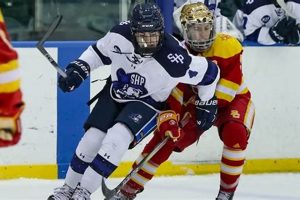
Tactical exercises designed to pressure the opposing team in their defensive zone with the aim of regaining possession of the puck are a fundamental element of hockey strategy. These structured activities train players to anticipate puck movement, implement effective angling techniques, and execute coordinated attacks to disrupt the opposition’s breakout attempts. A common example involves three forwards working in unison to contain the puck carrier along the boards while cutting off passing lanes.
Mastery of these pressure tactics is crucial for dictating the pace of play and creating scoring opportunities. Effective implementation can lead to turnovers in high-danger areas, significantly increasing the chance of a goal. Historically, successful teams have consistently demonstrated a strong ability to apply consistent zone pressure, forcing opponents into mistakes and establishing offensive dominance. This ability to apply pressure is often the difference between winning and losing.
The effectiveness of zone pressure relies on several key components, including individual player positioning, communication, and the ability to quickly transition from offense to defense. Further discussion will examine specific categories, focusing on progressive skill development and tactical variations applicable to different game situations. These topics include angling techniques, puck retrieval strategies, and support positioning for sustained offensive pressure.
Essential Considerations for Enhancing Zone Pressure Exercises
The following recommendations are designed to optimize the execution and impact of zone pressure exercises, leading to improved performance on the ice.
Tip 1: Emphasize Angling Technique: Proper angling forces the puck carrier towards the boards or into a teammate, limiting their options and facilitating turnovers. Instruct players to take away the middle of the ice, directing the opponent to the outside.
Tip 2: Focus on Puck Retrieval Efficiency: The player closest to the loose puck must prioritize immediate retrieval. Players must be taught to protect the puck and quickly transition into an offensive position.
Tip 3: Implement Progressive Difficulty: Start with stationary pucks and controlled scenarios, gradually increasing the complexity by adding player movement, defensive pressure, and decision-making elements. This ensures players master fundamental skills before advancing to more challenging situations.
Tip 4: Prioritize Communication: Clear and concise communication between players is essential for coordinated pressure. Verbal cues and visual signals allow players to anticipate movements and execute coordinated attacks, avoiding collisions and confusion.
Tip 5: Simulate Game Scenarios: Replicate real-game conditions in practice by incorporating variables such as fatigue, time constraints, and scoreboard pressure. This helps players develop the ability to perform effectively under pressure.
Tip 6: Analyze Video Footage: Utilize video analysis to provide players with visual feedback on their positioning, decision-making, and execution. This promotes self-awareness and accelerates learning.
Tip 7: Condition for Sustained Effort: Zone pressure requires high levels of physical conditioning. Incorporate drills that emphasize skating endurance, quick bursts of speed, and the ability to maintain intensity throughout the exercise.
Implementing these recommendations will contribute to a more effective and impactful training regimen, ultimately improving a team’s ability to control the pace of play and generate scoring opportunities. Mastery requires a dedicated approach.
The subsequent section will explore advanced strategies. This provides an outlook of the overall effectiveness of team pressure.
1. Angling

Angling, in the context of ice hockey and, specifically, zone pressure drills, refers to the strategic positioning and movement of a player to direct the puck carrier toward a specific area of the ice, typically the boards or into supporting teammates. This technique is fundamental for disrupting puck control and creating turnover opportunities.
- Effective Ice Denial
Angling effectively denies the puck carrier access to the central areas of the ice, forcing them to the perimeter where defensive support can converge. By cutting off passing lanes and skating with a precise angle of approach, the attacking player limits the opponent’s options and increases the likelihood of a forced error.
- Containment Strategies
Angling supports containment, preventing the puck carrier from penetrating deeper into the defensive zone. The correct angle forces the opponent to either turn back, pass under pressure, or skate into a congested area, all of which increase the chances of a successful puck retrieval.
- Influence on Puck Movement
The angle of approach taken by the forechecking player directly influences the direction and speed of the puck carrier’s movement. Skilled application of angling can disrupt the opponent’s rhythm, throw them off balance, and create opportunities for teammates to intercept passes or force a turnover.
- Adaptation to Opponent Tendencies
Successful angling requires the ability to adapt to the puck carrier’s tendencies and skating style. Adjusting the angle of approach based on the opponent’s strengths and weaknesses maximizes the effectiveness of the technique and minimizes the risk of being outmaneuvered.
The strategic implementation of effective angling techniques within the framework of zone pressure training significantly elevates a team’s ability to regain possession and transition to offense, serving as a cornerstone for a successful and aggressive game plan.
2. Support
Within the context of pressure training on the ice, support refers to the strategic positioning and coordinated movement of players to provide assistance and create advantageous situations for teammates engaged in pressuring the puck carrier. Support is integral to the successful execution and sustainability of these pressure tactics.
- Maintaining Pressure Continuity
Support ensures that pressure is maintained even when the initial player is unable to immediately retrieve the puck. By positioning themselves to intercept passes or engage the puck carrier, supporting players prevent the opposing team from easily breaking out of their zone.
- Creating Passing Options
Supporting players create viable passing lanes for teammates who win puck battles or force turnovers. These options allow for quick transitions from defense to offense, maximizing scoring opportunities. A forward winning the puck along the boards, for example, benefits from a teammate positioned to receive a pass in the slot.
- Providing Defensive Back-Up
Support involves being prepared to step in defensively if the initial forechecker is beaten or loses possession. This back-up system prevents the opposing team from gaining momentum and creating odd-man rushes. Defending the blue line during such times becomes an important area of focus.
- Facilitating Puck Retrieval
Support contributes to efficient puck retrieval by providing a safety valve for the puck carrier. Players in support positions can receive passes, win board battles, or tie up opposing players, allowing the puck carrier to maintain possession and cycle the puck effectively.
Support, therefore, is not merely a supplementary action but rather a foundational element of aggressive zone pressure. The ability to provide timely and effective support enhances a team’s capacity to control the play, generate scoring chances, and sustain offensive pressure within the opposing team’s zone. Effective practices require consistent teamwork.
3. Puck retrieval

Puck retrieval is intrinsically linked to effective zone pressure strategies on the ice. Successful regaining of possession following the initiation of pressure dictates the overall efficacy of any pressure system. If initial pressure does not result in the quick acquisition of the puck, the entire system can be rendered ineffective, allowing the opposing team to break out and transition to offense. The ability to secure loose pucks, win board battles, and intercept passes represents a crucial element within the overall plan. Examples of teams celebrated for their aggressive styles showcase a consistent pattern of high puck retrieval rates within the attacking zone.
The cause-and-effect relationship is clear: Effective application of tactical exercises, particularly in the offensive zone, enhances a team’s proficiency in securing loose pucks, thereby generating more scoring opportunities and sustained offensive presence. For instance, drills emphasizing quick transitions from checking to puck support teach players to anticipate loose pucks and react swiftly. Professional hockey teams consistently practice these exercises to ensure players can instinctively react and secure possession in high-pressure situations. The practical significance lies in converting defensive efforts into offensive chances, turning potential turnovers into scoring plays.
In summary, superior securing of loose pucks within tactical exercises is not merely a desirable attribute; it is a necessity for any team aspiring to achieve success in ice hockey. The ability to win battles, anticipate rebounds, and react quickly to turnovers within the offensive zone directly translates into improved scoring chances, greater offensive zone time, and ultimately, a higher probability of victory. Challenges in this area emphasize the need for continuous refinement of skills, particularly in areas of skating, stickhandling, and physical engagement, to optimize puck retrieval proficiency. This skill is essential for turning defensive actions into potent offensive advantages.
4. Communication
Within the context of tactical offensive and defensive exercises on the ice, communication is a critical determinant of success. Zone pressure systems, designed to regain possession in the opposing zone, necessitate coordinated action among players. Without clear and concise communication, these systems are prone to breakdown, leading to missed opportunities and defensive vulnerabilities. The exchange of information, both verbal and non-verbal, serves as the connective tissue that binds individual efforts into a cohesive unit.
Effective communication during zone pressure training drills manifests in several key forms. Verbal cues, such as calling out the location of the puck carrier or identifying open passing lanes, provide teammates with critical real-time information. Non-verbal signals, including visual cues and body language, further enhance coordination and anticipate player movements. Examples of successful teams demonstrate a consistent pattern of active communication on the ice, facilitating quick decision-making and seamless transitions. Consider a scenario where a forechecker angles the puck carrier towards the boards; a verbal call from a supporting player alerts the forechecker to the presence of a teammate ready to intercept a pass or engage in a puck battle.
The practical significance of fostering effective communication within pressure training lies in its direct impact on game-day performance. Teams that prioritize communication during practice demonstrate a heightened ability to execute pressure tactics efficiently, leading to increased puck possession, scoring opportunities, and defensive stability. Challenges in implementing these systems often stem from a lack of communication skills, emphasizing the need for drills designed to specifically develop these skills. In conclusion, communication is not merely a supplementary element of zone pressure training; it is a fundamental requirement for achieving sustained success and maximizing the effectiveness of pressure tactics.
5. Aggression

Aggression, within the context of ice hockey and, more specifically, in the execution of zone pressure exercises, embodies a proactive and assertive approach aimed at disrupting the opposing team’s puck possession and forcing turnovers. It is not simply about physical intimidation but rather the determined application of pressure, persistent puck pursuit, and a relentless drive to regain control of the play. This assertive style, when appropriately channeled, serves as a catalyst for effective zone pressure, dictating the tempo and intensity of the game. Teams renowned for their effective pressuring tactics consistently demonstrate high levels of controlled aggression, creating a challenging environment for their opponents.
Effective zone pressure training involves instilling this assertive mindset in players, teaching them to relentlessly pursue the puck, engage physically along the boards, and challenge the opposing team’s puck carriers. Drills designed to replicate game-like pressure situations, such as 2-on-1 or 3-on-2 scenarios, emphasize quick decision-making, precise angling, and an unwavering commitment to regaining possession. For example, forwards are often drilled to attack the puck carrier with speed and purpose, forcing them to make rushed passes or turn over the puck. The skill involved lies not just in individual effort but also in the coordinated execution of pressure tactics, ensuring that assertive plays are supported by strategic positioning and cohesive teamwork.
In summary, controlled aggression is a critical component of successful pressure training, serving as a driving force behind effective puck pursuit, defensive disruption, and offensive chance creation. The appropriate application of assertive tactics, combined with disciplined positioning and strategic execution, significantly enhances a team’s ability to control the game’s pace, dictate play in the offensive zone, and ultimately, increase their scoring opportunities. Maintaining a balance between intensity and discipline is paramount. Overly aggressive play can result in penalties, negating the benefits of zone pressure. The challenge lies in cultivating assertive players while maintaining strategic integrity.
6. Transitions

The ability to seamlessly transition between offensive and defensive strategies is central to the effectiveness of pressure exercises. The capacity to quickly shift from applying offensive pressure to defending against a breakout significantly impacts the success of this element of training in the game.
- Offensive to Defensive Transition
This transition occurs when the team applying pressure loses possession of the puck. Players must immediately switch their focus from attacking the puck carrier to denying space and preventing a clean breakout. For example, if a forward loses a puck battle along the boards, they must quickly retreat towards the defensive zone to maintain defensive structure. A successful exercise requires players to exhibit both physical endurance and tactical awareness.
- Defensive to Offensive Transition
This transition happens upon successful puck retrieval in the opposing zone. Players must immediately transition from defensive pressure to offensive support, creating passing lanes and driving towards the net. The immediate reaction after creating a turnover is to move the puck toward high-danger areas. Skill development drills focused on quick puck movement and supporting lane creation are essential in these scenarios.
- Neutral Zone Transitions
Neutral zone transitions are relevant when a team fails to sustain pressure and the puck leaves the offensive zone. Players must adjust their positioning to either pressure the puck carrier in the neutral zone or establish a defensive structure to prevent zone entry. This requires strategic skating and anticipation of the opponent’s movements.
- Mental Transition Speed
Beyond physical movements, the mental capacity to rapidly assess situations and adjust strategies is equally critical. Players must develop the ability to quickly recognize changes in puck possession and adapt their roles accordingly. This involves tactical awareness, decision-making, and anticipation of the opponent’s next move. Simulation exercises and video analysis can enhance mental transition speed and tactical proficiency.
Therefore, effective transition skills are not merely supplementary but are fundamental to successful tactics. These swift changes from attack to defense, and vice versa, are crucial for maintaining momentum and controlling the game. Mastering these aspects contributes significantly to maximizing a team’s potential during competitions. Understanding these facets strengthens the team’s overall performance.
7. Conditioning
Physical conditioning is a fundamental prerequisite for the effective execution of pressure drills in ice hockey. The high-intensity nature of these tactics places significant demands on players’ cardiovascular endurance, muscular strength, and anaerobic capacity. Without adequate physical preparation, players will struggle to maintain the necessary pace and intensity throughout the duration of the exercise, compromising the efficacy of the drill and hindering the development of critical skills.
- Cardiovascular Endurance
Sustained pressure requires players to maintain a high level of skating intensity for extended periods. Cardiovascular conditioning allows players to recover quickly between bursts of activity and minimizes fatigue, enabling them to consistently apply pressure and support their teammates. For example, a player with poor cardiovascular fitness may be unable to maintain the pace of the exercise, leaving gaps in the pressure and creating opportunities for the opposing team to break out of their zone. Interval training and sustained skating drills are essential for developing the necessary cardiovascular endurance.
- Muscular Strength and Power
Engaging in physical battles for the puck, delivering impactful checks, and maintaining balance in tight spaces require a significant level of muscular strength and power. Strength training exercises that focus on lower body power, core stability, and upper body strength are crucial for preparing players for the physical demands of pressure tactics. For instance, players need strong leg muscles to win board battles and core strength to maintain balance when applying pressure along the boards.
- Anaerobic Capacity
Pressure tactics often involve short, intense bursts of activity followed by periods of lower-intensity skating. Anaerobic conditioning allows players to perform repeated high-intensity efforts without experiencing a significant drop in performance. This type of conditioning can be developed through interval skating drills and short-sprint exercises, which simulate the demands of pressure situations.
- Recovery and Injury Prevention
Adequate conditioning not only improves performance but also reduces the risk of injury. Well-conditioned muscles are more resistant to strain and fatigue, minimizing the likelihood of injuries during intense pressure situations. Proper recovery techniques, such as stretching, foam rolling, and adequate sleep, are also essential for preventing injuries and maximizing the benefits of conditioning. Moreover, a fatigued player is more prone to making poor decisions, leading to increased risk of injury for themselves and others.
In conclusion, conditioning is an indispensable component of pressure training in ice hockey. Its development leads to enhanced performance, reduced injury risk, and improved skill acquisition. Integrating targeted conditioning exercises into the training regime enhances the effectiveness of practice and directly translates into improved game-day performance. Neglecting this aspect undermines the potential benefits of pressure tactics and exposes players to unnecessary risk.
Frequently Asked Questions
The following addresses common inquiries regarding the implementation and effectiveness of forecheck drills in ice hockey training. These answers aim to provide clarity and inform coaches and players on best practices.
Question 1: What is the primary objective of incorporating forecheck drills into a hockey training regimen?
The primary objective is to develop a team’s ability to effectively pressure the opposing team in their defensive zone, disrupt puck possession, and create turnover opportunities, leading to increased offensive chances.
Question 2: How do effective forecheck drills improve a team’s defensive capabilities?
By forcing the opposing team into making rushed decisions and turnovers, forecheck drills limit the opposition’s offensive zone time and create defensive advantages through controlled pressure and puck retrieval.
Question 3: What are the key elements to consider when designing a forecheck training drill?
Key elements include focusing on angling techniques, puck retrieval efficiency, communication, support positioning, and the ability to quickly transition from offense to defense. These should be incorporated progressively.
Question 4: What are some common mistakes coaches should avoid when implementing forecheck drills?
Common mistakes include neglecting proper technique instruction, failing to simulate game-like conditions, and overlooking the importance of communication and support among players. An overemphasis on physical exertion without strategic focus should also be avoided.
Question 5: How does physical conditioning influence the success of a team’s pressure system?
Physical conditioning directly impacts a team’s ability to sustain pressure throughout a game. Players with superior conditioning can maintain high levels of intensity, recover quickly between shifts, and consistently execute aggressive tactics.
Question 6: What role does video analysis play in refining a team’s pressure techniques?
Video analysis provides players with visual feedback on their positioning, decision-making, and execution, facilitating self-awareness and accelerating learning. It enables coaches to identify areas for improvement and reinforce proper techniques.
The answers provided offer a foundational understanding. Consistent application of these principles promotes improvement.
The next section will summarize. This is essential to retaining key concepts.
Conclusion
This exploration of zone pressure exercises has underscored their crucial role in modern ice hockey strategy. The discussions emphasized elements such as angling, support, puck retrieval, communication, controlled aggression, seamless transitions, and optimized conditioning as fundamental to the successful implementation. Mastery of these interconnected components empowers teams to dictate game tempo, generate scoring opportunities, and establish defensive dominance.
The sustained application of these training principles represents a commitment to excellence. Teams dedicated to refining pressure skills will inevitably elevate their competitive edge. Strategic pressure deployment is a differentiating factor between successful and unsuccessful teams and requires continual focus.