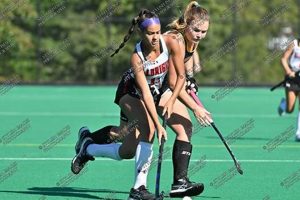
Protective facial gear, specifically designed for the sport, mitigates the risk of injury from impacts common in the game. These specialized pieces of equipment, often constructed from durable plastics and incorporating padding, shield the face from errant balls and sticks. An example would be a player wearing such a device while defending a penalty corner or participating in close-quarters play near the goal.
The implementation of facial protection has demonstrably reduced the incidence of serious facial and dental trauma within the sport. This is vital for player safety at all levels of competition. Historically, facial injuries were a more prevalent concern, leading to the development and eventual widespread adoption of this protective equipment to enhance player well-being and encourage participation. The evolution of these devices reflects an increasing emphasis on preventative measures in athletics.
The following sections will delve into specific aspects of this gear, including material composition, regulatory standards, appropriate fitting procedures, and maintenance requirements, providing a thorough understanding of effective protection within the sport.
Field Hockey Mask Usage
The correct selection, fitting, and maintenance of protective facial equipment are critical for player safety. The following guidelines offer essential information for optimizing the effectiveness of these devices.
Tip 1: Proper Sizing and Fit: A mask should fit snugly against the face without restricting vision or movement. An ill-fitting mask may shift during play, compromising protection.
Tip 2: Material Integrity Inspection: Regularly examine the mask for cracks, dents, or any signs of structural damage. Compromised materials offer reduced impact resistance and should be replaced immediately.
Tip 3: Strap Security: Ensure all straps are securely fastened before each use. Loose straps can cause the mask to dislodge upon impact, leaving the face vulnerable.
Tip 4: Vision Impairment Assessment: Confirm that the mask’s design does not impede peripheral vision. Reduced visibility can increase the risk of collisions with other players or the ball.
Tip 5: Cleaning and Storage Procedures: Clean the mask regularly with mild soap and water. Avoid harsh chemicals that can degrade the material. Store the mask in a dry, well-ventilated area to prevent mildew or damage.
Tip 6: Compliance with Regulations: Verify that the mask meets the standards set by governing bodies. Regulations often specify impact resistance and coverage requirements.
Tip 7: Specialized Positions Considerations: Goalkeepers and defensive players may require masks with enhanced protection due to the increased risk of high-velocity impacts.
Following these recommendations can significantly enhance the protective capabilities of facial gear, minimizing the potential for injury during play. Prioritizing these practices helps ensure a safer playing environment.
The subsequent section will address advanced topics related to the evolution and future developments in the design and technology of this safety equipment.
1. Impact Resistance

Impact resistance is a critical performance characteristic of protective facial equipment designed for field hockey. It determines the device’s ability to absorb and dissipate energy from collisions, thereby mitigating the risk of facial injuries.
- Material Composition and Impact Absorption
The materials used in construction directly affect impact resistance. Polycarbonate, known for its high strength-to-weight ratio, is frequently employed. The material’s ability to deform and absorb energy upon impact reduces the force transmitted to the face. For example, a mask constructed from a thicker polycarbonate layer will generally offer greater resistance compared to a thinner one.
- Design and Structural Integrity
The overall design and structural integrity contribute significantly to impact resistance. Reinforcements, such as strategically placed ribs or thicker sections, can enhance the mask’s ability to withstand force. A mask with a well-distributed design will more effectively dissipate impact energy across its surface, reducing localized stress.
- Testing Standards and Certification
Impact resistance is rigorously tested and certified according to established standards, ensuring a minimum level of protection. Testing protocols often involve subjecting the mask to impacts from projectiles at specified velocities. Certification marks indicate that the mask has met these criteria, providing assurance to the user. Equipment lacking proper certification may offer inadequate protection.
- Padding and Energy Dissipation
Internal padding plays a crucial role in dissipating energy. Foam materials, such as closed-cell polyethylene, provide a cushioning layer that absorbs impact force. The density and thickness of the padding influence its effectiveness. A mask with inadequate padding may transmit excessive force to the face, increasing the risk of injury.
The interplay of material composition, design, testing, and padding determines the overall impact resistance of field hockey facial equipment. Selecting gear that meets established standards and incorporates robust protective features is paramount for safeguarding players from potential injuries.
2. Facial coverage

Effective facial protection in field hockey necessitates adequate coverage to mitigate injury risks from impacts by the ball or sticks. The extent of coverage directly correlates with the degree of safety provided to athletes during gameplay.
- Coverage Area and Anatomical Protection
Facial coverage encompasses the extent to which a device shields critical anatomical structures. Full facial masks typically protect the forehead, eyes, nose, cheekbones, and jaw. Partial masks may offer less extensive protection, prioritizing specific areas such as the eyes and nose. A mask that fails to adequately cover a portion of the face leaves that area vulnerable to direct impact.
- Peripheral Vision Considerations
Comprehensive coverage must be balanced against maintaining adequate peripheral vision. A design that excessively restricts peripheral vision can impair situational awareness and increase the risk of collisions with other players or the ball. Protective gear should provide a clear field of view while safeguarding the face.
- Material Gaps and Vulnerability
Gaps in the protective material can create points of vulnerability. Even small openings can allow the ball or stick to make direct contact with the face, resulting in injury. Manufacturers must minimize gaps while ensuring adequate ventilation and comfort.
- Adjustability and Secure Fit
Proper coverage is contingent upon a secure and adjustable fit. A mask that shifts or dislodges during play exposes areas of the face to potential impact. Adjustable straps and customizable padding enable athletes to achieve a snug and stable fit, maximizing the protective benefits of the gear.
Optimal facial protection in field hockey requires a balance between comprehensive coverage, unobstructed vision, minimal material gaps, and a secure, adjustable fit. Protective equipment design should prioritize these factors to minimize the risk of facial injuries during gameplay.
3. Proper Fit

The effectiveness of protective facial equipment in field hockey is fundamentally linked to achieving a proper fit. A mask that does not conform correctly to the wearer’s face compromises its protective capabilities, potentially leading to injury despite the presence of the gear.
- Optimal Coverage and Stability
A properly fitted mask ensures comprehensive coverage of vulnerable facial areas, including the forehead, cheekbones, nose, and jaw. The mask should remain securely in place during dynamic movements, preventing slippage that could expose the face to impact. A fit that is either too loose or too tight can compromise stability and reduce the protective area.
- Unobstructed Vision and Peripheral Awareness
A correct fit maintains an unobstructed field of vision, allowing the player to effectively track the ball and other players. A mask that sits too low or too high can impede vision, increasing the risk of collisions and hindering performance. Peripheral vision should remain largely unimpaired, enabling situational awareness on the field.
- Comfort and Reduced Distraction
A properly fitted mask enhances player comfort, minimizing distractions and allowing for greater focus on the game. A mask that is too tight can cause discomfort, while one that is too loose may require constant readjustment. A comfortable fit promotes compliance and consistent use of the protective gear.
- Secure Strap System Functionality
The strap system is integral to maintaining a proper fit. Straps should be adjusted to ensure a snug and secure fit without causing excessive pressure. Loose or damaged straps can compromise the mask’s position and reduce its protective capacity. Regular inspection and maintenance of the strap system are essential for optimal functionality.
Therefore, the selection and adjustment of protective field hockey facial equipment must prioritize achieving a precise and comfortable fit. This ensures the mask functions as intended, maximizing safety and minimizing the risk of facial injuries during gameplay.
4. Vision Clearance

Vision clearance, the unobstructed field of view afforded by protective facial equipment, constitutes a critical factor in the design and functionality of field hockey masks. Compromised visibility can negate the protective benefits by hindering a player’s reaction time and spatial awareness, thereby increasing the risk of collisions and related injuries.
- Peripheral Vision and Spatial Awareness
Unrestricted peripheral vision is essential for maintaining spatial awareness on the field. Field hockey demands constant monitoring of teammates, opponents, and the ball’s trajectory. Masks that significantly restrict peripheral vision impair a player’s ability to react to rapidly changing situations, potentially leading to collisions or missed plays. Design considerations must balance protection with an adequate field of view.
- Optical Distortion and Image Clarity
The materials used in the construction of a field hockey mask’s lens or face shield can introduce optical distortion if not properly manufactured. Distortion can affect depth perception and the accurate assessment of distances, impacting a player’s ability to intercept the ball or make precise passes. High-quality materials and manufacturing processes are necessary to minimize optical aberrations.
- Lens Tint and Environmental Conditions
Lens tint can affect vision clearance under varying environmental conditions. Darker tints may reduce glare in bright sunlight but can impair visibility in low-light situations, such as indoor arenas or overcast days. Clear lenses provide optimal visibility in most conditions but may not sufficiently reduce glare in bright sunlight. The selection of appropriate lens tint should be based on the anticipated playing environment.
- Fogging and Ventilation
Fogging, caused by condensation on the inner surface of the mask, can severely restrict vision clearance. Adequate ventilation is essential to prevent moisture buildup. Anti-fog coatings can further mitigate this issue. Masks lacking sufficient ventilation or effective anti-fog treatments may require frequent cleaning during play, disrupting a player’s focus.
The interplay of peripheral vision, optical distortion, lens tint, and fogging directly impacts vision clearance in field hockey masks. Mask design should prioritize these elements to optimize both protection and visual acuity, enabling athletes to perform at their best while minimizing the risk of injury.
5. Strap security
Strap security forms an integral element in the functional design of field hockey masks, directly influencing the device’s capacity to provide consistent and reliable protection throughout gameplay. The integrity of the strap system dictates the stability and positioning of the mask on the wearer’s face, impacting its overall effectiveness.
- Retention and Dislodgement Prevention
The primary function of secure straps is to maintain the mask’s intended position on the face, preventing dislodgement upon impact from a ball or stick. A compromised strap system can result in the mask shifting or detaching entirely, leaving the face vulnerable to injury. Durable materials and robust attachment mechanisms are crucial for ensuring adequate retention.
- Adjustability and Custom Fit Maintenance
Adjustable straps enable players to customize the fit of the mask to their unique facial contours. This adjustability is essential for achieving a snug and secure fit that minimizes movement during play. A well-adjusted strap system distributes pressure evenly across the face, enhancing comfort and preventing localized irritation. Regularly checking and adjusting straps are necessary to maintain an optimal fit.
- Material Degradation and Replacement Intervals
Strap materials are subject to wear and tear from repeated use, exposure to environmental elements (e.g., sweat, sunlight), and cleaning processes. Degradation of strap materials can compromise their strength and elasticity, increasing the risk of failure. Regular inspection for signs of wear, such as fraying or cracking, is essential. Replacement of straps at recommended intervals or upon detection of damage is crucial for maintaining the mask’s integrity.
- Compatibility with Other Equipment
The design of the strap system should consider compatibility with other protective equipment, such as helmets or mouthguards. Interference between straps from different devices can compromise their effectiveness and increase discomfort. A streamlined strap design minimizes the likelihood of such conflicts, ensuring that all protective elements function optimally.
In conclusion, strap security represents a critical, yet often overlooked, aspect of field hockey mask design. Prioritizing durable materials, adjustability, regular maintenance, and compatibility with other gear enhances the reliability and effectiveness of this vital safety equipment.
6. Material Durability

Material durability, in the context of field hockey masks, signifies the equipment’s ability to withstand repeated impacts, environmental stressors, and general wear and tear throughout its lifespan. It is a paramount consideration, directly influencing the mask’s protective efficacy and longevity.
- Impact Resistance and Material Selection
The capacity of a mask to absorb and dissipate energy from collisions hinges on the inherent impact resistance of its constituent materials. Polycarbonate, a commonly utilized thermoplastic polymer, exhibits high impact strength and shatter resistance, making it suitable for deflecting blows from field hockey balls and sticks. Alternative materials, such as reinforced composites, may offer enhanced durability but can also increase manufacturing costs.
- Environmental Degradation and Material Stability
Exposure to ultraviolet radiation, moisture, and temperature fluctuations can degrade mask materials over time, compromising their structural integrity. Polymeric materials may experience chain scission, leading to reduced tensile strength and increased brittleness. Stabilizers and additives can mitigate these effects, but material selection should prioritize inherent resistance to environmental degradation.
- Wear and Abrasion Resistance
Repeated contact with playing surfaces, equipment, and other players can cause surface abrasion, reducing the mask’s aesthetic appeal and potentially affecting its structural integrity. Materials with high abrasion resistance, such as hard coatings applied to the outer surface, can prolong the mask’s service life and maintain its protective capabilities.
- Fatigue Resistance and Cyclic Loading
Field hockey masks are subjected to cyclic loading, experiencing repeated stress from impacts and pressure. Materials with high fatigue resistance can withstand these repeated stresses without developing cracks or fractures. The fatigue life of a mask is influenced by material selection, manufacturing processes, and the intensity and frequency of use.
The interplay between impact resistance, environmental stability, wear resistance, and fatigue resistance dictates the overall material durability of field hockey masks. Prioritizing materials with superior performance in these areas ensures that the equipment can consistently provide reliable protection throughout its intended lifespan, safeguarding athletes from potential injuries.
7. Regulatory compliance

Regulatory compliance dictates the minimum safety standards that protective facial equipment, including field hockey masks, must meet to be legally marketed and used in organized play. This ensures a baseline level of protection for athletes.
- Standardization Bodies and Certification Marks
Organizations such as ASTM International and NOCSAE develop performance standards for protective equipment. Products meeting these standards undergo rigorous testing and, upon successful completion, receive certification marks. These marks indicate that the equipment has been independently verified to meet established safety criteria. The presence of a recognized certification mark is often a prerequisite for participation in sanctioned field hockey leagues and tournaments.
- Impact Testing Protocols and Performance Metrics
Compliance with regulatory standards mandates specific impact testing protocols. These tests simulate the forces generated by a field hockey ball or stick striking the mask. Performance metrics, such as peak force transmission and energy attenuation, are measured to assess the mask’s ability to reduce the risk of facial injuries. Masks failing to meet the prescribed performance thresholds are deemed non-compliant and cannot be certified.
- Material Composition and Chemical Restrictions
Regulatory compliance extends beyond impact performance to encompass material composition and chemical restrictions. Certain materials may be prohibited or restricted due to potential health hazards. Regulations may also limit the use of volatile organic compounds (VOCs) in manufacturing processes to minimize environmental impact. Manufacturers must adhere to these material restrictions to ensure product safety and environmental responsibility.
- Labeling and Information Disclosure Requirements
Compliance regulations often mandate specific labeling and information disclosure requirements. This includes providing clear instructions on proper mask fitting, care, and maintenance. Warning labels may be required to inform users of potential risks associated with using the equipment. Accurate and readily accessible information empowers users to make informed decisions about product selection and usage.
The various facets of regulatory compliance collectively contribute to a safer playing environment for field hockey participants. Adherence to established standards and rigorous testing protocols ensures that protective facial equipment provides a demonstrable level of protection against potential facial injuries. Enforcement of these regulations promotes accountability among manufacturers and helps to mitigate the risks associated with the sport.
Frequently Asked Questions
The following section addresses common inquiries regarding protective facial equipment utilized in the sport. The information provided aims to clarify uncertainties and promote informed decision-making concerning safety measures.
Question 1: What are the primary benefits of utilizing facial protection in field hockey?
The primary benefits include a significant reduction in the incidence and severity of facial and dental injuries resulting from impacts with the ball or sticks. This protective gear enhances player safety and encourages participation by mitigating injury risks.
Question 2: Are field hockey face masks mandatory in all leagues and levels of play?
Mandatory usage policies vary depending on the specific league, governing body, and level of competition. It is essential to consult the rules and regulations of the relevant organization to determine whether facial protection is required or optional.
Question 3: How should a field hockey face mask be properly fitted to ensure optimal protection?
A properly fitted mask should conform snugly to the contours of the face without obstructing vision or causing discomfort. Straps should be adjusted to maintain a secure fit, preventing slippage during play. Professional fitting services may be available to ensure accurate sizing and adjustment.
Question 4: What materials are commonly used in the construction of protective field hockey face masks?
Common materials include high-impact polycarbonate plastics, which offer a balance of durability, impact resistance, and weight. Padding materials, such as closed-cell foam, are often incorporated to enhance comfort and energy absorption.
Question 5: How often should a field hockey face mask be replaced?
Replacement frequency depends on usage intensity, environmental conditions, and the presence of any visible damage. Masks exhibiting cracks, deformation, or compromised strap systems should be replaced immediately. Manufacturers often provide recommendations regarding replacement intervals.
Question 6: What cleaning and maintenance procedures are recommended for field hockey face masks?
Masks should be cleaned regularly with mild soap and water. Abrasive cleaners and solvents should be avoided, as they can degrade the materials. Masks should be stored in a dry, well-ventilated area to prevent mildew and prolong their lifespan.
The preceding answers provide a foundational understanding of key aspects related to field hockey facial protection. Addressing these common concerns contributes to a safer playing environment.
The subsequent section will explore future trends and innovations in the design and technology of protective equipment for the sport.
Field Hockey Masks
This exploration has illuminated various facets of field hockey masks, emphasizing the crucial role these devices play in mitigating the risk of facial injuries. The discussions encompassed material composition, fitting guidelines, regulatory compliance, and maintenance protocols. Each element contributes significantly to the overall effectiveness of this protective gear.
Continued adherence to safety standards, advancements in materials science, and consistent promotion of proper usage remain paramount. Prioritizing player well-being through the implementation and responsible application of this protective equipment fosters a safer and more sustainable environment for all participants in the sport.