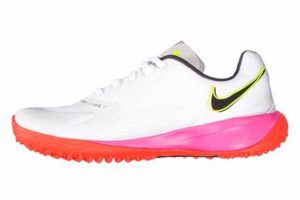
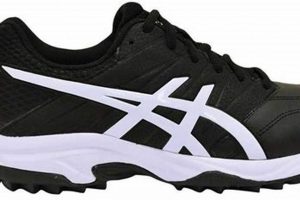
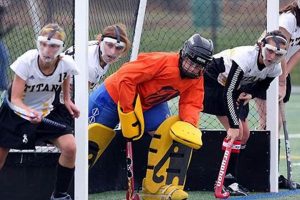
Footwear designed specifically for field hockey provides traction and support essential for optimal performance on the field. These specialized shoes often feature aggressive tread patterns to grip various playing surfaces, enabling quick cuts, sprints, and pivots. Examples of these types of shoes include those with multi-directional lug patterns or molded rubber outsoles.
Appropriate footwear enhances agility, reduces the risk of injuries such as ankle sprains, and improves overall player confidence. Historically, players used general athletic shoes, but the evolution of the sport has led to the development of purpose-built footwear designed to meet the unique demands of field hockey, offering improved grip and stability.
The following sections will delve into the specific characteristics to consider when selecting appropriate footwear, detailing factors such as outsole materials, upper construction, and fit considerations to ensure players choose the best option for their playing style and field conditions.
Selection Guidance for Field Hockey Footwear
This section provides essential guidance to ensure appropriate footwear selection for field hockey. Factors affecting performance and safety are addressed.
Tip 1: Assess Playing Surface: Consider the typical playing surface. Grass fields require cleats with longer studs for superior grip, while turf surfaces necessitate shorter, more numerous lugs to prevent excessive binding.
Tip 2: Evaluate Outsole Material: Opt for outsoles constructed from durable rubber compounds that provide both traction and longevity. Softer rubber offers better grip but may wear down more quickly, while harder rubber provides enhanced durability.
Tip 3: Prioritize Ankle Support: Select footwear with a supportive upper construction that securely cradles the ankle. This minimizes the risk of sprains and provides stability during lateral movements.
Tip 4: Consider Upper Material: Evaluate the upper material based on desired breathability and water resistance. Synthetic materials offer greater water resistance, while mesh uppers enhance ventilation.
Tip 5: Ensure Proper Fit: Prioritize a snug, comfortable fit with adequate room in the toe box to prevent discomfort or blistering during prolonged play. Consider trying on footwear with sport-specific socks to ensure accurate sizing.
Tip 6: Evaluate Cleat Configuration: Examine the cleat pattern for multi-directional traction. A combination of conical and bladed cleats can provide optimal grip for acceleration, braking, and turning.
Tip 7: Assess Weight: Lightweight footwear minimizes fatigue and enhances agility. However, prioritize durability and support over absolute weight reduction.
Adherence to these guidelines will contribute to enhanced performance, reduced injury risk, and increased overall comfort during field hockey activities.
The subsequent section will summarize the key considerations and provide concluding remarks.
1. Traction

Traction is a fundamental element in the functionality of field hockey footwear. The interaction between the shoe’s outsole and the playing surface dictates a player’s ability to execute rapid accelerations, decelerations, and changes in direction. Inadequate traction directly impedes performance, leading to compromised agility and an increased risk of slips and falls. For example, on wet grass, cleats lacking sufficient grip will result in reduced control and slower response times, impacting gameplay. Therefore, traction is an indispensable component of optimal field hockey footwear.
The design of the outsole is central to achieving effective traction. Cleats with aggressive lug patterns, strategically arranged for multi-directional grip, enhance contact with the ground. The depth, shape, and spacing of these lugs are tailored to specific field conditions, with longer studs providing superior grip on natural grass and shorter, more numerous lugs optimizing performance on artificial turf. Material science also plays a role; durable rubber compounds contribute to both traction and wear resistance. The practical implication is that careful selection of outsole design, including cleat type and material, directly translates to enhanced on-field agility and control.
In summary, the connection between traction and field hockey footwear is direct and consequential. Insufficient traction compromises performance and elevates injury risk. Understanding the principles of outsole design, including lug configuration and material properties, enables informed selection of footwear that maximizes grip and stability. Challenges remain in developing footwear that provides optimal traction across diverse field conditions, underscoring the ongoing importance of research and development in this area. The significance of traction extends beyond individual performance; it contributes to the overall dynamics and safety of the game.
2. Stability

Stability, in the context of field hockey footwear, refers to the shoe’s ability to resist excessive pronation and supination, thereby maintaining a neutral foot position during dynamic movements. The connection to performance and injury prevention is direct: insufficient stability increases the likelihood of ankle sprains, knee injuries, and fatigue. For instance, rapid lateral movements common in field hockey place substantial stress on the ankle joint; footwear lacking adequate stability allows excessive inward or outward rolling, increasing the risk of ligament damage.
Achieving stability in field hockey footwear requires a multi-faceted design approach. A firm midsole, often incorporating torsional rigidity features, minimizes unwanted foot twisting. External heel counters provide additional support, preventing excessive heel movement within the shoe. A wide outsole base enhances the overall stability platform. Material selection also contributes; stiffer materials in key structural components limit deformation under stress. Consider a player making a sharp turn to intercept a pass: the combination of a firm midsole, supportive heel counter, and wide outsole work in concert to maintain foot alignment and prevent ankle rollover, enabling the player to execute the maneuver safely and effectively.
In summation, stability is an indispensable component of optimal field hockey footwear. It directly affects a player’s ability to perform dynamic movements with confidence and reduces the risk of lower extremity injuries. A robust midsole, supportive heel counter, and wide outsole are key design elements that contribute to stability. Continued research and development in footwear technology are crucial for further enhancing stability and improving player safety. Recognizing the significance of stability enables informed footwear selection, maximizing performance and minimizing injury potential.
3. Ankle Support

Ankle support is a critical characteristic of field hockey footwear. The dynamic nature of the sport, characterized by rapid directional changes and abrupt stops, places considerable stress on the ankle joint. Inadequate support predisposes athletes to inversion sprains, a common injury in field hockey. Footwear classified as “best cleats for field hockey” invariably incorporates design elements intended to mitigate this risk. For example, a cleat lacking a reinforced heel counter or high-cut design provides minimal resistance to lateral ankle movement, increasing vulnerability to injury. Conversely, cleats with integrated ankle support features enhance joint stability, allowing athletes to execute maneuvers with greater confidence and reduced risk.
The integration of ankle support in field hockey cleats involves several key design considerations. Heel counters, often constructed from rigid or semi-rigid materials, cup the heel and resist excessive inward or outward rolling. High-cut designs extend the upper material above the ankle joint, providing additional stability and limiting range of motion. Internal or external support structures, such as straps or exoskeletal frames, further augment ankle stability. As an illustration, consider a player attempting a quick crossover maneuver. A cleat with robust ankle support features will maintain proper foot alignment, preventing excessive pronation or supination and allowing the athlete to maintain balance and control. This directly translates to improved performance and reduced injury incidence.
In summary, ankle support is an indispensable attribute of field hockey cleats. It directly impacts joint stability, reducing the risk of sprains and enabling athletes to perform dynamic movements with greater confidence. Design elements such as reinforced heel counters, high-cut designs, and integrated support structures are essential for achieving optimal ankle support. The understanding of these design principles allows players and coaches to make informed decisions when selecting footwear, ultimately contributing to enhanced performance and injury prevention. The absence of sufficient ankle support negates other desirable features of a cleat.
4. Durability

Durability, in the context of field hockey cleats, denotes the footwear’s capacity to withstand the repeated stresses and abrasions encountered during gameplay and training. A direct correlation exists between durability and the classification of footwear as among the “best cleats for field hockey.” Cleats subjected to rigorous use must maintain structural integrity to provide consistent performance and prevent premature failure. For example, inferior materials or construction techniques may result in rapid wear on the outsole, compromised support in the upper, or detachment of components, rendering the cleats unsuitable for competitive play. Consequently, durability is not merely a desirable feature but a fundamental requirement for cleats intended for regular use in field hockey.
The practical significance of durability extends beyond the immediate lifespan of the footwear. Cleats that retain their structural and functional characteristics over time provide a more consistent playing experience, reducing the need for frequent replacements. This offers economic benefits to athletes and teams and contributes to a more sustainable consumption pattern. Furthermore, cleats that maintain their integrity are less likely to contribute to injuries. Worn-out cleats with compromised support or traction increase the risk of slips, falls, and ankle sprains. For instance, an outsole with worn cleats may lose its grip on a wet field, increasing the likelihood of a player losing their footing during a crucial moment in the game. This emphasizes the link between durability, performance, and player safety.
In conclusion, durability is an essential attribute of field hockey cleats. It directly affects the longevity, performance consistency, and safety of the footwear. Selection of cleats constructed from high-quality materials and employing robust construction methods is crucial for maximizing durability and ensuring that the cleats can withstand the rigors of the sport. Addressing the challenges inherent in designing durable cleats for field hockey requires a continuous focus on material science, construction techniques, and product testing, ultimately benefiting athletes through improved performance and reduced risk of injury. The selection of durable cleats is also beneficial to the environmental sustainability.
5. Comfort
Comfort is a vital, though often subjectively assessed, attribute of footwear recognized as “best cleats for field hockey.” Its influence extends beyond simple ease of wear; discomfort can directly impede athletic performance. Ill-fitting cleats can cause blisters, chafing, and foot fatigue, leading to reduced agility, diminished focus, and increased susceptibility to injury. Consequently, cleats that prioritize comfort are likely to improve a player’s ability to maintain optimal performance throughout a game or training session. For example, a player experiencing foot pain from poorly fitted cleats may subconsciously alter their gait, increasing stress on other joints and potentially leading to compensatory injuries. Therefore, comfort is not a luxury but an essential component of high-performing field hockey footwear.
The assessment of comfort involves multiple factors. Proper fit, including adequate toe box room and a secure heel fit, is fundamental. The internal construction of the cleat, including the materials used for the insole, lining, and padding, significantly impacts comfort levels. Breathability is also a key consideration, as excessive moisture buildup can lead to discomfort and increase the risk of skin irritation. Manufacturers employ various technologies to enhance comfort, such as moisture-wicking linings, cushioned insoles, and seamless construction to minimize friction. A practical illustration involves two players, one wearing ill-fitting cleats with inadequate cushioning and the other wearing well-fitted cleats with a cushioned insole. The former may experience foot pain and fatigue, negatively affecting their speed and agility, while the latter can maintain their performance level for a longer duration.
In conclusion, comfort is an indispensable characteristic of field hockey cleats. It directly affects a player’s ability to perform optimally and minimizes the risk of discomfort-related injuries. Factors such as proper fit, internal construction, and breathability contribute significantly to overall comfort levels. Addressing the challenges inherent in designing comfortable cleats requires a continuous focus on ergonomic design principles, material selection, and product testing, ultimately benefiting athletes through improved performance, safety, and overall playing experience. The disregard of comfort in the selection process is detrimental to achieving peak athletic performance.
6. Turf Suitability

Turf suitability is a critical consideration when selecting field hockey cleats, particularly given the increasing prevalence of artificial turf surfaces in modern field hockey. Footwear appropriate for natural grass may not perform optimally, or even safely, on synthetic turf, underscoring the importance of considering the specific playing surface.
- Cleat Length and Configuration
Turf surfaces typically require shorter, more numerous cleats than natural grass. Longer cleats can become lodged in the artificial fibers, increasing the risk of ankle or knee injuries. The optimal cleat configuration for turf distributes pressure evenly across the foot, providing adequate grip without excessive binding. For example, molded rubber outsoles with multiple small lugs are generally preferred for turf surfaces.
- Outsole Material
The material composition of the outsole also impacts turf suitability. Softer rubber compounds offer greater grip on artificial turf, while harder compounds may slip. The ideal outsole material provides a balance of traction and durability, resisting wear from the abrasive nature of turf surfaces. An example would be a specialized rubber formulation designed to maximize contact points with the turf fibers.
- Stud Pattern and Spacing
The stud pattern determines the distribution of pressure and the degree of traction provided on turf. Widely spaced studs may create pressure points, leading to discomfort and potential foot fatigue. A more densely packed stud pattern distributes the load more evenly, enhancing comfort and reducing the risk of injury. Furthermore, the shape of the studs can influence turf suitability; rounded or bladed studs are often preferred for their ability to release from the turf quickly, facilitating rapid movements.
- Upper Construction and Stability
While the outsole directly interacts with the turf, the upper construction contributes to overall stability and support, particularly on the more unforgiving surface of artificial turf. Footwear with enhanced ankle support and a secure fit is essential for minimizing the risk of ankle sprains and other lower extremity injuries. The combination of a turf-appropriate outsole and a supportive upper creates a stable platform for athletic performance.
Therefore, turf suitability is an essential determinant of the “best cleats for field hockey,” particularly in regions where artificial turf is the predominant playing surface. Selection of footwear optimized for turf maximizes performance, minimizes injury risk, and enhances overall player comfort. Cleats designed primarily for natural grass are generally not suitable for turf and should be avoided in such conditions.
7. Water Resistance

Water resistance is a significant characteristic differentiating superior field hockey cleats from those of lower quality. Its presence mitigates the negative effects of wet playing conditions, thereby maintaining player comfort, performance, and reducing the risk of waterlogged footwear contributing to injury. In scenarios where fields are damp due to rain, dew, or irrigation, cleats lacking water resistance become saturated, increasing weight and hindering agility. Athletes are thus impeded by heavy, uncomfortable footwear, leading to decreased speed and maneuverability. The inclusion of water-resistant materials in the cleat’s construction directly addresses this issue.
The practical application of water resistance extends beyond mere comfort. Waterlogged footwear can lead to blisters and skin irritation due to prolonged exposure to moisture. Furthermore, saturated cleats can lose their structural integrity, compromising support and increasing the risk of ankle sprains. Cleats designed with water-resistant uppers, often incorporating synthetic materials or waterproof membranes, minimize water absorption, ensuring that the foot remains relatively dry and protected. This allows athletes to maintain their focus and perform at their best, irrespective of weather conditions. An example is a field hockey player executing a crucial pass in a downpour; if their cleats are water-resistant, they can maintain their balance and control, whereas waterlogged footwear could cause them to slip or misjudge the pass.
In summary, water resistance is an essential attribute of high-quality field hockey cleats. It preserves player comfort, enhances performance, and reduces the potential for moisture-related injuries. The integration of water-resistant materials and construction techniques in cleat design reflects a commitment to addressing the challenges posed by wet playing conditions. The ability of a cleat to resist water absorption is a direct indicator of its suitability for use in diverse environments, ultimately contributing to a more positive and safer playing experience. Therefore, water resistance must be a primary consideration in the selection process.
Frequently Asked Questions
The following section addresses common inquiries regarding the selection and utilization of appropriate footwear for field hockey, focusing on performance and safety considerations.
Question 1: What are the key differences between cleats designed for natural grass and those designed for artificial turf?
Cleats intended for natural grass typically feature longer studs to penetrate the soil and provide optimal grip. In contrast, cleats designed for artificial turf generally have shorter, more numerous lugs or molded patterns to distribute pressure and prevent excessive binding on the synthetic surface.
Question 2: How important is ankle support in field hockey cleats, and what features contribute to it?
Ankle support is crucial due to the dynamic movements inherent in field hockey. Features contributing to ankle support include reinforced heel counters, high-cut designs, and integrated support structures that limit excessive ankle movement and reduce the risk of sprains.
Question 3: What materials are commonly used in the construction of high-quality field hockey cleats, and what are their respective benefits?
High-quality field hockey cleats often incorporate synthetic uppers for water resistance and durability, rubber outsoles for traction and abrasion resistance, and cushioned midsoles for comfort and shock absorption. Specific materials, such as TPU or EVA, may be utilized for enhanced performance characteristics.
Question 4: How should field hockey cleats be properly fitted to ensure optimal performance and comfort?
Proper fit involves ensuring adequate toe box room, a secure heel fit, and appropriate width to accommodate the foot without excessive pressure or slippage. It is recommended to try on cleats with sport-specific socks and to assess fit after activity to account for foot swelling.
Question 5: How frequently should field hockey cleats be replaced, and what factors influence their lifespan?
The lifespan of field hockey cleats depends on usage frequency, playing surface, and maintenance practices. Signs of wear, such as worn outsoles, compromised support, or structural damage, indicate the need for replacement. Regular cleaning and proper storage can prolong cleat lifespan.
Question 6: Are there specific brands or models of field hockey cleats that are consistently recommended by coaches or players?
While specific brand or model recommendations vary, reputable brands known for producing high-quality athletic footwear often offer models designed for field hockey. Consulting with experienced coaches and players can provide valuable insights based on individual playing styles and preferences.
Proper footwear selection is vital for performance and safety. Adherence to these considerations supports an informed purchasing decision.
The subsequent section presents concluding remarks summarizing the main points.
Conclusion
The selection of appropriate field hockey cleats is a multifaceted decision requiring careful consideration of various factors. The preceding discussion underscores the importance of traction, stability, ankle support, durability, comfort, turf suitability, and water resistance in determining the optimal footwear for the sport. Neglecting any of these aspects can compromise performance and elevate the risk of injury, potentially hindering an athlete’s progress and well-being. Therefore, the acquisition of field hockey cleats demands a discerning approach, prioritizing both functional attributes and individual needs.
Ultimately, the determination of the best cleats for field hockey rests on a thorough evaluation of playing conditions, individual biomechanics, and performance requirements. By prioritizing the aforementioned characteristics and seeking informed guidance, athletes and coaches can make well-reasoned decisions that contribute to enhanced performance, reduced injury incidence, and a more positive playing experience. Continued research and development in footwear technology promise further advancements in cleat design, reinforcing the importance of staying informed and adapting selection practices to optimize athletic potential.