A structured approach to defending the area nearest one’s own goal is critical in ice hockey. This involves a coordinated effort among players to limit scoring opportunities for the opposing team. For example, a common setup might include assigning players specific responsibilities within the zone, such as covering opposing forwards or intercepting passes along the boards.
Effective zonal defense minimizes high-danger scoring chances and limits the time and space afforded to attacking players. A well-executed system can disrupt offensive flow, force turnovers, and initiate counter-attacks. Its evolution has been shaped by rule changes, tactical innovations, and the increasing emphasis on speed and skill in the modern game. Historically, variations in defensive structures have reflected evolving offensive strategies.
The following sections will detail various strategies employed to achieve defensive solidity, including common formations, player responsibilities, and techniques for neutralizing offensive threats in this critical area of the rink. Furthermore, adjustments to these systems based on game situations, such as penalty kills and late-game scenarios, will be examined.
Defensive Zone Strategies
Implementing effective defensive strategies within the zone requires disciplined execution and a comprehensive understanding of positional responsibilities. The following guidelines are designed to enhance overall defensive performance.
Tip 1: Prioritize Net-Front Presence: Maintaining a strong presence in front of the net is crucial for clearing rebounds and disrupting scoring opportunities. Designate players to occupy this space and aggressively clear the area of opposing forwards.
Tip 2: Implement Positional Awareness: Players must maintain awareness of their designated zone and the positioning of both teammates and opponents. Drills focused on positional play can improve recognition and reaction time.
Tip 3: Aggressively Challenge the Puck Carrier: Closing quickly on the puck carrier limits time and space, forcing rushed decisions and potential turnovers. Avoid over-commitment, however, to prevent being beaten one-on-one.
Tip 4: Disrupt Passing Lanes: Anticipating and intercepting passes is critical to disrupting offensive flow. Employing active sticks and maintaining tight gaps can effectively deny passing options.
Tip 5: Provide Support Below the Goal Line: When the puck is behind the net, provide support to the defenseman while maintaining awareness of potential breakout passes. Ensure adequate communication to avoid leaving passing lanes open.
Tip 6: Maintain Consistent Communication: Clear and concise communication is vital for coordinating defensive efforts. Use verbal cues and visual signals to communicate player movements and potential threats.
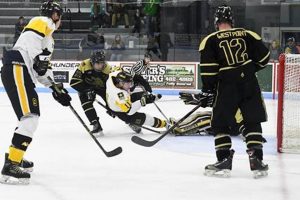
Tip 7: Control Rebounds: The ability to quickly secure and clear rebounds eliminates second-chance opportunities for the opposition. Players must be proactive in boxing out opponents and winning puck battles around the net.
Adhering to these principles fosters a more cohesive and effective defensive structure, ultimately reducing scoring chances and improving overall team performance. A disciplined approach to these elements will benefit any team’s defensive capabilities.
The final section will delve into advanced tactics and strategies that build upon these fundamental principles, providing a comprehensive framework for effective defensive zone play.
1. Positional discipline

Positional discipline is foundational to a successful defense. It provides the framework upon which all other aspects of effective protection against goals are built.
- Assigned Zone Responsibility
Each player must be responsible for a specific area. This ensures that no part of the zone is left undefended and minimizes confusion about who covers which opponent. Deviation from assigned positions creates gaps that can be exploited.
- Maintaining Defensive Structure
Adherence to the chosen defensive formation is critical. Whether employing a box, diamond, or other system, players must maintain their relative positions. Drifting out of position compromises the integrity of the entire defensive system.
- Support and Rotation
Positional awareness enables effective support for teammates engaging the puck carrier. Players must rotate into supporting positions seamlessly as the play evolves, maintaining the overall defensive structure while providing necessary assistance.
- Adaptation to Offensive Threats
While maintaining assigned positions is important, players must also adapt to changing offensive threats. This requires constant communication and intelligent adjustments to maintain defensive integrity without rigidly adhering to static positions.
Without this discipline, the entire defensive structure crumbles, leaving the team vulnerable to scoring chances. Positional integrity dictates that even under pressure, players must prioritize maintaining their structure to deny the opposition clear opportunities.
2. Communication Effectiveness

Effective exchange of information is a non-negotiable component of successful zonal defense. Players must constantly relay information to one another, ensuring coordinated responses to the fluid dynamics of the game. The absence of clear and timely communication undermines even the most well-designed defensive system.
- Verbal Cues and Alerts
Utilizing concise verbal cues, such as “man on,” “switch,” or “pressure,” enables players to quickly identify potential threats and adjust their positioning accordingly. For instance, a defenseman alerting a teammate to an approaching forechecker can prevent a costly turnover. The consistent use of agreed-upon terms ensures clarity and reduces the risk of misinterpretation.
- Visual Signals and Awareness
While verbal communication is vital, visual cues and awareness are equally important. Players must be able to read their teammates’ body language and positioning to anticipate their next move. A simple head nod can signal an intended zone exit, allowing linemates to prepare for the breakout. Effective visual communication complements verbal cues, providing a comprehensive understanding of the unfolding play.
- Coverage Assignments and Rotations
Communication facilitates seamless coverage assignments and rotations within the zone. When a player is drawn out of position, teammates must communicate to cover the vacated area. This requires a clear understanding of each player’s responsibilities and the ability to adapt quickly to changing circumstances. For example, if a defenseman pinches along the boards, a forward must communicate and drop back to cover the defensive point.
- Identifying and Addressing Threats
Real-time communication is essential for identifying and addressing emerging threats. Players must communicate the location of dangerous players, potential passing lanes, and developing offensive plays. This allows the defensive unit to proactively adjust its positioning and disrupt the opposition’s attack. Consistent communication effectively translates to a more vigilant and coordinated defensive posture.
In essence, communication serves as the connective tissue that binds individual players into a cohesive defensive unit. These factors contribute to a defensive environment where all members are aware of the current situation and prepared to react accordingly, increasing the chances of preventing scoring opportunities. Without it, even the most skilled players will struggle to maintain effective zonal coverage.
3. Puck Pressure

Consistent and strategic application of puck pressure is a cornerstone of effective defensive positioning. It directly impacts the opposition’s ability to execute plays and ultimately influences the number of scoring chances allowed. Puck pressure within the defensive zone is more than simply chasing the puck; it is a calculated effort to disrupt, control, and force turnovers.
- Reducing Time and Space
The primary objective of puck pressure is to minimize the time and space available to the puck carrier. Aggressive checking and tight marking force hurried decisions and less accurate passes. This is critical in breaking down offensive plays before they develop into high-danger scoring opportunities. Examples include quickly closing on a forward receiving a pass along the boards or disrupting a defenseman attempting to cycle the puck.
- Forcing Turnovers
Applying intense pressure can lead to forced errors and turnovers. When the puck carrier is under duress, they are more likely to make mistakes, such as errant passes or losing possession. These turnovers can then be capitalized upon to transition from defense to offense. A well-timed poke check or a forceful body check along the boards, when executed legally, can dislodge the puck and create a scoring chance.
- Controlling the Flow of Play
Puck pressure allows the defensive team to dictate the flow of play within the defensive zone. By aggressively pursuing the puck carrier, the defense can steer the opposition towards less dangerous areas of the ice, such as the corners or along the boards. This limits the opposition’s ability to generate scoring chances from high-percentage areas, like the slot.
- Supporting Teammates and Maintaining Structure
Effective puck pressure is not an isolated effort; it requires support from teammates and adherence to the overall defensive structure. While one player applies pressure, others must provide support by cutting off passing lanes and anticipating potential turnovers. This coordinated effort ensures that the defensive zone remains secure and prevents the opposition from exploiting gaps in coverage. If a player over-commits to pressuring the puck, teammates must be ready to cover the vacated space.
The implementation of effective puck pressure, when executed strategically and in conjunction with sound positioning and communication, significantly enhances the integrity of defensive zone strategies. It’s not just about individual effort but also about how that effort integrates with the overall defensive scheme to minimize scoring opportunities and gain possession of the puck.
4. Rebound Control

Rebound control constitutes a critical component of robust protection against goals. It directly influences the effectiveness of any defensive strategy by limiting second-chance scoring opportunities for the opposition. Failure to effectively manage rebounds can quickly negate even the most well-executed initial defensive efforts.
- Boxing Out Opponents
Establishing position between an opposing player and the net is paramount for securing rebounds. Players must actively box out opponents, preventing them from gaining clear access to the puck. Successful execution often involves physical positioning and the use of body weight to maintain separation. For example, a defenseman boxing out a forward crashing the net after a shot creates an opportunity for the goaltender to freeze the puck or for a teammate to clear the zone.
- Clearing the Crease
Removing loose pucks from the immediate vicinity of the net is essential for preventing scoring opportunities. Players must proactively clear the crease area, either by shooting the puck out of the zone or by securing possession and initiating a breakout. Hesitation in clearing the crease can result in chaotic scrambles and increased chances for the opposition to score. This task often falls to the defensemen who are positioned closest to the net.
- Communicating Rebound Locations
Clear and concise communication regarding rebound locations is crucial for coordinated defensive efforts. Players must alert teammates to the whereabouts of loose pucks, allowing them to react quickly and effectively. This communication can be verbal or visual, but it must be timely and accurate to be effective. A simple call of “rebound left” can inform a teammate to anticipate a loose puck on that side of the net, enabling them to make a play.
- Supporting the Goaltender
Providing support to the goaltender after a save is integral to rebound control. Players must be prepared to react quickly to rebounds, either by clearing the puck or by preventing opposing players from getting a shot on the rebound. This support can involve blocking shots, tying up opposing players, or simply occupying space to prevent the opposition from gaining an advantage. This synergistic action reduces the load on the goaltender and improves overall defensive performance.
These coordinated actions significantly contribute to limiting scoring chances and enhancing the overall effectiveness of any defensive system. A consistent focus on rebound control translates into a more resilient and less vulnerable defensive posture, ultimately increasing a team’s chances of success.
5. Net-front presence

Net-front presence is inextricably linked to the efficacy of zonal defense in hockey. As the area immediately in front of the goal represents the highest probability scoring zone, effectively managing this space is critical to minimizing scoring opportunities. Defensive strategies invariably prioritize controlling this area, either by clearing opposing players or preventing them from establishing position. Failure to maintain net-front presence allows the offensive team to screen the goaltender, capitalize on rebounds, and execute quick plays near the net, severely compromising protection against goals. An example is seen when a defensive breakdown leads to an unchecked forward camping in front of the net, deflecting a shot past the goalie; this highlights the direct cause-and-effect relationship between insufficient net-front control and increased vulnerability.
The defensive responsibilities in establishing and maintaining a net-front presence typically fall to defensemen, although forwards often assist depending on the defensive system employed. Specific tactics include boxing out opposing players, clearing rebounds, and disrupting passing lanes to prevent pucks from reaching forwards positioned near the net. A strong net-front presence also enables defenders to more effectively clear the zone, as they can more easily secure possession of loose pucks and initiate breakouts. Coaches emphasize these tactics in practices, often running drills that simulate game situations around the net. The practical significance of a well-controlled net-front is evident in analyzing game statistics, which consistently show a correlation between net-front control and lower goals-against averages.
In summary, net-front presence is not merely a supplementary aspect but a fundamental component of effective zonal defense. Challenges exist in consistently maintaining this presence due to the physical demands and the offensive team’s persistent efforts to gain positional advantage. Recognizing the importance of controlling the area immediately surrounding the net and consistently implementing the tactics required to do so are essential for any team seeking defensive solidity. Mastering this aspect is inherently linked to a team’s overall protective capability.
6. Passing lane denial

Effective zonal defense in hockey hinges on the ability to restrict the opposition’s offensive options, and a primary method for achieving this is through systematic obstruction of potential passing lanes. The denial of these lanes aims to prevent the offensive team from executing their intended plays, forcing them into less advantageous positions or causing turnovers. A direct cause-and-effect relationship exists between successful passing lane denial and a reduction in scoring opportunities for the opposing team. For example, if a defenseman anticipates a cross-ice pass and intercepts it, the offensive threat is immediately neutralized, potentially leading to a counter-attack. Conversely, neglecting to defend passing lanes allows the offense to move the puck with greater ease, creating openings for high-percentage shots.
Passing lane denial is not a passive endeavor; it requires proactive positioning, active stick work, and a comprehensive understanding of the offensive team’s tendencies. Defensemen often position themselves between the puck carrier and the intended receiver, effectively cutting off the passing route. Active stick work, such as using the stick to deflect or intercept passes, further disrupts the offensive flow. A practical example is a penalty kill situation, where defenders aggressively close passing lanes to prevent the power-play unit from setting up their offensive scheme. The significance of this understanding extends to game preparation, where scouting reports highlight the opponent’s preferred passing patterns, enabling defenders to anticipate and react accordingly.
The challenges associated with consistent passing lane denial involve maintaining discipline, adapting to changing offensive formations, and avoiding over-commitment. If a defender over-extends in an attempt to intercept a pass, it can create a vulnerable gap in the defensive coverage. Successful zonal defense requires a coordinated effort, where each player understands their role in obstructing passing lanes and supporting their teammates. Passing lane denial is an indispensable tool, not only to disrupt offensive schemes, but also to force turnovers and transition to offense quickly.
7. Box-out Effectiveness

Box-out effectiveness is a critical, interconnected element within the broader framework of zonal protection against goals. Its success directly influences the ability to minimize scoring chances generated from rebounds and net-front scrambles. A failure to execute effective box-outs allows opposing forwards unfettered access to prime scoring positions, thereby nullifying other defensive efforts. For instance, if a defenseman fails to properly box out an opposing forward crashing the net after a shot, the forward has an unimpeded opportunity to capitalize on the rebound. The efficacy of other protective measures is therefore inherently dependent on the successful execution of this maneuver.
The implementation of effective boxing-out techniques requires physical strength, positional awareness, and unwavering commitment. Defensemen, primarily responsible for net-front presence, must establish and maintain body position between the opposing player and the net. This typically involves using leverage and body weight to create a physical barrier, denying the opponent access to the scoring area. Drills emphasizing positional play and physical engagement are commonly used to develop and refine these skills. Furthermore, an understanding of the opponent’s tendencies, such as their preferred routes to the net, allows defensemen to anticipate and proactively counter their movements, amplifying protective capabilities in the zone.
While effective boxing-out can significantly contribute to improved zonal safety, it also presents certain challenges. Maintaining position requires constant vigilance and the ability to react quickly to dynamic game situations. Additionally, referees closely scrutinize these interactions, and infractions, such as interference or holding, can result in penalties that place the team at a disadvantage. Understanding the rules and executing legal box-out techniques is therefore crucial. In essence, box-out effectiveness is an indispensable component of a cohesive protection strategy, demanding both physical prowess and a calculated approach to effectively nullify threats in the most critical scoring area.
Frequently Asked Questions
The following questions address common inquiries regarding strategies and tactics employed when defending the area closest to one’s own goal in ice hockey. The information provided aims to clarify key concepts and dispel potential misconceptions.
Question 1: What is the primary objective?
The primary objective is to minimize scoring opportunities for the opposing team. This is achieved through a coordinated effort involving positional play, communication, and controlled aggression.
Question 2: What are common defensive formations?
Common formations include the box, the diamond, and various hybrid setups. The selection of a specific formation depends on team personnel, the opponent’s offensive tendencies, and the overall game strategy.
Question 3: How important is communication?
Communication is paramount. Players must constantly communicate with one another to relay information about player positioning, potential threats, and coverage assignments. Silence equates to vulnerability.
Question 4: What is the role of puck pressure?
Puck pressure involves strategically applying pressure to the puck carrier to limit their time and space. This can force turnovers, disrupt offensive flow, and create opportunities for counter-attacks.
Question 5: What is the significance of net-front presence?
Net-front presence involves controlling the area directly in front of the goal. This includes boxing out opposing players, clearing rebounds, and preventing screens that obstruct the goaltender’s vision.
Question 6: How does penalty killing affect the approach?
Penalty killing necessitates a more aggressive and disciplined approach. The focus shifts to denying passing lanes, blocking shots, and clearing the zone effectively while shorthanded.
In conclusion, the application of effective defensive zone strategies requires a holistic approach that integrates positional discipline, communication, and tactical execution. Mastering these elements is crucial for minimizing scoring chances and achieving overall team success.
The subsequent sections will explore advanced tactical applications and strategies, building upon the fundamental principles addressed in this FAQ.
Conclusion
This exploration of hockey defensive zone coverage has illuminated the critical elements required for effective protection against goals. Success hinges on the seamless integration of positional discipline, clear communication, strategic puck pressure, rebound control, and assertive net-front presence. The consistent application of these principles dictates the degree to which a team can minimize scoring opportunities and control the flow of play within its defensive zone.
The implementation of robust hockey defensive zone coverage is not merely a tactical consideration but a fundamental determinant of team success. Continued analysis, adaptation, and rigorous training are essential to maintain a competitive edge in this ever-evolving aspect of the sport. Teams that prioritize and master these principles will be best positioned to achieve sustained defensive excellence and, ultimately, championship contention. A comprehensive and disciplined application of these principles is paramount.