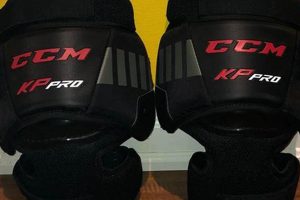
Proper equipment dimensions are paramount for the athlete occupying the net. Precise measurements are crucial when selecting pads, gloves, and helmets to ensure optimal protection and performance. For example, correctly measured leg guards should provide adequate coverage without hindering mobility.
Appropriate dimensions offer several advantages. Firstly, it enhances the athlete’s safety by minimizing gaps where pucks might penetrate. Secondly, properly fitted gear optimizes movement, allowing for quicker reactions and more efficient positioning. Historically, inadequate measurement practices led to increased injury rates and decreased effectiveness; the evolution of measurement techniques reflects a growing emphasis on athlete well-being and competitive edge.
The following sections will delve into the specifics of determining the correct dimensions for individual pieces of goaltending equipment, focusing on measurement methodologies and considerations for different age groups and skill levels.
Equipment Dimension Optimization Strategies
This section provides key recommendations to ensure appropriate equipment dimensions for optimal performance and safety.
Tip 1: Conduct Precise Measurements: Employ a flexible measuring tape and accurately measure height, chest circumference, and other relevant body dimensions. Record these measurements for reference during equipment selection.
Tip 2: Consult Equipment-Specific Guides: Refer to the manufacturer’s sizing charts for each piece of equipment. These charts provide detailed guidelines based on the athlete’s measurements.
Tip 3: Consider In-Person Fittings: Whenever possible, seek assistance from experienced equipment specialists at a reputable hockey equipment retailer. Their expertise ensures a properly tailored fit.
Tip 4: Prioritize Mobility: Ensure that the equipment allows for a full range of motion. Restricted movement can impede reaction time and negatively impact performance.
Tip 5: Account for Growth: For younger athletes, consider selecting equipment with adjustable features or purchasing slightly larger sizes to accommodate growth spurts. However, ensure that the equipment remains functional and does not compromise safety.
Tip 6: Inspect Equipment Regularly: Routinely inspect equipment for wear and tear. Replace any components that are damaged or no longer provide adequate protection.
Tip 7: Re-evaluate Dimensions Periodically: As the athlete’s body changes, it is imperative to re-evaluate measurements and adjust equipment dimensions accordingly. This practice ensures continued safety and optimal performance.
Adhering to these strategies promotes safety, comfort, and optimal performance within the net. Taking the time to accurately assess and customize dimensions is an investment in both player safety and athletic development.
The following final section will provide a brief recap of the article and offer concluding thoughts.
1. Leg Pad Length

Leg pad length constitutes a critical dimension within overall equipment assessment. Inadequate leg pad length compromises lower body coverage, leaving the goaltender vulnerable to shots directed toward the five-hole and lower extremities. Conversely, excessive length impedes mobility, hindering lateral movements and butterfly techniques. The interplay between pad length and height dictates effective coverage, with variations depending on the goaltender’s style. Example: A taller individual requires proportionally longer pads than a shorter individual with an equivalent skill level. Improper pad length directly impacts save percentage and increases the risk of injury.
The determination of correct leg pad length involves specific measurements and consideration of the goaltender’s stance. Measurement is taken from the ankle bone to the mid-thigh while in a stance. The selected pad’s rise should then adequately fill the gap between the top of the skate and the inner thigh when the goaltender is in a butterfly position. Practical application necessitates on-ice testing to validate the fit and range of motion. Adjustments to strapping and boot positioning fine-tune the pad’s interaction with the goaltender’s body.
Appropriate leg pad length represents a fundamental element of equipment consideration. Shortcomings in pad length can significantly detract from performance and safety. A comprehensive understanding of measurement protocols and on-ice adaptation is essential for ensuring that leg pads effectively contribute to protection and athletic capability. Addressing pad length challenges early in equipment selection leads to an optimal fit.
2. Glove Hand Dominance

Glove hand dominance represents a foundational consideration within equipment selection. It directly influences reaction time, puck control, and overall effectiveness. The choice of which hand wears the catching glove has implications for positioning, save selection, and subsequent play initiation.
- Dominant Hand Reaction Speed
The dominant hand exhibits superior fine motor skills and reaction speed. Placing the catching glove on the dominant hand capitalizes on these advantages, facilitating quicker glove saves and more secure puck retention. For example, a right-handed goaltender typically wears the catching glove on their right hand to optimize reaction to high shots on the glove side. This preference translates into reduced rebound opportunities.
- Glove Positioning and Coverage
The hand designated for the glove impacts positioning within the net. A right-handed goaltender with the glove on the right tends to favor the right side of the net, subtly adjusting their stance to maximize glove-side coverage. This positioning may influence shot selection by opposing players, who might target the weaker blocker side. Adaptations in positioning also affect rebound angles and clearance strategies.
- Puck Control and Transition
Following a glove save, the ability to quickly control the puck and initiate the next play is crucial. Dominant-hand glove usage often results in improved puck security and faster transitions to passing or covering the puck. A confident glove hand facilitates a seamless transfer from save to distribution, limiting scoring chances for the opposing team.
- Equipment Customization and Preference
While the dominant hand is generally preferred for the catching glove, some goaltenders opt for a non-dominant hand glove. This decision might stem from personal preference, previous injury, or a perceived advantage in specific situations. Equipment manufacturers accommodate both dominant and non-dominant glove preferences, offering gloves tailored to either hand. Understanding one’s preference is therefore critical.
The interplay between glove hand dominance and equipment dimensions underscores the importance of individualized fitting. Selecting the correct glove for the dominant hand optimizes reaction time and control. This synergy, when combined with properly dimensioned equipment, results in enhanced performance and contributes to a safer, more effective presence in the net. Individualized fit is key for success.
3. Chest Protector Coverage

Chest protector coverage is intrinsically linked to goaltender equipment dimensions. Adequate protection of the torso, shoulders, and upper arms is essential for injury prevention. Properly dimensioned chest and arm protectors safeguard vital organs and bone structures without hindering mobility.
- Torso Protection and Sizing Metrics
The primary function of the chest protector is to shield the torso from high-velocity impacts. Sizing metrics, including chest circumference and torso length, are crucial for selecting a protector that offers full coverage of the sternum, ribs, and abdomen. Insufficient torso protection leaves the goaltender vulnerable to contusions, fractures, and internal injuries. Chest protector width is similarly important. For example, a goaltender with a broad chest requires a wider protector to ensure complete lateral coverage and minimize gaps between the protector and the body.
- Shoulder Coverage and Range of Motion
Shoulder protection must provide comprehensive coverage of the glenohumeral joint and surrounding tissues. Undersized shoulder floaters expose the joint to direct impacts, increasing the risk of dislocations and rotator cuff injuries. However, overly large floaters restrict arm movement, hindering the goaltender’s ability to reach for high shots. Proper shoulder sizing involves a balance between impact absorption and range of motion.
- Arm Protection and Length Considerations
Arm protection extends from the shoulder to the wrist, shielding the biceps, triceps, and forearms. Length considerations are paramount. Protectors that are too short leave the lower arms exposed, while excessively long protectors impede wrist flexion and glove positioning. Adjustable arm straps and segmented padding enable customization and ensure a snug, secure fit that adapts to the goaltender’s arm length.
- Sternum and Spine Protection Integration
Advanced chest protectors incorporate specialized padding for the sternum and spine. These elements provide additional impact resistance to these vulnerable areas. A well-designed protector will seamlessly integrate sternum and spine protection without compromising mobility. The integration of these protective elements underscores a commitment to player safety.
The preceding facets highlight the critical interdependence between chest protector coverage and equipment measurements. Proper fitting ensures comprehensive protection without hindering range of motion. Precise sizing optimizes a goaltender’s safety and facilitates peak athletic performance. Careful attention to these dimensions is essential for mitigating injury risks.
4. Helmet Circumference

Helmet circumference constitutes a critical parameter within goaltender equipment assessment. Precise determination of this dimension is essential for achieving optimal head protection and a secure fit. An improperly sized helmet compromises impact absorption capabilities, potentially leading to severe head injuries.
- Accurate Measurement Protocols
Accurate measurement of the head’s circumference forms the basis for proper helmet selection. The measurement is taken using a flexible measuring tape positioned around the head, approximately one inch above the eyebrows. The tape should encircle the head horizontally, ensuring that it remains level. This measurement, recorded in inches or centimeters, serves as the primary reference point for consulting manufacturer sizing charts. Inconsistent measurement techniques introduce error, thereby compromising the effectiveness of subsequent helmet fitting.
- Impact on Stability and Retention
Helmet circumference directly impacts stability and retention during on-ice activity. A helmet that is too large exhibits excessive movement, reducing its ability to absorb impacts effectively. Conversely, a helmet that is too small exerts undue pressure on the head, potentially leading to discomfort or headaches. A properly fitted helmet remains securely in place, even during collisions or falls, thereby maximizing its protective capabilities. The chinstrap, when correctly adjusted, further enhances helmet retention.
- Compatibility with Facial Protection
Helmet circumference influences compatibility with facial protection elements, such as cages or visors. An appropriately sized helmet provides adequate clearance for the facial protection device, ensuring that it does not impinge on the face or restrict vision. Incorrect helmet dimensions can lead to misalignment of the facial protection, increasing the risk of injury. Integration of facial protection is, therefore, an interdependent consideration.
- Age and Head Size Variations
Head size varies significantly across different age groups. Pediatric goaltenders require helmets with smaller circumferences and shallower profiles compared to adult goaltenders. Equipment manufacturers offer a range of helmet sizes to accommodate these variations. Selecting a helmet specifically designed for the goaltender’s age and head size is crucial for achieving a secure and comfortable fit. The presence of adjustable features allows for fine-tuning as the individual matures.
The facets elucidated above underscore the significance of helmet circumference in goaltender equipment considerations. Accurate measurement, secure fit, facial protection compatibility, and accommodation of age-related variations are all integral to optimizing head protection. Proper consideration of these factors contributes significantly to the goaltender’s safety and performance.
5. Skate Boot Depth

Skate boot depth directly affects a goaltender’s stance, balance, and agility, thereby serving as a critical component of overall equipment assessment. The depth of the boot, measured internally from the insole to the top of the boot, influences the angle of the ankle and the distribution of weight across the foot. Insufficient boot depth can lead to instability and increased susceptibility to ankle injuries, while excessive depth may restrict movement and hinder the execution of butterfly techniques. Proper skate selection, accounting for boot depth, is therefore integral to efficient skating and controlled movements in the net.
The impact of skate boot depth extends beyond basic mobility to influence edge control and power transfer. A deeper boot typically provides increased ankle support, which translates into more forceful pushes and sharper turns. Conversely, a shallower boot may offer greater flexibility and a more responsive feel, enabling quicker adjustments and improved recovery from challenging positions. For example, a goaltender who favors a more aggressive, athletic style may benefit from a deeper boot to maximize power, while one who prioritizes finesse and agility might opt for a shallower boot. The selection process necessitates a careful evaluation of the goaltender’s individual skating style and preferences. Adjustment using aftermarket footbeds further optimizes fit.
In conclusion, skate boot depth represents a key consideration within the equipment evaluation process. It impacts stability, agility, edge control, and power transfer. Understanding the interplay between boot depth and individual skating style enables the selection of skates that optimize performance and minimize injury risk. The importance of skate selection, with attention to boot depth, can’t be overstated.
6. Blocker Palm Fit

Blocker palm fit represents a critical, often overlooked aspect of overall goaltender equipment dimensions. Improper palm fit directly affects stick control, rebound direction, and ultimately, save effectiveness. Insufficient hand-to-palm contact diminishes grip strength, leading to uncontrolled rebounds and compromised positioning. Overly tight palms restrict circulation, causing discomfort and diminished reaction time. Accurate hand measurements, when correlated with manufacturer-provided charts, are essential for determining appropriate blocker size.
The interplay between hand dimensions and palm design impacts performance. For example, a goaltender with longer fingers may experience slippage in a palm designed for a shorter hand, resulting in errant rebound deflections. Conversely, a smaller hand in an oversized palm risks instability, rendering the blocker ineffective during close-range shots. Real-life scenarios illustrate the practical significance: a poorly fitted blocker contributed to increased rebound goals against a professional player, prompting a change in equipment and subsequent performance improvement. Furthermore, age-related factors influence optimal fit; a growing youth player requires regular adjustment of equipment dimensions to maintain proper palm contact.
Therefore, proper blocker palm fit constitutes an indispensable element of a holistic equipment strategy. Neglecting this factor reduces the effectiveness of the blocker and increases vulnerability in high-pressure game situations. Careful measurements, combined with expert fitting advice, optimize comfort, control, and performance. Consideration of palm fit is a key element to goaltender equipment sizing, directly linking equipment dimensions to a goaltender’s effectiveness in the net.
Frequently Asked Questions
The following section addresses common inquiries regarding equipment dimensions for optimal goaltending performance and safety.
Question 1: What happens if the leg pads are too long?
Excessive leg pad length impedes mobility, hindering lateral movements and butterfly techniques. The goaltender may struggle to maintain a proper stance, leading to decreased agility and increased vulnerability.
Question 2: How often should measurements be retaken for growing goaltenders?
Measurements should be retaken every three to six months for rapidly growing individuals to ensure equipment remains appropriately sized and functional.
Question 3: Can equipment be purchased online without an in-person fitting?
Purchasing online is possible, but in-person fittings with experienced specialists are strongly recommended to guarantee a precise and safe equipment fit.
Question 4: What are the consequences of an ill-fitting chest protector?
An ill-fitting chest protector exposes vital organs to potential injury and/or restricts movement, hindering the ability to make saves effectively.
Question 5: How does helmet size affect vision?
Improper helmet dimensions can obstruct peripheral vision, limiting the ability to track the puck and anticipate plays effectively.
Question 6: Is it acceptable to use hand-me-down equipment?
Used equipment may be acceptable, but a thorough inspection for wear and tear is vital. Confirm that it meets current safety standards and still provides a secure and proper fit.
Accurate measurement and precise equipment fitting are paramount for ensuring protection and optimizing performance.
The next section will provide information on additional resources and related topics.
Concluding Remarks
This exploration of equipment dimensions underscores the importance of precision and individualized fitting for those occupying the net. From the length of leg pads to the depth of skate boots, accurate equipment dimensions are not mere conveniences; they are integral to safety and optimal performance. Attention to detail, meticulous measurement, and consideration of individual anatomy are necessary to minimize injury risk and maximize agility. Each element of equipment, from the helmet to the blocker, necessitates careful assessment to ensure that it functions effectively and contributes to the goaltender’s overall capabilities.
The diligent pursuit of correctly dimensioned equipment represents an investment in athletic well-being and competitive success. Continued adherence to best practices in fitting, coupled with ongoing research into protective technologies, holds the potential to further enhance both safety and performance within the net. The future of goaltending hinges, in part, on a commitment to the science and art of proper equipment dimensioning.
![Best Hockey Goalie Hats: [Brand] & More! | Your Ultimate Source for Hockey Updates, Training Guides, and Equipment Recommendations](https://ssachockey.com/wp-content/uploads/2026/02/th-262-300x200.jpg "Best Hockey Goalie Hats: [Brand] & More! Your Ultimate Source for Hockey Updates, Training Guides, and Equipment Recommendations")