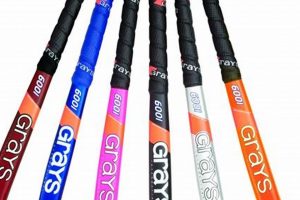
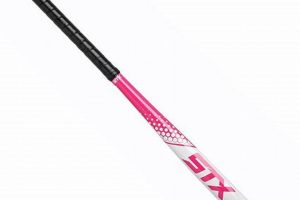
Applying aerosolized pigment to a hockey stick alters its aesthetic appearance. This process involves using a pressurized can to deliver paint onto the surface of the stick, typically done for customization or restoration purposes. For example, an athlete might employ this technique to match team colors or personalize equipment.
The practice allows for relatively inexpensive personalization, offering a way to refresh the stick’s look or hide cosmetic imperfections. Historically, this method has been utilized by amateur and recreational players seeking to express individuality or extend the usable life of older equipment, and as a cost-effective solution for altering the colour scheme. This is distinct from professional stick manufacturing, which employs different techniques for applying the primary finish.
Understanding surface preparation, paint selection, and application techniques is crucial for achieving a durable and visually appealing result. The following sections will delve into these aspects in greater detail, providing a comprehensive guide for those interested in modifying their hockey equipment.
Tips for Applying Aerosol Coating to a Hockey Stick
Achieving a professional and lasting finish when applying aerosol coatings requires careful attention to detail and adherence to best practices. The following tips will enhance the quality and durability of the finished product.
Tip 1: Surface Preparation is Paramount: Thoroughly clean and sand the hockey stick’s surface to ensure proper adhesion. Remove any existing paint, dirt, or wax. Use fine-grit sandpaper for a smooth, receptive surface.
Tip 2: Select the Appropriate Primer: Applying a primer specifically designed for the stick’s material (wood, composite, etc.) is essential. Primer promotes paint adhesion and provides a uniform base coat, preventing inconsistencies in the final color.
Tip 3: Choose Quality Aerosol Paint: Opt for paints formulated for durability and flexibility, suitable for withstanding the impacts and stresses of hockey gameplay. Consider paints with UV resistance to prevent fading.
Tip 4: Employ Thin, Even Coats: Apply multiple thin coats rather than a single thick coat to prevent drips, runs, and uneven drying. Allow each coat to dry completely before applying the next.
Tip 5: Maintain Consistent Spray Distance: Hold the aerosol can at a consistent distance (typically 6-10 inches) from the stick’s surface. This ensures even paint distribution and avoids concentrated areas of color.
Tip 6: Use Proper Ventilation: Aerosol paints contain volatile organic compounds (VOCs). Work in a well-ventilated area or use a respirator to avoid inhaling harmful fumes.
Tip 7: Apply a Protective Clear Coat: A clear coat provides an additional layer of protection against scratches, chips, and UV damage, extending the lifespan of the painted finish.
By following these guidelines, individuals can achieve a professional-looking and durable finish when modifying their hockey equipment with aerosol coatings. Proper preparation, material selection, and application techniques are critical to success.
The subsequent sections will address common challenges and troubleshooting tips encountered during the painting process.
1. Surface Preparation

The effectiveness of applying aerosol paint to a hockey stick hinges significantly on the quality of surface preparation. A poorly prepared surface directly causes adhesion failures, resulting in chipping, peeling, or an uneven finish. This is because contaminants such as dirt, grease, or existing coatings inhibit the paint from bonding correctly with the stick’s material. Consider a scenario where an individual attempts to paint a wooden hockey stick without first removing old varnish: the new paint will likely separate from the varnish layer, rendering the effort futile. Therefore, proper surface preparation is a critical component of a successful painting outcome.
Further elaborating, the specific preparation methods vary depending on the stick’s composition (wood, fiberglass, carbon fiber). Wood often necessitates sanding to create a mechanical key for the paint. Composite sticks might require only a thorough cleaning with a degreasing agent to remove mold release compounds or residues. For example, improperly removing mold release from a composite stick can lead to a “fish eye” effect during painting, where the paint repels from specific areas, creating imperfections. The type of existing finish also dictates the necessary approach; a glossy finish requires more aggressive sanding than a matte finish to ensure proper paint adherence.
In summary, understanding the integral link between surface preparation and the longevity of the painted finish is paramount. Neglecting this step introduces a significant risk of premature coating failure, requiring rework and additional expense. The practical significance lies in investing time and resources upfront to achieve a durable and aesthetically pleasing outcome, ultimately enhancing the appearance and potentially the resale value of the hockey stick. Successfully painting a hockey stick begins with a clean and properly prepared surface.
2. Paint Compatibility

The successful application of aerosol paint to a hockey stick is intrinsically linked to paint compatibility. Incompatibility between the paint and the stick’s material composition initiates a range of adverse effects, compromising the finish’s integrity and longevity. For instance, using a lacquer-based paint on a composite stick, which typically exhibits inherent flexibility, can lead to cracking as the rigid lacquer fails to accommodate the stick’s natural flex. This is because the paint’s chemical properties and the substrate’s physical characteristics must align to ensure proper adhesion and resistance to environmental factors. Without proper compatibility, the aesthetic enhancement is short-lived, incurring costs for rework or replacement. This principle extends to the primer selection; an inappropriate primer negates its intended function of promoting adhesion, leading to similar failures.
Considering the variety of materials used in hockey stick constructionwood, fiberglass, carbon fiber, and composite blendsselecting the appropriate paint system becomes a critical decision. Specific paints are formulated for optimal adhesion to particular substrates. For example, paints designed for plastic surfaces often incorporate additives that promote bonding with non-porous materials. Conversely, paints intended for wood may contain binders that penetrate the porous surface, creating a mechanical interlock. A scenario highlighting this difference is painting a wooden stick with a paint formulated solely for plastics; the absence of penetration results in a surface coating that is easily chipped or scratched, lacking the durability required for hockey gameplay. Understanding this distinction allows informed choices, mitigating risks of premature failure.
In conclusion, paint compatibility is not merely a detail but a foundational requirement for successfully utilizing aerosol paint on hockey sticks. Recognizing the potential for material incompatibility and its detrimental effects enables informed decision-making in paint selection. By prioritizing compatibility, the user ensures a durable, aesthetically pleasing finish, extending the life of the customization and improving the overall appearance of the equipment. The interplay between material science and paint chemistry dictates the success of the endeavor, emphasizing the need for due diligence in product selection.
3. Application Technique
The manner in which aerosol paint is applied to a hockey stick directly influences the quality and longevity of the resulting finish. Deviations from established best practices can lead to cosmetic flaws and reduced durability. Consistent technique is essential for achieving a professional result.
- Spray Distance and Angle
Maintaining a consistent distance (typically 6-10 inches) and perpendicular angle between the aerosol can and the stick’s surface ensures even paint distribution. Varying the distance causes inconsistent color saturation and texture irregularities, such as “orange peel” or runs. An improper angle results in uneven coverage, requiring additional coats and potentially leading to paint buildup.
- Movement Speed and Overlap
A smooth, consistent movement speed is critical for applying uniform coats. Rapid movements create thin, uneven layers, while slow movements can lead to excessive paint buildup and drips. Overlapping each pass by approximately 50% ensures complete coverage and minimizes the appearance of stripes or variations in color density. For instance, failure to overlap sufficiently often results in visible streaks.
- Number of Coats and Drying Time
Applying multiple thin coats, rather than a single thick coat, minimizes the risk of runs, drips, and incomplete drying. Allowing sufficient drying time between coats is essential for the paint to properly cure and bond to the surface. Rushing the drying process can trap solvents within the paint film, leading to a soft, easily damaged finish.
- Environmental Conditions
Ambient temperature and humidity significantly affect paint drying and adhesion. High humidity can slow the drying process and promote the formation of a hazy or milky finish. Extreme temperatures can also alter the paint’s viscosity and flow characteristics, impacting the uniformity of the coating. Painting in a well-ventilated area minimizes exposure to harmful fumes and promotes proper drying.
These facets of application technique demonstrate the importance of careful execution when using aerosol paint on hockey sticks. Adherence to these principles maximizes the likelihood of achieving a durable, aesthetically pleasing result, ensuring that the effort invested in surface preparation and paint selection is not undermined by improper application.
4. Layering Strategy

The approach to layering aerosol paint on hockey sticks significantly influences the aesthetic outcome and durability of the finish. A well-defined layering strategy is crucial for achieving optimal results.
- Primer Application
The initial layer, or primer, establishes the foundation for subsequent coats. Its primary role is to enhance adhesion between the stick’s surface and the paint. For example, a specialized primer designed for plastics is necessary when painting composite sticks to ensure proper bonding. Improper priming leads to paint chipping and peeling.
- Base Coat Uniformity
The base coat provides the primary color and must be applied in thin, even layers. This prevents runs and drips, which are difficult to correct later in the process. Consider a scenario where an individual attempts to achieve full color coverage with a single, thick coat; the result is often an uneven finish with pooling paint.
- Specialty Layers (Optional)
Intermediate layers can include metallic paints, pearlescent finishes, or graphic stencils. These layers add visual complexity but require careful application to avoid disrupting the underlying base coat. Applying a metallic flake paint too heavily, for instance, can obscure the base color and create an undesirable texture.
- Clear Coat Protection
The final layer is a clear coat, which protects the underlying paint from scratches, UV damage, and the wear and tear of gameplay. A durable, two-part clear coat offers superior protection compared to a single-component aerosol clear coat. Skipping this layer significantly reduces the lifespan of the painted finish.
These layering techniques demonstrate the importance of a systematic approach to aerosol application on hockey sticks. Each layer serves a distinct purpose, and its proper execution contributes to the overall quality and longevity of the customization. Neglecting any of these steps can compromise the final result and diminish the visual appeal and protective qualities of the paint job.
5. Drying Time

Drying time is a critical factor in the process of applying aerosol paint to a hockey stick. Inadequate drying between coats or before use leads to several detrimental effects. The paint film remains soft and susceptible to damage from handling or impact, compromising the integrity of the finish. Moreover, trapped solvents within the uncured paint can cause bubbling, wrinkling, or a hazy appearance, detracting from the aesthetic appeal. For instance, if a clear coat is applied over a base coat that has not fully dried, the solvents in the clear coat can dissolve the underlying paint, resulting in a distorted surface. Therefore, adherence to the manufacturer’s recommended drying times for each coat is essential for achieving a durable and visually appealing outcome.
The duration of the drying time varies depending on several factors, including the type of paint, ambient temperature, and humidity. Faster-drying paints, such as lacquers, may require only a few minutes between coats, while slower-drying enamels may need several hours. Low temperatures and high humidity extend the drying time, as these conditions impede the evaporation of solvents. It is prudent to allow additional drying time under unfavorable environmental conditions to ensure complete curing of the paint film. Consider a scenario where a stick is painted in a humid environment: the paint may appear dry to the touch, but the underlying layers may still be soft. Premature use of the stick under these circumstances will result in premature wear and tear.
In summary, proper drying time is not merely a procedural step, but a crucial determinant of the success of aerosol painting on hockey sticks. Neglecting this aspect introduces a substantial risk of premature coating failure and aesthetic defects. By adhering to recommended drying times and accounting for environmental factors, individuals can significantly enhance the durability and appearance of their customized hockey equipment. The practical implication lies in investing time upfront to ensure a lasting finish, ultimately prolonging the visual appeal and protective qualities of the paint job.
6. Clear Coat Protection
The application of a clear coat following the painting of a hockey stick serves as a critical protective measure, significantly impacting the finish’s longevity and resilience. This transparent layer acts as a barrier against environmental factors and physical stresses inherent in hockey gameplay, directly affecting the overall performance and aesthetic durability of the customized equipment.
- Abrasion Resistance
Clear coats, particularly those formulated with durable polymers, enhance the painted surface’s resistance to abrasion. Hockey sticks are subjected to impacts from pucks, skates, and other sticks, leading to scratches and scuffs that degrade the paint layer. A clear coat acts as a sacrificial layer, absorbing much of this wear and tear and preserving the underlying color. For instance, a polyurethane-based clear coat offers superior abrasion resistance compared to a standard acrylic clear coat, prolonging the finish’s pristine appearance.
- UV Protection
Prolonged exposure to ultraviolet (UV) radiation causes fading and discoloration of many paints. Clear coats containing UV absorbers mitigate this effect by filtering out harmful rays. This is particularly relevant for hockey sticks used outdoors, where sunlight exposure is unavoidable. Without UV protection, a vibrant custom paint job can fade significantly over time, diminishing its aesthetic appeal and potentially impacting its resale value.
- Chemical Resistance
The painted surface of a hockey stick is potentially exposed to various chemicals, including sweat, ice melt, and cleaning agents. Certain clear coats provide a barrier against these substances, preventing them from damaging or altering the paint layer. For example, some clear coats are resistant to the corrosive effects of de-icing salts commonly used on ice rinks, protecting the paint from discoloration or degradation.
- Impact Resistance
While not entirely impervious to impacts, a flexible clear coat can improve the overall impact resistance of the painted finish. The clear coat distributes the force of an impact over a wider area, reducing the likelihood of chipping or cracking. This is particularly beneficial for composite hockey sticks, which exhibit some degree of flex. A clear coat designed to flex with the stick’s material helps to prevent the paint from separating during gameplay.
The integration of a high-quality clear coat, therefore, extends beyond mere aesthetics, providing tangible benefits to the customized hockey stick. By mitigating abrasion, UV exposure, chemical damage, and impact-related issues, clear coat protection ensures a more durable, visually appealing, and long-lasting finish, maximizing the value and lifespan of the customized equipment. The selection of an appropriate clear coat formulation, tailored to the specific paint and hockey stick material, is essential for realizing these protective advantages.
Frequently Asked Questions Regarding Aerosol Paint Application on Hockey Sticks
The following section addresses common inquiries and concerns related to modifying hockey stick aesthetics using aerosolized paint. These questions aim to provide clear and concise answers based on best practices and material considerations.
Question 1: What type of paint adheres best to composite hockey sticks?
Paints specifically formulated for plastics or multi-surface applications generally offer superior adhesion to composite materials. Ensure the chosen paint includes a bonding agent or primer designed to create a strong connection with non-porous surfaces. Thorough surface preparation, including cleaning and light abrasion, is also crucial.
Question 2: How can runs and drips be avoided during aerosol application?
Preventing runs and drips involves applying multiple thin coats rather than a single thick coat. Maintain a consistent distance and speed while spraying, overlapping each pass by approximately 50%. Allow sufficient drying time between coats to prevent solvent buildup and sagging.
Question 3: Is sanding necessary before applying primer to a wooden hockey stick?
Sanding is generally recommended to create a mechanical key for the primer to adhere to. Remove any existing finish, dirt, or imperfections with medium-grit sandpaper, followed by fine-grit sandpaper for a smooth surface. This promotes optimal primer adhesion and a uniform base for subsequent paint layers.
Question 4: How does temperature affect the drying time of aerosol paint?
Lower temperatures significantly extend the drying time of aerosol paint. Conversely, higher temperatures can accelerate drying. Refer to the paint manufacturer’s recommendations for optimal drying temperatures and adjust drying times accordingly. Avoid painting in extreme temperatures or high humidity environments.
Question 5: What is the purpose of applying a clear coat after painting?
A clear coat provides a protective layer against scratches, UV damage, and chemical exposure. It enhances the durability and longevity of the painted finish, preserving its aesthetic appeal. Select a clear coat compatible with the underlying paint system for optimal performance.
Question 6: Can the paint on a hockey stick affect its performance?
While a thin, properly applied paint job is unlikely to have a significant impact on stick performance, excessive paint buildup can add weight and potentially alter the stick’s flex characteristics. Apply paint sparingly and avoid coating the grip area to maintain optimal handling.
These FAQs highlight essential considerations for successfully applying aerosol paint to hockey sticks. Attention to these details will contribute to a durable, aesthetically pleasing result.
The next section will address troubleshooting common challenges encountered during the painting process.
spray paint hockey stick
The preceding exploration of “spray paint hockey stick” has illuminated critical aspects of this process, ranging from surface preparation and paint selection to application techniques and protective measures. Emphasis has been placed on the interconnectedness of these stages, demonstrating how each contributes to the final outcome’s quality and longevity. Proper execution, material compatibility, and adherence to established best practices are paramount for achieving a durable and visually appealing result.
Ultimately, the responsible and informed application of aerosol coatings to hockey equipment requires careful consideration of the factors outlined. A commitment to meticulous technique and material selection ensures a superior finish, enhancing both the aesthetic and functional lifespan of the modified equipment. Continuous learning and adaptation to new materials and techniques will further refine the skill, contributing to consistently successful outcomes.