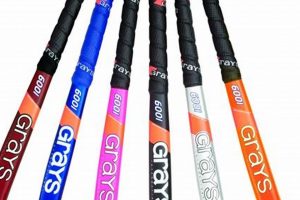
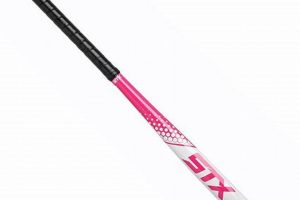
The component affixed to the handle of a hockey stick, typically made of textured materials such as tape or specialized polymers, provides enhanced control and comfort for the player. This application, wrapped around the upper portion of the stick, allows for a firmer grasp, mitigating slippage and promoting precise stickhandling. For instance, a player might apply adhesive cloth to this area to improve tactile feedback during a game.
The implementation of these handle coverings significantly impacts a player’s ability to manipulate the puck and execute plays effectively. The enhanced grip contributes to improved shot accuracy and quicker reaction times. Historically, players have experimented with diverse materials to optimize the feel and performance characteristics, leading to a wide array of commercially available options designed for specific player preferences and playing styles.
Subsequent discussion will delve into the different types available, the application techniques, and considerations for selecting the optimal covering to enhance on-ice performance. Understanding the nuances of these products and their proper usage is essential for players seeking a competitive edge.
Enhancing Hockey Stick Control
Optimizing the handle’s texture directly impacts puck control and shooting accuracy. Adhering to best practices ensures consistent performance and extends the equipment lifespan.
Tip 1: Surface Preparation: Before application, thoroughly clean the handle surface with an isopropyl alcohol solution to remove any residual oils or adhesives. A clean surface ensures optimal adhesion and prevents premature wear.
Tip 2: Material Selection: Consider the properties of different materials. Cloth adhesive offers tactile feedback, while synthetic polymers provide enhanced durability and moisture resistance. The selection should align with playing conditions and individual grip preferences.
Tip 3: Application Technique: Apply the covering in a consistent, overlapping spiral pattern. This method ensures uniform thickness and prevents gaps that can cause discomfort or reduce control. Maintain a consistent tension throughout the application process.
Tip 4: Overlap Consistency: Overlap each layer by approximately one-third to one-half of its width. This provides a secure, layered surface and prevents the formation of ridges or weak points.
Tip 5: Securing the Ends: Secure the top and bottom ends with electrical tape or specialized finishing tape. Wrap tightly to prevent unraveling and maintain a clean, professional appearance.
Tip 6: Regular Inspection: Regularly inspect the handle covering for signs of wear, such as tears, fraying, or loss of adhesion. Prompt replacement of worn sections maintains optimal grip and prevents performance degradation.
Tip 7: Moisture Management: If excessive moisture is a concern, consider using a moisture-wicking underlayer or a specialized moisture-resistant covering material. Regularly dry the handle between uses to prevent slippage and maintain grip integrity.
Proper application and regular maintenance of handle coverings are critical for maximizing stick handling proficiency and preventing injuries. Implementing these guidelines will improve overall performance and extend equipment longevity.
The subsequent sections will explore specific products and advanced techniques for customizing the feel and performance of the hockey stick handle.
1. Material Composition

The selection of materials is a foundational element in the design and functionality of hockey stick handle coverings. This selection directly influences grip, durability, and overall player performance. The composition determines how the player interfaces with the stick, influencing control and shot accuracy.
- Cotton Cloth Adhesives
Cotton cloth, often saturated with an adhesive, provides a traditional and tactile feel. This composition offers excellent grip when dry but can become less effective when wet. Example: Standard hockey tape, commonly used for its conformability and cost-effectiveness. Implication: Requires frequent replacement in humid conditions or with heavy perspiration.
- Synthetic Polymer Blends
Synthetic polymers, such as polyurethane or ethylene-vinyl acetate (EVA), offer enhanced durability and moisture resistance. These materials often incorporate textures to improve grip. Example: Specialized hockey handle grips designed for extended use and varying environmental conditions. Implication: Provides a more consistent grip in wet or cold environments, reducing the need for frequent replacement.
- Silicone-Based Compounds
Silicone formulations provide a tacky surface and exceptional shock absorption. These materials maintain their grip properties across a wide range of temperatures and humidity levels. Example: Some advanced handle grips utilize silicone to minimize vibration and maximize control. Implication: Offers a superior grip even with gloved hands and reduces fatigue during extended play.
- Multi-Layer Constructions
Advanced designs may incorporate multiple layers of different materials to optimize specific performance characteristics. For example, a moisture-wicking inner layer combined with a high-grip outer layer. Example: High-performance grips often feature a combination of synthetic and natural materials. Implication: Enables customization of grip properties to match individual player preferences and playing conditions.
The interplay between these various material compositions demonstrates the nuanced relationship between equipment design and player performance. The selection of an appropriate material depends on individual preferences, playing style, and environmental conditions, all contributing to the efficacy of the hockey stick grips.
2. Application Technique

The method employed to affix a handle covering significantly influences its performance and longevity. Proper technique ensures a secure, comfortable, and durable interface between the player’s hands and the hockey stick.
- Surface Preparation
The condition of the handle surface before application is paramount. Removing existing residue, dirt, or moisture with an appropriate solvent, such as isopropyl alcohol, is essential for optimal adhesion. Failure to adequately prepare the surface can result in premature peeling or slippage.
- Overlap Consistency
Maintaining a uniform overlap during the wrapping process ensures consistent thickness and prevents the formation of ridges or gaps. An overlap of approximately one-third to one-half the covering’s width is generally recommended. Inconsistent overlap can lead to uneven pressure distribution and compromised grip.
- Tension Control
Applying consistent tension throughout the wrapping process is crucial for securing the material firmly to the handle. Excessive tension can cause tearing or distortion, while insufficient tension may result in a loose or unstable covering. The appropriate tension level depends on the material’s elasticity and the player’s preference.
- Securing Termination Points
The termination points of the covering require secure fastening to prevent unraveling. Electrical tape or specialized finishing tape is commonly used to anchor the ends, providing a clean and durable finish. Improperly secured ends can lead to premature wear and reduced grip effectiveness.
These facets of application technique are interconnected and collectively determine the effectiveness of the handle covering. Attention to detail during each step of the application process ensures a secure, comfortable, and durable grip that enhances stick handling and shooting performance.
3. Thickness preference

The desired girth of the handle covering, a parameter defined by thickness preference, directly influences the tactile feedback and control experienced by the hockey player. A thicker covering provides a larger surface area for the hand to grip, potentially reducing hand fatigue during prolonged use. Conversely, a thinner application offers increased sensitivity and allows for a more direct feel of the stick’s shaft. The selection of a specific thickness is a subjective choice, contingent upon individual hand size, grip style, and overall playing preferences. For example, a player with larger hands might favor a thicker covering for enhanced comfort and control, while a player emphasizing puck handling finesse may opt for a thinner application to maximize tactile input.
The relationship between handle covering thickness and performance extends to shot power and accuracy. A thicker application may provide a more secure grip, facilitating greater force transfer during shooting. However, it can also reduce the player’s ability to feel subtle changes in the stick’s flex, potentially affecting accuracy. Conversely, a thinner covering may enhance feel and responsiveness, but could compromise grip strength during high-intensity plays. Thus, players frequently experiment with various thicknesses to identify the optimal balance for their individual playing style and position. This is especially crucial for professional players who utilize specialized coverings to fine-tune their equipment and gain even the smallest edge.
Ultimately, the choice of thickness represents a compromise between comfort, control, and sensitivity. While objective measures of performance may guide the selection process, individual preference remains paramount. Awareness of this connection underscores the importance of considering thickness as a critical component when customizing hockey stick grips, affecting on-ice comfort and handling capabilities. The optimization of this parameter, in conjunction with other material and application factors, plays a crucial role in maximizing overall player performance.
4. Adhesive Properties

Adhesive characteristics are a critical determinant of the efficacy and longevity of hockey stick handle coverings. The bond strength between the covering material and the sticks shaft directly impacts the covering’s resistance to slippage and peeling under the forces exerted during gameplay. Insufficient adhesion leads to premature wear, compromising grip integrity and negatively affecting a player’s ability to control the stick. For instance, a covering with inadequate adhesive properties will loosen during a game, requiring the player to expend energy readjusting the grip, thus impacting performance and potentially leading to errors.
The composition of the adhesive itself is crucial. Some adhesives are optimized for specific materials, such as cloth-based coverings, while others are designed for synthetic polymers. Environmental factors, including temperature and humidity, can significantly influence adhesive performance. Coverings designed for indoor use may exhibit diminished adhesion in outdoor conditions or during games where perspiration is excessive. Furthermore, the application technique plays a pivotal role; a properly cleaned and prepared handle surface enhances adhesive bond strength. Conversely, applying a covering to a dirty or moist surface compromises adhesion and reduces the covering’s lifespan. An example of successful use is utilizing heat-activated adhesives to ensure a strong bond in colder playing conditions
In conclusion, the adhesive properties of hockey stick handle coverings represent a vital component of overall performance. Selection of a covering with an adhesive appropriate for the material, playing conditions, and application technique is essential for maintaining a secure and reliable grip. Compromised adhesion increases the likelihood of slippage, reducing control, and potentially leading to injury. Ongoing research and development in adhesive technologies aim to improve bond strength and durability, contributing to enhanced player performance and safety.
5. Durability factors

The longevity of hockey stick handle coverings, significantly influenced by various factors, is a key consideration for players seeking consistent performance and cost-effectiveness. The resistance of these coverings to wear and tear, degradation from environmental conditions, and the stresses of gameplay directly impacts their lifespan and functionality.
- Material Composition & Abrasion Resistance
The intrinsic properties of the materials used in handle coverings dictate their resistance to abrasion from glove friction and impacts. Polymers with high tensile strength and abrasion resistance, such as certain synthetic rubbers, exhibit greater durability than natural materials like cotton-based tapes. For example, a grip constructed from a high-density polymer composite would be more resistant to wear compared to traditional cloth tape, especially under aggressive stick handling.
- Adhesive Bond Strength & Environmental Exposure
The adhesive that secures the covering to the stick must withstand both mechanical stresses and environmental factors. Exposure to moisture, extreme temperatures, and ultraviolet radiation can degrade the adhesive, leading to peeling and reduced grip integrity. Coverings utilizing adhesives specifically formulated for harsh conditions, such as those found in outdoor rinks, demonstrate superior durability. An example is the use of epoxy-based adhesives in high-performance grips, which maintain their bond strength even after prolonged exposure to water and cold.
- Application Technique & Stress Distribution
The method by which the handle covering is applied influences its resistance to tearing and unraveling. Consistent overlap and proper tension during application distribute stress evenly across the surface, minimizing the likelihood of localized failures. Inconsistent application, characterized by gaps or excessive tension, creates weak points that are prone to premature wear. For example, utilizing a spiral wrapping technique with consistent overlap ensures uniform stress distribution, enhancing the overall durability of the applied covering.
- Impact Resistance & Structural Integrity
The ability of the covering to withstand impacts from pucks, skates, or other equipment is crucial for maintaining its structural integrity. Materials with high impact resistance, combined with reinforced construction techniques, minimize the risk of tearing or puncture. For example, some high-end handle coverings incorporate a layer of impact-resistant foam or polymer to protect the underlying material from damage, extending their lifespan and maintaining grip effectiveness.
The interplay of these durability factors collectively determines the lifespan and performance of hockey stick handle coverings. Selecting coverings constructed from robust materials, applying them with proper technique, and protecting them from environmental degradation ensures long-lasting grip and consistent stick control, contributing to enhanced player performance over time.
Frequently Asked Questions
The following questions address common concerns regarding the selection, application, and maintenance of hockey stick handle coverings, providing insights to enhance on-ice performance.
Question 1: What are the primary factors to consider when selecting a covering material?
Material selection hinges on individual grip preferences, playing conditions, and the desired balance between tactile feedback and durability. Cotton-based adhesives offer a traditional feel, while synthetic polymers provide enhanced moisture resistance and longevity. Silicone-based compounds offer superior grip and shock absorption.
Question 2: How does the application technique affect the coverings performance?
Proper application is crucial for ensuring a secure and comfortable grip. Consistent overlap, uniform tension, and thorough surface preparation are essential for maximizing adhesion and preventing premature wear. Incorrect application can lead to slippage, reduced control, and discomfort.
Question 3: What is the recommended frequency for replacing the handle covering?
Replacement frequency depends on the intensity of use and environmental conditions. Regular inspection for signs of wear, such as tears, fraying, or loss of adhesion, is recommended. Coverings should be replaced when performance is compromised to maintain optimal grip and control.
Question 4: Can the choice of covering material affect shot accuracy or power?
Yes, the covering can indirectly influence shot accuracy and power. A secure and comfortable grip facilitates greater force transfer and reduces the likelihood of errors. The selection of material and thickness should align with individual preferences to optimize control and feel.
Question 5: How does moisture affect the performance of different covering materials?
Moisture can significantly impact the grip properties of certain materials. Cotton-based adhesives tend to lose grip when wet, while synthetic polymers and silicone-based compounds offer superior moisture resistance. Utilizing moisture-wicking underlayers or specialized coverings can mitigate this effect.
Question 6: Are there specific covering types recommended for different playing positions?
While individual preferences vary, certain covering types may be better suited for specific positions. Forwards often prioritize enhanced puck handling and may prefer thinner, more tactile coverings. Defensemen may benefit from thicker, more durable coverings that provide a more secure grip for powerful shots and physical play.
These questions highlight key considerations for optimizing handle covering selection and usage. The ultimate goal is to enhance on-ice performance by maximizing grip security, control, and comfort.
The subsequent section explores advanced techniques for customizing hockey stick handle coverings to further improve individual performance.
Conclusion
The preceding sections have explored the multifaceted nature of hockey stick grips, underscoring their significance in optimizing player performance. Key aspects examined include material composition, application techniques, thickness preference, adhesive properties, and durability factors. The careful consideration of each element contributes to a secure, comfortable, and reliable interface between the player and the stick.
The ongoing refinement of these components reflects a continuous pursuit of enhanced control and precision on the ice. Further research and development in materials science and application methodologies promise to yield even greater advancements, solidifying the critical role of hockey stick grips in the pursuit of excellence in the sport. The judicious selection and maintenance of these components remain paramount for players seeking to maximize their potential and maintain a competitive edge.