The selection of appropriate equipment is paramount for optimal performance and enjoyment in recreational sports. Specifically, the implement used to propel a puck or ball across a paved surface significantly impacts a player’s control, power, and overall experience. A well-suited option enhances accuracy and responsiveness, allowing for greater skill expression during gameplay.
Utilizing a purpose-built tool provides several advantages. Durability is a key factor, as paved surfaces subject equipment to considerable wear and tear. Superior control is also achievable, enabling players to execute precise shots and passes. Furthermore, the correct equipment can contribute to a more authentic and enjoyable playing experience, mirroring the feel of ice hockey while accounting for the unique demands of asphalt or concrete.
The subsequent sections will delve into the crucial attributes to consider when evaluating available options, including material composition, construction techniques, blade curvature, and overall weight distribution. These aspects will be examined to guide informed purchasing decisions and optimize on-surface performance.
Enhancing Play with a Suitable Implement
Optimizing performance in asphalt hockey requires careful consideration of equipment. The following tips highlight key aspects to improve the gameplay experience through informed selection.
Tip 1: Prioritize Durability: Asphalt and concrete surfaces impart significant wear. Choose a model constructed from high-impact ABS plastic or reinforced composites to withstand abrasive conditions and frequent use.
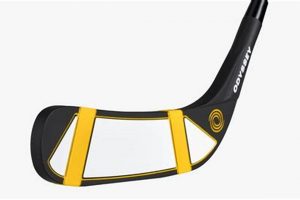
Tip 2: Evaluate Blade Composition: Consider the blade’s material and construction. Ribbed blade designs offer increased stiffness and improved shot power, particularly beneficial on non-ice surfaces. A solid core can enhance durability and prevent premature wear.
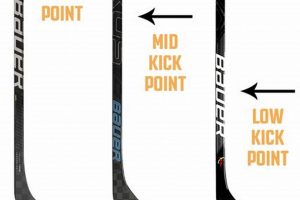
Tip 3: Assess Shaft Flexibility (Flex): Lower flex ratings enhance puck or ball control, while higher flex ratings increase shot power. Select a flex appropriate for individual strength and playing style; a balance between control and power is often ideal.
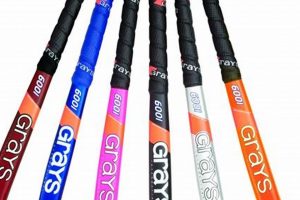
Tip 4: Examine Grip Texture: Adequate grip is vital for maintaining control. Look for models with textured surfaces or apply aftermarket grip tape to enhance hold, particularly in varying weather conditions.
Tip 5: Consider Length Appropriateness: Proper length contributes to optimal handling and shooting posture. When standing, the top of the implement should reach approximately to the player’s nose or chin while wearing shoes. Adjust as needed based on preference and skating style.
Tip 6: Balance Weight and Feel: A balanced tool facilitates quicker reactions and improved puck or ball handling. Experiment with various weights to determine the optimal balance point and overall feel for personal preferences.
Adhering to these considerations can significantly enhance the performance and longevity of equipment used on abrasive surfaces, resulting in an elevated recreational experience.
The subsequent section will address maintenance practices to further extend the lifespan of road hockey equipment.
1. Durability

Durability constitutes a foundational element in evaluating the suitability of any hockey implement intended for use on paved surfaces. The abrasive nature of asphalt and concrete environments necessitates a robust construction capable of withstanding significant wear and tear. The lifespan and performance of the equipment are directly contingent upon its ability to resist damage from repeated impact and friction.
- Material Composition
The selection of materials profoundly influences the equipment’s resilience. High-impact polymers, reinforced with fiberglass or carbon fiber, offer superior resistance to cracking and abrasion compared to traditional wood or weaker plastics. The molecular structure and density of the chosen material dictate its capacity to absorb and dissipate energy from impacts, thereby mitigating potential structural failures.
- Construction Techniques
The method of assembly and reinforcement plays a crucial role. One-piece construction, where the shaft and blade are fused into a single unit, eliminates potential weak points and enhances overall structural integrity. Reinforced edges and impact zones provide additional protection against chipping and cracking, particularly in areas prone to high stress during gameplay.
- Blade Reinforcement
The blade, being in direct contact with the playing surface, requires specific reinforcement. Internal ribs or a solid core design distribute impact forces more evenly, preventing premature wear and warping. External coatings or overlays, such as abrasion-resistant polymers, provide an additional layer of protection against surface damage.
- Impact Resistance
The implement’s ability to withstand high-velocity impacts without sustaining permanent damage is paramount. Testing and evaluation protocols often involve subjecting equipment to repeated impact tests at various angles and forces. Models exhibiting minimal deformation and structural compromise under these conditions are generally considered more durable and suitable for demanding asphalt hockey environments.
In summation, the interrelationship between material selection, construction methods, and blade reinforcement establishes the foundation of durability. This attribute directly impacts the longevity, performance consistency, and overall cost-effectiveness of equipment designed for paved surface use. Prioritizing durability ensures extended usability and minimizes the need for frequent replacements, ultimately contributing to a more satisfying and economical sporting experience.
2. Blade Composition

The composition of the blade is a critical determinant in the performance and longevity of equipment used on abrasive surfaces. A well-designed blade optimizes puck or ball control, shot accuracy, and overall durability, factors directly influencing the suitability of an implement for asphalt hockey.
- Material Selection
The primary material dictates the blade’s responsiveness and resistance to wear. High-density polyethylene (HDPE) offers a balance of flexibility and durability for recreational play. Acrylonitrile Butadiene Styrene (ABS) provides increased stiffness and impact resistance, suitable for more aggressive styles. Composite materials, such as fiberglass or carbon fiber reinforced polymers, maximize both durability and performance, offering enhanced shot power and puck feel. Material selection directly affects the implement’s ability to withstand the rigors of asphalt surfaces.
- Internal Core Structure
The internal architecture influences blade stiffness and impact absorption. Solid core blades offer superior durability and prevent bending or warping under stress, ideal for players prioritizing longevity. Ribbed core designs enhance stiffness while maintaining a degree of flex, contributing to improved shot power and control. Foam-filled cores reduce weight and dampen vibrations, offering enhanced feel and comfort during gameplay. The internal structure directly impacts the equipments handling characteristics and resistance to damage.
- Blade Curvature and Angle
The curve and angle significantly affect puck or ball handling and shooting capabilities. A more aggressive curve facilitates lifting the puck or ball, while a straighter blade promotes accurate passing and wrist shots. The lie, or angle between the blade and shaft, impacts the player’s stance and puck or ball position. Matching the blade curvature and lie to the player’s style enhances control and shot accuracy on asphalt surfaces, improving overall performance.
- Surface Texture and Finish
The blade’s surface texture influences puck or ball control and friction with the playing surface. A smooth surface reduces friction, allowing for quicker puck or ball movement and improved passing. A textured surface enhances grip, providing greater control during stickhandling and shooting. Specialized coatings can further reduce friction or improve abrasion resistance, contributing to both performance and durability. The surface finish directly impacts handling characteristics and overall gameplay effectiveness.
The integration of appropriate materials, core structures, blade curvature, and surface finishes constitutes the core of optimal design. These elements, when harmonized, result in equipment that delivers enhanced performance, durability, and control, establishing the equipment as an effective option for asphalt surfaces.
3. Shaft Flex
Shaft flex, representing the degree to which a hockey implement bends under load, is a crucial parameter in determining its suitability for various playing styles and surface conditions. The connection between shaft flex and the efficacy of equipment used on asphalt is particularly pronounced due to the differing friction and rebound characteristics of this surface compared to ice. Incorrectly matched flex can lead to diminished shot power, reduced accuracy, and compromised puck or ball control. Selecting appropriate flex is therefore an integral aspect of choosing effective equipment.
A lower flex rating, indicating a stiffer shaft, typically enhances control and precision, benefiting players who prioritize accurate passing and close-quarters puck or ball handling. Conversely, a higher flex rating, resulting in a more flexible shaft, generally maximizes shot power by allowing the player to load the shaft and release energy during the shooting motion. However, the increased friction of asphalt relative to ice can mitigate the power advantage of a high-flex shaft, as energy is lost through surface contact. Consequently, many players find that a slightly stiffer shaft, compared to what they would use on ice, provides an optimal balance of control and power on asphalt. For instance, a player using an 85-flex on ice may find a 95-flex more effective for asphalt hockey.
The choice of shaft flex significantly influences on-surface performance. Careful consideration of individual playing style, strength, and the specific dynamics of asphalt hockey is paramount. An informed selection contributes to enhanced control, accuracy, and power, ultimately optimizing the player’s overall experience and effectiveness. Experimentation with different flex ratings and a thorough understanding of their impact on shot mechanics is recommended to achieve peak performance.
4. Grip Texture

Grip texture, the tactile surface of a hockey implement’s shaft, directly influences handling and control, thus forming an integral component in the construction of equipment suited for abrasive surfaces. In the context of asphalt hockey, where conditions are inherently less predictable than ice, the assurance of a firm and reliable grip assumes amplified importance. Inadequate grip can lead to compromised stickhandling, inaccurate shots, and decreased overall performance. The connection between grip texture and optimal play on asphalt is therefore significant.
Varied methods exist to enhance grip texture. These include the application of specialized grip tape, the integration of raised patterns directly into the shaft material, or the utilization of textured coatings. Grip tape, while offering customizable thickness and feel, requires periodic replacement. Molded patterns, often composed of raised ridges or knurled surfaces, provide a permanent and consistent grip solution. Textured coatings, typically consisting of rubberized or polymeric compounds, offer a balance of comfort and adherence. A notable instance is the incorporation of a ribbed grip on high-end models, providing tactile feedback and preventing slippage. The effectiveness of each method depends on individual player preference and the severity of environmental conditions, such as moisture or temperature extremes.
Ultimately, the provision of a reliable and consistent grip texture is paramount in the context of an equipment designed for asphalt surfaces. It contributes directly to enhanced puck or ball control, improved shot accuracy, and a greater sense of confidence during gameplay. A nuanced understanding of the available grip enhancement methods and their relative advantages allows players to make informed decisions, thereby optimizing their overall on-surface experience and performance.
5. Length Appropriateness

The dimensional suitability of equipment directly influences a player’s ability to effectively manipulate a puck or ball. Regarding asphalt hockey, the selection of an implement possessing appropriate length is a critical factor in determining overall performance and comfort. A tool either too short or too long inhibits proper posture, reduces control, and diminishes shot power. Consequently, length appropriateness constitutes an essential element in defining what constitutes an optimal choice for this specific playing environment.
An implement of inadequate length compels a player to adopt a hunched or overly upright stance, disrupting the natural biomechanics of skating and shooting. Such adjustments compromise balance and reduce the player’s reach, hindering their capacity to effectively cover ground or intercept passes. Conversely, an implement of excessive length necessitates a wide grip and restricts maneuverability in close-quarters situations. A practical example lies in observing experienced players consistently selecting an implement that allows for a comfortable, slightly flexed posture, ensuring a full range of motion while maintaining optimal puck or ball control. Another example would be a taller player choosing the right height of stick to prevent back injury and discomfort.
Selecting an implement with appropriate length enhances control, optimizes power transfer, and promotes a more comfortable and efficient playing style. A player’s height, skating style, and preferred hand position should all factor into this decision. Neglecting the significance of length appropriateness can lead to diminished performance and an increased risk of injury. Therefore, a thorough assessment of an individual’s physical characteristics and playing preferences is necessary to ensure the optimal selection for maximizing effectiveness on paved surfaces.
Frequently Asked Questions
The following addresses common inquiries regarding the selection and maintenance of equipment for asphalt hockey.
Question 1: What materials constitute the most durable construction for sustained use?
High-impact ABS plastic, reinforced with fiberglass or carbon fiber, provides optimal resistance to abrasion and cracking. This construction minimizes wear and maximizes lifespan on abrasive surfaces.
Question 2: How does blade curvature influence performance on paved surfaces?
A straighter blade profile promotes accurate passing and wrist shots, while a more pronounced curve facilitates lifting the puck or ball. The selection depends on individual playing style and preference.
Question 3: What shaft flex rating is generally recommended for asphalt hockey?
A slightly stiffer shaft, compared to ice hockey equipment, provides a balance of control and power due to the increased friction of asphalt. Experimentation is advised to determine the optimal flex for individual strength and technique.
Question 4: How can grip be enhanced for reliable handling in varied weather conditions?
Grip tape, textured coatings, or molded patterns can significantly improve handling. Choosing the appropriate method depends on environmental factors and individual preference for feel and thickness.
Question 5: How does the surface impact on choosing equipment?
Asphalt surfaces require more durable blade options because of the constant friction with the ground. Asphalt also effects how equipment is used because the surface is not as smooth as ice. Due to asphalt not being as slippery as ice it has an effect on movement and equipment.
Question 6: What is a good recommendation to keep equipment well maintained?
Following the use of equipment, players must make sure that they clean the equipment properly and store the stick at room temperature. Also ensure that the area for storage is free of moisture to promote longevity of equipment.
Prioritizing durability, blade construction, shaft flex, and grip enhancement will contribute to a more effective and enjoyable experience.
The subsequent section will provide insights on making an informed purchase.
Concluding Assessment
The preceding analysis underscores the multifaceted considerations integral to the selection of effective equipment for asphalt hockey. Durability, blade composition, shaft flex, grip texture, and length appropriateness all contribute significantly to on-surface performance and equipment longevity. Understanding these factors allows for more informed purchasing decisions.
Ultimately, the identification of optimal equipment demands a synthesis of technical knowledge and individual player preferences. Investment in well-suited equipment promotes skill development, enhances the playing experience, and contributes to a more sustainable and enjoyable participation in asphalt hockey. Further research and experimentation are encouraged to refine individual equipment choices and maximize potential.