Equipment failure is an inherent aspect of high-impact sports. In ice hockey, the composite or wooden implement used by players to maneuver the puck is susceptible to damage under considerable force. This can manifest as a complete fracture of the shaft or blade, or as less visually obvious internal structural weaknesses. An instance would be a player taking a slapshot, only to have the stick splinter apart on impact with the puck.
Such an occurrence can significantly impact gameplay. It immediately removes the player from the play, potentially disrupting offensive or defensive strategies. Historically, failures like these were more common due to the use of primarily wooden equipment. Modern composite materials have improved durability, though they are still subject to stress and fatigue, especially at the high-performance levels of professional hockey. The frequency of this type of incident can also influence equipment purchasing decisions for teams and individual players.
Understanding the causes and consequences of equipment malfunctions is important for players, coaches, and equipment managers. The following discussion explores various facets of this equipment issue, encompassing the materials used, the types of failures observed, and strategies for minimizing such occurrences. This includes proper stick handling techniques, maintenance practices, and selection criteria.
Mitigating the Risk of a Broken Hockey Stick
Proper equipment care and usage techniques can significantly reduce the likelihood of implement failure during play.
Tip 1: Inspect Equipment Regularly: Prior to each game or practice, thoroughly examine the shaft and blade for cracks, splinters, or other signs of damage. Even minor imperfections can propagate rapidly under stress.
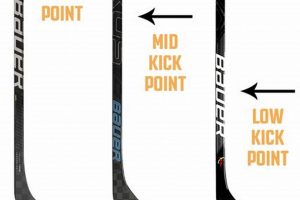
Tip 2: Use Appropriate Flex: Selecting a stick with the correct flex is crucial. A flex that is too low may not provide adequate power, while a flex that is too high can increase stress on the shaft, leading to breakage.
Tip 3: Avoid Excessive Taping: While tape provides grip and protects the blade, excessive layering can add unnecessary weight and alter the balance of the stick, potentially increasing stress points.
Tip 4: Protect Against Impacts: Avoid situations where the stick is likely to be subjected to direct, forceful impacts, such as slashing or blocking shots with the shaft. Proper technique minimizes these risks.
Tip 5: Store Equipment Properly: When not in use, store the stick in a cool, dry place away from direct sunlight and extreme temperatures. These conditions can degrade the composite materials.
Tip 6: Consider Stick Handling Technique: Avoid chopping down forcefully on the puck. A smooth, controlled sweeping motion is less likely to impart damaging stress on the stick.
Tip 7: Rotate Equipment: If possible, alternate between multiple sticks during practice and games. This distributes the wear and tear, extending the lifespan of each implement.
Adherence to these preventative measures can enhance equipment longevity and reduce the occurrence of in-game failures, contributing to improved performance and player safety.
The subsequent sections of this analysis will delve into the economic considerations associated with equipment replacement, and the role of manufacturers in ensuring product durability and safety standards.
1. Material Fatigue

Material fatigue, a progressive and localized structural damage that occurs when a material is subjected to cyclic loading, is a significant factor contributing to hockey stick failure. Repeated stress, even below the yield strength of the material, can lead to microscopic cracks that propagate over time, ultimately resulting in catastrophic fracture.
- Microcrack Initiation and Growth
Cyclic stress induces microcracks at points of stress concentration, such as surface imperfections or internal flaws within the composite or wood structure. These microcracks gradually expand with each loading cycle. For example, repeated slapshots or stick checks create stress cycles that lead to crack initiation and growth. This process weakens the stick incrementally until it reaches a critical point where it can no longer withstand the applied forces.
- Stress Concentration
Certain areas of the hockey stick are more susceptible to fatigue due to stress concentration. The blade-to-shaft connection, the mid-shaft area (where the player’s lower hand typically grips), and any point where the stick has been previously damaged (e.g., a minor crack or chip) are prone to higher stress levels. Repeated impacts or bending forces applied at these locations accelerate fatigue damage, shortening the lifespan of the stick.
- Material Properties and Composition
The type of material used significantly influences the rate of fatigue damage. Composite sticks, while generally more durable than wooden sticks, are still susceptible. The specific fiber orientation, resin type, and manufacturing process affect the material’s resistance to fatigue. Similarly, variations in wood grain and density in wooden sticks contribute to differences in fatigue life. Lower quality materials or manufacturing inconsistencies accelerate fatigue-related failures.
- Environmental Factors
Environmental conditions can exacerbate material fatigue. Exposure to extreme temperatures or humidity can weaken the bonding between composite layers or cause wood to become brittle. Repeated freezing and thawing cycles can also induce stress and cracking. These factors accelerate the fatigue process, particularly in outdoor rinks or poorly climate-controlled storage environments.
The cumulative effect of these factors underscores the importance of regular equipment inspection and proper usage. Recognizing the impact of material fatigue and implementing preventative measures can help mitigate the risk of stick failure and improve player safety. Understanding how material fatigue affects a hockey stick gives players and coaches insights into proper maintenance and replacement schedules.
2. Impact Force
The magnitude of impact force directly correlates with the probability of equipment failure. In ice hockey, the implement absorbs considerable force during actions such as shooting, stick-checking, and blocking shots. The higher the force applied, the greater the stress exerted on the stick’s structural integrity, elevating the risk of fracture or complete breakage. For example, a slapshot, which involves a full body motion to generate maximum velocity and power, imparts significantly more force than a wrist shot. Consequently, instances of stick failure are more prevalent during slapshot attempts.
The location and direction of impact further influence the outcome. An off-center impact, or a blow to the shaft rather than the reinforced blade, creates a torque that can exceed the material’s yield strength. Consider a player attempting to block a shot and receiving the full force of the puck directly on the mid-shaft. This scenario commonly leads to immediate fracture due to the concentrated stress and the lack of reinforcement in that area. Similarly, repeated high-force impacts in the same localized area can cause cumulative damage, leading to fatigue and eventual failure, even if no single impact exceeds the breaking point.
In summation, managing and mitigating impact force is crucial for prolonging the lifespan of equipment and ensuring player safety. Understanding the relationship between applied force and structural integrity allows players and coaches to adjust techniques, select appropriate equipment, and implement maintenance practices that reduce the likelihood of in-game failures. Consideration of impact dynamics is therefore a vital component of preventative equipment management within the sport.
3. Manufacturing Defect

Manufacturing defects, while ideally minimized through quality control processes, represent a significant contributing factor to equipment failures. These imperfections, arising during the production phase, create inherent weaknesses within the stick’s structure. Such defects can range from inconsistencies in composite layering or wood grain orientation to improper bonding of materials or the presence of microscopic voids. The consequence is a compromised structural integrity, rendering the implement susceptible to premature failure under typical gameplay stresses. For instance, an inadequate resin-to-fiber ratio in a composite stick can lead to delamination upon impact, resulting in sudden breakage. Similarly, undetected knots or irregularities in the wood of a wooden implement can create fracture points that are prone to catastrophic failure. Therefore, even with proper use and care, a stick with a manufacturing flaw is at a heightened risk of breaking, regardless of the player’s skill or playing style.
Further complicating the issue is the difficulty in identifying these defects through visual inspection alone. Many imperfections are subsurface, remaining undetectable until the point of failure. Advanced non-destructive testing methods, such as ultrasonic testing or X-ray analysis, could potentially identify these flaws prior to use, but such procedures are generally not feasible or cost-effective for consumer-grade equipment. Consequently, the onus often falls on the manufacturer to implement rigorous quality assurance protocols to minimize the occurrence of these defects. Instances of widespread manufacturing errors have resulted in product recalls, highlighting the significant impact these flaws can have on player safety and the reputation of equipment manufacturers. Such situations emphasize the practical need for stringent oversight and robust testing procedures throughout the production process.
In conclusion, manufacturing defects represent a critical and often hidden source of equipment malfunctions. While complete elimination of these imperfections may be unattainable, proactive measures such as enhanced quality control, advanced material analysis, and rigorous testing can significantly reduce their incidence. A comprehensive understanding of the role these defects play in equipment failure is essential for both manufacturers and consumers, enabling informed decisions regarding product selection, usage, and preventative maintenance. The challenge remains to balance the pursuit of performance and durability with the economic realities of equipment production and distribution.
4. Improper Use
Improper use directly contributes to equipment failure, particularly in the context of the composite or wooden implements employed in ice hockey. The intended purpose involves utilizing the stick to propel the puck and legally impede opponents; deviations from these uses place undue stress on the equipment, accelerating wear and the potential for breakage. Such misuse includes forceful slashing motions, using the stick as a lever during physical altercations, or impacting it against solid objects beyond the parameters of typical gameplay. Each instance represents a deviation from the manufacturer’s designed purpose and compromises structural integrity.
A practical example involves a player repeatedly striking an opponent’s skates or stick with excessive force during a stick-checking maneuver. While stick-checking is a legal tactic, employing excessive downward force concentrates stress at the point of impact, potentially leading to fracture. Similarly, a player using the shaft as a point of leverage while battling along the boards introduces torsional stress exceeding the material’s designed limits. Such actions, while seemingly innocuous, incrementally weaken the stick’s structure, culminating in failure at a later point, often during a routine play. The cumulative effect of these improper uses significantly shortens the equipment’s lifespan and increases the frequency of replacements.
Understanding the link between improper use and equipment failure is crucial for both players and coaches. Education on proper technique and responsible equipment handling reduces the incidence of breakage, yielding economic benefits through prolonged equipment lifespan. More importantly, it contributes to enhanced player safety by minimizing the risk of unexpected equipment malfunctions during gameplay. Therefore, emphasis on proper usage should be an integral component of training regimens and equipment management protocols within hockey programs at all levels.
5. Game Disruption

The failure of critical equipment during play directly impacts the flow and strategic execution of a hockey game. A broken hockey stick introduces immediate and consequential disruptions, influencing both short-term tactical adjustments and long-term strategic planning.
- Momentum Shift
A stick fracture occurring during a critical offensive or defensive play can abruptly shift game momentum. For example, a defenseman’s stick breaking while attempting to intercept a pass in the defensive zone may create an immediate scoring opportunity for the opposing team. This sudden turn of events can psychologically impact players and alter the overall trajectory of the game.
- Player Displacement
When an implement fails, the player is temporarily removed from the play, creating a numerical disadvantage. This displacement forces immediate line changes and tactical adjustments by the coach. A forward losing their stick in the offensive zone necessitates a hasty retreat and defensive reorganization, disrupting pre-planned offensive strategies.
- Strategic Timeouts
Frequent equipment failures can compel a coach to call a timeout, disrupting the natural flow of the game. This timeout serves as an opportunity to address equipment concerns, regroup players, and make necessary strategic adjustments. However, it also provides the opposing team with a similar opportunity to recalibrate their approach.
- Penalties and Infractions
In some instances, the act of a stick breaking may lead to incidental penalties. For example, if a broken portion of the stick strikes another player, it could result in a high-sticking or slashing penalty. Such infractions further disrupt the game and can significantly impact the outcome, particularly during critical junctures.
These multifaceted disruptions underscore the importance of equipment maintenance, proper usage, and robust manufacturing standards. The repercussions extend beyond individual player inconvenience, impacting the overall dynamics and competitive integrity of the game. Minimizing equipment failure through preventative measures becomes a crucial element in maintaining a smooth and predictable gameplay environment.
6. Economic Impact

Equipment failure in ice hockey, specifically a broken hockey stick, precipitates a range of economic consequences affecting individual players, teams, equipment manufacturers, and even the broader sporting goods market. These implications extend beyond the immediate cost of replacement.
- Individual Player Expenses
The most direct economic impact is the cost borne by players to replace broken implements. Depending on the level of competition and the frequency of breakage, these costs can accumulate significantly over a season. High-performance composite sticks can range in price, creating a substantial financial burden, particularly for amateur or youth players who may not have access to sponsorship or team-provided equipment. This expense influences equipment choices, with some players opting for less expensive, potentially lower-performing, alternatives.
- Team Budget Allocations
At the professional and collegiate levels, teams allocate budgets for equipment procurement. A high incidence of implement failure necessitates increased spending on replacements, potentially diverting funds from other areas, such as training resources or player development programs. Furthermore, team equipment managers expend considerable time and resources managing inventory, tracking breakage rates, and negotiating with equipment suppliers.
- Manufacturer Liability and Warranty Costs
Equipment manufacturers incur costs associated with warranty claims and product liability. Frequent failures, particularly those attributable to manufacturing defects, result in increased warranty claims, affecting profitability. The risk of litigation stemming from injuries caused by faulty equipment adds another layer of financial risk. Consequently, manufacturers invest in research and development, quality control measures, and product testing to mitigate these risks.
- Sporting Goods Market Dynamics
The failure rate of equipment influences consumer demand and market dynamics within the sporting goods industry. Higher breakage rates may lead to increased sales volume, but also impact brand reputation and customer loyalty. Consumers may shift preferences towards brands perceived as offering more durable or reliable products, even at a premium price. This competition incentivizes manufacturers to innovate with materials, designs, and manufacturing processes to enhance product lifespan and performance, shaping the overall trajectory of the market.
In conclusion, the economic ramifications stemming from a broken hockey stick are multifaceted, encompassing individual player expenses, team budget allocations, manufacturer liabilities, and broader market dynamics. Understanding these interconnected economic factors is crucial for players, teams, manufacturers, and consumers in making informed decisions regarding equipment selection, maintenance, and investment. The pursuit of durable and reliable equipment remains a critical objective within the sport, driven by both performance and economic considerations.
Frequently Asked Questions
This section addresses common inquiries regarding the failure of hockey sticks during gameplay, providing informative responses based on established understanding of material science and equipment management practices.
Question 1: What are the primary causes of hockey stick breakage?
The principal causes include material fatigue resulting from repeated stress, high-force impacts during shooting or stick-checking, manufacturing defects introducing inherent weaknesses, and improper usage such as slashing or using the stick as a lever. The relative contribution of each factor varies depending on the specific incident and the stick’s material composition.
Question 2: How does material composition influence the likelihood of a stick breaking?
Composite sticks, constructed from layered carbon fiber and resin, generally offer greater durability than traditional wooden sticks. However, the specific fiber orientation, resin type, and manufacturing process significantly affect resistance to impact and fatigue. Inconsistent material properties or improper bonding can compromise a composite stick’s integrity. Similarly, the wood grain, density, and presence of knots in wooden sticks determine their susceptibility to breakage.
Question 3: Can visual inspection reliably identify a potentially compromised stick?
Visual inspection can reveal obvious damage, such as cracks, splinters, or delamination. However, subsurface defects or microscopic fractures often remain undetectable through visual means alone. Advanced non-destructive testing methods, such as ultrasonic testing, are necessary to identify these hidden flaws reliably. These methods are not typically employed for consumer-grade equipment assessment.
Question 4: Does stick flex influence the probability of failure?
Selecting an appropriate flex rating is critical. Using a stick with insufficient flex for a player’s strength and shooting style can result in overexertion and increased stress on the shaft, leading to premature breakage. Conversely, an overly stiff stick may not provide adequate power transfer and could be more susceptible to fracture upon impact.
Question 5: How does equipment maintenance contribute to preventing stick failure?
Regular inspection, proper storage in a cool, dry environment, and avoidance of excessive tape layering are essential maintenance practices. These measures minimize environmental degradation, reduce stress concentrations, and prolong the equipment’s lifespan. Addressing minor damage promptly can prevent it from propagating into a catastrophic failure.
Question 6: Are there any legal or safety standards governing hockey stick manufacturing?
While specific regulatory standards directly governing hockey stick manufacturing are limited, manufacturers are subject to general product liability laws. These laws hold manufacturers accountable for ensuring their products are reasonably safe for their intended use. Furthermore, organizations like the National Operating Committee on Standards for Athletic Equipment (NOCSAE) establish voluntary performance standards that manufacturers may adhere to.
These answers provide a concise overview of common concerns regarding hockey stick failures. Recognizing the underlying factors and implementing preventative measures can mitigate the risk of equipment malfunctions and enhance player safety.
The subsequent section will explore strategies for selecting durable equipment and optimizing its performance.
Conclusion
The foregoing analysis has explored the multi-faceted nature of instances of “hockey stick broken,” examining the contributing factors ranging from material properties and manufacturing processes to player usage and game dynamics. Consideration has been given to the immediate impact on gameplay, the economic burden on players and teams, and the broader implications for equipment manufacturers. A comprehensive understanding of these variables is paramount for stakeholders seeking to mitigate the occurrence of equipment failures.
Continued research into advanced materials, improved manufacturing techniques, and enhanced preventative maintenance protocols remains essential. Proactive measures implemented by players, coaches, and equipment managers, coupled with a commitment to rigorous quality control standards by manufacturers, will collectively contribute to minimizing the risk of “hockey stick broken” incidents, thereby enhancing player safety and optimizing the integrity of the sport.