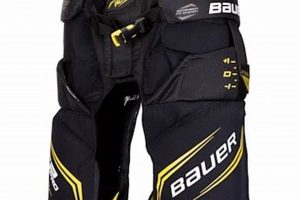
Appropriate lower body protection is crucial in ice hockey, and selecting the correct dimensions for this equipment is essential. For example, if a player’s height is 5’10” and their waist circumference is 34 inches, consulting a manufacturer’s chart will indicate the corresponding size to ensure a secure and comfortable fit.
Selecting the right size offers substantial performance and safety advantages. Properly fitted protective wear allows for an unhindered range of motion, contributing to agility and speed on the ice. Historically, inadequate safeguarding led to higher injury rates; modern design, coupled with meticulous attention to dimensions, mitigates these risks.
The subsequent sections will detail the methods for accurate measurement, outline variations among brands and models, and provide guidance on adjustments to optimize the overall protection and comfort provided by these essential components of a player’s kit.
Guidance on Selecting Ice Hockey Pants
The following recommendations aim to provide clarity and direction when determining the correct dimensions for lower body protection, optimizing player safety and performance.
Tip 1: Precise Measurement: Prioritize accurate body measurements. Use a flexible measuring tape to determine waist circumference and height. Inaccurate measurements will invariably lead to an incorrect fit.
Tip 2: Consult Manufacturer Charts: Each manufacturer uses unique sizing scales. Refer directly to the specific brand’s chart before making a purchase. A size “large” in one brand may differ substantially from another.
Tip 3: Consider Pant Style: Pant styles, such as traditional or tapered, affect fit. Traditional styles offer more volume and range of motion, while tapered styles provide a closer, more streamlined fit.
Tip 4: Account for Undergarments: Wear the undergarments typically used during play when taking measurements and trying on protective wear. This ensures accurate accommodation of the added bulk.
Tip 5: Check Thigh Coverage: Verify that the protective equipment extends sufficiently down the thigh to cover the upper leg. Inadequate coverage leaves the area vulnerable to impact.
Tip 6: Mobility Assessment: Once the pants are on, simulate skating motions and bending over. The equipment should allow for an adequate range of movement without restriction.
Tip 7: Adjustment Options: Examine the equipment for adjustment features like belt closures or internal drawstrings. These allow for fine-tuning the fit to accommodate individual body shapes.
Adhering to these guidelines will contribute to the selection of protective gear that maximizes player safety, comfort, and performance. A correctly dimensioned component of a player’s kit ensures adequate safeguarding.
The subsequent section will address maintenance and care to prolong the life of ice hockey protective wear.
1. Accurate measurements essential

Precise body measurements are fundamental to the selection of appropriately sized ice hockey pants. The correlation is direct and causal: inaccurate measurements invariably lead to an incorrect fit, compromising protection and performance. Without precise data on waist circumference and height, reliance on subjective approximations increases the likelihood of selecting protective wear that is either too restrictive, limiting mobility, or too loose, exposing vulnerable areas to impact. For example, if a player estimates their waist size instead of using a measuring tape, they might select pants that ride too low, leaving the lower abdomen unprotected, a critical safety oversight.
The practical significance of accurate measurement extends beyond initial fit. During gameplay, ill-fitting pants can shift and chafe, causing discomfort and distraction. In extreme cases, poorly sized equipment may contribute to injuries, such as hip pointers or contusions, due to inadequate padding in key areas. Moreover, accurate measurement enables informed online purchases, minimizing the need for returns and exchanges, streamlining the equipment acquisition process.
The challenges inherent in achieving precise measurements are primarily logistical. Individuals might lack the necessary tools, such as a flexible measuring tape, or may not have assistance in obtaining accurate readings. Despite these challenges, prioritizing accurate measurement as the cornerstone of the protective wear selection process remains essential. The repercussions of neglecting this initial step far outweigh the effort required to obtain reliable data. The connection between careful dimensioning and ice hockey pants effectiveness is intrinsic, ensuring both safety and optimal athletic performance.
2. Manufacturer charts matter

The reliance on manufacturer-specific sizing charts is non-negotiable when selecting ice hockey pants. Dimensional variations between brands are significant, rendering general size designations unreliable. Proper utilization of these charts mitigates the risk of acquiring ill-fitting protective gear.
- Sizing Scale Discrepancies
Different manufacturers employ unique sizing algorithms based on varying anthropometric data and design philosophies. A “medium” in one brand may be equivalent to a “small” or “large” in another. Ignoring the manufacturer’s chart introduces considerable error. For example, Brand A might define “medium” as a 32-34 inch waist, while Brand B uses that designation for 30-32 inches. This inconsistency necessitates direct consultation of the respective charts.
- Model-Specific Variations
Within a single brand, size variations can exist between different models. A “performance fit” model may be more streamlined and require a different size selection compared to a “classic fit” model from the same manufacturer. Charts often delineate these distinctions, providing separate measurements for each model line. Consequently, prior experience with a specific brand is not a reliable predictor of appropriate dimensions for subsequent purchases.
- Measurement Parameter Differences
Manufacturers may emphasize different measurement parameters in their charts. While waist circumference is universally considered, some charts also include height, inseam length, or thigh circumference. Failing to account for all relevant parameters can lead to an incomplete assessment of fit. A chart might prioritize waist and height, but neglect to mention that a particular model is designed for players with slimmer thighs. Such omissions can result in restricted movement and discomfort.
- Regular Chart Updates
Sizing charts are not static; manufacturers periodically update them to reflect evolving design considerations or changes in target demographics. Utilizing outdated charts introduces the potential for significant errors. Prior to purchase, verifying the chart’s revision date ensures that the selection process is based on the most current information available. Outdated charts can contain incorrect dimensions that are no longer applicable to the manufacturer’s current product line.
The consistent theme underscores the imperative of consulting manufacturer-specific resources when choosing ice hockey pants. General size categories are insufficient to guarantee a proper fit. The charts serve as the definitive guide, accommodating variations in scaling, model characteristics, measurement criteria, and temporal updates. Ignoring these charts compromises the integrity of player protection and performance.
3. Style impacts fit

The stylistic design of ice hockey pants significantly influences the overall fit and feel of the protective gear. Variations in cut, construction, and intended use cases necessitate careful consideration of how style contributes to proper selection.
- Traditional Cut: Increased Volume, Enhanced Mobility
Traditional ice hockey pants feature a wider cut throughout the hips and legs, providing greater range of motion and accommodating a more relaxed fit. This style often incorporates external padding and a looser shell, allowing for unrestricted movement, particularly beneficial for players who prioritize agility. The added volume, however, can affect the overall dimensions, requiring a potentially smaller size compared to other styles to maintain a secure and snug fit around the waist.
- Tapered Cut: Streamlined Profile, Snug Fit
Tapered ice hockey pants are characterized by a closer, more contoured fit that follows the natural lines of the body. This style offers a streamlined profile, reducing excess material and drag. The tighter fit can enhance responsiveness and contribute to a feeling of greater control. However, due to the reduced volume, it’s essential to ensure adequate space for movement without constriction. Players may need to size up to achieve a comfortable yet protective fit, particularly in the thigh and hip areas.
- Integrated Pant Systems: Hybrid Fit, Specialized Design
Integrated pant systems, often combining pants and protective girdle components, present a hybrid approach to fit. These systems aim to provide targeted protection while maintaining a streamlined profile. The sizing considerations for integrated systems can be complex, as they often incorporate adjustable features and modular padding. Accurate waist and hip measurements are paramount, as is consideration of the system’s intended use case. For example, a system designed for high-impact protection might necessitate a larger size to accommodate additional padding.
- Shell Material and Construction: Flexibility and Conformity
The material composition and construction of the pant shell also influence fit. Softer, more flexible materials tend to conform more readily to the body, providing a more adaptable fit. Stiffer materials, while offering greater durability, may require a more precise size selection to avoid restriction. Seam placement and construction techniques can further impact comfort and range of motion. Overly bulky seams or inflexible panels can create pressure points and impede movement, necessitating careful consideration of the pant’s overall construction.
The impact of style on fit is an essential consideration during the equipment selection process. Different styles cater to diverse player preferences and playing styles. Therefore, consulting manufacturer sizing charts, understanding the unique characteristics of each style, and assessing individual mobility requirements are crucial steps in ensuring the optimal fit and performance of ice hockey pants.
4. Coverage area crucial

The extent of protective coverage is a non-negotiable element directly linked to appropriate ice hockey pants dimensions. Insufficient coverage exposes vulnerable areas to potential impact, elevating the risk of injury. The sizing process must prioritize safeguarding the hips, thighs, kidneys, and tailbone, and the dimensions of the pants must align with the players anatomy to achieve this. For instance, pants that are too short may leave the upper thigh unprotected, rendering the quadriceps susceptible to contusions from direct contact with the ice, boards, or other players.
Variations in body type further emphasize the need for personalized assessment. Players with longer torsos may require pants with an extended rise to ensure adequate kidney protection. Conversely, players with shorter legs must ensure the pants do not extend excessively down the shin, impeding skating mechanics. The effectiveness of protective padding is contingent on its proper placement relative to the underlying anatomy. A practical example involves comparing two players of identical height: one with a longer torso will require a larger size to achieve comparable kidney coverage compared to a player with a shorter torso.
Ultimately, the relationship between coverage area and dimensions underscores the preventative role of properly sized ice hockey pants. Inadequate dimensions directly translate to compromised safety. Meticulous attention to manufacturer specifications, coupled with a thorough assessment of individual anatomical needs, is paramount. Challenges arise from the diverse range of body types and product offerings; however, prioritizing complete and appropriately positioned protective coverage remains the definitive criterion in size selection.
5. Adjustment fine-tuning

Adjustment mechanisms within ice hockey pants bridge the gap between standard sizes and individual anatomical variations. These features enable a more precise calibration of fit, addressing discrepancies not fully resolved by initial size selection.
- Waistband Modifications: Secure and Precise Fit
Internal drawstrings, external belts, or hook-and-loop closures at the waistband facilitate incremental adjustments to circumference. This allows for a secure fit that minimizes slippage during play, while accommodating layers of undergarments. Example: a player with a 33-inch waist might select pants sized for 32-34 inches, then use the internal drawstring to achieve a snug fit, preventing the pants from riding down and exposing the lower back.
- Thigh Padding Adjustments: Customized Protection
Some models incorporate adjustable thigh pads that can be repositioned or removed to accommodate different leg circumferences or preferences for mobility. This feature is particularly beneficial for players with larger thighs, preventing restrictive compression and ensuring optimal blood circulation. Example: a player with muscular thighs may adjust the thigh padding to provide adequate protection without hindering skating stride.
- Length Extension Systems: Adaptable Sizing
Certain pants feature zippered or hook-and-loop closures at the lower leg, allowing for length adjustments. This is beneficial for players who fall between standard sizes or for younger players experiencing growth spurts. Example: pants can be extended to provide optimal coverage of the upper shin, ensuring proper integration with shin guards and preventing gaps in protection.
- Suspender Compatibility: Secure and Stable Positioning
Loops or attachment points for suspenders offer an alternative means of securing the pants, distributing weight and preventing downward slippage. This can be particularly useful for players who prefer a higher waist fit or experience difficulty maintaining a secure fit with waistband adjustments alone. Example: suspenders can prevent the pants from shifting during strenuous activity, maintaining consistent protective coverage and preventing distractions.
These adjustment facets complement the initial sizing process, enabling players to personalize the fit of ice hockey pants and optimize both protective coverage and athletic performance. Adjustment fine-tuning improves overall comfort and safety by addressing specific anatomical needs beyond general size parameters.
Frequently Asked Questions
This section addresses common queries regarding selecting appropriately dimensioned ice hockey pants, emphasizing the importance of a proper fit for optimal protection and performance.
Question 1: How do I determine the correct dimensions for ice hockey pants?
Accurate body measurements are paramount. Utilize a flexible measuring tape to ascertain waist circumference and height. Consult the specific manufacturer’s sizing chart, as dimensional standards vary significantly between brands and models.
Question 2: What happens if ice hockey pants are too small?
Pants that are too small restrict movement, impeding skating mechanics and potentially compromising protective coverage. The tightness can limit circulation and create discomfort, distracting from performance.
Question 3: What happens if ice hockey pants are too large?
Overly large pants shift during play, exposing vulnerable areas to impact and increasing the risk of injury. Excess material can also hinder agility and create a tripping hazard.
Question 4: How do different styles of ice hockey pants affect sizing?
Traditional-cut pants offer a looser fit with greater volume, while tapered styles provide a closer, more streamlined profile. Account for these stylistic differences when consulting manufacturer sizing charts, as the same numerical size may fit differently depending on the design.
Question 5: Are there any adjustable features in ice hockey pants that can help with fit?
Many ice hockey pants incorporate adjustable features, such as internal drawstrings, external belts, and thigh pad adjustments. These mechanisms allow for fine-tuning the fit to accommodate individual body shapes and preferences.
Question 6: How often should ice hockey pants be replaced?
The lifespan of ice hockey pants depends on frequency of use and intensity of play. Regularly inspect the pants for signs of wear and tear, such as tears, worn padding, or damaged closures. Replace the pants when protective integrity is compromised.
In summary, accurate measurements, careful consultation of manufacturer sizing charts, and consideration of individual anatomical needs are crucial for selecting ice hockey pants with optimal dimensions. This diligence enhances safety, comfort, and on-ice performance.
The subsequent section will discuss proper maintenance and cleaning procedures to extend the life of ice hockey pants.
Ice Hockey Pants Sizing
This exploration of ice hockey pants sizing has underscored the critical link between proper dimensions and player safety. Accurate measurement, adherence to manufacturer-specific charts, consideration of stylistic variations, and verification of adequate protective coverage are paramount. Failing to address these elements compromises the integrity of the protective gear and elevates the risk of injury.
The selection process should be viewed as a deliberate and informed undertaking, not a cursory decision. Prioritizing meticulousness ensures adequate safeguarding and contributes to optimal athletic performance. Continuous assessment of fit and proactive replacement of worn equipment are essential components of responsible player safety management. The impact of appropriately dimensioned lower body protection reverberates throughout the athlete’s experience, fostering confidence and enabling unhindered participation in the sport.