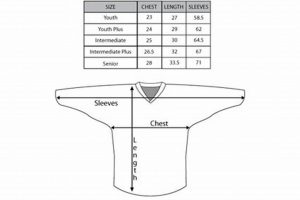
The individual occupying the net in ice hockey at the youth level is responsible for preventing the opposing team from scoring. This player’s primary function involves strategically positioning oneself and utilizing specialized equipment to block shots on goal. The development of this crucial role begins at a young age, typically with introductory programs designed to teach basic skills and techniques.
Successfully filling this position necessitates a combination of physical aptitude, mental fortitude, and strategic awareness. Developing proficient reflexes, maintaining focus under pressure, and understanding game dynamics are essential for minimizing goals allowed. Early training focuses on building a strong foundation in these areas, with an emphasis on agility, puck tracking, and effective communication with teammates. Historically, the prominence of this role has grown alongside the sport’s increasing popularity and competitive nature, leading to specialized coaching and training programs.
This introduction lays the groundwork for exploring various facets of this specialized position. Subsequent articles will delve into specific training methodologies, equipment considerations, common injuries and preventative measures, and the psychological aspects of performing under pressure. The development pathway from introductory levels to elite competition will also be examined.
Guidance for Aspiring Netminders
This section offers essential guidance for those developing their skills in the crease at the youth level. Emphasis is placed on techniques and strategies that can contribute to improved performance and long-term development.
Tip 1: Master the Butterfly Stance: This fundamental stance allows for efficient coverage of the lower portion of the net. Consistent practice is crucial for developing the proper technique, ensuring a wide and stable base while maintaining mobility for lateral movements.
Tip 2: Refine Rebound Control: Controlling rebounds minimizes second-chance opportunities for the opposing team. Focus on directing pucks into corners or deflecting them out of play. Developing this skill requires diligent practice and a keen understanding of angles.
Tip 3: Enhance Puck Tracking: Consistently tracking the puck is paramount. Maintain visual contact with the puck from the moment it leaves the opposing player’s stick until it is either secured or redirected. Drills involving rapid puck movement can significantly improve tracking abilities.
Tip 4: Develop Strong Skating Skills: Efficient skating is essential for quick positioning and agile movement within the crease. Focus on lateral movements, backwards skating, and the ability to quickly change direction. Dedicated skating drills will enhance overall agility and responsiveness.
Tip 5: Improve Mental Toughness: Maintaining focus and composure under pressure is critical. Visualize successful saves and practice techniques for managing stress and anxiety. A strong mental game can significantly impact performance during critical moments.
Tip 6: Communicate Effectively with Defensemen: Clear and concise communication with defensemen is crucial for coordinating defensive strategies and minimizing scoring opportunities. Practice communicating potential threats and identifying open players to ensure a cohesive defensive effort.
Tip 7: Maintain Proper Equipment Fit and Maintenance: Properly fitted equipment is essential for both protection and optimal performance. Regularly inspect and maintain equipment to ensure it is functioning correctly and provides adequate protection. Ill-fitting or damaged equipment can significantly compromise safety and mobility.
Consistent application of these strategies can result in demonstrable improvements in performance. Focusing on fundamental techniques, mental fortitude, and effective communication will contribute to long-term success at the youth level.
These tips provide a solid foundation for continued development. The following sections will explore advanced techniques and strategies for excelling in the position.
1. Equipment Sizing

Proper equipment sizing is paramount for the safety, performance, and developmental trajectory of the netminder at the youth level. Incorrectly sized equipment can hinder mobility, compromise protection, and impede the acquisition of fundamental skills.
- Helmet Fit and Protection
A properly fitted helmet is the first line of defense against head injuries. The helmet should sit snugly on the head, with the chin cup making consistent contact. Side-to-side or front-to-back movement indicates an improper fit, increasing the risk of concussion or other head trauma. A helmet that’s too large can shift during play, obstructing vision and reducing its protective capacity, while one that’s too small may not offer adequate coverage. For example, a loose helmet increases the risk during a collision at the net mouth.
- Chest Protector Coverage and Mobility
The chest protector must provide comprehensive coverage of the torso, shoulders, and upper arms without restricting movement. Overly bulky protectors can inhibit flexibility and range of motion, hindering the ability to make saves. Conversely, inadequate coverage leaves vulnerable areas exposed to potential impact injuries from pucks or collisions. A properly sized chest protector allows for a full range of motion while maintaining consistent protection. For instance, if the chest protector is too tight, it will limit the reach.
- Leg Pad Sizing and Rotation
Correct leg pad sizing is essential for sealing the five-hole and maximizing coverage along the ice. Pads that are too short leave gaps between the pad and the upper thigh, increasing the risk of low shots slipping through. Pads that are too long can impede skating and butterfly technique. The pads should rotate properly around the leg, allowing for smooth transitions between stances and minimizing gaps. If leg pads don’t properly meet at the five-hole, it creates a vulnerable scoring opportunity for the opposing team.
- Glove and Blocker Dexterity and Protection
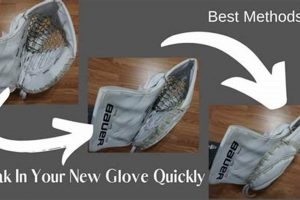
The glove and blocker must fit securely and allow for optimal dexterity and puck control. A glove that is too large can hinder the ability to catch pucks effectively, while one that is too small may not provide sufficient protection. The blocker should cover the hand and wrist without restricting movement, allowing for quick and controlled rebounds. The goal is to feel puck in the glove, if it’s too big, this won’t occur.
In conclusion, meticulous attention to equipment sizing is not merely a matter of comfort; it is a crucial element in ensuring the safety, performance, and long-term development of the aspiring netminder. Properly fitted equipment enables optimal performance, reduces the risk of injury, and allows the individual to focus on developing the necessary skills to excel. A comprehensive understanding of equipment sizing considerations is, therefore, a prerequisite for responsible coaching and parental involvement in youth hockey.
2. Reaction Time
Reaction time, defined as the interval between stimulus and response, forms a cornerstone of success for developing ice hockey netminders. The ability to quickly process visual information the puck’s trajectory, opposing players’ movements and initiate a corresponding motor response is paramount for preventing goals. A diminished reaction time translates directly into a reduced probability of making a save, while enhanced reactivity expands the margin for error. Consider, for example, a wrist shot from close range; a fraction-of-a-second delay in reacting can be the difference between a save and a goal. This responsiveness is not merely an innate ability; it is a skill honed through targeted training and experience.
Specific drills designed to improve reaction time include rapid-fire shooting exercises, where multiple pucks are directed at the net in quick succession, forcing the individual to make rapid adjustments and quick decisions. Visual tracking exercises, such as following moving objects or identifying patterns, further contribute to heightened awareness and faster processing speeds. Furthermore, anticipating player tendencies, such as recognizing a shooter’s preferred angle or a passer’s common target, allows for proactive positioning, effectively reducing the required reaction time. The significance of anticipatory skills underscores the interplay between cognitive processing and physical reflexes. A notable example is a quick glove save after the youth athlete recognizes the pass.
In summary, reaction time constitutes a critical performance determinant for developing ice hockey netminders. While innate predispositions may contribute to baseline reactivity, targeted training regimens and the acquisition of anticipatory skills can significantly enhance response times. Addressing this element within training programs is crucial for maximizing player potential and bolstering overall team performance. Future challenges in training often arise with the ability to effectively track a puck through a crowd. Continued research and innovation in training methodologies will be essential for further optimizing reactivity.
3. Skating Agility

Skating agility forms a foundational element for youth ice hockey netminders, directly influencing their ability to react to dynamic game situations and effectively cover the net. Agility, encompassing speed, balance, and the capacity for rapid directional changes, dictates the individual’s capacity to track the puck, maintain optimal positioning, and execute necessary movements to make saves. For instance, a quick lateral shuffle enables a responsive shift to intercept a cross-crease pass. Conversely, deficient skating agility compromises the individual’s ability to react promptly to unpredictable plays, resulting in increased scoring opportunities for the opposing team. The development of agile skating skills, therefore, is not merely supplementary; it represents an indispensable component of a successful youth ice hockey trajectory. Without it, even the best youth athlete will struggle during high-pressure moments.
Targeted training programs emphasizing specific skating techniques prove essential in cultivating agility. Drills focusing on lateral movement, backwards skating, and quick transitions between stances allow for increased responsiveness and efficiency within the crease. Furthermore, simulating game-like scenarios through agility courses that mimic the unpredictable nature of play helps to enhance the individual’s ability to react instinctively. For example, incorporating puck tracking into skating drills reinforces the link between visual stimuli and corresponding motor actions, improving overall decision-making speed and agility. The integration of video analysis, further, provides visual feedback to refine skating techniques, optimize posture, and identify areas for improvement.
In summary, the connection between skating agility and the success of youth ice hockey goalies remains undeniable. Emphasizing skating agility in training programs and incorporating game-realistic scenarios is of paramount importance. Such an approach bolsters the individual’s capacity to react effectively to the dynamic demands of the position. As the sport evolves, so too must the focus on developing agile skating skills, ensuring that aspiring netminders are equipped with the necessary tools to excel.
4. Mental Resilience

Mental resilience, the capacity to withstand and recover from adversity, represents a critical attribute for developing youth ice hockey netminders. The position inherently involves exposure to high-pressure situations, scrutiny, and the inevitable experience of conceding goals. The individual’s ability to navigate these challenges directly influences performance and long-term development.
- Coping with Pressure
The ability to perform under pressure is paramount. Youth athletes often face intense scrutiny from teammates, coaches, and parents. Developing coping mechanisms, such as controlled breathing techniques or positive self-talk, enables the individual to maintain focus and composure during critical game moments. For example, before a penalty shot, a resilient individual might visualize success and focus on executing practiced techniques, rather than dwelling on the potential consequences of failure. Conversely, succumbing to pressure can lead to hesitation, poor decision-making, and decreased performance.
- Overcoming Setbacks
Conceding goals represents an unavoidable aspect of the position, irrespective of skill level. The ability to quickly recover from these setbacks and maintain a positive mindset is crucial. A resilient individual views goals against as learning opportunities and avoids dwelling on past mistakes. Instead, the focus remains on the present moment and the next save. An example would be a youth athlete who allows a soft goal in the first period, but refrains from dwelling on the mistake and maintains their focus throughout the rest of the game, ultimately leading their team to victory.
- Maintaining Confidence
Sustaining confidence, even in the face of adversity, constitutes a hallmark of mental resilience. Believing in one’s abilities, despite past failures, fosters a positive self-image and encourages proactive performance. This confidence stems from consistent preparation, realistic self-assessment, and a supportive environment. An example of this is a youth athlete who continues to trust their technique, even after a series of challenging games, leading to a resurgence in performance. A lack of confidence, conversely, can lead to self-doubt, hesitation, and a self-fulfilling cycle of negative outcomes.
- Adapting to Change
Youth hockey environments are subject to frequent change, including team composition, coaching styles, and competitive pressures. Mental resilience involves the capacity to adapt to these changes without experiencing significant performance decline. This adaptability requires flexibility, open-mindedness, and a willingness to embrace new strategies or roles. For example, a youth athlete who readily accepts a new coaching system and actively seeks to understand and implement the new strategies demonstrates adaptability. Conversely, resistance to change can lead to frustration, decreased motivation, and impaired performance.
These facets of mental resilience collectively contribute to the development of a well-rounded youth ice hockey athlete. Fostering these qualities through targeted training, supportive coaching, and a positive team environment enables the individual to navigate the inherent challenges of the position and maximize their potential for long-term success. The cultivation of mental resilience, therefore, represents an integral component of youth athlete development.
5. Positioning Strategy
Positioning strategy constitutes a foundational element in the development of a youth ice hockey netminder. Effective positioning minimizes the angles available for opposing players to score, thereby increasing the probability of a save. For example, consistently positioning oneself squarely to the shooter, while accounting for the puck’s trajectory, allows for maximized coverage of the net. Conversely, improper positioning exposes vulnerable areas, significantly increasing the likelihood of goals conceded. The consistent application of sound positioning principles directly correlates to a reduction in goals-against average and an overall improvement in performance. A youth athlete who struggles with their positioning might find themselves constantly playing catch-up, reacting to shots instead of proactively controlling the available space.
The implementation of positioning strategies involves a complex interplay of factors, including reading the play, anticipating the opponent’s actions, and adjusting to dynamic game situations. For instance, anticipating a cross-ice pass necessitates shifting laterally to maintain proper alignment with the puck and the shooter. Furthermore, understanding the shooter’s tendencies, such as preferred shooting angles or the likelihood of a deke, allows for proactive adjustments in positioning, further reducing scoring opportunities. Proper positioning is not static; it requires constant adaptation and refinement based on the unfolding events on the ice. Video analysis, for example, can reveal subtle flaws in an youth athlete’s positioning, enabling targeted adjustments during practice.
In summary, positioning strategy is an indispensable aspect of the youth ice hockey goalie position. The consistent application of fundamental positioning principles, combined with the ability to adapt to dynamic game situations, significantly enhances performance and reduces scoring opportunities for the opposition. Emphasis on positioning during training, supplemented by video analysis and personalized coaching, is essential for fostering the long-term development of aspiring netminders. The ongoing refinement of positioning strategies represents a critical component of maximizing potential and achieving success at higher levels of competition.
6. Rebound Control
Rebound control represents a critical performance differentiator for netminders at the youth ice hockey level. The ability to manage rebounds, preventing them from becoming scoring opportunities for the opposing team, directly impacts the goals-against average and overall defensive effectiveness. Ineffective rebound management often results in second-chance shots from close range, significantly increasing the likelihood of a goal. For example, a poorly directed rebound following a save on an initial shot can allow an opposing forward to capitalize on the loose puck before the defense can react. Conversely, controlled rebounds, directed strategically into corners or out of play, neutralize the threat and provide the defense with an opportunity to regain possession.
Developing proficient rebound control requires a multifaceted approach, incorporating both technical skill and strategic awareness. Proper technique involves utilizing the body and equipment to absorb the impact of the puck, directing it towards predetermined areas. This necessitates a strong understanding of angles and the ability to anticipate the trajectory of the puck after the initial save. Strategic awareness entails reading the play and identifying potential threats around the net. An netminder who anticipates the presence of opposing players near the crease is better positioned to control rebounds and minimize scoring opportunities. Drills that simulate game-like scenarios, where multiple shots are directed at the net in rapid succession, are essential for honing rebound control skills and enhancing reaction time.
In summary, the connection between rebound control and the success of a youth ice hockey goalie is undeniable. The ability to effectively manage rebounds transforms potential scoring opportunities into defensive advantages. Emphasis on developing both the technical and strategic aspects of rebound control during training is crucial for maximizing player potential and fostering long-term success at higher levels of competition. The mastery of this skill contributes significantly to a reduction in goals-against average and reinforces the overall defensive stability of the team.
7. Coaching Quality
Coaching quality exerts a profound influence on the development of youth ice hockey netminders, shaping not only their technical proficiency but also their strategic understanding and mental fortitude. The quality of coaching directly impacts the rate at which young individuals acquire fundamental skills, such as proper stance, skating agility, and rebound control. For instance, a coach with specialized expertise in the position can provide targeted feedback on technique, leading to faster and more effective skill acquisition. The presence of knowledgeable and experienced coaching is therefore essential for maximizing potential and minimizing the risk of developing detrimental habits. Conversely, inadequate coaching may result in the perpetuation of flawed techniques, hindering long-term progress.
Beyond technical skills, coaching quality significantly affects the strategic development of youth ice hockey goalies. Effective coaches impart knowledge of game dynamics, positioning strategy, and the ability to read opposing players. This understanding empowers young individuals to anticipate plays, make informed decisions, and optimize their positioning within the net. A coach with a strong strategic vision will instill a proactive mindset, encouraging individuals to take command of the crease and dictate the flow of play. An example is a coach that helps the youth athlete to recognize passing lanes for a cross-ice pass, where to position for the most direct line. The coach is building their athletes hockey smarts.
In summary, coaching quality stands as a critical determinant in the development trajectory of youth ice hockey goalies. The provision of knowledgeable instruction, coupled with a focus on strategic understanding and mental resilience, enables these youth athlete’s to reach their full potential. Investing in high-quality coaching programs represents a crucial step in nurturing the next generation of proficient and well-rounded competitors, strengthening the entire sport. However, coaching availability to youth programs can be a hindrance for development.
Frequently Asked Questions about Youth Ice Hockey Goalie Development
This section addresses common inquiries regarding the development of netminders at the youth level, providing concise and informative responses.
Question 1: What is the optimal age to begin goalie-specific training?
While introductory skating skills can be initiated at a young age (5-7 years), focused goalie-specific training is generally recommended around 8-10 years. This allows for the development of fundamental skating skills and coordination before introducing the complexities of the position. Early specialization, prior to mastering basic skating and hockey skills, can be detrimental to long-term development.
Question 2: What are the essential equipment requirements for a youth ice hockey goalie?
Essential equipment includes a properly fitted helmet (certified by HECC or CSA), neck guard, chest protector, blocker, glove, pants, jock/jill supporter, knee pads, and leg pads. Proper fit is paramount for safety and mobility. Ill-fitting equipment compromises protection and can impede performance.
Question 3: How can reaction time be effectively improved in youth ice hockey goalies?
Reaction time can be enhanced through targeted training drills incorporating rapid-fire shooting exercises, visual tracking exercises, and simulated game situations. Anticipation skills, developed through studying player tendencies, also contribute to faster reaction speeds. Consistent repetition and focused practice are key to improving reactivity.
Question 4: What role does skating agility play in the success of a youth ice hockey goalie?
Skating agility is fundamental for efficient movement within the crease, allowing the goalie to maintain proper positioning and react quickly to dynamic plays. Drills focusing on lateral movement, backwards skating, and quick transitions are essential for developing this skill. Insufficient skating agility compromises the ability to cover the net effectively.
Question 5: How can mental resilience be cultivated in young ice hockey goalies?
Mental resilience can be fostered through positive reinforcement, coping strategies for managing pressure, and a supportive coaching environment. Encouraging a growth mindset, where setbacks are viewed as learning opportunities, is also crucial. Mental toughness is essential for maintaining focus and composure during challenging game situations.
Question 6: What are some common injuries affecting youth ice hockey goalies, and how can they be prevented?
Common injuries include knee injuries, hip injuries, and concussions. Prevention strategies include proper equipment fitting, comprehensive warm-up routines, and the implementation of safe techniques during practice and games. Emphasizing injury prevention is essential for ensuring the long-term health and well-being of young athletes.
The development of a skilled and resilient youth ice hockey goalie requires a multifaceted approach, encompassing technical proficiency, strategic awareness, mental fortitude, and a commitment to safety. The information provided in this section serves as a foundation for understanding the key elements involved in this developmental process.
The next section will delve into specific training methodologies and drills designed to enhance the skills and performance of youth ice hockey goalies.
Youth Ice Hockey Goalie
This exploration has detailed the multifaceted aspects of developing youth ice hockey goalies, encompassing equipment considerations, reaction time enhancement, skating agility, mental resilience, positioning strategies, rebound control, and the crucial role of coaching quality. Each element contributes significantly to the overall development and performance capabilities of the aspiring netminder. Mastering these fundamentals creates a robust foundation for advancement within the sport.
Continued emphasis on comprehensive training programs, coupled with rigorous attention to safety and mental well-being, remains paramount for fostering the next generation of capable goalies. The future success of youth ice hockey goalies hinges upon the dedication of coaches, parents, and organizations to provide optimal developmental opportunities. The ongoing pursuit of excellence in coaching methodologies and equipment technology will further elevate the position and ensure the continued growth of the sport.
![Best Hockey Goalie Hats: [Brand] & More! | Your Ultimate Source for Hockey Updates, Training Guides, and Equipment Recommendations](https://ssachockey.com/wp-content/uploads/2026/02/th-262-300x200.jpg "Best Hockey Goalie Hats: [Brand] & More! Your Ultimate Source for Hockey Updates, Training Guides, and Equipment Recommendations")