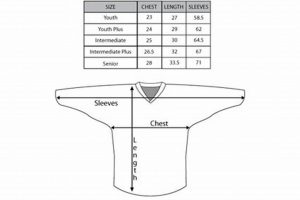
A reference table provides measurements that correlate to appropriate equipment dimensions for hockey goaltenders. This resource aids in selecting gear that ensures both optimal protection and maximum mobility. For example, a table may specify recommended chest protector size based on a goaltender’s height and chest circumference, or leg pad sizing based on the distance from ankle to mid-thigh.
Correct equipment sizing is crucial for player safety and performance. Ill-fitting gear can lead to restricted movement, hindering a goaltender’s ability to react quickly and efficiently. Furthermore, improperly sized protective equipment may leave vulnerable areas exposed, increasing the risk of injury. Historically, goalies relied heavily on subjective assessments and the experience of equipment retailers; standardization through measurement guides and readily available charts has significantly improved the fitting process.
The following sections will detail the specific measurement parameters relevant to various pieces of goaltending equipment, discuss methods for accurate self-measurement, and explore factors that can influence the ultimate equipment selection for individual players.
Selecting Optimal Goaltending Equipment
Choosing the correct size for goaltending equipment is essential for both performance and safety. Utilizing measurement guidelines is paramount in making informed decisions.
Tip 1: Measure Accurately: Precise measurements are fundamental. Height, chest circumference, and ankle-to-knee measurements are common starting points for most equipment fitting tables.
Tip 2: Consult Multiple Charts: Different manufacturers may have slight variations in their equipment sizing. Cross-referencing several charts provides a more comprehensive view.
Tip 3: Account for Growth: Younger players may require slightly larger equipment to accommodate growth spurts. However, oversized gear should be avoided, as it compromises protection and mobility.
Tip 4: Prioritize Mobility: Ensure that chosen sizes permit a full range of motion. Restricted movement can negatively impact reaction time and overall performance.
Tip 5: Consider Padding Thickness: Internal padding within the equipment can affect the fit. When possible, try on equipment with game-day undergarments to simulate actual playing conditions.
Tip 6: Focus on Coverage: The equipment’s primary function is protection. Verify that vital areas, such as the collarbone, sternum, and knees, are adequately shielded.
Tip 7: Seek Expert Advice: Consulting with experienced equipment specialists at reputable hockey retailers can provide valuable insights and personalized recommendations.
Proper equipment selection, guided by meticulous measurement and consideration of individual needs, will contribute significantly to a goaltender’s safety and on-ice effectiveness.
The following sections will explore how to interpret measurement guides and provide more detailed information on specific equipment components.
1. Height correlation

Height correlation, in the context of the table that provides dimensions for goaltending equipment, serves as a foundational metric. It establishes a preliminary estimate for gear sizes, recognizing that a taller individual will generally require larger equipment. This correlation, however, is not absolute, as other body measurements significantly influence final equipment selection.
- Initial Size Approximation
Height provides a convenient starting point for determining appropriate equipment sizes. A simple reference chart might suggest a range of chest protector sizes based on height alone. This initial approximation narrows the field of options, streamlining the selection process.
- Leg Pad Length Determination
While not directly dictating leg pad size, height offers a predictive indicator. Taller goaltenders typically have longer legs, necessitating longer leg pads to adequately cover the net’s lower portion. However, precise leg measurements from ankle to mid-thigh are still required for accurate fitting.
- Overall Equipment Proportionality
Height influences the perceived proportionality of equipment. A chest protector deemed appropriately sized for a shorter goaltender might appear too small on a taller individual. This visual assessment, while subjective, highlights the importance of considering overall body dimensions when selecting gear.
- Limitations of Height Alone
Relying solely on height for equipment selection can lead to inaccuracies. Body composition, such as torso length or arm span, varies among individuals of the same height. Therefore, precise measurements of chest circumference, arm length, and other relevant dimensions are essential to supplement height-based estimates.
In conclusion, height correlation within these charts acts as a valuable initial guide. However, to ensure optimal protection and mobility, it is imperative to consider additional measurements and individual body characteristics, thereby refining the selection process beyond a simple height-based assessment.
2. Chest protector dimensions

Chest protector dimensions constitute a critical component within a resource designed to match goaltending equipment to player size. The proper fit of a chest protector directly impacts a goaltender’s safety, mobility, and overall performance. Therefore, understanding the measurements and fitting considerations is crucial.
- Torso Coverage and Sizing
The primary function of a chest protector is to shield the torso from high-impact shots. Measurement guidelines typically consider chest circumference and height to determine the appropriate size. Inadequate torso coverage leaves vulnerable areas exposed, while excessive size can restrict arm movement and impede reaction time. For instance, a goaltender with a 42-inch chest might require a size large, but must also ensure the protector extends sufficiently to cover the sternum and collarbone.
- Arm Length and Adjustability
Arm length is a significant factor influencing the fit of the chest protector’s arm pads. These pads must provide adequate coverage to the upper arms without hindering mobility. Many chest protectors feature adjustable arm straps, allowing goaltenders to customize the fit and ensure optimal protection. A goaltender with shorter arms might require adjustments to prevent the arm pads from interfering with their glove or blocker.
- Shoulder and Collarbone Protection
Adequate shoulder and collarbone protection is paramount. Sizing guides often consider the width of the shoulders to ensure the shoulder floaters adequately cover these vulnerable areas. Properly fitted shoulder protection reduces the risk of injury from pucks impacting the upper chest and shoulder region. For example, a goalie with broad shoulders should choose a chest protector with wider shoulder floaters to maximize coverage.
- Sternum and Abdominal Protection
The length of the chest protector’s sternum and abdominal padding must extend sufficiently to protect these vital areas. A protector that is too short leaves the lower abdomen vulnerable to shots. Measurement guidelines frequently suggest a minimum length based on the goaltender’s height. Goaltenders should ensure that the sternum and abdominal padding provides full coverage when in a crouched position.
In conclusion, correct chest protector dimensions, derived from measurements and size guidelines, are fundamental for goaltender safety and performance. An improperly fitted chest protector can compromise protection and mobility, increasing the risk of injury and hindering on-ice effectiveness. Therefore, meticulous attention to sizing and adjustability is essential when selecting this critical piece of equipment.
3. Leg pad length
Leg pad length, a critical data point within equipment sizing guides for hockey goaltenders, directly dictates the amount of net coverage provided. The sizing guide serves as a lookup resource where ankle-to-mid-thigh measurement is correlated with a particular leg pad size offered by manufacturers. This measurement ensures appropriate coverage when the goaltender assumes a butterfly position, preventing shots from passing between the legs or beneath the pads. For example, a goaltender measuring 18 inches from ankle to mid-thigh would consult the chart to identify the corresponding pad size, perhaps 33 inches, depending on the brand’s specific dimensions.
Inadequate pad length compromises the defensive barrier, increasing the likelihood of goals scored through the five-hole or along the ice. Conversely, excessively long pads can impede mobility, hindering the goaltender’s ability to move laterally or recover quickly. The guide ensures a balance between coverage and agility. Therefore, an informed choice predicated on accurate measurement is vital to on-ice performance. A goaltender with a 19 inch measurement should select pads according to the chart, noting that improperly sized equipment not only reduces performance but can increase injury risk as vulnerable areas are left exposed. The information provides the necessary data for selecting pads that are neither too long nor too short.
Correctly utilizing this data element is therefore paramount. An accurate measure facilitates informed equipment selection, promoting both safety and optimized performance. This process minimizes the risk of inadequate net coverage, thereby enhancing a goaltender’s ability to effectively defend the goal.
4. Glove/Blocker sizing

Glove and blocker sizing represents a critical component within guides used to match goaltending equipment to player size. Proper fit ensures optimal hand protection, control, and reaction time. Deviations from appropriate sizing compromise performance and increase injury risk.
- Hand Measurement Correlation
Measurements of hand circumference and finger length correlate directly with recommended glove and blocker sizes. A goaltender with a larger hand necessitates a larger glove for adequate internal space and proper finger placement within the catching pocket. Similarly, blocker size is often determined by hand length, ensuring sufficient coverage of the hand and wrist area.
- Glove Pocket Depth and Closure
The depth of the glove’s catching pocket influences the ease with which a goaltender can secure pucks. The relationship between hand size and pocket depth is vital; a glove too large for the hand may result in pucks bouncing out, while a glove too small restricts closure and reduces catching efficiency. Therefore, the sizing considerations factor in optimal pocket dimensions based on hand measurements.
- Blocker Board Coverage and Mobility
The blocker board’s dimensions must provide adequate coverage of the hand, wrist, and forearm. Sizing guidelines typically recommend blocker sizes that extend slightly beyond the wrist to maximize protection. However, excessive size can impede wrist mobility and hinder stickhandling. Balancing coverage with maneuverability is therefore paramount during selection.
- Wrist and Finger Protection
Sizing directly impacts the extent of wrist and finger protection offered by the glove and blocker. Ill-fitting equipment may leave vulnerable areas exposed to puck impact. Correct sizing ensures that protective padding is correctly positioned, minimizing the risk of fractures, sprains, and other hand injuries. Measurements should, therefore, be meticulously followed.
Proper utilization of sizing resources during glove and blocker selection is essential for goaltenders seeking optimal performance and protection. Ignoring size guidelines increases the risk of injury and compromises a goaltender’s ability to effectively control rebounds and protect the net.
5. Helmet fit
Helmet fit is inextricably linked to the validity and effectiveness of a hockey goalie sizing guide. The guide provides dimensional relationships between the goaltender’s head circumference and corresponding helmet sizes offered by manufacturers. An improperly fitted helmet, regardless of other correctly sized equipment, renders the entire fitting process compromised, potentially leading to severe injury. Real-world examples of concussions sustained due to helmets that are too loose or too tight highlight the practical significance of this dimension. Moreover, a helmet that shifts during gameplay obscures vision, hindering the goaltender’s ability to track the puck, thereby directly affecting performance.
Further analysis reveals that helmet fit goes beyond simple circumference measurements. Factors such as head shape, helmet internal padding characteristics, and chin cup adjustments all play a crucial role. Manufacturers offer various shell shapes (oval, round, square) to accommodate diverse cranial morphologies. Adjustment mechanisms, including straps and internal padding systems, provide customization options to fine-tune the fit. For example, a goaltender with an oval-shaped head might find that a round helmet creates pressure points, leading to discomfort and an insecure fit. In practice, this requires trial and error, coupled with expert consultation, to optimize comfort and protection.
In conclusion, helmet fit is not merely a single data point, but rather a critical convergence of measurement, design, and individual physiology. The sizing guide serves as a starting point, but ultimately, a secure and comfortable fit is paramount. The challenge lies in balancing standardized measurements with the inherent variability of human anatomy, ensuring optimal head protection for every goaltender. This underscores the importance of professional fitting services and a commitment to ongoing helmet maintenance and replacement as needed. The sizing guide is just one aspect, fit must be the overall goal.
6. Pant waist

Pant waist measurements, as incorporated within resources that correlate goaltending equipment to player size, establish a dimensional parameter directly influencing both protection and mobility. An accurate pant waist measurement is critical for selecting equipment that provides comprehensive lower abdominal, hip, and thigh protection without restricting movement or compromising the goaltender’s stance. This measurement is often taken at the narrowest point of the waist or hip, depending on the pant style, and is directly compared to manufacturer sizing charts. For example, a measurement of 34 inches would necessitate a size large pant in some brands, while others might require a medium, highlighting the importance of consulting specific manufacturer charts. Failure to adhere to the size guide can result in equipment that is either too constricting, limiting range of motion, or too loose, leaving areas vulnerable to puck impact.
A goaltender’s pant waist size impacts the overall fit and integration of other equipment components, notably the chest protector and leg pads. An improperly sized pant can interfere with the proper positioning of the chest protector’s lower flaps, leaving the lower abdomen exposed. Additionally, if the pant is too large, it can slip down, interfering with the leg pad straps and altering the pad’s positioning. This interplay between equipment elements underscores the interconnectedness within the complete gear setup and the importance of considering pant waist as a key metric when consulting size guides. The dimension’s influence extends beyond isolated protection, affecting the synergy of the entire equipment ensemble. Choosing a larger size will make it less mobility and choosing smaller size make less protected.
In summary, accurate pant waist measurements, cross-referenced with manufacturer-specific size guides, are foundational for selecting goaltending pants that maximize protection and maintain optimal mobility. This data point contributes to the harmonious integration of all equipment components, ensuring a cohesive and effective defensive barrier. Neglecting this measurement increases the risk of both injury and compromised performance. Correct sizing leads to safer and more effective defense, supporting the goaltender’s ability to perform successfully.
7. Skate size
Skate size is a fundamental measurement within a hockey goalie dimensions resource, influencing mobility, balance, and overall performance. Selecting the correct skate size directly impacts a goaltender’s ability to execute fundamental movements, such as shuffling, butterfly drops, and recoveries. Discrepancies between actual foot size and skate size result in compromised agility and increased risk of injury.
- Foot Measurement and Skate Size Correlation
Proper skate sizing begins with precise foot measurement. Length and width measurements are cross-referenced with manufacturer-specific sizing charts, which vary due to differences in skate construction and internal padding. For instance, a foot measuring 27 centimeters in length might correspond to a size 8 skate in one brand but a size 8.5 in another. This variability necessitates careful consultation of sizing charts and, ideally, in-person fitting.
- Impact on Blade Contact and Stability
Skate size directly affects the amount of blade contact with the ice. A skate that is too large reduces blade contact, diminishing stability and making it difficult to maintain balance during lateral movements. Conversely, a skate that is too small can cause discomfort, restrict circulation, and ultimately compromise performance. Optimal skate size maximizes blade contact, enhancing stability and agility.
- Relationship to Leg Pad Height
Skate size interacts with leg pad height to influence overall coverage of the lower portion of the net. A goaltender with smaller skates may require slightly longer leg pads to compensate for the reduced height. Conversely, a goaltender with larger skates may need shorter pads to maintain optimal mobility and prevent interference between the pads and the ice. Therefore, skate size must be considered in conjunction with leg pad length to ensure a balanced and functional equipment setup.
- Customization Options and Fit Adjustments
Many modern goalie skates offer customization options, such as heat molding, to improve fit and comfort. Heat molding allows the skate boot to conform to the individual’s foot shape, minimizing pressure points and enhancing overall performance. Skate size, in conjunction with customization, provides a means of achieving a precise and comfortable fit that supports optimal mobility and stability on the ice.
The relationship between skate size and the dimensions guide highlights the interconnectedness of various equipment components. Accurate skate sizing, guided by measurement and chart consultation, is foundational for achieving optimal balance, agility, and performance. Neglecting this dimension compromises the effectiveness of the entire equipment setup and increases the risk of injury.
Frequently Asked Questions
This section addresses common inquiries regarding the selection of properly sized equipment for hockey goaltenders.
Question 1: Why is adherence to equipment size guides crucial for goaltenders?
Adherence to sizing guidelines ensures optimal protection and mobility. Improperly sized equipment compromises both safety and performance. Gear that is too large may hinder movement, while gear that is too small leaves vulnerable areas exposed.
Question 2: How frequently should goaltender equipment sizes be reassessed?
Equipment sizes should be reassessed annually, and more frequently for growing players. Significant changes in height or weight necessitate re-evaluation of all equipment dimensions. Regular inspection of equipment fit ensures ongoing protection.
Question 3: What is the potential impact of using improperly sized leg pads?
Improperly sized leg pads reduce net coverage and compromise the butterfly position. Pads that are too short expose the five-hole, while pads that are too long impede lateral movement. Optimal pad length maximizes coverage without sacrificing agility.
Question 4: How do different equipment manufacturers influence size selection?
Equipment manufacturers may employ varying sizing conventions. A size large chest protector from one manufacturer may differ in dimensions from a size large chest protector from another. Consulting manufacturer-specific size charts is essential for accurate equipment selection.
Question 5: What role do specialized hockey retailers play in equipment sizing?
Specialized hockey retailers possess expertise in equipment fitting and can provide valuable assistance in selecting appropriately sized gear. Their experience and knowledge can augment reliance solely on size charts, ensuring a more personalized and accurate fit.
Question 6: Are there specific age-related considerations in sizing goaltender equipment?
Younger goaltenders require more frequent equipment assessments due to growth spurts. It is advisable to allow for minimal growth when selecting equipment for youth players, but oversized equipment should be avoided, as it compromises protection and mobility.
Accurate equipment sizing is paramount for goaltender safety and performance. Regularly consult size guides, seek expert advice, and prioritize proper fit to optimize on-ice effectiveness.
The next article section will provide detailed information on specific equipment sizing considerations.
Accurate Sizing for Optimal Goaltending Performance
The preceding exploration of the “hockey goalie size chart” has underscored its fundamental role in facilitating informed equipment selection. Height correlation, chest protector dimensions, leg pad length, glove/blocker sizing, helmet fit, pant waist measurement, and skate sizeeach factor contributes to an integrated system designed to protect the goaltender and optimize performance. The importance of accurate measurement and manufacturer-specific chart consultation has been consistently emphasized.
The ongoing evolution of equipment technology and sizing methodologies necessitates a continued commitment to education and precision. Prioritizing accurate equipment fitting, guided by comprehensive resources and expert consultation, will remain crucial for ensuring goaltender safety and maximizing potential on the ice. Regular review and adherence to established size guidelines are essential components of responsible goaltending practice.
![Best Hockey Goalie Hats: [Brand] & More! | Your Ultimate Source for Hockey Updates, Training Guides, and Equipment Recommendations](https://ssachockey.com/wp-content/uploads/2026/02/th-262-300x200.jpg "Best Hockey Goalie Hats: [Brand] & More! Your Ultimate Source for Hockey Updates, Training Guides, and Equipment Recommendations")