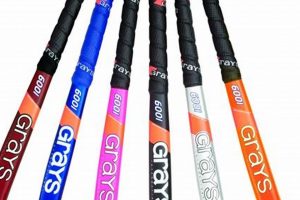
A hockey stick designated “100 flex” indicates the amount of force, measured in pounds, required to bend the stick one inch. This measurement directly correlates to the stick’s stiffness; a higher number signifies a stiffer stick. For example, a stick with a 100 flex rating will bend one inch when 100 pounds of force are applied to it. This is a crucial characteristic in selecting a stick that matches a player’s strength and playing style.
The importance of selecting the appropriate stiffness lies in optimizing shot power and accuracy. A stick that is too stiff will be difficult to load properly, resulting in reduced shot velocity and potentially compromised control. Conversely, a stick that is too flexible will feel whippy and may lead to inconsistent shots. Historically, the development of flex ratings has allowed players to more precisely tailor their equipment to their individual needs, leading to improved performance on the ice. The introduction of standardized flex ratings marked a significant advancement in hockey equipment technology.
The following sections will delve into the factors influencing flex selection, including player weight, height, playing position, and individual preferences. Furthermore, the article will explore the various materials used in the construction of hockey sticks and their impact on overall performance, and also the relationship between flex and kick point and the effect on shot trajectory.
Guidance on Selecting and Utilizing a 100 Flex Hockey Stick
The following guidelines provide insights into the optimal selection and use of a hockey stick with a flex rating of 100. Considerations extend beyond the flex rating itself, encompassing factors such as player attributes and playing style.
Tip 1: Consider Body Weight. A 100 flex hockey stick is generally suitable for players who weigh approximately 170-190 pounds. This correlation is based on the typical force a player of that weight can generate during a shot. Players significantly above or below this weight range may find a different flex more appropriate.
Tip 2: Evaluate Shooting Style. Players who prefer a powerful slapshot often benefit from a stiffer flex, like 100. The increased stiffness allows for greater energy transfer during the loading phase of the shot. Conversely, players who rely more on wrist shots or snapshots may find a slightly lower flex more conducive to quick release.
Tip 3: Assess Playing Position. Defensive players, who often need to deliver hard, accurate clearing passes and slapshots from the point, may find a 100 flex beneficial. Forwards, particularly those who engage in close-quarters play and require quick wrist shots, might consider a slightly more flexible option.
Tip 4: Account for Stick Length. The length of the stick influences its effective flex. A longer stick provides more leverage, effectively making the stick feel more flexible. Conversely, a shorter stick will feel stiffer. Adjust the flex rating accordingly if significant modifications to stick length are made.
Tip 5: Prioritize Personal Comfort. While the aforementioned guidelines offer a framework for selection, personal preference remains paramount. It is recommended to test various flex ratings to determine the optimal feel and performance. Trial and error is essential to find a stick that complements individual playing style.
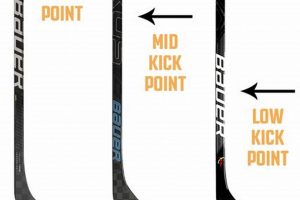
Tip 6: Understand Kick Point Compatibility. A 100 flex can be found in various kick point configurations (low, mid, high). Match the kick point to the player’s preferred shot type; low kick point for quick releases, mid kick point for versatile shots, and high kick point for powerful slapshots.
Tip 7: Evaluate the Stick Material. Composite sticks offer a blend of durability, lightweight construction, and optimized energy transfer. Different carbon fiber weaves and resin systems can influence the stick’s overall feel and performance. Evaluate the material composition to find a stick that aligns with performance expectations.
Selecting the correct flex is essential for maximizing shot power, accuracy, and overall on-ice performance. Careful consideration of the factors outlined above will assist in choosing a hockey stick that complements individual attributes and playing style.
The subsequent discussion will shift to maintenance practices aimed at prolonging the lifespan of the hockey stick and ensuring consistent performance throughout its use.
1. Player weight suitability

Player weight is a critical factor when selecting a hockey stick, particularly one with a defined flex rating such as 100. The relationship between player weight and stick flex directly impacts the efficiency of energy transfer during a shot, thereby affecting both power and accuracy. Choosing a stick with an inappropriate flex rating relative to body weight can hinder performance and potentially lead to injury.
- Force Generation Capacity
Body weight is a primary indicator of a player’s ability to generate force. A heavier player typically possesses the strength to adequately flex a stiffer stick, such as one with a 100 flex rating. Conversely, a lighter player may lack the necessary muscle mass to properly load the stick, resulting in decreased shot velocity. This relationship emphasizes the importance of matching stick flex to the player’s physical capabilities. Consider, for example, a player weighing 190 pounds; they are more likely to effectively utilize a 100 flex stick than a player weighing 150 pounds.
- Optimal Energy Transfer
A 100 flex stick is designed to bend optimally under a specific load, roughly correlating to the force exerted by a player within a certain weight range. When a player whose weight aligns with the 100 flex rating loads the stick, the energy stored in the bent stick is efficiently transferred to the puck upon release. This efficient transfer maximizes shot power. A player significantly outside the recommended weight range will either over-flex or under-flex the stick, diminishing the energy transfer and compromising shot effectiveness.
- Stick Loading Mechanics
Effective stick loading requires a coordinated effort between the player’s upper and lower body. The players weight and strength are critical for bending the stick during the loading phase of a shot. A 100 flex stick demands a certain level of physical strength to achieve the necessary bend. If a player’s weight is insufficient to generate adequate force, the stick will not bend properly, and the potential energy will not be stored effectively. This results in a weak and potentially inaccurate shot.
- Injury Prevention Considerations
Using a hockey stick with a flex rating mismatched to a player’s weight can also increase the risk of injury. Attempting to force a stick that is too stiff for one’s body weight can strain muscles and joints in the wrists, elbows, and shoulders. Conversely, repeatedly over-flexing a stick that is too flexible can also lead to overuse injuries. Selecting a flex rating that aligns with body weight helps ensure proper biomechanics and reduces the risk of strain.
In conclusion, the suitability of a 100 flex hockey stick is intrinsically linked to a player’s weight. The proper matching of these factors ensures optimal energy transfer, enhances shot performance, and minimizes the risk of injury. Players and coaches should carefully consider weight as a primary criterion when selecting a hockey stick, ensuring that the flex rating aligns with the player’s physical capabilities and playing style to maximize their potential on the ice.
2. Shot power optimization
Shot power optimization, in the context of hockey stick selection, involves maximizing the energy transferred from the player to the puck. The flex rating of a stick, such as 100, plays a critical role in achieving this optimization. Selecting a stick with an appropriate flex rating is essential for harnessing a player’s strength and technique to generate maximum shot velocity.
- Efficient Energy Transfer
The flex rating dictates the amount of force required to bend the stick. A 100 flex stick is designed to bend optimally when subjected to a specific load, typically corresponding to the force generated by a player of a certain weight and strength. When the stick bends to its optimal point during the loading phase of a shot, potential energy is stored within the stick. Upon release, this stored energy is transferred to the puck, propelling it forward with increased velocity. The efficiency of this energy transfer is directly influenced by the appropriateness of the flex rating for the individual player. An improperly matched flex rating will result in either under-flexing or over-flexing the stick, diminishing the amount of energy transferred and compromising shot power.
- Loading Mechanics
Loading the stick properly is crucial for generating shot power. A 100 flex stick demands a certain level of strength to achieve the necessary bend. Effective loading involves a coordinated effort between the player’s upper and lower body, using the legs to generate power and the arms to control the stick. A player who lacks the strength to bend the stick sufficiently will be unable to load it properly, resulting in a weak and ineffective shot. Conversely, a player who is too strong for the flex rating may over-flex the stick, leading to a loss of control and accuracy. Therefore, selecting a stick with a flex rating that aligns with the player’s strength and loading technique is paramount for optimizing shot power.
- Release Speed and Trajectory
The flex rating also affects the release speed and trajectory of the shot. A properly loaded 100 flex stick will release the puck with a consistent and predictable trajectory. A stick that is too stiff may cause the puck to rise excessively, while a stick that is too flexible may result in a low or unpredictable trajectory. The release speed is also influenced by the flex rating; a well-matched flex will allow the player to generate maximum puck velocity, while an improperly matched flex will hinder the player’s ability to accelerate the puck effectively. The relationship between flex rating, release speed, and trajectory highlights the importance of selecting a stick that complements the player’s shooting style and technique.
- Shot Accuracy Enhancement
Optimizing shot power is intrinsically linked to shot accuracy. While generating velocity is important, directing the puck towards the intended target is equally crucial. A 100 flex stick that is properly matched to the player’s strength and technique will enhance shot accuracy by providing a more stable and controlled release. A player who is struggling to control a stick with an inappropriate flex rating will likely experience decreased accuracy. By selecting a stick that allows for efficient energy transfer, proper loading mechanics, and consistent release speed and trajectory, players can improve their shot accuracy and increase their scoring opportunities.
In summary, shot power optimization is a multifaceted process that involves careful consideration of the stick’s flex rating in relation to the player’s physical attributes and playing style. By selecting a 100 flex stick that complements the player’s strength, technique, and shooting preferences, it is possible to maximize shot power, enhance accuracy, and improve overall on-ice performance. The interplay between these factors highlights the significance of proper equipment selection in achieving optimal results.
3. Stick length influence
The length of a hockey stick significantly impacts its effective flex, particularly when considering a stick designated with a 100 flex rating. The relationship between stick length and flex directly affects a player’s ability to load the stick properly, influence shot power, and maintain overall control. Understanding this interplay is crucial for selecting a stick that complements a player’s individual attributes and playing style.
- Leverage and Effective Flex
A longer stick provides increased leverage, effectively making the stick feel more flexible. This is because the applied force is distributed over a greater distance, resulting in a larger bending moment. For example, a 100 flex stick that is extended by several inches will feel less stiff than the same stick at its original length. Conversely, a shorter stick reduces leverage, making the stick feel stiffer. Consequently, a player who cuts down a 100 flex stick may find it feels closer to a 110 or 120 flex. This alteration in effective flex necessitates careful consideration when adjusting stick length, as it can drastically alter the stick’s performance characteristics.
- Impact on Shot Mechanics
Stick length influences the mechanics of a player’s shot, particularly the loading phase. A longer stick allows for a wider range of motion and potentially greater energy storage during the loading process. However, it may also require more strength and coordination to control. A shorter stick, on the other hand, offers greater maneuverability and quicker release, but may limit the amount of power that can be generated. The relationship between stick length and shot mechanics is critical when selecting a 100 flex stick, as the optimal length will depend on the player’s individual technique and shooting preferences. For instance, a player who favors powerful slapshots from the point may benefit from a slightly longer stick, while a player who relies on quick wrist shots in close may prefer a shorter option.
- Balance and Control
The length of a hockey stick directly affects its balance and control. A longer stick can feel unwieldy and difficult to handle, particularly in tight spaces. This can compromise a player’s ability to stickhandle effectively and maintain puck possession. A shorter stick offers improved agility and quicker reactions, but may sacrifice reach and defensive coverage. When selecting a 100 flex stick, it is important to consider the trade-offs between reach, maneuverability, and overall control. A player who prioritizes puck control and quick transitions may opt for a shorter stick, while a player who needs to cover more ice defensively may choose a longer option.
- Compensating for Height and Stance
Stick length should be adjusted to accommodate a player’s height and stance on the ice. A taller player will typically require a longer stick to maintain proper posture and reach, while a shorter player will need a shorter stick to avoid excessive bending and awkward movements. Similarly, a player with a more upright stance may prefer a longer stick, while a player with a lower, more aggressive stance may opt for a shorter one. The appropriate stick length will ensure that the player can maintain a comfortable and balanced position, allowing them to maximize their performance and minimize the risk of injury. Therefore, when selecting a 100 flex stick, it is essential to consider individual height, stance, and skating style to determine the optimal length.
In conclusion, the interplay between stick length and a 100 flex rating is a critical consideration for optimizing performance. The modifications to stick length influence its effective flex and the ability to appropriately load the stick. Understanding this relationship is essential for tailoring hockey equipment to individual preferences and playing styles. This adjustment leads to increased shot power and greater on-ice control.
4. Playing position alignment

The selection of a hockey stick with a 100 flex rating must consider the specific demands and requirements of different playing positions. Optimal stick performance hinges on aligning equipment characteristics with the responsibilities and typical actions associated with each position on the ice.
- Defensemen and Powerful Shots
Defensemen often require the ability to deliver powerful slapshots from the blue line. A 100 flex stick can provide the necessary stiffness to maximize energy transfer during this type of shot. The increased stiffness allows for a more efficient loading of the stick, resulting in greater puck velocity. Example: A defenseman clearing the puck from their own zone under pressure will benefit from the added power a stiffer stick provides. Misalignment would result in reduced shot power and compromised defensive capabilities.
- Forwards and Quick Release Shots
Forwards, particularly those playing in offensive roles, frequently require quick release wrist shots and snapshots in close proximity to the net. While a 100 flex stick can still be used effectively, some forwards may prefer a slightly lower flex rating to facilitate quicker loading and release. The reduced stiffness allows for a more responsive feel and faster puck handling in tight spaces. Example: A forward receiving a pass near the net needs to quickly elevate the puck over the goalie; a stick with too much stiffness may hinder this action. Misalignment would mean a slower release and reduced scoring opportunities.
- Centermen and Versatile Performance
Centermen, responsible for both offensive and defensive duties, often require a versatile stick that can perform well in a variety of situations. A 100 flex stick can provide a balance between power and control, allowing centermen to contribute effectively in all zones. The moderate stiffness allows for both accurate passing and reasonably powerful shots. Example: A centerman transitioning from defense to offense needs to deliver a crisp breakout pass and then transition quickly to taking a shot on goal. Misalignment would compromise either their passing accuracy or shooting power.
- Goaltenders and Stick Handling (Indirect)
While goaltenders do not directly utilize flex in the same manner as skaters, the overall stiffness and feel of their stick indirectly impact their puck-handling abilities. A 100 flex designation is not applicable to goalie sticks; however, a similar level of stiffness is desirable for clearing pucks and controlling rebounds. A stiffer stick allows for greater stability when making contact with the puck. Example: A goalie attempting to redirect a shot around the boards benefits from a stick with sufficient stiffness to absorb the impact. Misalignment would mean a loss of control and increased rebound opportunities for the opposing team.
These points demonstrate how playing position significantly influences the ideal flex rating of a hockey stick. Selecting a 100 flex stick requires careful consideration of the demands associated with each position. Aligning stick characteristics with positional requirements optimizes performance and contributes to overall team success.
5. Kick point compatibility

The kick point of a hockey stick, in conjunction with its flex rating, significantly influences shot performance. Kick point compatibility, specifically with a 100 flex hockey stick, addresses the alignment between a player’s shooting style and the location where the stick bends most during a shot. Mismatched kick points and flex ratings can diminish shot power, accuracy, and release speed. A low kick point, for instance, promotes a quick release ideal for close-range shots, while a high kick point is better suited for powerful slapshots from the blue line. The 100 flex rating dictates the overall stiffness, but the kick point determines where that stiffness is concentrated, impacting how the stick loads and unloads energy. An example would be a player preferring wrist shots using a 100 flex stick with a high kick point; they would likely experience difficulty loading the stick effectively, resulting in a weaker, less accurate shot. Conversely, pairing a 100 flex stick with a low kick point would better suit that shooting style.
Several factors dictate optimal kick point selection with a 100 flex hockey stick. Player position, typical shot selection, and individual technique all contribute. Defensive players, often tasked with delivering powerful slapshots, may benefit from a high kick point, allowing for maximum energy transfer from the entire stick length. Offensive players, prioritizing quick releases in tight scoring areas, might prefer a low kick point, facilitating rapid puck elevation. Furthermore, the player’s technique, specifically their loading style, must be considered. A player who leans heavily into their shots will load the stick differently than one who relies on a quick, wrist-driven motion. Experimentation is often necessary to determine the most compatible kick point, as individual preferences play a significant role. A 100 flex stick with a mid-kick point can offer versatility, providing a balance between power and quick release, suitable for players with diverse shooting styles.
The understanding of kick point compatibility with a 100 flex hockey stick underscores the importance of considering equipment as an extension of the player’s physical capabilities and strategic approach. Choosing the correct combination can optimize shot performance and enhance overall on-ice effectiveness. However, challenges remain in accurately assessing individual shooting styles and predicting the performance of different kick point configurations. It is important to note the equipment selection needs to be periodically revisited, reflecting changes in style and strength over time.
6. Material composition effects

The material composition of a hockey stick directly influences its performance characteristics, including its flex rating. A “100 flex” designation signifies a specific resistance to bending, but the materials used in the stick’s construction determine how that flex is achieved and the resulting feel, durability, and energy transfer properties. Different materials and manufacturing processes yield varying results, even when targeting the same 100 flex specification. For example, a stick constructed primarily of fiberglass may exhibit a 100 flex rating, but it will likely feel less responsive and more prone to vibration compared to a stick made from high-modulus carbon fiber. This difference arises from the inherent properties of each material and how they contribute to the overall stiffness and damping characteristics of the stick. In essence, material composition is a fundamental component of a 100 flex hockey stick, defining its performance beyond the simple measure of its bending resistance.
The practical significance of understanding material composition effects lies in selecting a stick that matches a player’s individual preferences and playing style. Consider a player who favors quick wrist shots and requires a responsive feel; they would likely benefit from a 100 flex stick constructed with high-end carbon fiber, designed for optimal energy transfer and minimal torsional deflection. Conversely, a player seeking a more durable and forgiving stick might opt for a composite blend incorporating fiberglass or other impact-resistant materials, even if it means sacrificing some responsiveness. Furthermore, the resin system used to bind the composite materials together plays a critical role in the stick’s overall durability and performance. Advanced resin systems can enhance impact resistance and reduce premature failure, ensuring consistent performance over time. These considerations highlight the importance of evaluating material composition as a key factor in hockey stick selection, not just the flex rating alone.
In summary, the material composition of a 100 flex hockey stick directly impacts its feel, durability, and energy transfer properties. While the 100 flex designation indicates a specific bending resistance, the materials used determine how that flex is achieved and the resulting performance characteristics. Understanding these material effects is essential for selecting a stick that aligns with a player’s individual preferences and playing style. Challenges remain in accurately assessing the complex interplay between different materials and predicting their long-term performance. Continued research and development in material science will undoubtedly lead to further advancements in hockey stick technology, enabling players to optimize their performance on the ice.
Frequently Asked Questions
The following questions address common concerns and misconceptions regarding the selection and use of hockey sticks designated with a 100 flex rating. These answers aim to provide clarity and enhance understanding of this critical equipment characteristic.
Question 1: Is a 100 flex hockey stick suitable for all player weights?
No, a 100 flex hockey stick is not universally suitable. It is generally recommended for players within a specific weight range, typically between 170 and 190 pounds. Players significantly above or below this range may find a different flex rating more appropriate for optimal performance and injury prevention.
Question 2: Does a higher flex rating always equate to greater shot power?
Not necessarily. While a stiffer stick, such as one with a 100 flex rating, can enhance shot power for some players, it is contingent on their ability to properly load the stick. A player who lacks the strength to bend the stick sufficiently will not realize the potential power benefits. Conversely, a player who over-flexes the stick may experience reduced control and accuracy.
Question 3: How does stick length affect the performance of a 100 flex hockey stick?
Stick length significantly influences the effective flex rating. A longer stick provides increased leverage, making the stick feel more flexible. A shorter stick reduces leverage, making the stick feel stiffer. Adjustments to stick length should be considered in conjunction with the flex rating to maintain optimal performance.
Question 4: Can a 100 flex hockey stick be used effectively by both forwards and defensemen?
Yes, a 100 flex hockey stick can be utilized by both forwards and defensemen, but the suitability depends on individual playing styles and preferences. Defensemen who prioritize powerful slapshots may find a 100 flex beneficial, while forwards who rely on quick wrist shots may prefer a slightly lower flex rating. Versatility in playing style is key to determining suitability.
Question 5: Is material composition important when selecting a 100 flex hockey stick?
Yes, material composition is a critical factor. Different materials, such as carbon fiber and fiberglass, offer varying levels of responsiveness, durability, and energy transfer. A 100 flex stick made from high-quality carbon fiber will generally provide superior performance compared to one made from less advanced materials.
Question 6: Does the kick point of a 100 flex hockey stick affect shot performance?
Absolutely. The kick point, which is the location where the stick bends most during a shot, significantly influences shot trajectory and release speed. A low kick point facilitates quick releases, while a high kick point maximizes power for slapshots. Aligning the kick point with the player’s shooting style is essential for optimizing performance.
In summary, the effectiveness of a 100 flex hockey stick depends on several interconnected factors. The proper matching of these factors, like player weight, preferred kick point, playing style, and material of the stick ensures improved performance. This will help players get the most out of their hockey stick selection.
The subsequent discussion will provide a comprehensive overview of the long-term maintenance and preservation practices for a 100 flex hockey stick, ensuring sustained performance and longevity.
100 Flex Hockey Stick
This exploration has elucidated the critical factors surrounding the selection and utilization of a 100 flex hockey stick. Key points emphasized the interplay between player weight, playing position, material composition, kick point, and stick length. Understanding these elements is essential for optimizing performance and minimizing the risk of injury. The inherent characteristics of the 100 flex designation dictate a specific bending resistance, making it crucial to align this attribute with individual player profiles and on-ice demands.
The informed selection of a hockey stick transcends mere equipment acquisition; it represents a strategic investment in performance enhancement and player safety. Continued research and diligent attention to individual needs will further refine the selection process, maximizing the potential of athletes at all levels. Therefore, a commitment to comprehensive understanding is paramount in harnessing the full capabilities of a 100 flex hockey stick.