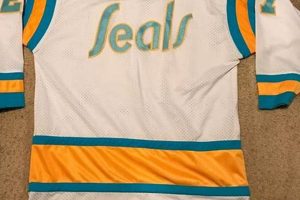
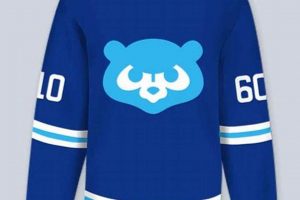
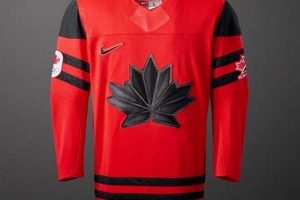
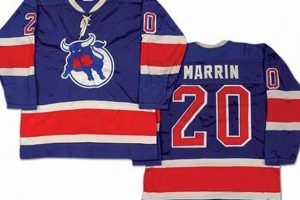
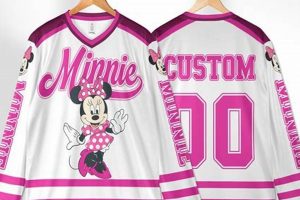
Garments worn in ice hockey that incorporate designs, logos, and player information directly into the fabric through a dye-sublimation printing process offer durable and visually appealing uniforms. This production method involves transferring specially formulated inks onto a synthetic material at high temperatures, resulting in a permanent, vibrant, and high-resolution graphic that becomes part of the textile itself. An example is a team uniform featuring intricate team crests, player numbers, and sponsor logos, all seamlessly integrated into the fabric, eliminating the possibility of cracking, peeling, or fading.
This apparel choice is highly valued within the sport for several reasons. Its durability ensures that the design remains intact even under the rigors of intense gameplay and frequent washing. The ability to create complex and customized designs allows teams to express their unique brand identity and attract sponsors. Historically, teams relied on sewn-on patches and screen-printing, which were less durable and limited design options. The advent of the dye-sublimation process offered a significant improvement in both aesthetic quality and longevity.
The advantages of this manufacturing technique extend to diverse aspects of the industry, influencing design trends, material selection, and the overall player experience. Further exploration into specific design considerations, fabric technologies, and the economic impact on team branding provides a deeper understanding of its multifaceted role in modern ice hockey.
Considerations for Sublimated Hockey Jersey Selection and Maintenance
The following points offer guidance on the effective selection, care, and utilization of customized hockey apparel produced using dye-sublimation techniques.
Tip 1: Design Complexity and Cost: Intricate designs with numerous colors may increase the initial production cost. Evaluate the design’s complexity against budgetary constraints. A simplified, yet effective, design can be equally impactful while remaining cost-effective.
Tip 2: Fabric Selection for Performance: Opt for moisture-wicking and breathable fabrics to enhance player comfort and performance. Polyester and its variations are commonly used for their durability and suitability for the sublimation process. Selecting a heavier weight fabric may improve durability but can impact breathability.
Tip 3: Color Matching and Brand Consistency: Ensure precise color matching across all team apparel to maintain a consistent brand identity. Provide accurate color codes (e.g., Pantone) to the manufacturer to minimize discrepancies. Discrepancies in color representation can negatively impact a team’s professional image.
Tip 4: Sizing and Fit Considerations: Offer a range of sizes to accommodate all players comfortably. Consider providing size charts and sample garments for players to try on before placing a bulk order. Ill-fitting apparel can hinder player mobility and performance.
Tip 5: Durability and Wash Instructions: Adhere to the manufacturer’s recommended wash instructions to prolong the life of the apparel. Avoid using harsh detergents or bleach, which can damage the sublimated design. Proper care will ensure the design remains vibrant and intact over time.
Tip 6: Verify Quality Control Procedures: Prior to placing a large order, inquire about the manufacturer’s quality control procedures. Request samples to assess the print quality, fabric durability, and overall construction of the jersey. Thorough quality control minimizes the risk of defects and ensures customer satisfaction.
Following these guidelines ensures a durable, visually appealing, and high-performance uniform that contributes to a team’s overall success and professional image.
Moving forward, a detailed analysis of the specific materials used in the sublimation process and their impact on garment performance will provide further insight into optimizing apparel selection.
1. Design Permanence

Design permanence, in the context of ice hockey apparel, refers to the resistance of graphics, logos, and identifying marks to degradation over time and through repeated use. With garments employing dye-sublimation techniques, design permanence is a critical attribute. The sublimation process infuses the ink directly into the fabric fibers, creating a bond that withstands the rigors of on-ice activity, repeated laundering, and exposure to environmental elements. A lack of design permanence results in fading, cracking, or peeling of the graphics, negatively impacting the visual appeal and professional image of the team. For example, a team logo that fades quickly after only a few washes necessitates costly replacements, undermining the initial investment in the apparel.
The bond between ink and fabric achieved during sublimation directly correlates to design permanence. High-quality inks and controlled application processes are crucial. In contrast, screen-printed designs or applied decals are prone to separation from the fabric surface due to their superficial adhesion. This advantage translates to a more cost-effective long-term solution, as sublimated graphics remain intact and vibrant for the garment’s lifespan. Moreover, the design remains unaffected by abrasions from equipment or physical contact during gameplay, maintaining a professional and consistent appearance.
In summation, design permanence is a key determinant of value and performance. Its resistance to wear and tear ensures a lasting visual identity, optimizing both the initial investment and the team’s representation. Teams should prioritize sublimation to avoid the pitfalls of less durable methods. Future advancements in sublimation ink technologies promise even greater resistance to fading and abrasion, solidifying its position as the preferred method for professional hockey apparel.
2. Fabric Breathability

Fabric breathability is a crucial characteristic of ice hockey apparel, particularly within the context of garments produced through dye-sublimation processes. Effective breathability facilitates the evaporation of perspiration, mitigating the negative effects of heat and moisture buildup during strenuous physical activity.
- Moisture Wicking and Air Permeability
The ability of a fabric to wick moisture away from the skin and allow air to circulate through its structure defines its breathability. Materials like polyester, often utilized in sublimation, can be engineered with enhanced wicking properties. This functionality reduces the accumulation of sweat, preventing discomfort and minimizing the risk of skin irritation. For example, tightly woven, non-breathable fabrics restrict airflow, leading to overheating and decreased performance. This is especially pertinent in ice hockey, where players exert significant energy in a cold environment.
- Impact of Dye-Sublimation on Fabric Structure
The dye-sublimation process itself can influence a fabric’s breathability. While the process embeds ink within the fibers, excessive dye application may potentially reduce the fabric’s inherent air permeability. Therefore, manufacturers must carefully control the ink saturation levels to preserve the fabric’s ventilating properties. In instances where breathability is compromised, players may experience increased core temperatures and decreased endurance. This consideration is critical for maintaining optimal performance levels throughout a game.
- Influence of Jersey Design and Construction
The design and construction of the ice hockey apparel contributes to its breathability. Strategically placed mesh panels or ventilation zones in high-heat areas can enhance airflow and improve moisture evaporation. Seam placement and construction techniques can also affect breathability; bulky or restrictive seams can impede airflow. Thoughtful design, therefore, complements the inherent breathability of the selected fabric, optimizing comfort and performance.
- Long-Term Performance and Maintenance
The breathability of a fabric can degrade over time due to factors such as repeated washing and the accumulation of dirt or residue. Following the manufacturer’s care instructions is essential for preserving the fabric’s performance characteristics. Harsh detergents or improper drying methods can damage the fibers and reduce their ability to wick moisture and allow airflow. Regular cleaning and proper care extend the lifespan and maintain the breathability of the garment.
In summary, fabric breathability is an essential attribute influencing player comfort and performance. The interplay between material selection, sublimation process control, design considerations, and proper maintenance dictates the extent to which a can effectively regulate temperature and moisture. By considering these elements, teams can ensure their athletes are equipped with apparel that promotes peak physical condition and sustained performance.
3. Color Vibrancy

Color vibrancy, in the context of apparel manufactured through dye-sublimation, is the perceived intensity and vividness of the hues transferred onto the fabric. In the case of ice hockey uniforms, this attribute is critical for projecting a team’s identity, attracting sponsorships, and enhancing the overall visual appeal. A lack of color vibrancy results in a dull or washed-out appearance, diminishing the impact of team logos, player numbers, and sponsor advertisements. For example, a team that utilizes a specific shade of blue to represent its brand relies on the accurate and vibrant reproduction of that color to maintain brand consistency. Compromised color vibrancy undermines the brand image and reduces the uniform’s aesthetic appeal.
The dye-sublimation process directly influences color vibrancy. The process involves converting solid dye particles into a gaseous state, allowing them to penetrate the fabric fibers and create a permanent bond. High-quality sublimation inks and controlled printing parameters (temperature, pressure, and time) are essential for achieving optimal color saturation and vibrancy. In contrast, low-quality inks or inadequate printing conditions result in muted or faded colors. This phenomenon emphasizes the importance of partnering with reputable manufacturers who employ rigorous quality control measures. For instance, sports apparel companies that invest in advanced color management systems can accurately reproduce a wide range of colors with exceptional vibrancy, ensuring brand consistency across all team apparel.
Color vibrancy is a key determinant of the visual impact and perceived quality. Its capacity to reproduce a brand’s identity accurately and vibrantly enhances recognition. Challenges of long-term color retention under heavy use require using high-quality inks and carefully following care instructions. The selection of sublimation techniques is paramount. As technology advances in ink formulation and application, garments are expected to demonstrate even greater color fastness. This will continue to enhance team branding and player appeal.
4. Seam Durability

Seam durability in the context of ice hockey apparel, particularly garments that have undergone dye-sublimation processes, is a critical factor influencing the overall lifespan and performance of the product. Robust seams are essential for withstanding the intense physical demands inherent in the sport.
- Seam Type and Construction
The specific type of seam employed significantly impacts its durability. Interlock seams, flatlock seams, and overlock seams are commonly used in athletic apparel due to their strength and ability to stretch without breaking. For example, a flatlock seam creates a flat, low-profile connection between fabric panels, minimizing bulk and preventing chafing while maximizing seam strength. Conversely, a poorly constructed seam, such as a single-needle stitch, is more likely to fail under stress. The choice of seam construction directly influences the garment’s ability to withstand the rigors of gameplay.
- Thread Quality and Composition
The thread used to create the seams is equally crucial. High-tenacity polyester or nylon threads are preferred for their strength, abrasion resistance, and ability to withstand repeated laundering. Lower-quality threads, such as cotton, are more susceptible to breakage and degradation. An example of the importance of thread quality is seen in professional hockey jerseys, where reinforced seams with high-strength thread prevent tearing during aggressive physical contact. Therefore, the selection of appropriate thread materials is paramount for ensuring long-lasting seam integrity.
- Reinforcement Techniques
Strategic reinforcement of seams in high-stress areas can significantly enhance durability. This may involve adding extra stitching, using bartacks to secure seam ends, or incorporating reinforcing tape along the seam line. For instance, reinforcing seams at the shoulders and elbows of an ice hockey jersey prevents tearing during collisions and falls. Without these reinforcements, seams in these vulnerable areas are more likely to fail prematurely. The implementation of appropriate reinforcement techniques extends the garment’s lifespan and maintains its structural integrity.
- Impact of Sublimation on Seam Integrity
The dye-sublimation process itself does not directly compromise seam durability. However, the heat applied during sublimation can potentially weaken certain thread types or adhesives used in seam construction. Therefore, it is essential to select threads and adhesives that are compatible with the high temperatures used in sublimation. For example, using heat-resistant thread ensures that the seams remain strong and intact after the sublimation process. Careful material selection and quality control are necessary to mitigate any potential adverse effects of sublimation on seam integrity.
In conclusion, seam durability is a multifaceted attribute that depends on seam type, thread quality, reinforcement techniques, and compatibility with the sublimation process. Attention to these factors ensures that garments can withstand the demanding conditions of ice hockey, providing athletes with reliable and long-lasting apparel. The integration of robust seams is integral to the performance and value.
5. Customization Options

The appeal of apparel produced using dye-sublimation techniques is significantly augmented by the breadth of available customization options. The process inherently allows for intricate designs, team logos, player names, and sponsor advertisements to be seamlessly integrated into the fabric. This capability contrasts sharply with traditional methods such as screen printing or sewn-on patches, which often limit design complexity and are prone to wear and tear. A direct consequence of the sublimation process is that design elements become an intrinsic part of the fabric, resisting fading, cracking, or peeling. The ability to fully customize a garment, down to the smallest detail, empowers teams to express their unique brand identity and create a cohesive visual representation.
Real-life examples illustrate the practical significance of comprehensive customization options. Professional ice hockey teams frequently utilize the sublimation process to create alternate uniforms that celebrate historical milestones or showcase charitable partnerships. These specialized designs, often featuring intricate graphics and unconventional color schemes, would be impractical or impossible to achieve using traditional methods. Moreover, the ability to customize each garment with individual player names and numbers ensures a professional and unified appearance on the ice. This level of personalization enhances team morale and fosters a sense of belonging among players. Furthermore, the integration of sponsor logos provides valuable revenue streams for teams, further demonstrating the economic significance of customization.
In summary, the deep integration of customization options is a key benefit. This permits sophisticated branding. The challenge of meeting very specific design and color matching requires working with established manufacturers committed to quality. It remains at the forefront of appealing garments within a team environment.
6. Player Comfort
Player comfort, in the context of ice hockey, directly influences performance, endurance, and overall well-being. Garments produced through dye-sublimation, while offering numerous aesthetic and branding advantages, must prioritize player comfort to be effective. The interplay between fabric selection, design considerations, and the sublimation process itself dictates the level of comfort afforded to the athlete.
- Moisture Management and Breathability
Efficient moisture management is paramount for maintaining player comfort during intense physical activity. Fabrics used in sublimated ice hockey uniforms must effectively wick perspiration away from the skin, preventing the build-up of moisture and reducing the risk of chafing. Breathability, the ability of the fabric to allow air circulation, further enhances comfort by facilitating evaporative cooling. For instance, a uniform constructed from a non-breathable material can trap heat and moisture, leading to overheating, discomfort, and decreased performance. Conversely, a breathable and moisture-wicking fabric promotes a cool, dry, and comfortable environment, allowing players to focus on the game.
- Fabric Weight and Texture
The weight and texture of the fabric significantly impact player comfort. A heavy or abrasive fabric can restrict movement and cause skin irritation. Lightweight and smooth fabrics, on the other hand, offer greater freedom of movement and reduce the likelihood of chafing. Consider a scenario where a player is wearing a jersey made from a rough, heavy material; this would limit agility and distract during play. Selecting a soft, lightweight fabric in production ensures better comfort for athletes.
- Seam Placement and Construction
Seam placement and construction play a critical role in preventing skin irritation and discomfort. Poorly placed or bulky seams can rub against the skin during movement, causing chafing and discomfort. Flatlock seams, which create a smooth, low-profile connection between fabric panels, are often preferred in athletic apparel to minimize friction. Properly designed construction ensures seams are not in contact with skin to prevent distractions.
- Fit and Range of Motion
An appropriate fit is essential for optimizing player comfort and performance. Uniforms that are too tight can restrict movement, while those that are too loose can be cumbersome and distracting. A well-fitted sublimated jersey should allow for a full range of motion without binding or restricting the athlete’s movements. Proper sizing consideration ensures comfort for player movement during performance.
In summary, player comfort is an indispensable attribute of any ice hockey apparel, impacting not only the athlete’s physical well-being but also their performance on the ice. The effective management of moisture, selection of appropriate fabrics, strategic seam placement, and an optimized fit are all essential for maximizing player comfort in a garment made through dye-sublimation techniques. Attention to detail in these areas allows athletes to remain focused and comfortable.
7. Cost-Effectiveness

The economic viability of sublimated hockey jerseys hinges on the balance between initial investment and long-term value. While the upfront cost may exceed that of traditionally produced garments, the superior durability and design permanence inherent in the sublimation process contribute to cost-effectiveness over the lifespan of the apparel. A team that opts for sublimated jerseys experiences reduced replacement frequency due to the resistance of designs to fading, cracking, or peeling, a common issue with screen-printed alternatives. This decreased need for replacements translates directly into long-term savings, effectively offsetting the initial investment. Furthermore, the vibrant, high-resolution graphics achieved through sublimation enhance a team’s professional image, potentially attracting sponsors and increasing revenue streams. The ability to incorporate complex logos and advertisements seamlessly into the fabric eliminates the need for costly add-ons, such as patches, further contributing to cost-effectiveness.
Practical applications of this understanding extend to team budget allocation and resource management. By investing in higher-quality, sublimated jerseys, teams can minimize expenditures on apparel maintenance and replacement, freeing up funds for other essential needs, such as equipment upgrades or player development programs. A minor hockey league, for example, could allocate a portion of its fundraising efforts towards acquiring sublimated jerseys for all its teams. Although this may require a larger initial outlay, the reduced need for replacements over several seasons would result in substantial savings, allowing the league to invest in additional resources for its players. Moreover, the professional appearance afforded by sublimated jerseys can attract sponsorships from local businesses, further offsetting the cost of the apparel.
In summary, the cost-effectiveness stems from reduced replacements. The increased professional image also contributes to savings. The primary challenge is recognizing the lifecycle of durability. The long-term economic benefits of durability and design permanence outweigh the initial investment.
Frequently Asked Questions
This section addresses common inquiries regarding apparel produced utilizing the dye-sublimation process, providing detailed explanations and technical insights.
Question 1: What distinguishes a garment produced through dye-sublimation from one manufactured using traditional methods such as screen printing?
The core difference lies in the integration of design elements. Sublimation infuses ink directly into the fabric fibers, creating a permanent bond that resists fading, cracking, and peeling. Screen printing, conversely, applies ink to the surface of the fabric, resulting in a less durable finish susceptible to wear and tear.
Question 2: Does the dye-sublimation process impact the breathability or performance characteristics of the fabric?
While the sublimation process itself can slightly reduce breathability depending on ink saturation, careful control of ink application and the selection of appropriate moisture-wicking fabrics mitigate any negative impact. Quality manufacturers prioritize breathable materials and optimize the sublimation process to preserve the garment’s performance characteristics.
Question 3: How does the cost of apparel manufactured through dye-sublimation compare to traditionally produced garments?
The initial investment in sublimated apparel may be higher than that of traditionally produced garments. However, the increased durability and design permanence of sublimated apparel contribute to long-term cost-effectiveness by reducing the need for frequent replacements.
Question 4: What types of designs are best suited for garments produced through dye-sublimation?
The sublimation process is exceptionally well-suited for intricate and complex designs featuring numerous colors, gradients, and photographic images. The technology allows for seamless reproduction of even the most detailed graphics, offering virtually unlimited design possibilities.
Question 5: What are the recommended care instructions for sublimated hockey uniforms to ensure longevity?
To maximize the lifespan of sublimated uniforms, it is recommended to machine wash them inside out in cold water with a mild detergent. Avoid using bleach or fabric softeners, and tumble dry on low heat or hang to dry. Following these care instructions will help prevent fading and maintain the vibrancy of the design.
Question 6: Can dye-sublimation be applied to all types of fabrics?
Dye-sublimation is most effective on synthetic fabrics, particularly polyester and polyester blends. These materials readily accept the sublimation dyes and provide optimal color vibrancy and design permanence. Natural fibers, such as cotton, are not as suitable for sublimation due to their lower dye receptivity.
These FAQs offer a concise overview of key considerations regarding apparel produced through the dye-sublimation process. Understanding these aspects facilitates informed decisions and maximizes the value derived from this technology.
The subsequent article section will explore emerging trends and innovations in the field of dye-sublimation technology, providing a glimpse into the future of sports apparel manufacturing.
Conclusion
This article has explored the multi-faceted aspects of the sublimated hockey jersey, examining its design, durability, comfort, cost-effectiveness, and customization capabilities. Emphasis has been placed on the technical advantages of dye-sublimation over traditional manufacturing methods, highlighting the superior integration of design elements and the enhanced performance characteristics of the resulting garment. The detailed analysis of fabric breathability, seam durability, and color vibrancy has underscored the importance of informed material selection and quality control in achieving optimal product performance.
The adoption of sublimated hockey jersey technology represents a strategic investment in both team branding and athlete performance. Future innovations in ink technology, fabric science, and manufacturing processes promise even greater levels of design sophistication, durability, and comfort. Teams and organizations are encouraged to carefully consider the long-term value proposition of this technology when making decisions regarding apparel procurement. The performance and aesthetics of team sportswear are directly impacted when they utilize this process in the right way, and a greater understanding of the technique offers a competitive edge.