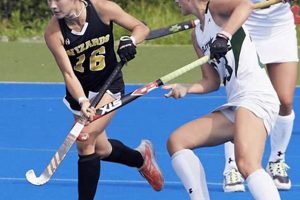
Footwear designed specifically for the indoor iteration of field hockey provides athletes with the necessary grip, support, and agility for optimal performance on smooth, hard surfaces. These specialized shoes often feature non-marking soles to preserve the integrity of the playing surface, coupled with reinforced toe and side panels to withstand the demands of close-quarters play. An example would be a shoe with a gum rubber outsole for superior traction and a low-profile midsole for enhanced court feel.
The appropriate footwear enhances a player’s ability to execute quick turns, maintain balance, and generate power during gameplay. Historical context reveals that the development of this equipment stemmed from the necessity for traction and protection not found in traditional outdoor field hockey shoes when adapted to indoor arenas. The benefits include reduced risk of injury and increased overall performance levels due to specialized design considerations.
The subsequent sections will delve into the specific features, materials, and considerations when selecting footwear for indoor field hockey. Analysis of different sole types, upper construction, and fit characteristics will provide a comprehensive understanding of the factors influencing athlete selection and performance.
Tips for Selecting Indoor Field Hockey Footwear
This section provides guidance on choosing the most suitable equipment for maximizing performance and minimizing the risk of injury during indoor play. Careful consideration of the following factors is crucial.
Tip 1: Prioritize Traction. The outsole material must provide superior grip on smooth, hard surfaces. Gum rubber soles are frequently recommended due to their high coefficient of friction. A slip-resistant sole minimizes the risk of falls and improves agility.
Tip 2: Evaluate Sole Flexibility. Footwear should allow for natural foot movement. Excessive rigidity can hinder quick pivots and turns. A flexible sole enables players to maintain balance and execute rapid changes in direction.
Tip 3: Assess Midsole Cushioning. Impact absorption is essential for reducing stress on joints. A well-cushioned midsole, often incorporating EVA foam or similar materials, protects against repetitive stress injuries. This becomes particularly important during extended periods of play.
Tip 4: Examine Upper Construction. The upper material should offer both support and breathability. Reinforced areas around the toe and sides protect against impact and abrasion. Breathable fabrics such as mesh enhance ventilation and prevent overheating.
Tip 5: Ensure Proper Fit. Ill-fitting footwear can lead to blisters, discomfort, and impaired performance. Footwear should fit snugly around the heel and midfoot, with adequate space in the toe box to accommodate natural foot splay during movement. A proper fit enhances comfort and responsiveness.
Tip 6: Consider Weight. Lighter footwear can improve agility and reduce fatigue. However, weight should not compromise support or protection. A balance between lightness and durability is ideal.
These selection criteria are paramount for enhancing performance and mitigating potential injuries. Informed selection ensures optimal gameplay experience.
The subsequent conclusion will consolidate the preceding information and summarize the key aspects for optimal selection.
1. Traction

Traction constitutes a foundational attribute of footwear specifically engineered for indoor field hockey. The nature of the playing surfacetypically polished wood or synthetic materialpresents a markedly different environment than the grass or turf encountered in the outdoor version of the sport. Consequently, the selection of appropriate sole materials and tread patterns becomes paramount. Inadequate traction can lead to slips, falls, and a diminished capacity for rapid acceleration, deceleration, and directional changes, all of which are critical for competitive performance. For example, a player attempting a quick pivot may lose footing if the footwear lacks sufficient grip, resulting in a missed opportunity or potential injury.
The correlation between effective traction and enhanced gameplay manifests through several observable effects. Improved traction facilitates sharper turns and quicker reactions, which directly translates into enhanced ball control and positioning on the field. Furthermore, the confidence instilled by reliable grip reduces hesitation and promotes more aggressive and decisive play. Field tests demonstrate that players equipped with high-traction soles exhibit demonstrably faster sprint times and improved agility scores compared to those using footwear with inferior grip properties. Practically, this means the design considerations must factor in not only the sole material’s frictional coefficient but also its ability to maintain grip under varying load conditions and through dynamic movements.
In summary, the relationship between traction and indoor field hockey performance is demonstrably causal and practically significant. Selecting footwear with optimized traction characteristics is not merely a matter of preference but a fundamental requirement for maximizing athletic potential and minimizing the risk of injury. Future innovations will likely focus on further refining sole materials and tread patterns to provide even greater levels of grip and responsiveness in the demanding conditions of indoor field hockey.
2. Flexibility

Flexibility, in the context of footwear designed for indoor field hockey, denotes the shoe’s capacity to conform to the natural movements of the foot. This characteristic is not merely a matter of comfort; rather, it is intrinsically linked to an athlete’s agility, responsiveness, and risk of injury during gameplay.
- Ankle Mobility and Range of Motion
Limited flexibility in the shoe’s construction can restrict ankle mobility, impeding a player’s ability to execute rapid changes in direction or maintain balance during dynamic movements. A shoe that allows for natural ankle flexion and extension facilitates quicker pivots and reduces the strain on surrounding ligaments and tendons. For instance, footwear with a stiff sole may prevent the ankle from properly adapting to uneven surfaces or sudden shifts in weight, thereby increasing the likelihood of sprains.
- Forefoot Flexibility and Propulsion
The ability of the shoe to flex in the forefoot region directly affects a player’s propulsion and acceleration. A flexible forefoot allows the foot to bend naturally during push-off, maximizing the transfer of energy and enhancing speed. Conversely, a rigid forefoot can inhibit this natural movement, reducing efficiency and increasing fatigue. As an example, a sprinter in inflexible footwear would expend more energy to achieve the same velocity as one in a shoe that allows for greater forefoot flexion.
- Midsole Torsion and Adaptability
Torsional flexibility in the midsole is essential for adapting to uneven surfaces and maintaining stability during lateral movements. A shoe that allows for a degree of twisting motion can help to absorb impact and distribute stress more evenly across the foot, reducing the risk of ankle or knee injuries. Consider a scenario where a player steps awkwardly on the edge of the playing surface; a torsionally flexible midsole can accommodate this unevenness and prevent a sudden, jarring impact on the joints.
- Material Composition and Construction
The materials used in the construction of the shoe, as well as the design of the sole and upper, significantly influence its overall flexibility. Softer, more pliable materials generally offer greater flexibility, while thicker, more rigid materials tend to restrict movement. The construction techniques employed, such as the use of flex grooves in the sole or strategic stitching patterns in the upper, can further enhance or limit flexibility. For example, a shoe with deep flex grooves in the forefoot will typically exhibit greater flexibility than one with a solid, unyielding sole.
In conclusion, the degree of flexibility inherent in indoor field hockey footwear directly impacts an athlete’s agility, stability, and overall performance. The interplay of ankle mobility, forefoot flexibility, midsole torsion, and material composition determines the shoe’s capacity to adapt to the demands of the sport and minimize the risk of injury. Therefore, players should prioritize footwear that offers a balance between support and flexibility, allowing for natural foot movement while providing adequate protection and stability.
3. Cushioning

Cushioning, as a component of indoor field hockey shoes, serves as a primary interface between the athlete’s foot and the hard, unforgiving surfaces typical of indoor playing environments. The lack of natural shock absorption inherent in these surfaces necessitates that the footwear provides adequate attenuation of impact forces. Insufficient cushioning can lead to a cascade of biomechanical consequences, including increased stress on joints, accelerated fatigue, and a heightened risk of lower extremity injuries. For instance, repetitive landing and pivoting motions, characteristic of indoor field hockey, generate substantial forces that, without proper cushioning, are directly transmitted to the ankles, knees, and hips. The etiology of stress fractures, plantar fasciitis, and other overuse injuries is often directly linked to inadequate shock absorption in footwear.
The effectiveness of cushioning materials directly influences the performance and longevity of the athlete. Materials such as ethylene-vinyl acetate (EVA) and polyurethane (PU) foams, often incorporated into midsoles, are selected based on their shock-absorbing properties, compression resistance, and durability. The density and thickness of these materials are critical factors in determining the level of protection provided. Furthermore, the placement of cushioning elements within the shoe must correspond to areas of high impact, such as the heel and forefoot, to maximize their effectiveness. Consider a scenario where an athlete is executing a sharp turn; the impact forces generated are concentrated in the forefoot region. Footwear designed without adequate forefoot cushioning will result in increased stress on the metatarsals, potentially leading to discomfort or injury. Similarly, the heel strike phase of running generates significant vertical ground reaction forces that require substantial cushioning to mitigate.
In summary, the proper selection and implementation of cushioning technology in indoor field hockey shoes is not a trivial design consideration but a fundamental requirement for promoting athlete safety, optimizing performance, and extending the lifespan of athletic careers. Challenges in this area include balancing the need for maximal shock absorption with the desire for responsiveness and stability. Further research into advanced cushioning materials and biomechanical analysis of foot-surface interactions is essential for continually improving the design and effectiveness of indoor field hockey footwear.
4. Support
Support, in the context of indoor field hockey footwear, constitutes the structural elements designed to stabilize the foot and ankle, mitigating the risk of injury and optimizing biomechanical efficiency during gameplay. The dynamic movements inherent in the sport, characterized by rapid lateral shifts, abrupt stops, and forceful impacts, place substantial stress on the musculoskeletal system. Insufficient support can lead to ankle sprains, plantar fasciitis, and other overuse injuries, ultimately hindering performance and potentially sidelining athletes. Adequate support is achieved through a combination of design features, including reinforced heel counters, medial and lateral stability bars, and supportive upper materials that conform to the foot’s contours. For example, a heel counter, constructed from rigid materials, prevents excessive pronation or supination, thereby reducing the likelihood of ankle inversion injuries commonly observed in indoor field hockey.
The practical manifestation of adequate support translates into enhanced athletic performance and reduced recovery time. Footwear that effectively stabilizes the foot and ankle allows athletes to execute movements with greater confidence and precision, facilitating quicker reactions and more efficient energy transfer. A stable platform promotes proper alignment of the lower extremities, minimizing compensatory movements that can lead to fatigue and injury. Consider a player attempting a crossover step; footwear with inadequate lateral support may cause the foot to roll inward excessively, compromising balance and increasing the risk of ankle sprain. Conversely, footwear with robust lateral support maintains foot stability, enabling the athlete to execute the maneuver with greater speed and control. Post-game recovery is also influenced by the level of support provided; reduced stress on joints and soft tissues minimizes inflammation and facilitates faster tissue repair.
In summary, the relationship between support and indoor field hockey shoe design is fundamentally critical for both injury prevention and performance enhancement. Effective support mechanisms within the footwear provide a stable foundation for dynamic movements, reducing the risk of ankle and foot injuries while optimizing biomechanical efficiency. Continuous advancements in materials science and biomechanical engineering are essential for further refining support structures in indoor field hockey shoes, ensuring athletes can perform at their peak while minimizing the potential for long-term musculoskeletal damage. Future designs may integrate dynamic support systems that adapt to individual foot morphology and movement patterns, providing personalized stability and cushioning.
5. Breathability

Breathability, in the context of footwear for indoor field hockey, refers to the capacity of the shoe to facilitate the circulation of air and the expulsion of moisture vapor from the interior. This characteristic is not merely a matter of comfort; it directly influences physiological performance, thermal regulation, and the prevention of dermatological complications. The enclosed environment of indoor sports arenas, coupled with the intense physical exertion inherent in field hockey, creates conditions conducive to elevated foot temperature and perspiration. Without adequate breathability, moisture accumulates within the shoe, fostering an environment ripe for bacterial and fungal growth, leading to conditions such as athlete’s foot and blisters. A practical example is observed in athletes who experience persistent foot odor and skin irritation despite meticulous hygiene practices; often, the underlying cause is inadequate ventilation within their footwear.
The materials used in the construction of the upper portion of the shoe significantly impact its breathability. Synthetic materials, while often offering durability and water resistance, tend to exhibit lower breathability compared to natural materials such as leather or specifically engineered breathable meshes. The design of the shoe also plays a crucial role; ventilation holes, strategically placed to maximize airflow without compromising structural integrity, can enhance breathability significantly. Furthermore, the sock liner, or insole, can contribute to moisture management by incorporating materials with wicking properties, drawing perspiration away from the skin and facilitating evaporation. For instance, shoes incorporating a combination of breathable mesh uppers, ventilation ports, and moisture-wicking sock liners demonstrate a measurably lower internal humidity level compared to those lacking these features, resulting in improved comfort and reduced risk of skin maceration.
In summary, breathability is a critical, often underestimated, attribute of indoor field hockey shoes that directly affects athlete comfort, hygiene, and performance. The selection of breathable materials and thoughtful design considerations are essential for creating footwear that effectively manages moisture and temperature, thereby minimizing the risk of dermatological issues and optimizing physiological efficiency. Challenges remain in balancing breathability with other desirable characteristics such as durability and support, necessitating ongoing research and development in materials science and footwear engineering.
6. Fit

The fit of indoor field hockey shoes constitutes a foundational element in ensuring optimal performance, comfort, and injury prevention. The intricate and demanding nature of indoor field hockey necessitates a secure and precise fit to facilitate rapid movements, maintain stability, and minimize the risk of blisters, chafing, and other foot-related issues. Ill-fitting footwear compromises a player’s agility, responsiveness, and overall confidence on the court. For example, a shoe that is too loose can lead to excessive foot movement within the shoe, causing friction and increasing the likelihood of blisters, while a shoe that is too tight can restrict blood flow and cause discomfort, hindering performance.
The relationship between fit and athletic performance is evident in various aspects of gameplay. A properly fitted shoe allows for a more direct transfer of power from the foot to the ground, enhancing acceleration and agility. It also provides a more stable platform for making quick turns and stops, reducing the risk of ankle sprains and other injuries. Furthermore, a secure fit ensures that the shoe moves in sync with the foot, minimizing slippage and maximizing responsiveness. Consider a scenario where a player needs to execute a sudden change of direction; if the shoe does not fit properly, the foot may slide within the shoe, resulting in a loss of balance and a delay in reaction time. The practical significance of understanding proper fit lies in the ability to select footwear that complements individual foot morphology and playing style, ultimately contributing to enhanced athletic outcomes.
In conclusion, the significance of fit in indoor field hockey shoes cannot be overstated. It is a critical determinant of performance, comfort, and injury prevention. Accurate sizing, consideration of foot shape and width, and appropriate lacing techniques are all essential for achieving a proper fit. Challenges remain in developing footwear that accommodates the diverse range of foot types and the dynamic movements inherent in the sport. Future advancements in footwear technology should focus on customizable fitting systems and materials that conform to the foot’s unique contours, ensuring that every player can benefit from a shoe that provides optimal support and comfort.
Frequently Asked Questions
This section addresses common inquiries and misconceptions regarding footwear specifically designed for indoor field hockey. The information provided aims to clarify the features, selection criteria, and maintenance aspects of this specialized equipment.
Question 1: Are “indoor field hockey shoes” the same as regular athletic shoes?
No. Footwear designed for indoor field hockey incorporates specific features tailored to the demands of the sport, including non-marking soles, enhanced lateral support, and specialized cushioning systems optimized for hard, indoor surfaces. General athletic shoes lack these sport-specific design considerations and may compromise performance and safety.
Question 2: What type of sole is best for “indoor field hockey shoes”?
Gum rubber soles are widely recognized as the optimal choice due to their superior traction on smooth, indoor surfaces. The high coefficient of friction exhibited by gum rubber provides exceptional grip, facilitating rapid movements and minimizing the risk of slips. Non-marking characteristics also prevent damage to the playing surface.
Question 3: How important is cushioning in “indoor field hockey shoes”?
Cushioning is a critical factor in mitigating the impact forces generated during indoor play. Adequate cushioning reduces stress on joints, minimizes fatigue, and helps prevent overuse injuries. Midsoles constructed from materials such as EVA or polyurethane foam provide effective shock absorption, enhancing comfort and protecting against the repetitive strain associated with indoor field hockey.
Question 4: How should “indoor field hockey shoes” fit?
A proper fit is essential for both comfort and performance. Footwear should fit snugly around the heel and midfoot, with adequate space in the toe box to allow for natural foot splay during movement. Ill-fitting shoes can lead to blisters, discomfort, and impaired agility. Accurate sizing and consideration of foot shape are crucial for achieving a secure and comfortable fit.
Question 5: How should “indoor field hockey shoes” be maintained?
Regular cleaning is essential for preserving the integrity and performance of footwear. Remove debris after each use, and allow shoes to air dry thoroughly. Avoid exposing shoes to excessive heat or direct sunlight, as this can damage the materials and shorten their lifespan. Periodic replacement of insoles can also improve hygiene and comfort.
Question 6: Can “indoor field hockey shoes” be used for other sports?
While footwear designed for indoor field hockey may offer some advantages in other indoor sports, they are specifically engineered for the unique demands of field hockey. Using them for other activities may compromise their effectiveness and potentially accelerate wear and tear. It is recommended to use sport-specific footwear whenever possible.
Understanding the specific features and requirements of this specialized equipment is essential for maximizing performance and minimizing the risk of injury. Proper selection and maintenance contribute significantly to a positive and safe playing experience.
The subsequent section provides a concluding summary of key considerations and recommendations.
Conclusion
The preceding analysis has underscored the critical role of footwear explicitly designed for indoor field hockey. Key considerations, including traction, flexibility, cushioning, support, breathability, and fit, significantly influence athletic performance and injury prevention. Compromising on any of these factors can detrimentally impact an athlete’s ability to execute rapid movements, maintain stability, and withstand the repetitive stress inherent in the sport.
Therefore, informed selection and meticulous maintenance of footwear tailored for indoor field hockey are not merely preferential choices but essential investments in athletic well-being and competitive success. The continued advancement of materials science and biomechanical engineering promises to further refine these specialized designs, ensuring that athletes can perform at their peak potential while mitigating the risk of long-term physical harm. Prioritizing appropriate equipment remains paramount for the sustained development and enjoyment of indoor field hockey.