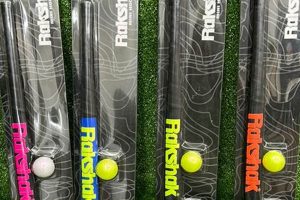
The selection of appropriate equipment significantly impacts performance in field hockey. Identifying manufacturers that consistently produce high-quality, reliable, and innovative equipment is crucial for athletes seeking to optimize their gameplay. These manufacturers are known for their commitment to material science, engineering, and player feedback, resulting in products that enhance power, control, and overall field presence.
Utilizing equipment from reputable sources provides a competitive advantage. Enhanced performance characteristics can lead to improved shot accuracy, increased ball speed, and superior handling. A history of innovation and dedication to player needs also ensures athletes have access to the latest advancements in composite materials, stick shapes, and weight distribution. These factors contribute to increased confidence and a lower risk of equipment-related failures during critical moments of competition.
The subsequent discussion will focus on evaluating key aspects of the major players in the field hockey equipment market. The analysis will encompass product lines, technological advancements, player endorsements, and overall reputation within the sport. This information will help players, coaches, and parents make informed decisions about equipment acquisition.
Equipment Selection Guidance
Optimizing performance on the field necessitates careful consideration of equipment. Selection criteria must align with individual playing style, position, and skill level. The following provides guidance on selecting appropriate equipment to enhance gameplay.
Tip 1: Evaluate Material Composition: Composite materials, such as carbon fiber and fiberglass, offer varying levels of stiffness and power. A higher carbon content generally translates to increased power and reduced flex, suitable for offensive players. Conversely, a higher fiberglass content provides greater control and feel, often preferred by defensive players.
Tip 2: Consider Stick Weight and Balance: Stick weight and balance influence maneuverability and swing speed. Lighter sticks facilitate quicker stick work and are beneficial for players emphasizing agility. Heavier sticks provide more power but may sacrifice speed. Experimentation with different weight distributions helps determine the optimal balance point for individual preference.
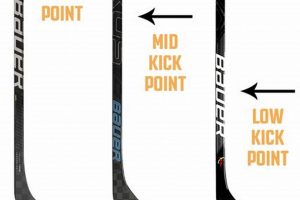
Tip 3: Assess Bow Shape and Placement: The bow, or curve, of a stick impacts ball control and shooting technique. Mid-bow sticks are versatile and suitable for all-around play. Low-bow sticks are designed for drag-flicking and aerial skills. The bow’s location influences the ease with which specific skills can be executed.
Tip 4: Analyze Handle Grip and Thickness: A comfortable and secure grip is essential for maintaining control. Experiment with different grip thicknesses and textures to find a configuration that minimizes slippage and maximizes feel. Regular replacement of worn grips ensures consistent performance.
Tip 5: Account for Length: Stick length should correspond to the player’s height and playing style. A stick that is too short may lead to poor posture and reduced reach, while a stick that is too long can hinder ball control. Seek guidance from a coach or experienced player to determine the appropriate length.
Tip 6: Prioritize Durability: Selecting equipment designed for long-term use ensures consistent performance and minimizes the need for frequent replacements. Invest in products known for their construction and resistance to wear and tear.
Adhering to these guidelines helps facilitate informed equipment choices, leading to enhanced on-field performance and a more enjoyable playing experience.
The following sections will provide additional insights into specific product lines and technological advancements, further aiding in the equipment selection process.
1. Material Innovation

Material innovation is a cornerstone differentiating leading field hockey stick manufacturers. The utilization of advanced materials directly influences the stick’s power, feel, durability, and overall performance, impacting an athlete’s ability to execute skills effectively.
- Composite Composition Refinement
The optimization of composite material blends, specifically carbon fiber, fiberglass, and aramid, is paramount. Varying the ratios of these materials allows manufacturers to fine-tune the stick’s stiffness, flex, and vibration dampening characteristics. High-carbon sticks deliver increased power for shooting, while higher fiberglass content provides enhanced feel for close control. Advanced weaving techniques further enhance strength and reduce weight, leading to improved maneuverability.
- Resin Technology Advancements
The type of resin used to bind the composite layers significantly affects the stick’s overall performance and lifespan. Innovative resin systems offer superior bonding strength, impact resistance, and temperature stability. Some manufacturers employ specialized resins that reduce vibration and improve energy transfer, resulting in a more responsive and powerful feel during ball striking.
- Damping Material Integration
Integrating damping materials within the stick’s construction minimizes unwanted vibrations, enhancing feel and reducing the risk of injury. Foam cores or strategically placed gel inserts absorb shock, improving player comfort and control, particularly during high-impact situations. Effective damping technology allows players to maintain focus and precision throughout the game.
- Shape and Profile Optimization
Advanced manufacturing techniques enable the creation of complex stick shapes and profiles that optimize performance for specific playing styles. Bow shapes, head shapes, and shaft profiles are carefully engineered to enhance ball control, lifting ability, and shooting accuracy. These innovations allow players to tailor their equipment to their individual strengths and preferences.
These innovations illustrate how manufacturers invest in research and development to optimize stick performance. Leading brands consistently refine material composition, resin technology, damping integration, and shape optimization to provide athletes with equipment that enhances their capabilities. The constant pursuit of material advancements is what defines superior field hockey equipment manufacturers, ultimately contributing to improved on-field performance and player satisfaction.
2. Performance Enhancement

The concept of performance enhancement is intrinsically linked to identifying superior field hockey stick brands. Manufacturers achieving prominence in this sector consistently demonstrate a commitment to designing and producing equipment that demonstrably improves player capabilities. This encompasses improvements in shot power, ball control, speed of execution, and overall playing efficiency. The causality is direct: superior equipment, developed through advanced engineering and materials science, leads to enhanced performance metrics on the field.
Performance enhancement, therefore, is a critical component of what defines elite equipment providers. Brands like Grays, TK, and Ritual invest heavily in research and development, incorporating player feedback and advanced technology into their product design. For example, Grays’ GX series, featuring Kinetic Core technology, claims to increase energy transfer during ball striking, leading to increased shot power. Similarly, TK’s Total One series utilizes advanced carbon fiber layering to optimize stiffness and responsiveness, improving ball control and precision. The efficacy of these technologies is validated through player testimonials, scientific testing, and ultimately, on-field results. These brands gain and retain their reputation through tangible performance gains for players across skill levels.
Understanding the connection between superior brands and enhanced performance holds significant practical importance. Players, coaches, and parents can make informed decisions regarding equipment purchases by focusing on brands with a proven track record of delivering tangible performance benefits. While individual preferences play a role, a data-driven approach, centered on material composition, stick design, and player reviews, can help optimize equipment selection. This understanding translates to a competitive edge on the field, as players are equipped with tools designed to maximize their potential. The challenge lies in discerning marketing hype from genuine technological advancements, requiring a critical evaluation of available information and a reliance on credible sources and expert opinions.
3. Player Endorsements

The association of elite athletes with specific equipment manufacturers, known as player endorsements, significantly influences the perceived quality and desirability of field hockey sticks. A prominent player’s endorsement serves as a tacit validation of a brand’s product performance and reliability. This endorsement implicitly communicates that the equipment meets the stringent demands of professional-level gameplay, influencing purchasing decisions at all levels of the sport. The underlying assumption is that the endorsed equipment provides a competitive advantage, contributing to the athlete’s success.
The causal relationship operates as follows: manufacturers invest in research and development to produce high-performing equipment. Elite players, in search of optimal performance, select equipment that aligns with their needs. Successful performance by an endorsed player translates to increased brand visibility and consumer confidence. For instance, a prominent international player using a Grays stick who consistently scores goals elevates the perception of Grays as a superior brand. Similarly, when top defenders are associated with TK equipment, it can be a indicator of their ability to perform excellently. Conversely, a player experiencing equipment failure or substandard performance could negatively impact the brand’s reputation, even if the equipment is not solely responsible for the outcome. There are also times where brands select upcoming players as their endorsers, creating a connection between youth players and the brands.
However, the effectiveness of player endorsements depends on several factors. The athlete’s credibility and the authenticity of their endorsement are crucial. Overtly promotional or insincere endorsements can erode consumer trust. Moreover, the overall quality and performance of the equipment must align with the player’s reputation. A mismatch between endorsement and product performance can lead to consumer skepticism. Therefore, a nuanced understanding of player endorsements, coupled with a critical evaluation of product attributes, is necessary for informed decision-making in the field hockey equipment market.
4. Durability Standards
Durability standards are a critical differentiator among field hockey stick manufacturers. The longevity and resistance to damage of equipment directly impact its value proposition and contribute significantly to a brand’s reputation. Evaluating durability standards involves assessing material quality, construction techniques, and testing protocols employed by manufacturers.
- Material Selection and Quality Control
The selection of high-grade composite materials, such as carbon fiber and fiberglass, is fundamental to stick durability. Reputable manufacturers implement stringent quality control measures to ensure that materials meet specific standards for strength, flexibility, and impact resistance. Consistent material quality minimizes the risk of premature failure or performance degradation, thereby extending the useful life of the stick. Brands known for rigorous material selection processes generally exhibit superior durability.
- Construction Techniques and Reinforcement
Advanced construction techniques, including layering and orientation of composite materials, contribute significantly to the overall strength and resistance to cracking or delamination. Reinforcement of high-stress areas, such as the head and handle, further enhances durability. Manufacturers employing sophisticated molding processes and precise layering techniques produce sticks that withstand the rigors of competitive play for extended periods. Brands with advanced construction capabilities are more likely to meet stringent durability standards.
- Impact Resistance Testing
Rigorous impact resistance testing is essential for validating the durability of field hockey sticks. Manufacturers subject their products to standardized impact tests to assess their ability to withstand repeated high-force impacts without structural failure. These tests simulate the stresses encountered during gameplay, providing valuable data on the stick’s overall durability. Brands transparently communicating their testing protocols and results demonstrate a commitment to durability and player safety.
- Environmental Resistance and Longevity
Exposure to environmental factors, such as moisture and UV radiation, can degrade the performance and structural integrity of field hockey sticks. Manufacturers incorporating protective coatings and employing materials resistant to environmental degradation enhance the longevity of their products. Sticks designed to withstand environmental stressors maintain their performance characteristics over time, providing players with consistent performance and value. Brands that emphasize environmental resistance contribute to sustainable equipment options.
The emphasis on durability standards is directly correlated with leading field hockey stick brands. Manufacturers that prioritize material quality, advanced construction, rigorous testing, and environmental resistance produce equipment that consistently withstands the demands of competitive play. This commitment to durability translates to increased player satisfaction, enhanced brand reputation, and a superior value proposition in the marketplace. Prioritizing durability ensures players invest in equipment that performs reliably and lasts longer, maximizing their investment and minimizing equipment-related disruptions during critical moments of competition.
5. Technological Advancement
Technological advancement is a primary driver differentiating leading field hockey stick brands. Continuous innovation in materials science, design, and manufacturing processes enables these brands to create equipment that offers tangible performance improvements, thereby solidifying their position in the market. The pursuit of technological superiority is a defining characteristic of the most successful manufacturers.
- Composite Material Engineering
The refinement of composite materials, particularly carbon fiber, is a significant area of technological advancement. Manipulating the type, grade, and layering patterns of carbon fiber allows manufacturers to precisely control the stiffness, weight, and impact resistance of sticks. For instance, some brands utilize unidirectional carbon fiber for maximum stiffness along the length of the stick, while others employ woven patterns for enhanced torsional stability. These advancements directly translate to improved power transfer and accuracy during shooting and passing. Examples include the use of graphene-enhanced composites to increase impact resistance while minimizing weight.
- Vibration Dampening Systems
Excessive vibration can negatively impact a player’s feel for the ball and contribute to fatigue. Technological advancements in vibration dampening systems aim to mitigate these effects. This includes the integration of specialized foams, gels, or elastomers within the stick’s construction. These materials absorb and dissipate vibrations, resulting in a smoother feel and improved ball control. Some manufacturers utilize computational modeling to optimize the placement and properties of damping materials for maximum effectiveness.
- Bow Shape and Profile Optimization
The shape and profile of a field hockey stick’s bow significantly impact its performance characteristics, particularly for drag-flicking and aerial skills. Computer-aided design (CAD) and finite element analysis (FEA) enable manufacturers to optimize bow shapes for specific playing styles. These tools allow for precise control over the bow’s location, depth, and curvature, resulting in improved ball control, lifting ability, and power. For example, low-bow designs facilitate easier lifting for drag-flicking, while mid-bow designs offer a more balanced performance profile.
- Manufacturing Process Innovation
Advancements in manufacturing processes, such as resin transfer molding (RTM) and automated fiber placement (AFP), contribute to improved consistency, precision, and efficiency in stick production. These techniques allow for tighter tolerances and reduced material waste, resulting in higher-quality sticks with consistent performance characteristics. Automated processes also enable manufacturers to produce more complex stick designs that were previously unattainable. The integration of robotic systems in manufacturing is streamlining production and improving product quality.
These technological advancements are directly linked to the success of leading field hockey stick brands. Manufacturers that prioritize innovation and invest in research and development are better positioned to create equipment that meets the evolving needs of players at all levels. The ongoing pursuit of technological superiority remains a defining characteristic of the most successful brands in the field hockey equipment market, impacting player performance and market share.
Frequently Asked Questions
The following addresses common inquiries regarding the selection and maintenance of field hockey equipment, focusing on factors that contribute to optimal performance and longevity.
Question 1: What defines a superior field hockey stick brand?
A superior brand is characterized by consistent quality, material innovation, demonstrated performance enhancement, endorsements by elite players, adherence to stringent durability standards, and continuous technological advancement. These attributes collectively contribute to a brand’s reputation and product effectiveness.
Question 2: How important is material composition in field hockey stick selection?
Material composition is paramount. The blend of carbon fiber, fiberglass, and aramid directly influences the stick’s power, feel, and durability. Higher carbon content typically yields greater power, while higher fiberglass content enhances ball control. A balanced composition often represents a versatile option.
Question 3: Do player endorsements guarantee a brand’s superiority?
Player endorsements can be an indicator of a brand’s quality, but they should not be the sole determinant. A credible endorsement from an elite athlete suggests that the equipment meets professional standards. However, product performance and personal suitability should also be carefully considered.
Question 4: What durability factors should be considered when purchasing equipment?
Assess material quality, construction techniques, and impact resistance ratings. Reputable manufacturers subject their products to rigorous testing. Consider environmental resistance, as exposure to moisture and UV radiation can degrade certain materials over time. Longevity is a key indicator of value.
Question 5: How does technological advancement impact field hockey stick performance?
Technological advancements in composite materials, vibration dampening systems, and bow shape optimization directly influence performance. Innovations in these areas can lead to improved power transfer, ball control, and overall playing efficiency. Evaluate brands that consistently invest in research and development.
Question 6: What are the key considerations for stick length selection?
Stick length should correlate with the player’s height and playing style. A stick that is either too short or too long can hinder ball control and performance. Seek guidance from a coach or experienced player to determine the appropriate length.
These FAQs highlight the critical factors involved in selecting high-quality field hockey equipment. A comprehensive evaluation of these elements ensures informed decision-making and optimal on-field performance.
The subsequent section will provide insights into the future of field hockey equipment, exploring emerging trends and technological advancements that may shape the sport.
Concluding Remarks on Identifying Top-Tier Equipment
The preceding analysis has underscored the multi-faceted criteria that define high-quality field hockey equipment. Material innovation, performance enhancement, player endorsements, durability standards, and technological advancement each contribute to the overall value and effectiveness of equipment from leading manufacturers. Discerning these attributes enables informed decision-making, leading to optimal on-field performance.
Continued vigilance in monitoring emerging technologies and evolving player preferences remains crucial. Selection based on a comprehensive understanding of both objective performance metrics and individual needs is paramount. As the sport advances, the pursuit of superior equipment will inevitably shape the competitive landscape, driving athletes and manufacturers alike to strive for ever-higher levels of performance and innovation.