Methods employed to prevent the opposing team from scoring constitute a critical aspect of ice hockey. These systems involve player positioning, movement, and collaborative efforts designed to regain possession of the puck and protect the goal. For example, a team might utilize a zone defense, where players are responsible for covering specific areas of the ice, or a man-to-man marking system, focusing on individual opponents. Success hinges on discipline, communication, and the ability to adapt to the opposing team’s offensive tactics.
The implementation of robust obstruction methods yields numerous advantages, including reduced scoring opportunities for the opposition, increased team confidence, and improved overall performance. Historically, tactical approaches have evolved significantly, influenced by rule changes, player skill development, and strategic innovations. Effective execution of these methods can be the difference between victory and defeat, shaping the outcome of individual games and entire seasons.
The following discussion will explore specific systematic approaches used, examining their strengths, weaknesses, and suitability for various game situations. Further, this analysis will delve into the roles and responsibilities of individual players within these frameworks, highlighting the skills and attributes necessary for effective implementation.
Effective Obstruction Methods
Optimizing obstruction capabilities requires a multifaceted approach encompassing player development, tactical understanding, and disciplined execution. The following tips offer insights into enhancing effectiveness in this critical area of ice hockey.
Tip 1: Mastering Positional Play: Effective positioning is paramount. Players should maintain proper angles and distances relative to the puck and opponents. This minimizes passing lanes and limits scoring opportunities. For instance, a defenseman should position themselves between the attacker and the net, forcing the attacker to the outside.
Tip 2: Emphasizing Stick Checks: Disciplined stick work is essential. Players should focus on disrupting the puck carrier’s control with well-timed and legal stick checks. Overzealous stick work leads to penalties. A poke check, executed with proper timing and angle, can dislodge the puck effectively.
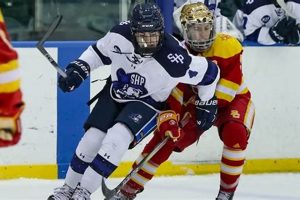
Tip 3: Prioritizing Body Positioning and Gap Control: Utilize body positioning to guide attackers towards less dangerous areas of the ice. Maintain a tight gap between the defenseman and the attacking forward to limit space and time. For example, a defenseman should skate backward, maintaining a close distance to the forward, while steering them toward the boards.
Tip 4: Perfecting Defensive Zone Coverage: Understanding and executing defensive zone coverage is vital. Whether employing a zone or man-to-man system, each player must fulfill their responsibilities. Clear communication and seamless transitions are essential. If utilizing a zone, players rotate through their assigned areas, ensuring no player is left uncovered.
Tip 5: Enhancing Transition Game: Efficiently transitioning from defense to offense is crucial. Quick puck retrieval and accurate outlet passes can initiate offensive opportunities. Smooth transitions catch the opposing team off guard. A defenseman, after retrieving the puck, should quickly assess the ice and make a smart pass to a forward.
Tip 6: Improving Communication: Constant and clear communication amongst players is essential for coordinated implementation. Verbally relaying positioning, identifying threats, and calling out plays enhances effectiveness. Communication prevents miscommunication and allows teammates to react quickly to changing situations.
Tip 7: Maintaining Discipline and Avoiding Penalties: Disciplined play is paramount. Avoid unnecessary penalties that create power play opportunities for the opposition. Controlled aggression and smart decision-making are key. Refrain from retaliatory actions or high-sticking infractions.
Adherence to these principles fosters a more impenetrable defense, leading to fewer goals conceded and improved overall team success. Effective execution hinges on consistent practice and a thorough understanding of each principle.
The following section will consider common errors related to these obstructive techniques and how to avoid them, fostering continuous improvement in defensive capabilities.
1. Positional Awareness

Positional awareness serves as a cornerstone within ice hockey obstruction approaches, dictating a player’s effectiveness in both individual engagements and overall team systems. It underpins the ability to anticipate plays, close down space, and disrupt the opposition’s offensive flow.
- Anticipation of Passing Lanes
This facet entails the ability to predict where the puck is likely to be passed, allowing a player to intercept or disrupt the pass. A defenseman anticipating a cross-ice pass can shift position to block the lane, preventing a scoring opportunity. The implication is a reduced likelihood of the opposing team gaining advantageous offensive positions.
- Effective Gap Control
Maintaining an appropriate distance between the defending player and the attacker is essential. A tight gap limits the attacker’s time and space, making it difficult to execute plays. Conversely, too much space allows the attacker to build momentum. The consequences of poor gap control are frequently seen in breakaways and odd-man rushes against the defending team.
- Strategic Angle Play
Taking optimal angles towards the puck carrier forces them towards less dangerous areas of the ice, such as the boards or away from the net. By positioning themselves correctly, a defender can limit the attacker’s options and direct the play. Incorrect angles can open up scoring lanes and create scoring chances for the opposition.
- Defensive Zone Coverage Responsibilities
Within structured systems, each player has specific zones or players they are responsible for covering. Positional awareness ensures players are in the correct location to fulfill these responsibilities, preventing breakdowns in coverage. For example, in a zone defense, each player must be aware of their assigned area and adjust their position based on the puck’s location. A breakdown in zone coverage can lead to open shots and goals.
These elements demonstrate the integral role of positional awareness. Mastery allows players to proactively influence the play, limit offensive opportunities, and contribute to a robust and effective framework. It moves from reactive engagement to proactive prevention, fundamentally altering the balance of power on the ice.
2. Gap Control

Gap control, a crucial element within ice hockey obstruction methodologies, refers to the distance maintained between a defending player and an opposing puck carrier. Effective management of this space directly impacts the attacker’s ability to generate offensive opportunities. A diminished gap reduces available time and space for puck handling, passing, and shooting. Conversely, an excessively large gap provides the attacker with increased freedom, potentially leading to scoring chances. A defenseman who consistently allows an attacking forward too much space is likely to concede zone entry and offensive pressure. Proper execution requires a combination of skating ability, positional awareness, and anticipation.
The implications of gap control extend beyond individual matchups to encompass broader team strategies. A coordinated approach to defensive coverage relies on consistent gap management across the defensive unit. For example, if one defenseman maintains a tight gap while another allows excessive space, the attacking team can exploit the discrepancy, creating uneven pressure. In a zone defense, gap control becomes critical in funneling the puck carrier towards areas with supporting defenders. Elite defensemen are adept at adjusting their gap based on the opponent’s speed, skill, and the overall game situation. They recognize when to challenge aggressively and when to concede space strategically to prevent dangerous plays.
In conclusion, gap control serves as a foundational skill within a comprehensive defensive framework. Its effective implementation requires not only individual competence but also a cohesive team approach. Challenges arise from inconsistencies in player execution, leading to breakdowns in coverage. A thorough understanding of gap control principles, combined with consistent practice and tactical awareness, is essential for maximizing defensive effectiveness and minimizing scoring opportunities for the opposition.
3. Stick Discipline

Stick discipline, defined as the responsible and controlled use of the hockey stick, forms an essential pillar of effective ice hockey obstruction methods. Its presence or absence directly affects a team’s ability to limit scoring opportunities and maintain a positional advantage. Uncontrolled stick work, such as slashing, hooking, or high-sticking, results in penalties, granting the opposing team power play opportunities. The consequences extend beyond a simple loss of a player; a penalty disrupts defensive formations, creates numerical disadvantages, and provides the opposition with increased scoring potential. Conversely, disciplined stick use allows for legal puck disruption, controlled stick checks, and effective defensive plays without incurring penalties. Examples include the strategic use of a poke check to separate an opponent from the puck or the careful lifting of an opponent’s stick to prevent a shot.
The impact of stick discipline resonates throughout various obstruction schemes. In zone coverage, disciplined stick work enables players to effectively pressure puck carriers within their designated areas without resorting to illegal tactics. In man-to-man marking systems, responsible stick use becomes critical for preventing opponents from gaining inside positioning and creating scoring chances. A defenseman exhibiting excellent stick discipline can effectively neutralize an attacking forward without drawing a penalty, maintaining their team’s defensive structure and minimizing risk. The effectiveness of penalty killing units relies heavily on stick discipline. Players must pressure the puck carrier and disrupt passing lanes while adhering to the rules to avoid further penalties that would compound their team’s disadvantage.
Ultimately, stick discipline serves as a critical determinant of success within ice hockey obstruction methods. The ability to use the stick effectively and legally enhances a team’s defensive capabilities, while a lack of discipline leads to penalties and scoring opportunities for the opposition. Continuous emphasis on proper stick techniques during practice and a commitment to disciplined play during games contribute significantly to a team’s overall defensive effectiveness and chances of victory. The ramifications of neglecting this component of a defensive game plan cannot be overstated, as even a single penalty can alter the momentum of a game and impact the final score.
4. Zone Coverage
Zone coverage constitutes a fundamental element within various ice hockey obstruction strategies, offering a systematic approach to defending the net and limiting scoring opportunities. This defensive system relies on players being assigned specific zones of the ice to protect, rather than directly marking individual opposing players.
- Area Responsibility and Positioning
Each player is responsible for a specific area or zone within the defensive zone. Positioning within this zone dictates responsibilities for intercepting passes, blocking shots, and engaging opposing players entering the zone. For example, a defenseman assigned to the corner zone is responsible for preventing opposing forwards from establishing a strong scoring position along the boards. Effective zone coverage requires players to maintain awareness of their zone boundaries and adjust their positioning based on the puck’s location and the movement of opposing players. Failure to maintain proper zone positioning can create gaps in the defense, leading to scoring chances for the opposition.
- Communication and Rotational Schemes
Communication among players is essential for the effective execution of zone coverage. Verbal cues and non-verbal signals enable players to coordinate their movements and anticipate developing plays. Rotational schemes dictate how players adjust their positions when the puck moves within or between zones. For example, if the puck moves from the corner to the front of the net, the player responsible for the corner zone may rotate towards the net to provide support, while another player rotates to cover the vacated corner. Coordinated communication and rotational schemes prevent breakdowns in coverage and ensure that all areas of the defensive zone are adequately protected.
- Puck Pressure and Containment
Zone coverage emphasizes applying pressure to the puck carrier within the zone, while also containing their movement to prevent them from penetrating the high-scoring areas. Players must aggressively pursue the puck carrier, forcing them to make quick decisions and potentially turn over possession. Simultaneously, players must be disciplined in maintaining their positional responsibilities, preventing the puck carrier from skating through the zone or passing to an open teammate. Effective puck pressure and containment limit the opposing team’s offensive options and increase the likelihood of turnovers.
- Transition to Offense
Zone coverage also influences the transition from defense to offense. After gaining possession of the puck, players must quickly and efficiently transition from their defensive positions to support the attack. Pre-determined outlet passes and coordinated breakouts facilitate a smooth transition, allowing the team to capitalize on offensive opportunities. For instance, a defenseman intercepting a pass in their zone may immediately initiate a breakout pass to a forward streaking towards the offensive zone. An effective transition from defense to offense can quickly turn defensive stops into scoring chances.
Zone coverage offers a structured, team-oriented approach to obstruction play. Its successful implementation relies on disciplined positioning, clear communication, and effective rotational schemes. While not without potential weaknesses, a well-executed zone system significantly reduces the opposition’s scoring opportunities and contributes to overall defensive effectiveness, forming a critical component of most team approaches.
5. Transition Offense

Transition offense represents a critical juncture where effective ice hockey obstruction methodologies directly influence subsequent offensive opportunities. This phase, occurring immediately after a defensive stop or turnover, dictates a team’s ability to swiftly convert defensive plays into attacking chances, capitalizing on the opposition’s temporary disorganization.
- Quick Puck Retrieval and Distribution
The speed and efficiency with which a team retrieves a loose puck in the defensive zone and initiates an outlet pass significantly impacts transition effectiveness. A delayed or errant pass allows the opposition to regroup defensively, negating any potential offensive advantage. Elite teams prioritize quick puck recovery and precise passing to trigger immediate offensive surges. An example would be a defenseman winning a puck battle along the boards and immediately firing a crisp pass to a streaking forward, initiating a breakout. The implications are clear: rapid and accurate puck movement is paramount for exploiting defensive vulnerabilities.
- Defensive Zone Exit Strategies
Pre-determined plays and coordinated movements in the defensive zone facilitate a structured breakout and efficient transition to offense. These strategies dictate player positioning and passing lanes, ensuring a smooth and controlled exit from the defensive zone. One such strategy involves a defenseman skating the puck out of the zone, supported by forwards creating passing options. The successful execution of these strategies minimizes turnovers and maximizes offensive potential. Teams without clear defensive zone exit strategies often struggle to generate sustained offensive pressure, remaining trapped in their own end.
- Neutral Zone Speed and Support
Maintaining speed through the neutral zone and providing adequate support for the puck carrier are essential for capitalizing on transition opportunities. Players must skate with purpose, anticipating the play and creating passing lanes. A supporting forward can provide a crucial passing option for the puck carrier, preventing a turnover and maintaining possession. An example involves a center driving hard through the neutral zone, creating a passing option for a defenseman exiting the zone. Without adequate speed and support, a team’s transition offense can be easily disrupted, leading to turnovers and lost opportunities.
- Exploiting Defensive Imbalances
Transition offense thrives on capitalizing on defensive imbalances created by turnovers or quick changes in possession. Identifying and exploiting these vulnerabilities requires quick thinking, precise passing, and decisive execution. A team might exploit an odd-man rush by quickly moving the puck up the ice and creating a scoring chance before the defense can regroup. A lack of awareness or inability to exploit these imbalances results in wasted offensive opportunities and diminished scoring potential. Successful teams are adept at recognizing and exploiting these situations to generate high-quality scoring chances.
The multifaceted connection between transition offense and ice hockey obstruction methods emphasizes that defensive prowess is not merely about preventing goals; it is also about creating subsequent offensive opportunities. Each facet, from quick puck retrieval to exploiting defensive imbalances, is crucial in transforming defensive plays into attacking threats. A team that masters the art of transition offense gains a significant competitive advantage, transforming defensive stops into potent offensive weapons.
6. Communication
The efficacy of obstruction methods hinges critically on seamless communication among team members. The fast-paced, dynamic nature of ice hockey demands instantaneous decision-making, which is inherently dependent on the rapid exchange of information. Deficiencies in this area can lead to breakdowns in coverage, missed assignments, and ultimately, increased scoring opportunities for the opposition. For example, when executing a zone defense, players must communicate effectively to ensure proper coverage rotations and prevent open lanes to the net. The failure to call out an incoming player or a developing threat can result in a defensive breakdown, directly impacting the team’s ability to prevent goals. The ability to clearly convey information about player positioning, potential threats, and impending changes in strategy is paramount for maintaining a cohesive and effective defensive front.
Specific real-world examples underscore the practical significance of communication. During a penalty kill, for instance, players must communicate constantly to identify the positioning of opposing players and anticipate passing lanes. A verbal cue, such as “screen,” alerts teammates to the presence of an opposing player in front of the net, allowing them to adjust their positioning accordingly. Furthermore, effective communication extends beyond verbal cues to include non-verbal signals. Eye contact, hand gestures, and body language can convey critical information in situations where verbal communication is not feasible. The coordinated movement of a defensive pairing often relies on non-verbal communication to anticipate each other’s actions and maintain a tight defensive gap. This synchronicity prevents opponents from exploiting gaps in coverage and generating scoring opportunities. The level of coordinated play is often the difference between a successful defensive effort and a critical defensive breakdown.
In summary, communication represents an indispensable element of obstruction methodology. While strategic planning and individual skill are undoubtedly important, they are rendered less effective without the ability to communicate effectively on the ice. The constant flow of information allows players to adapt to changing game situations, anticipate opponent movements, and maintain a cohesive defensive structure. While implementing effective communication strategies may present challenges, such as fostering a culture of open communication and developing clear, concise communication protocols, the benefits far outweigh the challenges. Ultimately, a team’s ability to communicate effectively determines its capacity to execute defensive strategies and minimize scoring opportunities, underscoring the practical significance of this understanding for improved performance.
Frequently Asked Questions
The following questions address common inquiries and clarify prevalent misconceptions regarding ice hockey obstruction methodologies.
Question 1: What are the primary goals of systematic obstruction approaches in ice hockey?
The central objective of these approaches is to minimize the opposing team’s scoring opportunities. This involves preventing zone entries, disrupting puck possession, and forcing opponents into unfavorable offensive positions.
Question 2: How do different zone obstruction schemes compare to man-to-man marking?
Zone obstruction assigns players to specific areas of the ice, whereas man-to-man marking requires players to directly defend assigned opponents. Zone obstruction promotes positional discipline and team coordination, while man-to-man emphasizes individual defensive skills. The choice depends on team strengths, player skillsets, and opponent tactics.
Question 3: What fundamental skills are crucial for executing effective systematic obstruction?
Key attributes include skating agility, stick handling proficiency, positional awareness, and effective communication. Defenders must possess the ability to maintain a tight gap, execute controlled stick checks, and communicate effectively with teammates to coordinate defensive efforts.
Question 4: How does a team effectively transition from systematic obstruction to offensive play?
Rapid puck retrieval and distribution are paramount. Efficient outlet passes to supporting forwards and well-designed breakout strategies allow a team to quickly transition from defense to offense, capitalizing on the opposing team’s defensive disarray.
Question 5: What common mistakes undermine the effectiveness of obstruction techniques?
Common errors include undisciplined stick work resulting in penalties, poor positional awareness creating scoring lanes, and inadequate communication leading to defensive breakdowns. Over-aggression and failure to maintain proper defensive posture also contribute to ineffectiveness.
Question 6: How are systematic obstruction approaches adapted to counter varying offensive tactics?
Adaptation requires continuous evaluation of the opposing team’s offensive strategies and adjustments to defensive formations. This involves modifying zone coverage schemes, adjusting pressure tactics, and assigning specific player matchups to neutralize key offensive threats.
Mastery of ice hockey defensive strategies necessitates a thorough understanding of the above inquiries. Addressing these aspects is the foundation for success.
The next section will provide a glossary of terms related to ice hockey defensive strategies.
Conclusion
The preceding analysis has explored ice hockey defensive strategies, emphasizing the systematic approaches employed to minimize scoring opportunities and secure victory. Positional awareness, gap control, stick discipline, zone coverage, transition offense, and communication have been presented as foundational elements. The effective integration of these elements is critical for limiting the opposition’s offensive capabilities and maximizing a team’s competitive advantage.
Mastery of ice hockey defensive strategies represents a continuing area of exploration and refinement within the sport. Understanding the principles discussed herein provides a foundation for coaches, players, and analysts to further develop and adapt strategies to meet the evolving challenges of the game. The persistent pursuit of enhanced proficiency in these areas remains essential for achieving sustained success in competitive ice hockey.