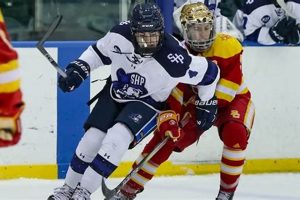
In ice hockey, this situation occurs when one team has more players on the ice than the opposing team due to a penalty assessed to a player on the shorthanded team. This numerical advantage provides the team with more players a greater opportunity to control the puck, establish offensive zone presence, and ultimately score a goal. For example, if a player on Team A is penalized, Team B will then have five skaters against Team A’s four skaters.
This advantage is significant because it increases the likelihood of scoring, shifting momentum in a game, and dictating the pace of play. Historically, successful teams capitalize on these situations to gain a competitive edge. Converting these opportunities into goals can dramatically alter the outcome of a hockey game and is a key factor in overall team success. The strategic deployment of players and well-rehearsed offensive schemes are critical for maximizing the effectiveness of this scenario.
Understanding the nuances of penalty killing and special teams play are essential for comprehending the broader strategic elements of ice hockey. These special teams aspects are as crucial as even-strength performance when analyzing a team’s effectiveness and potential for victory. Subsequent discussions will delve into the tactics employed during such scenarios, the roles and responsibilities of players involved, and the strategies used to both create and defend against this advantage.
Strategies for Capitalizing on a Player Advantage in Ice Hockey
The following strategies offer insights into maximizing the effectiveness of possessing a player advantage in an ice hockey game.
Tip 1: Puck Possession and Control: Maintaining possession of the puck is paramount. Controlled passing and strategic puck movement wear down the penalty-killing unit and create scoring opportunities. A team should prioritize cycling the puck within the offensive zone to create openings.
Tip 2: Establishing Offensive Zone Presence: Consistent presence in the offensive zone forces the shorthanded team to expend energy defending. This sustained pressure eventually leads to defensive breakdowns and higher-quality scoring chances.
Tip 3: Utilizing Effective Passing Lanes: Identifying and exploiting open passing lanes stretches the defensive coverage. Quick, accurate passes keep the penalty killers moving and prevent them from setting up a solid defensive structure. Passing to the open player, even if it’s a less obvious option, can often lead to better scoring angles.
Tip 4: Screen the Goaltender: Obstructing the goaltender’s vision increases the likelihood of scoring. A player positioned in front of the net, legally screening the goalie, makes it difficult to track the puck, particularly on shots from the point.
Tip 5: Point Shots and Rebounds: Shots from the point, or blue line, should be directed towards the net. Even if the initial shot is saved, the ensuing rebound offers another scoring opportunity. Forwards should be positioned to capitalize on these rebounds.
Tip 6: Player Movement and Rotation: Static positioning allows the penalty-killing unit to anticipate plays. Continuous movement and rotation among offensive players create confusion and open up passing and shooting lanes. Avoid predictable patterns of play.
Tip 7: Adapt to the Penalty Kill Formation: Observe and react to the shorthanded team’s defensive formation (e.g., box, diamond). Adjust the offensive strategy to exploit weaknesses in their setup. If the penalty kill is aggressive, look for stretch passes and quick transitions.
Adopting these strategic approaches can significantly improve the chances of converting opportunities into goals, ultimately impacting the game’s outcome. Mastery of these tactics is crucial for maximizing the benefits of a player advantage.
The subsequent analysis will delve into the defensive strategies employed by teams while shorthanded and the tactics used to disrupt the effectiveness of these offensive setups.
1. Penalty creates advantage

The phrase “Penalty creates advantage” forms the foundational principle upon which situations of numerical superiority in ice hockey are built. A penalty assessed to a player on one team directly results in the opposing team gaining this advantage. This cause-and-effect relationship defines the initial condition. Without the penalty, the opportunity for a team to possess more players on the ice would not exist, thus highlighting the penalties importance to enable the opportunity.
The direct consequence of this penalty is a distinct shift in the balance of power during gameplay. The team with the numerical advantage benefits from increased space on the ice, facilitating improved puck possession, more fluid passing lanes, and enhanced scoring opportunities. Consider, for instance, a tripping penalty called against a defenseman on Team A. Immediately, Team B gains a critical advantage, affording them a period of sustained offensive pressure and a heightened probability of scoring. This example illustrates the practical implications stemming from a penalty’s occurrence.
Understanding that a penalty instigates an advantage is essential for both players and coaches in strategic decision-making. Teams must possess well-defined offensive strategies to capitalize on these opportunities and equally robust defensive systems to mitigate the disadvantage when shorthanded. Recognizing the direct link between penalties and the potential for scoring swings is fundamental to successful game management. The ability to effectively respond to, and exploit, these situations significantly influences overall team performance and game outcomes.
2. Numerical superiority on ice
Numerical superiority on the ice forms the defining characteristic of a player advantage situation in ice hockey. This numerical imbalance, typically resulting from a penalty assessed to the opposing team, grants the advantaged team an elevated opportunity to control the flow of play and generate scoring chances. The cause-and-effect relationship is straightforward: the penalty creates a temporary condition where one team has more skaters on the ice than the other, thereby establishing a numerical advantage.
The importance of this superiority is evident in its direct impact on offensive and defensive dynamics. With an extra skater, the attacking team gains more space to maneuver, allowing for more intricate passing sequences, increased offensive zone possession, and a greater capacity to pressure the opposing team’s defense. Conversely, the shorthanded team faces a significant challenge, requiring heightened defensive discipline, efficient clearing of the puck, and reliance on goaltending to withstand the increased offensive pressure. A prime example would be a five-on-four situation where the team with five players can set up a more effective offensive scheme due to the additional skater, increasing the likelihood of a scoring opportunity. This underlines the tactical significance of understanding and exploiting this numerical edge. Special teams performance significantly impacts a team’s ability to secure victories.
The practical significance of understanding numerical superiority lies in its strategic implications. Coaches meticulously design power-play formations and penalty-killing strategies to either maximize or minimize the impact of this numerical disparity. Effective special teams play can frequently determine the outcome of a game. While securing the man-advantage opportunity is valuable, the team must effectively leverage it for optimal results, emphasizing the strategic nuance of numerical superiority’s connection with success in ice hockey. Challenges include maintaining puck possession, executing set plays effectively, and adapting to the opposing team’s penalty-killing strategies, all while working within the time constraint imposed by the penalty duration.
3. Increased scoring opportunity

The condition of numerical superiority directly translates into an increased scoring opportunity. When a team has more players on the ice due to a penalty assessed against the opposing team, the resulting imbalance creates more space, more passing lanes, and a greater chance for shots on goal. The core principle is that with fewer defenders to cover the attacking zone, the advantaged team can establish a stronger offensive presence and generate higher-quality scoring chances. A penalty provides a team with this powerplay and an opportunity to capitalize and shift momentum.
The importance of this enhanced scoring opportunity is underscored by the emphasis placed on special teams play in ice hockey. Teams dedicate significant practice time to power-play formations and strategies, recognizing that converting these opportunities into goals can dramatically influence game outcomes. For example, a team consistently converting 25% or more of its power-play chances is considered highly effective and gives them a measurable advantage over their competitors. Conversely, a team that fails to capitalize on these opportunities squanders a valuable resource. In a close game, one successful power play can be the deciding factor, highlighting the critical importance of special teams proficiency.
Understanding the connection between a numerical advantage and the elevated scoring likelihood is crucial for game management and tactical decision-making. Coaches must strategically deploy players with specific skill sets during these situations to maximize scoring potential. Challenges in capitalizing on these opportunities include maintaining puck possession, executing precise passes, and effectively screening the opposing goaltender. Successfully overcoming these challenges requires diligent preparation, skilled execution, and the ability to adapt to the specific defensive strategies employed by the shorthanded team. The ability to convert these opportunities is vital for overall team success.
4. Offensive zone pressure

Offensive zone pressure, exerted during situations in ice hockey where one team has a numerical advantage, represents a key component in maximizing the effectiveness of the power play. Sustained presence and activity within the opposing team’s defensive zone force the penalty-killing unit into a reactive posture, increasing the likelihood of defensive breakdowns and scoring opportunities.
- Puck Possession as a Catalyst
Maintaining puck possession within the offensive zone is paramount in generating pressure. Extended puck control forces the penalty-killing unit to expend energy and disrupts their defensive structure. For instance, consistent cycling of the puck along the boards and through the high slot can create confusion and open passing lanes. This sustained possession wears down the opposition and allows for more deliberate offensive plays.
- Shot Volume and Net-Front Presence
Increased shot volume from various angles, coupled with a strong net-front presence, significantly enhances offensive zone pressure. Shots from the point with players screening the goaltender make it difficult for the opposing team to clear the puck and provide opportunities for rebounds and deflections. This approach not only tests the goaltender but also creates chaos in front of the net, further disrupting the defense.
- Forcing Defensive Zone Turnovers
Applying forechecking pressure within the offensive zone aims to force turnovers and maintain possession. Aggressive pursuit of the puck carrier, combined with strategic positioning to intercept passes, can trap the penalty-killing unit in their own end. Recovering possession deep in the offensive zone allows for immediate scoring opportunities and prevents the shorthanded team from gaining valuable ice.
- Exploiting Defensive Fatigue
Prolonged offensive zone pressure induces fatigue in the penalty-killing unit. As players tire, their decision-making and execution deteriorate, leading to defensive lapses and increased scoring chances. Recognizing and exploiting this fatigue by maintaining relentless pressure is crucial for capitalizing on the power play.
These facets collectively illustrate the integral role offensive zone pressure plays in the power play’s success. By controlling the puck, generating high-volume shots, forcing turnovers, and exploiting defensive fatigue, the team with the numerical advantage can significantly increase its chances of scoring. These combined strategies highlight the dynamic interplay between offensive execution and the constrained defensive efforts of the opposing team.
5. Special teams situation

In ice hockey, the circumstances surrounding a numerical advantage, commonly referred to as a “power play,” are fundamentally defined as a special teams situation. These moments require specialized strategies and personnel distinct from those utilized during even-strength play. The outcome of these situations often significantly impacts the overall game, necessitating a focused examination of their defining characteristics.
- Designated Player Roles
Special teams situations necessitate the deployment of players with specific skill sets and roles, differing from their typical assignments during even-strength play. Power-play units often include skilled puck-handlers, precise passers, and players adept at screening the goaltender or converting rebounds. Penalty-killing units prioritize shot-blocking, puck-clearing, and aggressive forechecking. These specialized roles underscore the strategic variance from conventional gameplay.
- Unique Tactical Formations
Power plays and penalty kills employ distinct tactical formations designed to maximize scoring opportunities or minimize defensive vulnerabilities. Power-play formations may include variations of the 1-3-1 or umbrella setup, aiming to create passing lanes and shooting angles. Penalty-killing formations often utilize a box or diamond structure to protect the high-scoring areas and pressure the puck carrier. These formations represent a deviation from the typical structure used during even-strength play.
- Altered Game Tempo and Momentum
Special teams situations frequently alter the tempo and momentum of a game. A successful power play can energize a team and shift the game’s momentum, while an effective penalty kill can stifle the opposition and maintain defensive stability. The outcome of these situations can significantly influence team morale and crowd involvement, contributing to a dynamic shift in the game’s atmosphere.
- Statistical Significance
Statistical analysis of power-play and penalty-killing efficiency highlights the importance of special teams performance. Teams with higher power-play conversion rates and lower penalty-killing percentages often exhibit a greater likelihood of success. These statistics provide valuable insights into a team’s strategic effectiveness and ability to capitalize on or mitigate special teams situations.
These facets of the special teams context serve to illuminate the strategic intricacies associated with advantages in ice hockey. Understanding player roles, tactical formations, game tempo, and statistical significance provides a more comprehensive perspective on the distinct nature and impact of special teams play within the broader framework of the sport.
6. Strategic player deployment
Strategic player deployment is critical for maximizing the effectiveness of a power play in ice hockey. The numerical advantage gained through a penalty creates an opportunity that necessitates careful selection and positioning of players to optimize scoring potential.
- Specialized Skill Sets
Power-play units require players with distinct skill sets. For instance, a quarterback-type player is often positioned at the point to distribute the puck effectively. Net-front presence is crucial, demanding players skilled at screening the goaltender and capitalizing on rebounds. Wingers who can execute accurate one-timers and possess strong puck-handling abilities are also essential. The composition of the unit directly impacts its ability to generate scoring chances.
- Power Play Formations and Positional Roles
Common power-play formations, such as the 1-3-1 or umbrella, dictate specific positional roles. These formations are designed to create passing lanes, shooting angles, and net-front traffic. Each players responsibility is clearly defined within the formation, and their success hinges on adherence to the tactical structure. Incorrect positioning can disrupt the power play and reduce its effectiveness.
- Adapting to Opponent’s Penalty Kill
Strategic player deployment must also account for the opposing team’s penalty-killing formation and tendencies. If the penalty kill is aggressive, quick puck movement and stretch passes may be necessary. Conversely, if the penalty kill is passive, maintaining puck possession and establishing sustained offensive zone pressure becomes paramount. The ability to adapt player positioning and tactics based on the opponent’s approach is crucial for success.
- Line Combinations and Chemistry
Effective power-play units often rely on established line combinations that exhibit strong chemistry and familiarity. Players who understand each other’s tendencies and can anticipate their movements are more likely to execute plays effectively. Rotating players into the power-play unit without considering line chemistry can disrupt the flow and diminish its overall effectiveness.
Strategic player deployment significantly influences the success of the power play. Optimizing the lineup based on individual skill sets, positional responsibilities within the chosen formation, adaptation to the opponent’s penalty kill, and the establishment of strong line chemistry are all critical factors. The effectiveness of the player advantage relies heavily on the astute selection and strategic placement of personnel.
Frequently Asked Questions
The following addresses common inquiries regarding scenarios when a team gains a numerical advantage in ice hockey, also called a Power Play. These answers aim to provide a clear and comprehensive understanding of the related rules, strategies, and implications.
Question 1: What specific infractions typically lead to a circumstance where one team has a numerical advantage?
Penalties such as tripping, hooking, interference, and cross-checking most commonly result in such advantage. Minor penalties of this nature typically lead to a two-minute penalty, affording the opposing team this opportunity.
Question 2: How does a penalized team regain its player during such opportunity?
The penalized player returns to the ice when the penalty time expires, or if the opposing team scores during the power play. Certain penalties, such as double minors or major penalties, may extend the numerical advantage even if a goal is scored.
Question 3: Are there situations when a team does not get a numerical advantage despite a penalty being called?
Yes. If a team commits a penalty while already shorthanded, the penalties are often served consecutively, rather than concurrently, unless specific rules dictate otherwise. Additionally, offsetting penalties involving an equal number of players on each team result in a brief period of four-on-four play.
Question 4: What strategic deployments are common during this player advantage?
Common strategies involve deploying specialized units with skill sets tailored for offensive zone possession, accurate passing, and effective net-front presence. Formations like the 1-3-1 or umbrella are frequently employed to create passing lanes and shooting angles.
Question 5: What is the key defensive objective for a team when facing such situation?
The primary objective is to deny entry into the defensive zone, disrupt passing lanes, block shots, and clear the puck efficiently. Maintaining a tight defensive structure, such as a box or diamond formation, is essential.
Question 6: How significant is special teams play in determining the outcome of ice hockey games?
Special teams play, including power-play efficiency and penalty-killing success, is exceptionally significant. Teams that consistently convert numerical advantages and effectively negate opposing power plays often exhibit a higher probability of winning. Special teams are regarded as critical performance indicators.
In summary, numerical advantages in ice hockey present unique strategic opportunities and challenges, demanding specialized skill sets and tactical approaches. Successful execution in these situations can significantly impact game outcomes.
Further discussion will focus on advanced strategies for power play implementation and penalty kill optimization, including situational awareness and adaptability.
In Ice Hockey What Is A Power Play
This exploration has detailed that in ice hockey what is a power play involves a team gaining a temporary numerical advantage due to an opposing player’s penalty. This advantage manifests as increased offensive zone pressure, enhanced scoring opportunities, and strategic player deployment. The success of this condition relies on specialized skill sets, tactical formations, and adaptability to the opponent’s defensive strategy. The effectiveness of special teams play, particularly the power play, has a profound influence on game outcomes.
Understanding and mastering the nuances of in ice hockey what is a power play is paramount for competitive success. Its strategic importance extends beyond mere numerical superiority, encompassing elements of puck control, spatial awareness, and disciplined execution. Continued analysis and refinement of power-play strategies remain essential for teams seeking to optimize their performance and secure victory.